Electric Vehicles in Pakistan Are We Finally Ready
Honest look at electric vehicles in Pakistan in 2026, covering prices, charging, policy targets, real risks and whether buyers should switch now.
Electric Vehicles in Pakistan 2026: 7 Honest Truths on Whether We Are Finally Ready
Introduction
Electric vehicles in Pakistan have been “the future” for years. The country announced its first EV policy in 2019, promised a green transport revolution, and then watched the targets slip away. So when the government launched the NEV Policy 2025-30 and set a goal of 30% electric new vehicle sales by 2030, plenty of people rolled their eyes.
This time, some things really are different. BYD is building a factory in Karachi. Chinese brands are selling small electric hatchbacks at prices close to a Suzuki. Charging tariffs have been cut sharply, and electric bikes are quietly showing up on streets in Lahore, Karachi and Peshawar. Petrol prices remain painful for most households, which makes the idea of charging at home for a fraction of the cost very tempting.
But enthusiasm is not the same as readiness. The charging network is still thin, the grid is unreliable in many areas, resale values are uncertain, and Pakistan has a long history of good policies being bent by smugglers, import scheme abusers and electricity thieves.
This article looks at EVs in Pakistan through seven honest truths. It covers what the policy promises, what is actually on the ground in 2026, where the real barriers are, and which illegal practices from the past could damage the transition if nobody learns from them. If you are thinking about switching, it should help you decide whether now is your moment.
Where Electric Vehicles in Pakistan Stand in 2026
The short answer is that the foundations are finally being laid, but the building is far from finished. Here is what is real today.
Truth 1: The Policy Is Ambitious, and This Time It Has Money Behind It
The NEV Policy 2025-30 was launched in June 2025. Its headline goal is that 30% of all new vehicles sold in Pakistan by 2030 should be electric. According to Business Recorder’s coverage of the policy launch, the government allocated Rs9 billion in subsidies for FY2025-26 to support 116,053 electric bikes and 3,171 electric rickshaws, and planned 40 charging stations on motorways spaced about 105 km apart.
The policy also claims big national gains:
- About 2.07 billion litres of fuel saved each year
- Carbon emissions cut by 4.5 million tons
- Around $1 billion saved in foreign exchange annually
- Health costs reduced by $405 million per year
It is worth remembering that the 2019 EV policy set a similar 30% target and fell short, which the new policy document itself admits. The difference now is funded subsidies, a six-monthly audit by the Auditor General, and an EV adoption levy on petrol vehicles to pay for the transition. In mid 2026, officials told a Senate committee that more than 12,800 electric vehicles and nearly 160,000 electric motorcycles had already been manufactured locally, with a projection of 2.2 million electric vehicles in Pakistan by 2030.
Truth 2: Real Cars Are Arriving, but Most Are Still Expensive
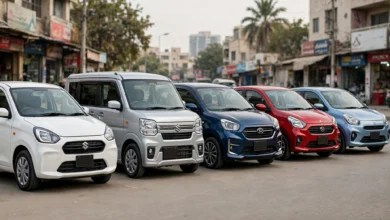
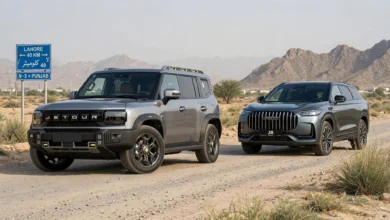
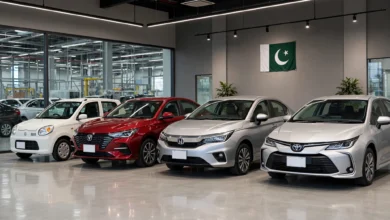
For years, buying one of the electric cars in Pakistan meant choosing between a pricey import and a small, unknown brand. That is changing. BYD launched in Pakistan in August 2024 with partner Mega Motor Company and has become the largest supplier of EVs in the country. Its $150 million plant in Sindh, with capacity for 25,000 units a year, is targeted for completion in late 2026, according to Dawn’s situationer on EV readiness. MG, Changan, GAC and several smaller Chinese brands are also active.
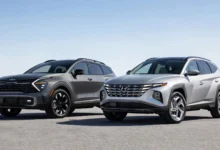
The price picture has two ends:
- Budget city EVs such as the Rinco Aria sit around PKR 30 lakh, with small batteries and city ranges of roughly 150 to 200 km.
- Mainstream family EVs from BYD, MG and others start in the several-million range and go well above a Corolla or Civic.
So EV prices in Pakistan are within reach for some urban families, but for most people a proper family EV is still a luxury purchase. Local assembly should narrow that gap, but it will not happen overnight.
The Real Barriers Holding Back Electric Vehicles in Pakistan
Policy targets are easy to announce. The daily experience of owning an EV is what decides whether people switch. Three problems stand out.
Truth 3: The Charging Network Is Still Thin
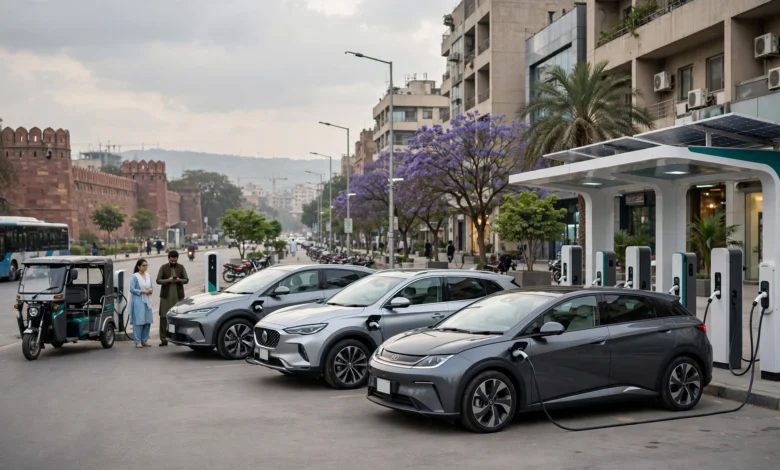
EV charging stations in Pakistan are growing, but from a very small base. Estimates in early 2026 put the number of public stations somewhere between a few dozen and under a hundred, mostly in Karachi, Lahore and Islamabad. The national target is 3,000 stations by 2030.
Some progress is visible:
- PSO, BYD and HUBCO Green opened their first fast-charging station in June 2025 as part of a Karachi to Peshawar corridor plan.
- PSO reported nine EV charging stations on that corridor in its nine-month FY26 report.
- The Sindh government approved a public-private partnership for a provincial network, with Rs750 million committed for 300 stations.
The honest reading is that city driving with home charging is practical today. Long intercity trips in an EV still need careful planning, and a breakdown or a broken charger on the motorway can leave you stuck. If you live in a flat without a dedicated parking spot, charging becomes the biggest daily hassle.
Truth 4: Electricity Is Cheaper Than Petrol, but Not Always Reliable
The government cut the EV charging tariff for public stations from about Rs71 to roughly Rs39 per unit, and NEPRA later reduced the base tariff further. That makes each kilometre in an EV much cheaper than in a petrol car, especially if you charge at home or on solar.
The catch is reliability. Load shedding is still common in many districts, voltage fluctuations can damage chargers, and home tariffs rise sharply in higher consumption slabs. An EV that pushes your household into a higher slab can erase part of the savings. Anyone with rooftop solar has a big advantage here, and pairing solar with an EV is currently one of the smartest energy decisions a Pakistani household can make.
Truth 5: Resale Value and Battery Life Are Still Question Marks
The used market for EVs in Pakistan is young. Buyers worry about battery replacement costs, and dealers price that fear into trade-in offers. Budget EVs in particular have lost value faster than petrol hatchbacks so far.
Heat is another concern. Summer temperatures above 45 degrees Celsius put stress on batteries, especially cheaper chemistries without good thermal management. LFP batteries, which several brands now use, handle heat better than older types. Before buying, ask for the battery chemistry, the battery warranty in years and kilometres, and whether that warranty transfers to the next owner. A strong transferable warranty is one of the best protections for your resale value.
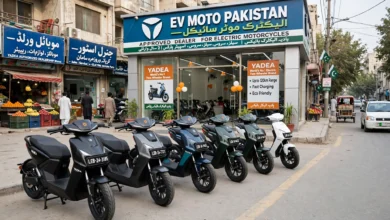
Truth 6: Electric Bikes and Rickshaws Are Where the Shift Is Really Happening
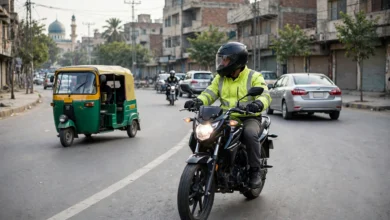
When people talk about electric vehicles in Pakistan, they usually picture a BYD sedan. The bigger story is happening on two and three wheels.
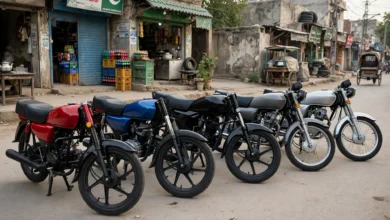
Pakistan is one of the world’s largest motorcycle markets, and most of those bikes are used for daily commuting and delivery work. For a rider covering 50 to 80 km a day, fuel is a major monthly expense. Electric bikes in Pakistan cut that cost sharply, need less maintenance, and can be charged from a normal home socket.
Why Two and Three Wheelers Lead
- Lower upfront cost. Many electric bikes cost about the same as a new 125cc petrol motorcycle or less after subsidies.
- Local manufacturing. The government says over 90% of components for electric two and three wheelers are already made in Pakistan, which keeps prices and parts supply stable.
- Short daily distances. Most trips fit easily within the range of a single charge.
- Direct subsidies. The NEV policy offers support for each electric bike and rickshaw, with a quarter of subsidies reserved for women.
What Buyers Should Watch For
The fast growth of this segment has also attracted low-quality products. Cheap bikes with unbranded batteries and no real warranty can lose range within a year, and poorly made chargers are a fire risk. Buy from licensed manufacturers, ask for the battery warranty in writing, and avoid modified or “converted” bikes sold without paperwork.
The electric rickshaw subsidy could make a real difference for drivers who pay heavy daily fuel bills. If the scheme is run transparently, it could improve incomes for thousands of low-income families, which is exactly why it needs to be protected from abuse.
Truth 7: Illegal Practices Could Derail Electric Vehicles in Pakistan
Every incentive creates an opportunity for someone to cheat. Pakistan’s auto and energy sectors have a documented record of this, and the EV transition depends on concessions, subsidies and cheap electricity that are all open to abuse. Learning from past cases is not pessimism. It is how the transition survives.
Import Scheme Abuse
For years, the Personal Baggage, Gift and Transfer of Residence schemes let overseas Pakistanis bring in used cars at concessionary rates. Commercial dealers used the passports of expatriates to import vehicles for resale, turning a welfare facility into a business. In 2024, the Prime Minister directed the FBR to stop this misuse, and in January 2026 the government formally abolished the Personal Baggage route. The remaining schemes now carry a one-year ban on resale.
The lesson for EVs is direct. The current policy gives heavy tax concessions on EVs and their parts. If the same dealer networks find a way to route vehicles or components through concessionary channels and sell them commercially, the government loses revenue, honest local assemblers are undercut, and buyers end up with cars that have no local warranty or service support.
Electricity Theft
Pakistan’s power distribution companies lost Rs226 billion in the first ten months of FY2025-26, and about Rs169 billion of that came from inefficiencies and theft, according to ProPakistani’s report on DISCO losses. In Khyber Pakhtunkhwa, PESCO reported losses of about Rs583 million a day in 2024-25, with some districts losing more than 70% of the power supplied.
If EV charging adds demand in areas where “kunda” hooking is common, the losses grow and honest bill payers carry the cost through higher tariffs. Charging an EV from a stolen connection is not a victimless shortcut. It is theft from every paying household, and it also creates serious fire and electrocution risks.
Subsidy Fraud and Fake Paperwork
Whenever cash subsidies are handed out, fake applicants, ghost beneficiaries and bribery follow unless verification is strict. The Rs9 billion allocation for electric bikes and rickshaws will be tested on this. The same goes for the used EV market, where the old tricks of tampered chassis numbers, forged registration papers and rolled-back odometers can easily be applied to electric cars. Always verify registration with your provincial Excise department before buying any used vehicle.
Dumping and Unsafe Batteries
Ethical risk also comes from what happens to old batteries. Informal lead-acid recycling has long been a health hazard in Pakistan, and lithium batteries need proper collection and recycling too. Without clear rules, cheap used battery packs could be imported, repackaged and sold as new. Buyers should insist on documented battery origin and warranty, and policymakers should make recycling a condition of selling EVs.
Should You Buy One of the Electric Vehicles in Pakistan Now?
The right answer depends on how you live and drive. An EV makes strong sense for some households today and poor sense for others.
An EV Makes Sense If You
- Drive mostly within one city and rarely travel long distances by road
- Have a private parking spot where you can install a home charger
- Have rooftop solar or a stable power supply in your area
- Plan to keep the vehicle for many years rather than sell it quickly
Wait a Little Longer If You
- Drive between cities every week
- Live in an apartment with shared or street parking
- Face long daily load shedding
- Depend on strong resale value to fund your next car
A Buyer’s Checklist
- Check the battery warranty. Get the years, kilometres, and transfer terms in writing.
- Confirm the battery chemistry. LFP batteries generally cope better with Pakistan’s heat.
- Map your charging. Find the nearest public chargers on your usual routes and confirm they actually work.
- Get a proper home installation. Use a licensed electrician, a dedicated circuit and correct earthing. Never charge from an illegal or overloaded connection.
- Buy from an authorized dealer. Avoid grey imports that have no local warranty, software support or parts supply.
- Check the service network. Ask where the nearest trained EV workshop is and how long parts take to arrive.
- Verify paperwork on used EVs. Match chassis numbers and registration with your provincial Excise records, just as you would for a petrol car.
- Work out your real savings. Compare your current fuel bill with the expected increase in your electricity bill, including any slab jump.
Conclusion: Are Electric Vehicles in Pakistan Finally Ready?
Electric vehicles in Pakistan are more ready in 2026 than at any point before, but readiness depends on who you are: the NEV Policy 2025-30 has real subsidies and a 30% sales target, BYD’s local plant and a wave of Chinese brands are widening choice, charging tariffs have been cut, and electric bikes and rickshaws are already changing daily commutes, yet public charging remains thin, grid reliability is uneven, resale values are uncertain, and past abuse of import schemes, subsidies and electricity connections shows how easily good policy can be bent. For a city driver with home parking and ideally solar, an EV is a sensible choice today, while intercity drivers and apartment dwellers may be better off waiting a year or two, and whichever group you fall into, buying from authorized dealers, insisting on written battery warranties, charging only from legal connections and verifying every document is what will keep the transition honest and worthwhile.