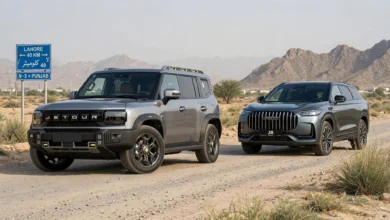
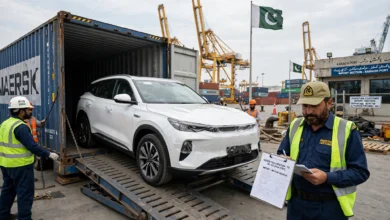
Top 5 Locally Manufactured Cars in Pakistan Worth Buying
Locally manufactured cars in Pakistan ranked for value, safety, and resale, plus the dealer premiums and industry practices buyers should watch for.
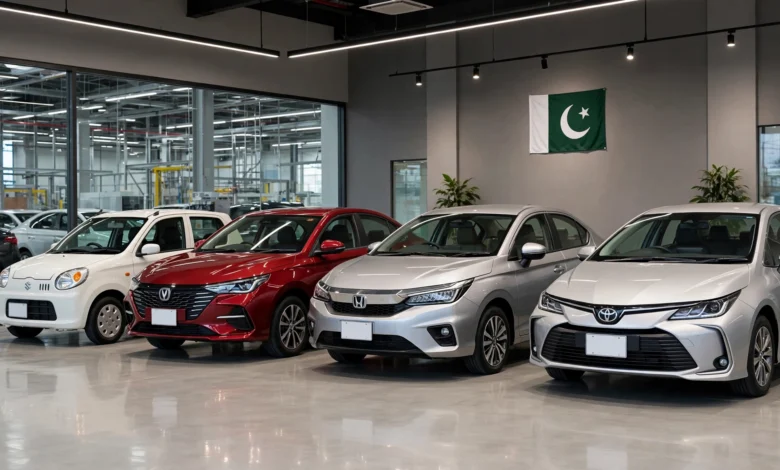
Locally Manufactured Cars in Pakistan: Top 5 Best Value Picks Worth Your Money
Introduction
Locally manufactured cars in Pakistan make up the bulk of what families actually drive. Imported cars get the attention on social media, but most people end up choosing between models assembled at plants in Karachi, Lahore, Sheikhupura and nearby industrial zones. These cars are easier to service, cheaper to insure, and their parts are available in almost every town.
That does not mean every local car is a good buy. Prices have risen sharply over the past few years, and buyers have often paid more for less. Some models stayed on sale for years with minimal safety features. Dealers and investors have charged hefty “own money” premiums on top of the official price. Regulators have also looked into pricing behaviour in the auto sector more than once.
So the real question is not just which car is popular. It is which car gives you honest value for your money, holds its resale, keeps your family reasonably safe, and doesn’t drain your wallet at the workshop.
This guide picks five locally assembled cars that are worth buying, from an entry-level hatchback to a family SUV. For each one, it explains who it suits, what it does well and where it falls short. It also covers the industry practices that have hurt Pakistani buyers in the past, so you can avoid paying for someone else’s profit margin and drive away with a car that genuinely deserves your money.
What “Locally Manufactured Cars in Pakistan” Really Means
The phrase sounds simple, but it hides an important detail. Most locally manufactured cars in Pakistan are assembled here from kits, rather than built entirely from local parts.
CKD Assembly vs Full Manufacturing
Cars made in Pakistan are mostly produced through CKD (Completely Knocked Down) assembly. The manufacturer imports engines, transmissions and many electronic parts, then assembles them locally with a mix of Pakistani-made components like seats, glass, wiring harnesses, plastics and some body parts. The share of local parts is called localisation, and it varies a lot from model to model.
Why Local Assembly Matters to Buyers
- Lower duties than fully imported cars, which keeps prices somewhat lower
- Wider parts availability, including in smaller cities
- Authorised dealer networks for warranty and service
- Better resale, because buyers trust familiar local models
- Easier financing, since banks prefer locally assembled cars
The Weak Spots
Local assembly also has drawbacks. Because a large share of parts is still imported, prices rise sharply whenever the rupee falls. For years, limited competition also let some manufacturers sell outdated models with basic safety features at high prices. You can follow industry production and sales figures through the Pakistan Automotive Manufacturers Association (PAMA), which publishes monthly data on locally assembled vehicles.
Top 5 Locally Manufactured Cars in Pakistan Worth Buying
The market has grown strongly in 2026. According to PAMA figures reported by PakWheels, the Suzuki Alto is still the country’s best-selling model, while the Swift, Honda’s sedans, Toyota’s Corolla family and the locally assembled Haval H6 have all posted strong numbers. These five picks balance value, reliability, resale and safety. Prices change often, so confirm the latest figures with authorised dealers before booking.
1. Suzuki Alto: Best Entry-Level Car
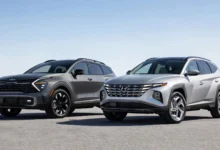
The Suzuki Alto is the most popular car in Pakistan for good reason. It is affordable to buy, very light on fuel, cheap to maintain, and easy to resell. For a first-time owner, a small family or a daily commuter in crowded cities, it is hard to argue against.
- Why it’s worth buying: low running costs, huge parts network, strong resale
- Where it falls short: limited safety features and space, and it feels light on highways
- Best for: first cars, city commuting, tight budgets
2. Suzuki Swift: Best Small Car Upgrade
The Suzuki Swift has become one of the fastest-growing locally assembled models this year. It offers better build, more features and a more planted drive than the Alto, while keeping Suzuki’s low running costs and easy servicing. The newer Suzuki Fronx, launched locally in 2026, is also worth a look if you want a crossover shape, though it has less of a track record so far.
- Why it’s worth buying: good balance of price, comfort and efficiency
- Where it falls short: rear seat space and boot are modest for big families
- Best for: young professionals and small families stepping up from an entry-level car
3. Honda City: Best Value Family Sedan
The Honda City gives you proper sedan comfort, a roomy cabin and good fuel economy without the price of a Civic or Corolla. Honda’s local sales have grown strongly over the last year, and the City remains a dependable choice for families who want a comfortable car for both city and intercity use.
- Why it’s worth buying: spacious, efficient, easy to maintain
- Where it falls short: modest power when fully loaded
- Best for: families, intercity commuters, first sedan buyers
4. Toyota Corolla: Best for Reliability and Resale
The Toyota Corolla has been Pakistan’s default family sedan for decades. It is not exciting, but it is tough, comfortable and simple to service anywhere in the country. Resale value is consistently strong, which softens its higher purchase price. Buyers on a tighter budget can consider the Toyota Yaris, assembled on the same lines.
- Why it’s worth buying: proven durability, nationwide service, excellent resale
- Where it falls short: higher price and conservative features compared with newer rivals
- Best for: families who want a low-stress, long-term car
5. Haval H6: Best Locally Assembled Family SUV
Assembled locally by Sazgar, the Haval H6 has climbed near the top of the sales charts in 2026, according to Best Selling Cars Blog’s monthly PAMA roundup. It offers a modern cabin, more safety technology than most local cars and a hybrid option for better fuel economy.
- Why it’s worth buying: features and safety equipment for the money, hybrid availability
- Where it falls short: long-term resale and parts experience are still building compared with Japanese brands
- Best for: families wanting a modern SUV with strong safety features
Quick Comparison of the Best Locally Assembled Cars
This table sums up where each car stands. Ratings are general guidance, not test results.
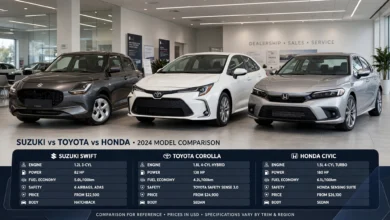
| Car | Segment | Fuel economy | Safety features | Resale | Maintenance cost |
|---|---|---|---|---|---|
| Suzuki Alto | Entry hatchback | Excellent | Basic | Very strong | Very low |
| Suzuki Swift | Compact hatchback | Very good | Moderate | Strong | Low |
| Honda City | Compact sedan | Very good | Moderate | Strong | Moderate |
| Toyota Corolla | Family sedan | Good | Good | Very strong | Moderate |
| Haval H6 | Family SUV | Good (hybrid better) | Very good | Still building | Moderate to high |
If your budget is tight and you mostly drive in the city, the Alto or Swift makes the most sense. Families who travel between cities will be happier in a City or Corolla, while those who want modern safety tech should look closely at the Haval H6.
The Hard Truth About Locally Manufactured Cars in Pakistan: Past Malpractice Buyers Should Know
Any honest guide to locally manufactured cars in Pakistan has to cover the practices that have cost buyers money and, in some cases, put them at risk. Knowing this history makes you a sharper buyer.
“Own Money” and Investor Booking
For years, buyers who wanted quick delivery had to pay an unofficial own money premium on top of the official price, sometimes running into hundreds of thousands of rupees. Investors booked cars in bulk using multiple identities and resold them at a markup, while genuine buyers waited months. The government responded at different times with measures such as requiring bookings in the buyer’s own name, restricting transfers soon after delivery, and imposing extra taxes on early resale. If someone asks for an off-the-books premium, it is worth asking whether you really need the car that urgently.
Regulators Looking at Pricing
The Competition Commission of Pakistan (CCP) has examined the auto sector on several occasions, including concerns about pricing, delivery delays and how bookings and advance payments were handled. Buyers have also complained about large advance payments being held for months without compensation, which led to rules requiring late-delivery compensation in the auto policy.
Safety Standards Left Behind
Some local models stayed on sale for years without airbags, ABS or modern crash protection. The Suzuki Mehran is the best-known example: it was sold for decades with very basic safety equipment before being discontinued in 2019. Pakistan has since moved toward adopting UN vehicle safety regulations, but standards still lag behind many countries. This is why safety features should weigh heavily in your choice.
Mis-Declaration and Tax Evasion in the Supply Chain
Customs and tax authorities have pursued cases where imported auto parts were mis-declared to pay lower duties, and where vehicles or parts were under-invoiced. These practices distort the market and hurt honest manufacturers and vendors.
Smuggled and NCP Vehicles
Non-custom paid vehicles undercut legitimate local cars on price, but they can be confiscated and some have stolen or forged histories. Buying a properly registered locally assembled car is both the legal and the safer choice.
How to Buy Locally Manufactured Cars in Pakistan the Smart Way
Picking the right model is only half the job. How you buy matters just as much.
Before You Book
- Compare total cost of ownership, not just the sticker price. Add fuel, insurance, tax and expected maintenance.
- Check safety features such as airbags, ABS, stability control and seatbelt reminders.
- Read real owner reviews from Pakistani drivers who have used the car for at least a year.
- Check resale trends on major car portals for older versions of the same model.
When You Book
- Book only through an authorised dealer and pay through a bank instrument in the company’s name.
- Get the booking terms in writing, including delivery time and late-delivery compensation.
- Never pay off-the-books premiums in cash without a receipt.
- Keep copies of your booking form, payment proof and CNIC.
At Delivery
- Inspect the car in daylight for paint defects, scratches or signs of transport damage.
- Check that the chassis and engine numbers match the invoice.
- Confirm all features listed in the brochure are actually fitted.
- Make sure the first registration is done in your name.
Financing Tips
Car financing is easier for locally assembled cars, but interest rates and rules change often. Compare at least three banks, read the fine print on insurance and early settlement, and borrow only what you can repay comfortably.
Frequently Asked Questions About Locally Manufactured Cars in Pakistan
Which is the best-selling locally manufactured car in Pakistan?
The Suzuki Alto remains the best-selling model by a wide margin, thanks to its low price, fuel efficiency and strong resale.
Are locally assembled cars safe?
Safety has improved, but it still varies a lot between models. Newer cars like the Haval H6 and recent Toyota and Honda models offer more safety equipment than entry-level hatchbacks. Always check the airbag count and whether ABS and stability control are standard.
Is it legal to pay “own money” for faster delivery?
Paying a premium to a private reseller is common, but it is often undocumented and has been targeted by government measures over the years. It is safer to book directly with an authorised dealer and get everything in writing.
Do locally manufactured cars have better resale value than imported cars?
Generally yes. Popular local models like the Alto, Corolla and City have strong demand in the used market because parts and servicing are easy to find.
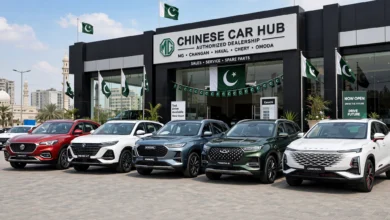
Are Chinese locally assembled cars worth buying?
Models like the Haval H6 offer strong features and safety for the price. The main question is long-term resale and parts experience, which is still building compared with Japanese brands.
Conclusion
The best locally manufactured cars in Pakistan right now are the Suzuki Alto for affordable city driving, the Suzuki Swift as a smart small-car upgrade, the Honda City for value-focused families, the Toyota Corolla for reliability and resale, and the locally assembled Haval H6 for buyers who want a modern SUV with stronger safety features. Each offers the local advantages of easier servicing, wider parts availability and better resale than most imports, but the industry’s history of own money premiums, investor bookings, regulatory scrutiny over pricing, slow safety upgrades and smuggled NCP competition shows why buyers need to stay alert. Compare total ownership costs, prioritise safety, book only through authorised dealers with everything in writing, and refuse off-the-books payments, and you will end up with a car that gives honest value for every rupee you spend.