Top Cloud Storage Apps Compared Google Drive vs OneDrive vs Dropbox
Google Drive vs OneDrive vs Dropbox compared on price, storage, security, and real breach history, so you can pick the right cloud storage app in 2026.
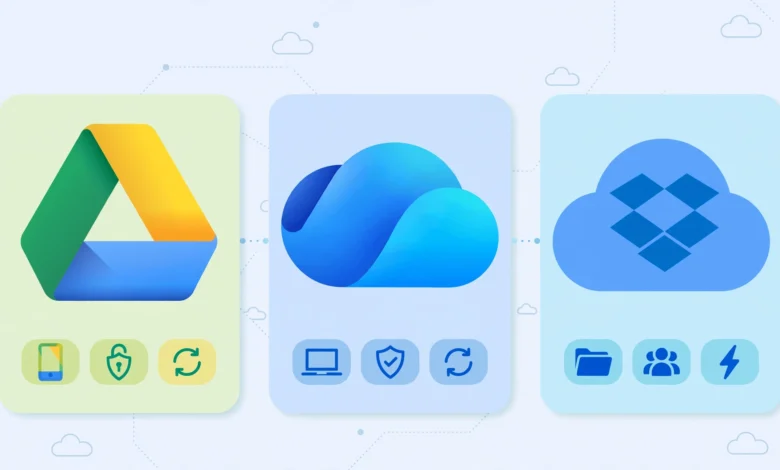
Google Drive vs OneDrive vs Dropbox: 7 Honest Truths for Choosing the Best Cloud Storage in 2026
Introduction
Google Drive vs OneDrive vs Dropbox is a question most people ask only once they run out of space or lose a file they thought was safe. That timing is the problem. By then your photos, tax papers, and work documents are already spread across apps you picked by accident, usually because one came with your phone and another came with your laptop.
The three services look similar on the surface. Each gives you a folder that syncs across devices, a way to share links, and a monthly plan when the free tier fills up. The differences show up later: how much you actually pay over three years, how well the app fits the tools you already use, and what happens when something goes wrong.
That last part gets skipped in most cloud storage comparison articles. This one does not skip it. All three companies have dealt with real security incidents, from leaked passwords to government data requests, and criminals have abused all three platforms to spread malware or hide stolen data. Knowing that history does not mean you should avoid the cloud. It means you should use it with your eyes open.
Below you will find a plain comparison of pricing, free storage, file sync, collaboration, and cloud storage security, followed by real cases that show where things broke. By the end, you should know which service fits your situation and how to protect your files no matter which one you choose.
What the Top-Ranking Pages Cover (and What They Miss)
Before writing, I reviewed the pages ranking for Google Drive vs OneDrive vs Dropbox in October 2026, including comparisons from TechRadar, Windows Central, ITPro, and several newer 2026 guides. Almost all of them follow the same pattern: free storage, pricing, sync speed, collaboration, and a verdict. Very few spend real time on breach history, government access, or how criminals misuse these platforms.
Primary keyword
- Google Drive vs OneDrive vs Dropbox (focus keyword)
Secondary and LSI keywords used in this article
- best cloud storage
- cloud storage comparison
- cloud storage security
- free cloud storage
- Google One storage plans
- OneDrive Microsoft 365
- Dropbox file sync
- data breach
- two-factor authentication
- end-to-end encryption
The gap is clear. Competitors answer “which is cheapest,” but they rarely answer “which one has let people down before, and how?” This article covers both.
Google Drive vs OneDrive vs Dropbox: Quick Price and Storage Comparison
If you only want the numbers, here they are. Prices are US list prices as of mid-2026 and can vary by country, taxes, and promotions.
| Plan | Google Drive (Google One) | OneDrive (Microsoft 365) | Dropbox |
|---|---|---|---|
| Free tier | 15 GB, shared with Gmail and Photos | 5 GB | 2 GB |
| Entry paid plan | 100 GB for $1.99/month | 100 GB for $1.99/month (Basic) | 2 TB Plus for about $11.99/month, or $9.99/month billed yearly |
| Around 1 to 2 TB | 2 TB for $9.99/month or $99.99/year | 1 TB plus Office apps for $9.99/month or $99.99/year | 2 TB Plus (same as above) |
| Family option | Share any plan with up to 5 others | Family: 6 TB total (1 TB each, up to 6 people) for $129.99/year | Family plan: 2 TB shared by up to 6 people |
A few things in that table are easy to miss:
- Google’s free tier is changing. From March 2026, new Google accounts start with 5 GB and unlock the remaining 10 GB after verifying a phone number, so the 15 GB figure now comes with a condition (Aboki Forex report).
- OneDrive is no longer sold as storage alone. Paid space comes through a Microsoft 365 subscription, which is great value if you use Word and Excel and wasted money if you do not (Internxt pricing breakdown).
- Dropbox has no cheap middle tier for individuals. You jump from 2 GB free straight to 2 TB paid. That works for heavy users and feels expensive for light ones.
For most people choosing purely on price, Google Drive wins at small sizes, OneDrive wins if you need Office anyway, and Dropbox only makes financial sense once you genuinely need terabytes.


Google Drive: Best for Free Storage and Real-Time Collaboration
Google Drive is the default choice for anyone who already uses Gmail or an Android phone. You probably have an account right now, whether you meant to or not. That convenience is its biggest strength and, as we will see later, a quiet risk.
What Google Drive does well
- Generous free cloud storage. Even with the new phone verification step, 15 GB is still three times OneDrive’s free tier and over seven times Dropbox’s.
- Collaboration that just works. Google Docs, Sheets, and Slides let several people edit the same file at once, with comments and suggestion mode built in. Native Google files also do not count against your quota.
- Search. Google’s search inside Drive finds text in PDFs and even words in scanned images. If you lose files often, this alone can justify it.
- Affordable Google One storage plans. The 100 GB plan costs about the same as a coffee each month, and any plan can be shared with five family members.
Where Google Drive falls short
- Shared quota. Your 15 GB covers Gmail, Google Photos, and Drive together. A busy inbox and a few years of phone photos can eat it fast.
- Desktop sync is fine, not great. The Drive for desktop app works, but it does not sync changed parts of a file the way Dropbox does, so big edited files re-upload in full.
- Privacy model. Files are encrypted in transit and at rest, but Google holds the keys. Google also scans content for abuse material, which matters for the account lockout story later in this article.
Who should pick Google Drive
Students, freelancers, small teams on Google Workspace, and Android users. If most of your work happens in a browser, this is the easiest option among the three.
OneDrive: Best Value If You Already Pay for Microsoft 365
OneDrive comes built into Windows 10 and 11, which means millions of people use it without ever signing up on purpose. That is both helpful and occasionally annoying, since Windows can start backing up your Desktop and Documents folders by default.
What OneDrive does well
- Office bundled in. The OneDrive Microsoft 365 pairing is the real selling point. For $99.99 a year you get 1 TB of storage plus desktop Word, Excel, PowerPoint, and Outlook. If you would buy Office anyway, the storage is close to free.
- Family plan value. Microsoft 365 Family gives up to six people 1 TB each, which works out cheaper per person than most rivals.
- Personal Vault. A separate folder that needs a second verification step to open and locks itself after a short period of inactivity. It is a good place for passport scans and tax returns.
- Files On-Demand. You can see every file in File Explorer without downloading it, which saves space on smaller laptops.
Where OneDrive falls short
- Tiny free tier. 5 GB is barely enough for phone photos from a single trip.
- No storage-only big plan. If you want 1 TB without Office, you cannot buy it cleanly. You pay for apps whether you use them or not.
- Aggressive Windows prompts. Some users find OneDrive syncing folders they never meant to upload. Always check the backup settings after a fresh Windows install.
- Price changes. Microsoft added Copilot AI features to consumer plans and announced further Microsoft 365 price increases for July 2026, so renewal prices deserve a close look.
Who should pick OneDrive
Windows users, Office-heavy workers, and families who want one subscription that covers storage and productivity apps for everyone.
Dropbox: Best for Fast File Sync and Mixed-Platform Teams
Dropbox was the app that made cloud sync feel normal back in 2008, and it is still the one many designers, video editors, and agencies swear by. It does not try to sell you an office suite. It just moves files quickly and reliably.
What Dropbox does well
- Fast, efficient Dropbox file sync. Dropbox uses block-level sync, meaning only the changed part of a file uploads. Edit a 3 GB video project and it sends the difference, not the whole thing again.
- Works with everything. It plays nicely with Microsoft Office files, Google Docs, Adobe apps, Slack, and Zoom. Teams that mix Mac, Windows, and Linux tend to have fewer headaches here.
- Strong recovery tools. Paid plans keep deleted files and old versions for a long window, and Dropbox Rewind lets you roll an entire folder back to a date before a mistake or ransomware hit.
- Clean sharing. Shared links can have passwords and expiry dates on paid tiers, and file requests let clients upload to you without an account.
Where Dropbox falls short
- Weak free plan. 2 GB and a three-device limit on the free tier make it hard to rely on without paying.
- Expensive for light users. There is no small paid plan, so you pay for 2 TB even if you need 200 GB.
- Security history. Dropbox has had more public security incidents than its two rivals, which we cover honestly in the next section.
Who should pick Dropbox
Creative professionals, agencies, and teams that work with large files across different operating systems. If speed and version recovery matter more than free space, Dropbox earns its price.
Google Drive vs OneDrive vs Dropbox Security: What Actually Went Wrong
Every cloud storage security page promises encryption and world-class protection. Real history is messier. None of these cases means a service is unsafe today, but each one shows a specific risk you can plan for.
Dropbox: the 68 million password data breach
In 2012, someone used a stolen password to get into a Dropbox employee account that held a document with user email addresses. Dropbox described it at the time as a limited incident. Four years later, in August 2016, a dump of about 68 million Dropbox email addresses and hashed passwords surfaced online, and Dropbox confirmed the data came from that 2012 theft (PCWorld report).
The passwords were hashed, which limited the damage. The bigger lesson was the gap between the event and the full disclosure. Anyone who reused their Dropbox password on other sites was exposed for years without knowing.
Dropbox Sign: authentication data stolen in 2024
In April 2024, an attacker broke into the production environment of Dropbox Sign, the e-signature product formerly called HelloSign. Dropbox’s own SEC filing on the Dropbox Sign incident says the attacker accessed emails, usernames, phone numbers, hashed passwords, API keys, OAuth tokens, and multi-factor authentication details. Dropbox said the breach was isolated to Sign and did not touch regular Dropbox storage, and it reset passwords and rotated keys.
OneDrive: government access under PRISM
In July 2013, documents leaked by Edward Snowden and reported by The Guardian said Microsoft had worked with the FBI to give the NSA easier access through the PRISM program to SkyDrive, the service now called OneDrive. Microsoft denied giving any government blanket or direct access and said it only responds to lawful requests (PCWorld coverage of the Guardian report).
The surveillance itself was argued to be legal under US law at the time, but courts and lawmakers later challenged parts of the bulk collection programs. For users, the takeaway is simple: if the provider holds the keys, a government order can reach your files.
Google Drive and Photos: an innocent father locked out for good
In 2021, a San Francisco father photographed his toddler’s infection because a nurse asked for pictures before a video appointment. The photos backed up automatically to his Google account. Google’s automated systems flagged them as possible abuse material, disabled his whole account, and reported him to police (PetaPixel summary of the New York Times investigation).
Police cleared him. Google still did not restore his account, so he lost his email, contacts, photos, and even his phone number. Scanning for real abuse material is legal and important. But this case shows what happens when one company holds everything and its decision is final.
How criminals abuse all three platforms
Criminals like trusted services because security filters often let their links through. Over the years, security firms have documented:
- Malware hosted on Google Drive and OneDrive. Loaders such as GuLoader were widely distributed through shared Drive and OneDrive links in 2020, because the download came from a familiar domain.
- Phishing through fake share notifications. In May 2017, a fake “Google Docs” sharing request spread to around a million Gmail users within hours by tricking them into granting account access to a malicious app.
- State-backed hackers using cloud storage for command and control. Groups linked to Russian intelligence have been reported using Dropbox and Google Drive to pass stolen data and instructions, blending in with normal business traffic.
- Storing and sharing illegal content. All three companies scan for known child abuse material and report it to authorities, and many criminal cases have started from those reports.
The pattern is the same across all three: the platforms themselves are rarely the weak point. Stolen passwords, reused passwords, and links people click without thinking are.
How to Use Cloud Storage Safely and Ethically
Whichever app you pick, these steps cut most of the real-world risk shown above. None of them takes more than a few minutes.
Lock down your account
- Turn on two-factor authentication. The Dropbox password dump would have been far less useful to criminals if every account required a second step. Use an authenticator app or a hardware key rather than SMS where you can.
- Use a unique password. A password manager makes this painless. Reused passwords are how one company’s data breach becomes your problem everywhere.
- Review connected apps. The 2017 Google Docs scam worked by getting people to approve a fake app. Check your Google, Microsoft, and Dropbox security pages a few times a year and remove anything you do not recognise.
Protect the files themselves
- Encrypt sensitive files before upload. None of the three offers full end-to-end encryption for regular files by default. Tools like Cryptomator add a client-side layer, so even the provider cannot read the contents.
- Use expiring and password-protected links. Set shared links to expire and avoid “anyone with the link” for anything personal.
- Keep a second copy. The Google lockout case is the strongest argument for a backup outside your main provider, such as an external drive or a second cloud service.
Stay on the right side of the law
Cloud storage is not a hiding place. Providers scan for illegal material, respond to court orders, and keep logs. Sharing pirated movies, stolen data, or other people’s private images through a cloud link is traceable and can lead to account bans and criminal charges. If you handle client or patient data at work, check whether your plan meets the rules you are bound by, such as GDPR in Europe or HIPAA in the US, before uploading anything.
7 Honest Truths Before You Choose Between Google Drive vs OneDrive vs Dropbox
After comparing prices, features, and real incidents, these are the points that matter most when settling Google Drive vs OneDrive vs Dropbox for yourself.
- The best cloud storage is the one that fits your existing tools. Gmail users should lean Google, Office users should lean Microsoft, and mixed teams often do best with Dropbox.
- Free storage is a trial, not a plan. 15 GB, 5 GB, or 2 GB will fill up. Budget for a paid tier if the files matter to you.
- Bundles change the math. OneDrive looks expensive until you count the Office apps. Google One looks cheap until Gmail eats your quota.
- Every provider has had a bad day. Dropbox had leaked passwords, Microsoft faced surveillance revelations, and Google locked out an innocent parent. Choose with that in mind, not in fear of it.
- Your password habits matter more than the brand. Most account takeovers come from reused passwords and phishing, not from the provider being hacked.
- One account should never hold your only copy. Keep a second backup somewhere you control.
- Prices go up. Google and Microsoft both raised prices in 2025 and 2026. Check renewal rates, not just the first-year deal.
Quick picks by user type
| If you are… | Pick | Why |
|---|---|---|
| A student or Android user | Google Drive | Most free space and easy sharing |
| A Windows and Office user | OneDrive | Storage plus Word, Excel, and PowerPoint |
| A family of four to six | OneDrive Family or Google One 2 TB | Cheapest per person |
| A designer or video editor | Dropbox | Block-level sync and strong version recovery |
| Privacy-focused | Any of the three plus client-side encryption | None encrypts files end-to-end by default |
Conclusion
The honest answer to Google Drive vs OneDrive vs Dropbox is that each one wins for a different person: Google Drive gives the most free cloud storage and the easiest collaboration, OneDrive delivers the best value when you already need Microsoft 365, and Dropbox offers the fastest, most reliable sync for people who work with large files across platforms. All three have real history to learn from, including the 68 million leaked Dropbox passwords, the 2024 Dropbox Sign breach, Microsoft’s role in the PRISM revelations, and Google’s permanent lockout of a father police had cleared, along with years of criminals hiding malware and phishing behind trusted share links. None of that makes the cloud unsafe to use, but it does mean the smartest choice pairs the right service with two-factor authentication, unique passwords, careful sharing, and a backup you control outside any single company.