What Is the Digital Pakistan Vision and How Is It Progressing
Digital Pakistan Vision explained: its goals, laws, IT export records, 5G rollout, and the shutdowns, data leaks and scams that still hold it back.

Digital Pakistan Vision 2026: 7 Powerful Wins and Hard Truths About Its Real Progress
Introduction
The Digital Pakistan Vision is one of the few policy ideas that both major political camps in Pakistan have backed, even if they don’t agree on much else. It started as a campaign in late 2019. Since then it has become a law, a set of new institutions, and a long list of targets for internet speed, exports and online government services. On paper, the Digital Pakistan Vision promises a country where a farmer gets subsidy payments on a phone, a student in Gilgit freelances for a client in Berlin, and a citizen gets a birth certificate without bribing anyone.
Most of the coverage stops at the promises. This article doesn’t. It looks at what the Digital Pakistan Vision actually is, who runs it, what has really improved, and where things keep going wrong. The record has real wins: IT exports at an all-time high, a long-delayed 5G rollout finally underway, and digital payments now handling most retail transactions. It also has serious failures. Citizens’ identity data has been stolen and sold abroad. Illegal loan apps drove people into debt and despair. Scam call centres ran out of office buildings in Islamabad and Karachi. Repeated internet shutdowns cost the economy more than almost any other country in the world.
A digital nation isn’t built with fibre and apps alone. It also needs trust, protected data and steady rules. Here is an honest look at how far Pakistan has come and what still stands in the way.
What Is the Digital Pakistan Vision?
The Digital Pakistan Vision is the national plan to move Pakistan’s economy, government services and everyday life onto digital platforms. The basic idea is simple. If more people can get online cheaply and safely, the country earns more from tech exports, wastes less money on paperwork, and cuts some of the room for corruption.
The 2019 Launch and Its Five Pillars
The first formal version came in December 2019. Prime Minister Imran Khan said that with the introduction of the ‘Digital Pakistan Vision’, the full potential of the contribution of youth and women to the economy would be unleashed. The government brought in Tania Aidrus, who resigned from her previous position as Director, Product, Payments for Next Billion Users at Google to lead it.
At launch, the Digital Pakistan Vision rested on five strategic pillars: Access and Connectivity, Digital Infrastructure, Digital Skilling and Literacy, E-Government, and Innovation and Entrepreneurship.
- Access and Connectivity: affordable internet for every Pakistani, treated as a basic right.
- Digital Infrastructure: fibre, data centres, cloud and spectrum.
- Digital Skills and Literacy: training young people for online jobs.
- E-Government: moving official processes from paper files to online systems.
- Innovation and Entrepreneurship: a friendlier climate for startups and investors.
From Campaign to “Digital Nation Pakistan”
Governments changed, but the Digital Pakistan Vision carried on under a new name. Today the official framing is “Digital Nation Pakistan.” The prime minister has said the national vision of “Digital Nation Pakistan” focuses on three major pillars: digital economy, digital society and digital governance. In July 2026 the government also described these as the three core pillars of the National Digital Vision: digital economy, digital citizen services and digital government services.

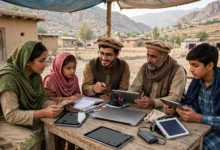
The continuity matters. Pakistan has a long history of policies dying when their political sponsors leave office. The fact that the Digital Pakistan Vision survived a change of government is a good sign in itself.
The Legal Backbone: Digital Nation Pakistan Act 2025
For years the Digital Pakistan Vision had no legal footing. That changed in January 2025.
What the Act Establishes
The Digital Nation Pakistan Act 2025 received the assent of the President on 29th January, 2025. The Act aims to transform Pakistan into a digital nation by leveraging digital technologies, data use, innovative service delivery models, and robust Digital Public Infrastructure.
It creates three bodies to carry the Digital Pakistan Vision forward:
- National Digital Commission (NDC): led by the Prime Minister and comprising all Chief Ministers, relevant Federal Ministers and departmental heads. It sets direction and approves the master plan.
- Pakistan Digital Authority (PDA): a corporate body established to develop, implement, monitor, and update the National Digital Masterplan. The government formally established it with the appointment of Dr Sohail Munir as chairman.
- Oversight Committee: meant to review the PDA’s work and report to the Commission.
You can read the full text in the official Digital Nation Pakistan Act 2025 published by the National Assembly.
Criticism of the Law
The Act did not pass without objections. The Senate committee vote was four in favour and two against, with senators Kamran Murtaza and Saifullah Niazi opposing the bill. Legal commentators raised structural concerns. A Dawn analysis noted that the Oversight Committee, made up mainly of secretaries from the IT, finance, and planning ministries already represented at the Commission, comes across as a subset of the Commission. Put simply, the people being overseen partly sit on the body doing the overseeing.
Rights groups also flagged gaps. One review argued that the Act adopts a predominantly administrative orientation rather than a rights-based one. These criticisms matter because the Digital Pakistan Vision depends on collecting huge amounts of citizen data. A law that is strong on coordination but thin on rights protection carries real risk, as the data breaches below show.
How Is the Digital Pakistan Vision Progressing? 4 Powerful Wins
Progress under the Digital Pakistan Vision is uneven, but some of the gains are real and measurable.
Win 1: Record IT Exports
The clearest success of the Digital Pakistan Vision is the tech export sector. Pakistan’s IT and telecom export remittances reached a record USD4.6 billion in fiscal year 2025-26, but fell short of the government’s ambitious USD5 billion target. That is up from USD3.814 billion in fiscal year 2024-25.
Freelancers are a big part of this story. Pakistani freelancers generated more than $1 billion in export earnings for the first time during FY2025-26. That shows the Digital Pakistan Vision working at street level, with young people in small cities earning foreign currency from their laptops.
Missing the $5 billion target is worth remembering, though. Big announced targets that aren’t met are a recurring pattern here.
Win 2: The 5G Rollout Finally Begins
Pakistan waited years for new spectrum. In March 2026, the government completed its 5G spectrum auction, with 480 megahertz (MHz) sold for $507 million at the end of the third round of bidding. Zong acquired 110 MHz, Ufone secured 180 MHz, and Jazz purchased 190 MHz of spectrum.
For context, Pakistan had been using around 274 megahertz of spectrum, much of it allocated decades ago. The auction was a major step for the Digital Pakistan Vision, but it was not a complete one: the PTA sold 480 MHz of spectrum against an available 597 MHz. Unsold spectrum points to lingering concerns among operators about pricing and taxes.
Win 3: Digital Payments Go Mainstream
Cash is losing ground fast. The State Bank of Pakistan said digital channels accounted for 92% of all retail transactions in the second quarter of the 2026 fiscal year, up from 88% a year earlier. More than 135 million people in Pakistan now use digital banking services, according to the Finance Division.
This is the Digital Pakistan Vision in everyday life: Raast transfers, mobile wallets, QR payments at small shops. It also means more people are exposed to online fraud, which comes up again below.
Win 4: E-Governance and Paperless Offices
Inside government, e-governance has moved further than most people realise. In November 2025 the IT minister said 98% of federal government offices were using e-office systems, making governance largely paperless. That figure comes from the government itself and hasn’t been independently audited, so treat it with some caution.
The next goal is bigger. Prime Minister Shehbaz Sharif said the government’s vision for national digitalisation aims to provide citizens access to all public facilities under a single digital identity. Health, agriculture, utilities, housing and small businesses were named as priority sectors. A single digital ID is the centrepiece of the Digital Pakistan Vision, and it also carries the most risk.
Other Notable Signals
- A GSMA report found that reforms in spectrum policy, measurable progress in women’s digital inclusion and stronger digital governance have strengthened the foundations of Pakistan’s digital economy.
- The planning minister claimed the digital gender divide narrowed to 8% and set a $1 trillion digital goal for 2035.
- On AI, Pakistan has laid foundations through the National AI Policy 2025, a proposed National AI Fund, Centres of Excellence, regulatory sandboxes, and a goal of training 200,000 people annually.
You can read the GSMA’s full assessment in its Digital Pakistan 2030 report.
3 Hard Truths: Illegal Activities and Failures That Damaged Trust
No honest review of the Digital Pakistan Vision can skip the damage done by crime, negligence and policy decisions that worked against the plan. These aren’t side stories. They go straight to the trust any digital nation depends on.
Hard Truth 1: The NADRA Data Breach
NADRA holds the identity records of nearly every Pakistani. Any single digital ID system under the Digital Pakistan Vision will rest on it. That is why the NADRA data breach is so alarming.
A joint investigation team confirmed that the personal information of 2.7 million Pakistanis was stolen from the database of the National Database and Registration Authority. Investigators found that data was stolen from NADRA offices in at least three cities, Karachi, Peshawar and Multan, over the course of four years, and that the stolen data was transmitted to Dubai and sold in Argentina and Romania.
The cause was not just outside hackers. The FIA-formed JIT determined that senior officials’ negligence permitted the data theft. Eight NADRA officials were reportedly suspended afterwards.
It wasn’t the first warning. Back in 2021, an FIA official told a parliamentary committee that NADRA’s biometric verification system used for SIM registration had been compromised, and 13,000 fake SIMs were recently seized during a crackdown in Faisalabad. NADRA strongly denied that claim at the time. Either way, fake SIMs registered on stolen identities became a basic tool for fraudsters.
Lesson for the Digital Pakistan Vision: putting every service behind one ID makes life easier for citizens and for criminals. Without a strong data protection law, independent audits and real penalties for officials, centralisation multiplies the risk.
Hard Truth 2: Predatory Loan Apps and Scam Call Centres
The growth of digital payments opened the door to new kinds of cybercrime.
Illegal loan apps. In 2023, unlicensed lending apps lent small amounts at crushing rates, then harassed borrowers and their contacts. The issue became national news when a 42-year-old man from Rawalpindi died by suicide after failing to repay loans from multiple mobile apps. His wife told police loan officers from the apps had been threatening him on a daily basis. Regulators reacted, and the SECP has so far blocked 132 illegal apps in active collaboration with Google, Apple, FIA and PTA. But enforcement is a game of whack-a-mole. An SECP official admitted that these apps restart their business with a new name soon after being banished.
Scam call centres. Pakistan has also become a base for international fraud networks. In one case, the NCCIA arrested 149 people, including 48 Chinese nationals, in Faisalabad in a raid on a call center allegedly involved in Ponzi schemes and investment fraud. In Karachi, the agency busted an “international cartel” involved in cyber fraud amounting to $60 million, arresting 15 foreign nationals and recovering 10,000 international SIMs. Another Islamabad network used fake online earning platforms, AI-generated images and social media to trick victims, then laundered money through crypto wallets.
These cases hurt the Digital Pakistan Vision twice. Pakistani citizens lose money, and the country’s reputation as a destination for legitimate outsourcing takes a hit just when IT exports are growing.
Hard Truth 3: Internet Shutdowns and Platform Bans
The most expensive setbacks to the Digital Pakistan Vision came from the state itself. Authorities have repeatedly cut mobile internet and blocked platforms for security or political reasons.
The numbers are hard to ignore. Pakistan topped the global charts with a cumulative financial impact of $1.62 billion from shutdowns in 2024, according to Top10VPN. These disruptions lasted 9,735 hours and impacted 82.9 million users. The shutdown of social media platform X since February 18 was the costliest, with a total estimated impact of $1.34bn. The ban on X remained in place for over a year till May 2025.
The tech industry felt it directly. According to P@SHA, the sector faced potential annual financial losses of up to $150 million, primarily due to slow internet speeds and restrictions on VPNs. Shutdowns didn’t stop in 2025 either: Pakistan was ranked third in the world over the imposition of internet restrictions, with over 20 internet shutdowns reported in 2025.
The government points to security needs and misinformation risks as the reason for these decisions. Critics, including industry bodies and rights groups, argue that blanket shutdowns are a blunt tool that hurts ordinary earners far more than bad actors. Wherever you land on that debate, it’s hard to call internet access a basic right under the Digital Pakistan Vision while switching it off this often.
Gaps Between Policy and Delivery
Beyond crime and shutdowns, there are quieter problems slowing the Digital Pakistan Vision.
Implementation Lags
International partners keep saying the same thing: plans are fine, delivery is weak. A World Bank-funded digital economy project was rated only “Moderately Satisfactory” on progress. GSMA has urged coordination among federal and provincial governments, clear ownership of agreed actions and regular progress reviews. One editorial put it bluntly: the digital economy cannot grow through announcements alone.
Infrastructure Costs and Taxes
Hardware and devices remain expensive, and the telecom sector is heavily taxed. A Dawn business analysis argued that for Digital Pakistan to be a genuine growth engine rather than a slogan, the infrastructure, ie critical hardware, needs to be incentivised. If smartphones and data packages stay out of reach for poorer households, the Digital Pakistan Vision will mostly serve the urban middle class.
Federal-Provincial Coordination
Health, education and land records are largely provincial subjects after the 18th Amendment. That’s why the Centre has sought provincial input on the digital master plan. Without buy-in from all four provinces, the Digital Pakistan Vision risks becoming a patchwork of incompatible systems.
What Needs to Happen Next
To turn the Digital Pakistan Vision from a slogan into a lasting system, a few things matter more than any new target:
- Pass and enforce a strong data protection law with an independent regulator, mandatory breach disclosure, and personal accountability for officials who mishandle data.
- Publish NADRA breach findings in full so citizens know what was lost and what has been fixed.
- Set clear legal limits on internet shutdowns, including judicial oversight, time limits and targeted measures in place of blanket cuts.
- Tighten SIM and identity verification to choke off the fake identities that power scam networks.
- Build fraud awareness into digital literacy programmes so new users of digital payments can recognise loan traps and investment scams.
- Cut taxes on devices and data so that access actually reaches rural and low-income users.
- Publish independent progress reports on the Digital Pakistan Vision each year, not just ministerial press releases.
Who Benefits and Who Is Left Behind?
The winners of the Digital Pakistan Vision so far are fairly clear: software houses, freelancers, fintech companies, telecom operators and urban consumers. The people most at risk of being left behind are rural women, older citizens, people with disabilities, and residents of areas that face frequent security-related shutdowns, such as parts of Balochistan and Khyber Pakhtunkhwa.
A fair Digital Pakistan Vision has to judge itself by those left out, not just by export figures. When a citizen in Turbat loses mobile internet for weeks, or a widow in Rawalpindi gets harassed by an illegal lending app, that is also part of the record.
Conclusion
The Digital Pakistan Vision has grown from a 2019 campaign into a legally backed national programme with real institutions, record IT exports of $4.6 billion, a working 5G rollout, and digital payments that now dominate retail transactions. Those wins are real, and they’ve survived changes of government, which is rare in Pakistan. But the record also includes the theft and sale of 2.7 million citizens’ NADRA records, predatory loan apps tied to at least one suicide, international scam call centres operating from Pakistani cities, and internet shutdowns that cost the economy more than $1.6 billion in a single year. The next phase of the Digital Pakistan Vision will be judged less by new announcements and more by whether the state can protect citizens’ data, keep the internet on, punish digital crime consistently, and make sure ordinary Pakistanis, not just urban elites, share in the gains.