Best Portable Chargers for Long Trips and Travel
Compare the best portable chargers for travel in 2026, with real airline rules, safe capacity picks, and warnings on fake and recalled power banks.
Best Portable Chargers for Travel in 2026
Introduction
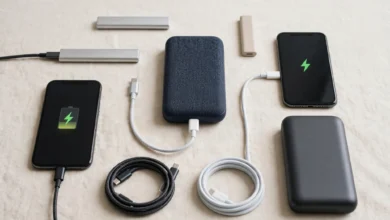
The best portable chargers for travel are not always the ones with the biggest number on the box. On a long trip, a good charger is the one that gets through airport security, fits the rules of every airline on your ticket, and does not overheat in your bag halfway through a 14-hour flight.
That last part matters more in 2026 than it ever has. After a string of cabin fires, airlines from Lufthansa to Qantas to American now limit how many power banks you can carry, and many ban using them in flight at all. China turns away chargers without a valid safety mark. Recalls have pulled millions of units off shelves, and customs agents keep seizing counterfeit batteries dressed up with fake brand names and fake safety logos.
So this guide does two jobs. First, it shows you how to pick a portable charger for travel that suits your trip, whether that means a slim 5,000 mAh pack for a weekend or a 100 Wh brick that can run a laptop through a week of remote work. Second, it walks through the real cases behind today’s rules: the recalls, the seizures, and the shortcuts sellers have taken. Knowing what went wrong helps you avoid buying the next bad battery.
No hype, no sponsored rankings. Just what to buy, what to skip, and how to fly with it without trouble.
How to Choose the Best Portable Chargers for Travel
Before looking at specific models, it helps to know which specs actually matter on the road and which are just marketing. Six things decide whether a travel power bank will serve you well.
1. Capacity: Read Watt-Hours, Not Just mAh
Most boxes shout the mAh figure, but airlines care about watt-hours (Wh). The conversion is simple: multiply mAh by the cell voltage (usually 3.7 V) and divide by 1,000. A 10,000 mAh pack works out to about 37 Wh. A 20,000 mAh pack is about 74 Wh. Around 27,000 mAh is where you hit the 100 Wh limit that most airlines treat as the ceiling for carry-on without special approval.
Also, expect to lose energy in the conversion. A power bank rarely delivers more than 60 to 70 percent of its rated capacity to your phone. So a 10,000 mAh charger gives a modern phone with a 4,500 mAh battery about one and a half full charges, not two.
2. Output Power and USB-C PD
Capacity tells you how much energy is stored. Output, measured in watts, tells you how fast it comes out. For phones, 20 to 30 W over USB-C Power Delivery (PD) is plenty. For a laptop, you need at least 45 W, and 65 to 100 W if you want it to charge while you work. Check that the charger’s USB-C port supports PD, or your laptop may refuse to charge at all.
3. Size and Weight
On a long trip you carry this thing every day. A useful rule of thumb:
- 5,000 mAh: pocket size, about 100 to 130 g, good for a day out
- 10,000 mAh: fits a jacket pocket, about 180 to 250 g, the sweet spot for most travelers
- 20,000 mAh: roughly 350 to 500 g, best for multi-device or multi-day trips
- 25,000 to 27,000 mAh: around 550 g or more, for laptops and remote work
4. Ports and Built-In Cables
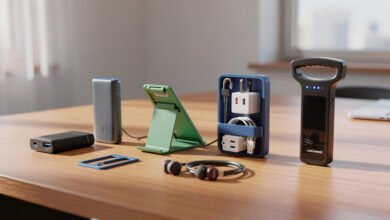
Count your devices. A phone, earbuds, and a watch need at least two outputs, ideally with one USB-C and one USB-A for older gear. Built-in cables save you from forgetting one at a hotel, but they are also the first thing to fray. If you go that route, choose a model with a replaceable or well-reinforced cable.
5. Recharge Speed
People forget this one. If your charger takes six hours to refill itself, a short layover or overnight stay may not be enough. Look for USB-C input of 20 W or higher, and pack a decent wall adapter. On a long trip, how fast the battery recharges can matter as much as how big it is.
6. Safety Marks You Can Verify
Look for real certification marks such as UL, CE, or China’s 3C (CCC) mark, a printed Wh rating, and a model number you can look up. As the sections below show, a missing or blurry label can get your charger confiscated at the airport, and a fake one is a warning sign that the battery inside cut corners too.
Airline Rules for Power Banks in 2026
The core rule has not changed: power banks go in your carry-on, never in checked luggage. What has changed is everything around it. In 2025 and 2026, airlines worldwide moved from “bring what you like under 100 Wh” to strict limits on quantity, storage, and use.
The Baseline Rules Almost Everywhere
- Carry-on only. Spare lithium batteries, including any airline approved power bank, are banned from checked bags. If your bag is gate-checked, take the charger out first.
- Up to 100 Wh is generally allowed without asking anyone.
- 101 to 160 Wh needs airline approval in advance, and usually only two such batteries per person.
- Over 160 Wh is not allowed on passenger flights.
- Damaged or recalled units are not allowed at all.
The New Limits on Number and Use
The big shift is that many carriers now cap you at one or two power banks and ban charging during the flight. Here is a snapshot of policies in effect as of October 2026:
| Airline or region | Max power banks | In-flight use | Effective from |
|---|---|---|---|
| Lufthansa Group (incl. Swiss, Austrian, Eurowings) | 2 | Not allowed | 15 January 2026 |
| American Airlines | 2 | Kept visible; no recharging the bank on board | 1 May 2026 |
| Southwest | 1 | Kept in plain sight | 20 April 2026 |
| Emirates | 1 (under 100 Wh) | Not allowed | October 2025 |
| Qantas, Jetstar, Virgin Australia | 2 | Not allowed | December 2025 |
| Korean carriers (Korean Air, Asiana and others) | Limited | Not allowed | 26 January 2026 |
| Singapore Airlines and Scoot | Limited | Not allowed | In effect |
Sources: Lufthansa Group power bank regulations, Travel Market Report on American and Southwest, and Wego’s roundup of 2026 global rules.
Why Airlines Got Stricter
This was not bureaucracy for its own sake. By the time the FAA issued its 2025 safety alert, it had already logged around 50 incidents of lithium battery smoke, fire, or extreme heat on U.S. flights that year. The Australian carriers changed their rules after a power bank caught fire on a Virgin Australia flight in July 2025. Lufthansa says its 2026 policy follows guidance from EASA, FAA, IATA and ICAO.
The practical takeaway: on a long trip with several airlines, the strictest one sets your limit. If one leg is on Emirates, plan around a single charger under 100 Wh. And charge your phone from the seat outlet in flight, not the power bank.
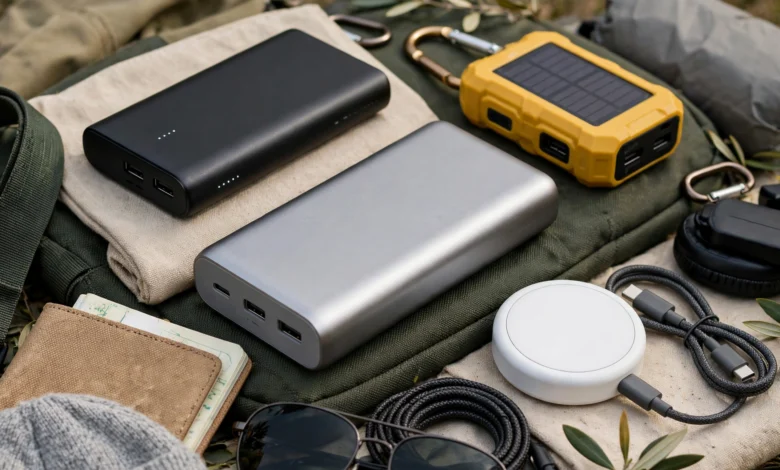
9 Best Portable Chargers for Travel and Long Trips
These picks are grouped by trip type rather than ranked by a single score, because the right travel power bank for a backpacker is the wrong one for a consultant with a laptop. All of them sit under the 100 Wh carry-on limit. Prices move often, so treat any figure here as a rough guide and check the current listing.
| Charger | Capacity | Approx. Wh | Best for |
|---|---|---|---|
| Anker Nano Power Bank (22.5W) | 5,000 mAh | 18.5 | Day trips, light packers |
| Clutch Pro | 5,000 mAh | 18.5 | Ultra-slim pocket carry |
| INIU Portable Charger (22.5W) | 10,000 mAh | 37 | Budget travelers |
| Anker MagGo Power Bank 10K (Slim) | 10,000 mAh | 37 | iPhone users, wireless |
| Mophie Prime20 | 20,000 mAh | 74 | Families, multi-device |
| Anker Prime 20,000mAh (200W) | 20,000 mAh | 74 | Business travel, laptops |
| UGREEN Nexode 20,000mAh (130W) | 20,000 mAh | 74 | Laptop plus phone |
| Anker Prime 27,650mAh | 27,650 mAh | 99.5 | Maximum legal capacity |
| Mophie Powerstation Pro AC | High capacity | Check label | Devices that need an AC plug |
Best Small Chargers for Short Days Out
1. Anker Nano Power Bank (5,000 mAh)
Consumer Reports named this its top phone charger pick, at around $26 (Consumer Reports results via Quartz). It plugs straight into your phone’s USB-C port with a fold-out connector, so there is no cable to lose. Expect roughly one full phone charge. It is ideal as a daily carry on a city trip, and its small 18.5 Wh rating means no airline will question it.
2. Clutch Pro (5,000 mAh)
This one is about as thin as a stack of a few credit cards, with a built-in USB-C cable and MagSafe attachment. It slips into a passport wallet. The trade-off is obvious: thinness costs capacity, so it is a top-up charger, not an all-day one. Good for travelers who hate bulk and mostly need a 50 percent boost by evening.
Best Mid-Size Pick for Most Travelers
3. INIU Portable Charger (10,000 mAh, 22.5W)
If you want one sensible charger without overthinking it, start here. Consumer Reports listed it as the cheapest charger in its lineup at about $21 and recommended it for daily use. Ten thousand mAh gives most phones one and a half to two charges, and it still fits a jacket pocket. This is the best power bank for long trips on a tight budget.
4. Anker MagGo Power Bank 10K (Slim)
For iPhone owners, a MagSafe power bank like this means no cables at all: it snaps to the back of the phone and charges wirelessly. It is handy on trains or long walking days. Two caveats: wireless charging wastes more energy as heat, and it is less useful in the cabin now that many airlines ban power bank use in flight.
Best High-Capacity Chargers for Multi-Day Trips
5. Mophie Prime20 (20,000 mAh)
Consumer Reports recommended this as an inexpensive, compact 20,000 mAh option at around $45. Its 18W output is modest, so it is slower than premium picks, but it can charge a phone four or so times or keep a couple of devices alive across a weekend without a wall outlet. A practical choice for families sharing one charger.
6. Anker Prime 20,000mAh (200W)
This is the business traveler’s charger. High total output means it can run a laptop and a phone at the same time, and it refills itself quickly from a strong USB-C wall charger. It costs much more than the Mophie, and you pay for speed you may not need if you only carry a phone.
7. UGREEN Nexode 20,000mAh (130W)
A strong alternative to the Anker Prime at a lower price, with enough USB-C PD output to charge most 13- to 14-inch laptops at full speed. Worth a look if you work remotely from cafes and co-working spaces while traveling.
Best for Laptops and Remote Work
8. Anker Prime 27,650mAh
At about 99.5 Wh, this sits just under the 100 Wh line. That is the most energy you can carry on most flights without asking the airline first. It can give a laptop close to a full charge. The catch: it is heavy, and a few airline staff may ask to see the label because it is so close to the limit. Keep the box or a photo of the spec sheet on your phone.
9. Mophie Powerstation Pro AC
This one has a real AC outlet, so it can power devices that do not charge over USB, such as some camera chargers, CPAP accessories, or older laptops. Consumer Reports recommended it among high-capacity chargers at around $165. It is overkill for most trips, but a lifesaver for the few people who truly need a wall-style socket. Check its Wh rating against your airline’s rules before you fly.
A Note on Brand Trust
You might notice Anker appears several times, even though it ran one of the biggest power bank recalls of 2025 (covered below). That is deliberate. Every major brand has had a recall at some point. What separates a trustworthy brand is that it registers its products, prints traceable serial numbers, and replaces faulty units. A no-name charger with no model number gives you none of that protection.
The Reality Check: Counterfeits, Recalls, and Illegal Shortcuts
Most buying guides skip this part. But if you want to understand why airport security now looks at your charger so closely, you need to know what has actually happened. Some of these cases are outright illegal, like counterfeiting. Others are safety failures that regulators had to step in on. Both shape what you should buy.
Counterfeit Power Banks Seized at the Border
Counterfeit chargers are not a rare problem. U.S. Customs and Border Protection’s own seizure records for 2019 and 2020 list shipment after shipment of fake power banks and adapters. A few examples from that list:
- Los Angeles, December 2019: 7,804 counterfeit power banks seized from a shipment from China.
- Chicago, August 2019: 100 counterfeit power banks seized.
- Portland, December 2019: 601 power adapters seized carrying a counterfeit UL mark, the safety label many buyers trust most.
You can read the full list in CBP’s counterfeit power adapter and power bank seizure records. The fake UL mark is the detail to remember. Counterfeiters do not just copy logos; they copy the safety labels that are supposed to protect you. A charger that lies about its brand has every reason to cut costs on the battery cells and protection circuits inside it.
Revoked Safety Certifications in China
In 2025, China’s market regulator revoked or suspended the 3C safety certification of several power bank and battery cell makers, citing quality and safety risks. Soon after, the Civil Aviation Administration of China responded with an emergency rule. From 28 June 2025, passengers may not carry power banks on domestic flights if they lack a 3C mark, have an unclear one, or belong to a recalled batch. The regulator pointed to a series of on-board fires and smoke incidents earlier that year.
For travelers, the practical impact is big. A UL mark does not count as a substitute. If your trip includes a domestic leg inside mainland China, a charger without a clear 3C certification can be confiscated at security, even if it is perfectly safe.
Major Recalls in 2025
Recalls are not illegal activity, but they show how often things go wrong even with well-known brands:
- Anker PowerCore 10000 (model A1263): about 1.16 million units recalled in the U.S. in June 2025 after 19 reports of fires and explosions, according to the Consumer Product Safety Commission (Fox 6 report on the recall).
- Casely wireless power banks: about 429,200 units, re-announced by the CPSC in 2026.
- 2025 overall: PIRG counted 11 CPSC recalls and four public warnings on portable chargers that year, covering more than 2.6 million units (PIRG’s summary).
If you think your charger is part of a power bank recall, check the model and serial number on the label. Recalled units are banned from flights, and they are a fire risk at home too.
Fake Capacity Claims
Online marketplaces are full of listings for “50,000 mAh” chargers at impossibly low prices, in bodies too small to physically hold that many cells. Testers who open these up often find a fraction of the claimed capacity, and sometimes sand or metal weights added to make them feel heavier. Advertising false specs can break consumer protection laws in many countries, but enforcement is slow, and the seller is often gone before anyone acts. Your best defense is physics: if the weight and size do not match the claim, the claim is false.
Hiding Batteries in Checked Bags
Some travelers still pack power banks in checked luggage to dodge carry-on limits. This is not a gray area. Spare lithium batteries in the hold are prohibited, and in the U.S. the FAA can fine passengers for hazardous materials violations. More importantly, a fire in a cargo hold is far harder to detect and put out than one in the cabin, which is the whole reason for the rule.
Using the Best Portable Chargers for Travel Safely
Even a well-made charger can fail if it is treated badly. These habits keep your battery healthy and keep you on the right side of airport rules.
Before You Leave
- Check the label. Make sure the Wh rating, model number, and safety marks are printed clearly. If the print has worn off, some airports may treat it as unmarked.
- Look up recalls. Search your model number on the manufacturer’s site or the CPSC recall database.
- Read every airline’s rules. Check each carrier on your itinerary, including codeshare partners. The strictest one decides how many chargers you can bring.
- Charge it to around 80 percent. That is enough for a travel day and is gentler on the cells than storing it at 100 percent.
At the Airport and On the Plane
- Keep the charger in a pocket or under-seat bag, never in the overhead bin. Several airlines now require this.
- If your cabin bag is taken for gate check, remove the power bank first.
- Use the seat’s USB or AC outlet to charge your phone in flight. Save the power bank for after you land.
- If a charger gets hot, swells, smells odd, or smokes, tell the crew right away. Cabin crew are trained and equipped to handle battery fires. Do not try to hide it.
During the Trip
- Do not leave a charger on a sunny car dashboard or beside a radiator. Heat is the main enemy of lithium cells.
- Avoid charging it overnight on a soft hotel bed or under a pillow, where heat cannot escape.
- Use a good cable. Cheap cables can fail and, in rare cases, damage the port.
- Retire any charger that has been dropped hard, punctured, or has started to bulge. Recycle it at an e-waste point, not in the hotel bin.
Quick FAQ
Can I bring two power banks on a plane? On many airlines, yes, as long as each is under 100 Wh. But Emirates and Southwest allow only one, so check first.
Is 20,000 mAh allowed on flights? Yes. At about 74 Wh it is below the 100 Wh limit on almost every airline.
What is the best size for a two-week trip? For phone-only travelers, a 10,000 mAh charger is usually enough. Add a 20,000 mAh model if you carry a tablet, camera, or laptop.
Are TSA approved portable chargers a real category? Not officially. TSA does not approve products. A TSA approved portable charger is simply one that meets the carry-on battery rules, so read the Wh rating rather than trusting the phrase on the box.
Conclusion
Choosing among the best portable chargers for travel in 2026 comes down to three questions: how much power your devices really need, which airlines you are flying, and whether you can trust what is printed on the label. For most people, a 10,000 mAh charger from a traceable brand covers a long trip, while laptop users should look at a 20,000 to 27,000 mAh model that stays under 100 Wh. The new limits on quantity and in-flight use, the counterfeit seizures with fake safety marks, China’s revoked certifications, and the multi-million-unit recalls all point to the same lesson: a cheap, unmarked battery is not a bargain. Buy a charger with a clear Wh rating, a real model number, and genuine certification, check it against your airline’s rules before you pack, and it will keep your phone alive from the first boarding pass to the last taxi home.