How to Choose a Reliable UPS for Home Use During Outages
How to choose a reliable UPS for home: sizing, pure sine wave, battery types, safe installation, and real cases of fake batteries and illegal recycling.
How to Choose a Reliable UPS for Home Use During Outages
Introduction
Knowing how to choose a reliable UPS for home use can be the difference between a calm evening and hours of heat, darkness, and a dead Wi-Fi router. In countries like Pakistan, where load shedding and sudden breakdowns are part of daily life, a home UPS or inverter is no longer a luxury. It keeps fans turning, lights on, children studying, and freelancers online.
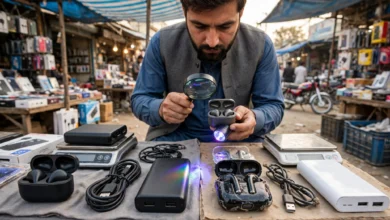
Yet many families buy the wrong system. Some get a unit too small for their load and watch it beep and shut down after twenty minutes. Others pair a good inverter with a cheap battery that loses half its capacity in a year. Some unknowingly buy counterfeit batteries. In one case in Iraq’s Kurdistan Region, a company sold more than 20,000 batteries relabeled from 25 to 30 amp-hours to 60 before security forces seized 11,000 of them.
There is a hidden human cost too. A UNICEF study in Pakistan found unsafe lead levels in many children living in high-risk industrial cities, with informal lead-acid battery recycling named as a major source. Where your old UPS battery ends up matters.
This guide walks you through nine practical steps: choosing the right type of system, sizing your load, picking a battery, and installing everything safely. Along the way, it explains the real cases behind the warnings, so you can buy with confidence and avoid paying twice.
How to Choose a Reliable UPS for Home: Start With the Right Type
The word “UPS” gets used loosely in local markets. Before comparing brands, be clear about what kind of system you actually need.
Step 1: Decide Between a Computer UPS, Home Inverter, or Hybrid Solar Inverter
- Computer UPS (online or line-interactive): a small box with a built-in battery that keeps a PC or router running for a few minutes, mainly so you can save work and shut down. It switches over almost instantly, but its runtime is short. Good for a desktop computer, not for running fans through a two-hour outage.
- Home inverter UPS: what most Pakistani households call a “UPS.” It connects to one or more external batteries and powers fans, lights, routers, and TVs for hours. Switching time is usually a few milliseconds, fast enough for most home appliances.
- Hybrid solar inverter: works like a home inverter but also accepts solar panels, so batteries can recharge during the day without relying on the grid. It costs more up front, but it is the best long-term option if you face long, frequent outages and have roof space.
For most homes, the real choice is between a home inverter UPS and a hybrid solar inverter. Use a small computer UPS only alongside them, to protect a desktop PC from the brief gap during switchover.
Step 2: Insist on Pure Sine Wave Output
An inverter converts battery power into AC power, and the shape of that output wave matters:
- Pure sine wave output closely matches grid power. Fans run quietly and cooler, inverter ACs and refrigerators behave properly, and sensitive electronics like laptops, LED TVs, and medical devices are safe.
- Modified (square) sine wave output is cheaper but rougher. Ceiling fans may hum loudly and run hot, some chargers buzz, and motors wear out faster.
A pure sine wave UPS costs a little more, but it protects every appliance you plug in. In 2026 there is little reason to buy anything else for a home.
Other Features Worth Paying For
- Adjustable charging current, so you can match the charging speed to your battery type and size.
- A clear display showing load, battery level, and mode.
- Overload, short-circuit, and deep-discharge protection.
- Wide input voltage range, so the unit keeps working through low-voltage supply common in summer evenings.
- Lithium battery compatibility if you plan to upgrade later.
Sizing a Home UPS: Load, VA Rating, and Backup Time
Most UPS problems come from bad sizing. A unit that is too small trips under load; a battery that is too small dies before the power comes back. These three steps prevent both.


Step 3: List What You Actually Need to Run
Decide what must stay on during an outage and add up the watts. Check each appliance’s label, or use typical figures like these:
| Appliance | Typical power (watts) |
|---|---|
| Ceiling fan (standard) | 70 to 80 |
| Ceiling fan (DC inverter) | 30 to 40 |
| LED bulb | 10 to 15 |
| Wi-Fi router | 10 to 20 |
| LED TV (32 to 43 inch) | 50 to 100 |
| Laptop charger | 45 to 90 |
| Desktop PC with monitor | 150 to 300 |
| Phone charger | 10 to 25 |
Leave out heavy loads such as irons, kettles, microwaves, water pumps, and standard air conditioners. They draw far more than a typical home UPS can handle and will drain any battery quickly.
Step 4: Convert Watts to VA and Add Headroom
Inverters are rated in VA (volt-amperes), not watts. A simple rule is to divide your total watts by 0.8 (a typical power factor) to get VA, then add about 25 to 30 percent headroom for motor start-up surges and future additions. Running a unit near its maximum shortens its life and causes nuisance tripping.
Step 5: Calculate Backup Time and Battery Size
Backup time depends on the battery, not the inverter. Use this rule of thumb:
- Energy needed (Wh) = total watts × hours of backup you want.
- Usable battery energy (Wh) = battery voltage × amp-hours (Ah) × usable depth of discharge × inverter efficiency.
Lead-acid batteries should only be discharged to about 50 percent regularly if you want them to last. Lithium iron phosphate (LiFePO4) batteries can safely use 80 to 90 percent. Inverter efficiency is typically around 85 to 90 percent.
A Worked Example
A family wants two standard ceiling fans (150 W), four LED bulbs (40 W), a router (15 W), a TV (80 W), and phone charging (20 W), for a total of about 305 watts for up to 3 hours.
- VA rating: 305 ÷ 0.8 ≈ 380 VA, plus headroom. A common 1 kVA home inverter comfortably covers this and leaves room to grow.
- Energy needed: 305 W × 3 h ≈ 915 Wh.
- Lead-acid option: one 12 V battery gives about 12 × Ah × 0.5 × 0.85 ≈ 5.1 Wh per amp-hour. So 915 ÷ 5.1 ≈ 180 Ah. A 12 V, 180 to 200 Ah tubular battery fits.
- Lithium option: a 12.8 V, 100 Ah LiFePO4 battery gives about 12.8 × 100 × 0.9 × 0.9 ≈ 1,040 Wh usable, enough for the same 3 hours in a much smaller, lighter package.
Swapping the two standard fans for DC inverter fans would cut the load by around 80 watts and stretch the same battery noticeably further. Upgrading appliances is often cheaper than upgrading the battery bank.
Choosing the Right UPS Battery
The battery is the most expensive part of a home backup system over its lifetime, and the part most often faked. Get this right and your UPS will serve you for years.
Step 6: Pick the Right Battery Type
| Battery type | Typical lifespan | Maintenance | Best for |
|---|---|---|---|
| Flooded tubular lead-acid | Around 3 to 5 years | Top up distilled water regularly | Long daily outages on a moderate budget |
| Sealed maintenance-free (SMF/AGM) | Around 2 to 3 years | None | Small setups and indoor spaces |
| Lithium iron phosphate (LiFePO4) | Often 8 years or more | None | Frequent deep outages and solar systems |
These are typical figures. Real life depends heavily on heat, charging quality, and how deeply you discharge the battery.
- Tubular batteries are the traditional choice for home inverters. They handle repeated deep discharges better than flat-plate car-style batteries, but they need water top-ups and release gas while charging, so they need ventilation.
- SMF batteries need no maintenance but usually wear out sooner in hot climates.
- LiFePO4 batteries cost more up front but last many more cycles, charge faster, weigh far less, and can use most of their capacity. They are also much safer than other lithium chemistries. Make sure your inverter supports lithium charging and that the battery has a proper battery management system (BMS).
Step 7: Check the Battery’s Real Capacity and Authenticity
Battery labels are easy to fake, as the cases in the next section show. Before buying:
- Check how Ah is rated. Many lead-acid batteries quote capacity at a slow 20-hour rate (C20), which looks higher than the 10-hour (C10) figure that better matches home use. Compare like with like.
- Check the weight. Lead-acid capacity comes from lead plates. A “200 Ah” tubular battery that feels unusually light compared with the same brand’s spec sheet is a red flag.
- Check the manufacturing date. A battery that sat in a warehouse for a year has already lost life.
- Get the warranty in writing, ideally a brand warranty with a serial number, not just the shop’s promise. Many brands offer replacement for a period and pro-rata coverage after.
- Buy from authorized dealers. Counterfeiters copy popular brand stickers and packaging precisely because buyers trust them.
The Reality Check: Fake Batteries, Toxic Recycling, Fires, and Power Theft
Backup power is big business wherever the grid is unreliable, and that attracts shortcuts. These documented cases show what can go wrong, both for buyers and for the people around them.
| When | Where | What happened |
|---|---|---|
| 2025 | Punjab, Pakistan | Punjab Police registered 85,886 electricity theft cases and arrested 60,482 people during the year; more than 11,000 were punished and fined (Punjab Police report). |
| Reported 2025 to 2026 | Pakistan | A UNICEF-backed study tested 2,175 young children across 21 sites in high-risk cities and named informal lead-acid battery recycling as a key exposure source. In Hattar, Haripur, 88 percent of children tested had high blood lead levels (UNICEF Pakistan). |
| Reported 2026 | Lviv region, Ukraine | Investigators exposed a group that sold counterfeit Duracell batteries from 2023 to 2025, warning such batteries can fail during power outages. |
| October 2024 | Erbil, Kurdistan Region of Iraq | Security forces seized 11,000 batteries whose labels had been changed from 25 to 30 amp-hours to 60. The company had sold more than 20,000 of them (Rudaw report). |
| July 2023 | Lahore, Pakistan | A pre-dawn house fire in the Bhati Gate area killed six children and four adults; police suspected an electrical short circuit. |
| 2022 | United States | The FBI and the National IPR Center warned the public that counterfeit batteries skip standard safety testing and are often sold at deep discounts. |
| Undated report | San Juan, Puerto Rico | Customs seized 1,072 counterfeit deep-cycle lead batteries bearing a fake UL safety mark, sold for solar backup systems. |
Lesson 1: Amp-Hour Labels Can Be Lies
The Erbil case is exactly the trick buyers should fear. A battery labeled 60 Ah but holding 25 to 30 Ah gives roughly half the backup you paid for. You would never know from the sticker, only from short backup times. That is why weight, brand warranty, and authorized dealers matter so much.
Lesson 2: Fake Safety Marks Are Common
In the San Juan seizure, the batteries carried a counterfeit UL mark. Counterfeiters copy safety certifications along with logos. A safety mark is useful only when the product comes from a traceable, authorized source.
Lesson 3: Your Old Battery Can Poison Children
Lead-acid batteries are recyclable, but informal recyclers break them open and smelt lead in crude furnaces, poisoning workers and neighbors. Sindh’s Environmental Protection Agency has said it acts against illegal recycling units, but operators often move after enforcement. Selling your old battery to the highest-bidding scrap buyer may feed this trade. Return old batteries to the brand’s dealer or an exchange scheme with a licensed recycler.
Lesson 4: Charging and Wiring Cause Fires
Not every house fire involves a UPS, but electrical faults and overcharged batteries are common causes. In one Lahore incident, an overcharging electric wheelchair battery exploded and started a fire that killed two family members. A properly sized inverter with correct charging settings, good wiring, and a ventilated battery location dramatically reduces the risk.
Lesson 5: Stealing Power Is Not a Backup Plan
Illegal hook connections (kunda) and tampered meters are not a solution to outages. Punjab alone registered more than 85,000 theft cases in 2025, and theft adds to losses that every paying customer ends up covering. Unsafe illegal connections are also a serious fire and electrocution hazard. A properly sized UPS and, where possible, solar are the legal way to stay powered.
Installing and Maintaining a Home UPS Safely
A good system installed badly is still dangerous. The last two steps cover installation, maintenance, and a final buying checklist.
Step 8: Install It the Right Way
- Use a qualified electrician. The UPS should feed a separate circuit for selected fans, lights, and sockets, wired through a proper changeover or distribution board, not extension cords snaking across the floor.
- Use the right cable thickness between the battery and inverter, with tight, clean terminals. Loose or thin cables heat up under load.
- Choose a ventilated spot. Flooded lead-acid batteries release hydrogen gas while charging. Keep them out of closed cupboards and bedrooms, and away from stoves and gas lines.
- Keep it off the floor where water can reach it, and out of direct sun.
- Set the charging mode to match your battery type (tubular, SMF, or lithium). The wrong setting can overcharge a battery or leave it permanently undercharged.
- Install a smoke detector nearby. They are cheap and rarely used in Pakistani homes, yet they buy precious minutes in a fire.
Step 9: Maintain It and Plan for Replacement
- Top up distilled water in tubular batteries every one to two months, never tap water or acid.
- Clean terminals and apply petroleum jelly to prevent corrosion.
- Keep loads within limits. Do not add an iron or kettle “just for a minute” during an outage.
- Watch for warning signs: swelling, a rotten-egg smell, excessive heat, leaking acid, or sudden drops in backup time.
- Return old batteries to the dealer or a licensed recycler, not to informal scrap buyers.
Quick Buying Checklist
- Pure sine wave output
- VA rating at least 25 to 30 percent above your load
- Battery sized for your real backup needs, rated in comparable Ah
- Brand warranty on both the inverter and the battery, with serial numbers
- Lithium-ready charging if you may upgrade later
- Solar input if you have roof space and long outages
- Purchase from an authorized dealer with a proper invoice
- Installation by a qualified electrician
Conclusion
Learning how to choose a reliable UPS for home comes down to nine practical steps: pick the right system type (a home inverter or a hybrid solar inverter rather than a small computer UPS), insist on pure sine wave output, list your real load in watts, convert it to VA with healthy headroom, size the battery for the backup time you need, choose between tubular, sealed, and LiFePO4 batteries based on budget and outage patterns, verify capacity and authenticity, install with a qualified electrician in a ventilated spot, and maintain the system while recycling old batteries responsibly. The cases behind these warnings are real: relabeled batteries in Erbil sold at double their true capacity, counterfeit batteries with fake UL marks seized in Puerto Rico, Pakistani children poisoned by informal lead recycling, fatal electrical fires in Lahore homes, and tens of thousands of electricity theft cases in Punjab in a single year. Buy from authorized dealers, keep loads sensible, and treat your backup system as a safety device, and it will keep your home running through outages for years.