PTA Internet Regulations 2026: 7 Powerful Changes Pakistani Users Must Know to Stay Safe
PTA internet regulations 2026 explained: VPN rules, SIM limits, local peering, broadband speed rights and new social media laws for Pakistani users.
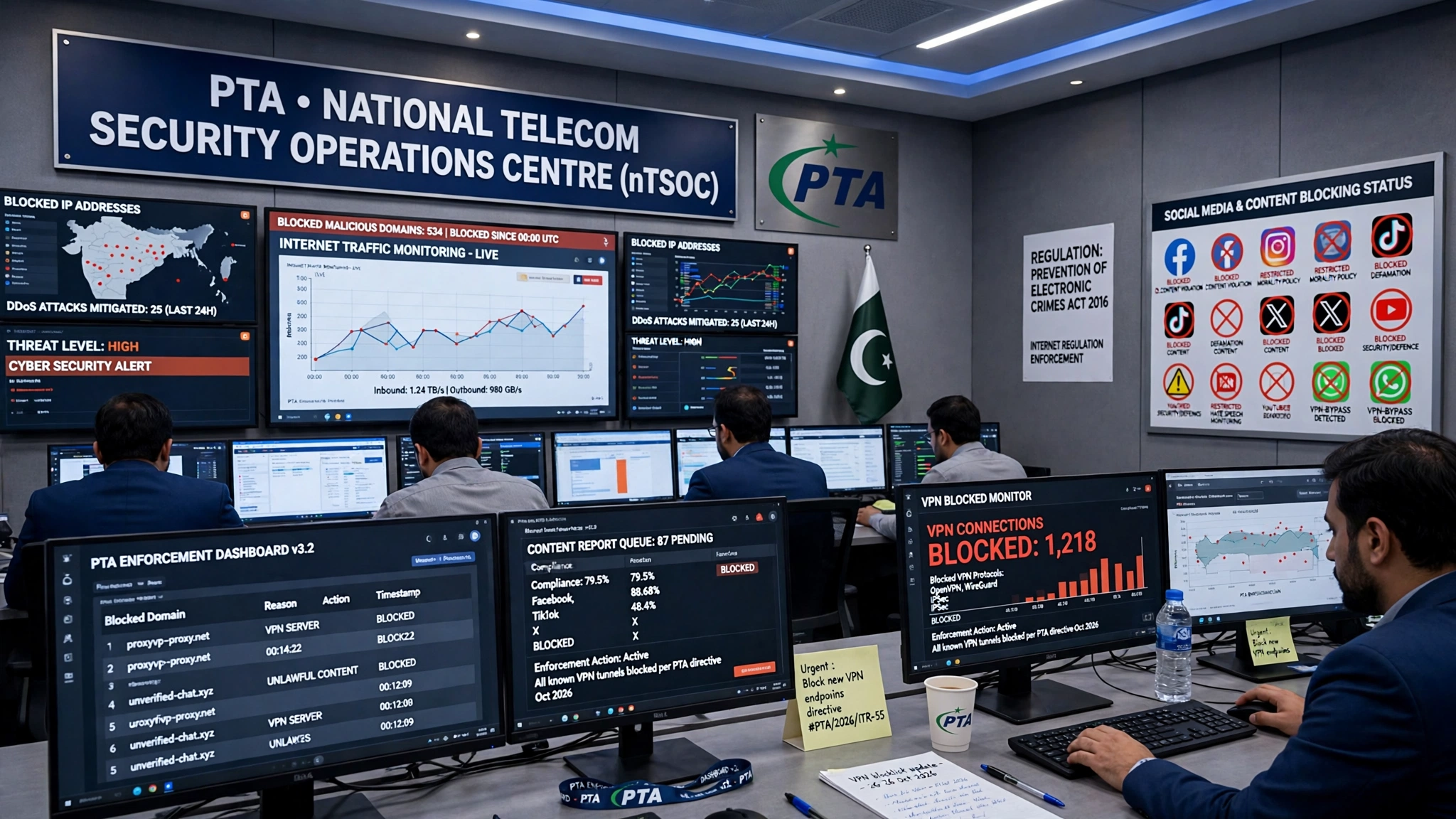
PTA internet regulations changed more in 2026 than in almost any year before, and most of those changes touch something you use every day: your SIM card, your home broadband, the VPN you open for work, and even the route your data takes when you load a Pakistani website.
The problem is that the news arrives in pieces. One week it is a ban on late-night SIM sales. A month later it is a gazette notification about internet exchange points that reads like it was written only for engineers. Then there is the new social media authority under PECA, which many people have heard of but few really understand.
This guide brings it all together. We went through the official notifications, PTA press releases and reporting from Pakistan’s main tech outlets, and narrowed it down to seven changes that matter to ordinary users. For each one, you will see what the rule says, who it applies to and what you should do about it.
Some of these new PTA rules work in your favour, like cheaper local ISPs, clearer speed rights and shorter routes for local traffic. Others, like stricter SIM controls and VPN registration, add a bit of paperwork. Either way, knowing where the PTA internet regulations stand as of October 2026 will save you from blocked numbers, surprise disconnections and a lot of confusion.
Why PTA Internet Regulations Matter More in 2026
The Pakistan Telecommunication Authority is the body that licenses telecom operators, sets service standards and, until recently, handled most online content complaints. When PTA changes a rule, your operator has to follow it, and you feel the result on your phone or router.
In 2026 the PTA internet regulations moved on two tracks at once. One track is about security and control: tighter SIM issuance, VPN registration and a new social media regulator. The other track is about access and quality: more local internet providers, local traffic routing and speed benchmarks. Understanding both tracks helps you see why some rules feel restrictive while others are clearly helpful.
1. PTA Internet Regulations on SIM Sales and Ownership
The biggest day-to-day change is how SIMs are sold and kept. On May 19, 2026, PTA directed all mobile operators to stop SIM sales between 12:00 AM and 6:00 AM across the country, and told franchises and retailers that violations would bring legal action (Profit).
What else changed for SIM users
The late-night ban came alongside a wider set of SIM rules in Pakistan:
- Longer disown period: The period during which a new SIM cannot be disowned went from 60 days to 365 days. If you buy a SIM in your name, you are responsible for it for a full year.
- Two users per sale device: Biometric SIM-sale devices are now limited to two authorised users, so it is easier to trace who issued an illegal SIM.
- Geofenced devices: Sale devices only work within about 100 metres of the registered outlet.
- Expired CNIC blocking: SIMs registered on expired, cancelled or deceased persons’ CNICs are being blocked, starting with SIMs tied to CNICs that expired in 2017 or earlier.
According to TechJuice, PTA has blocked 18.2 million illegal SIMs and fined operators about Rs4.2 billion under this crackdown.


What you should do
- Check that your CNIC is valid. If it has expired, renew it through NADRA before your SIM gets blocked.
- Check how many SIMs are registered on your CNIC and disown any you do not recognise.
- Buy SIMs only from authorised outlets during permitted hours, and make sure biometric verification happens in front of you.
- Never let a friend or relative use a SIM registered in your name. Under the PTA internet regulations, you are the legal owner of whatever happens on that number.
You can report violations through the PTA Complaint Management System, the PTA CMS app, the WhatsApp assistant on 0315-0055055 or the toll-free helpline 0800-55055.
2. VPN Registration Pakistan: Licensed Providers and the Free Portal
VPNs have been a sore point for years. PTA’s position is that encrypted connections used for business should be registered, and in 2026 it took two concrete steps. First, it began licensing local VPN service providers under its Class License for data services. By January 2026, nine companies had been authorised. Second, it kept its free VPN registration portal open for individuals and companies (ProPakistani).
More than 30,000 entities and freelancers have registered so far, and PTA says approvals usually arrive within eight to ten working hours.
Who should register a VPN
- Freelancers working for foreign clients
- Software houses and call centres
- Banks, embassies and companies that use VPNs for secure remote access
- Anyone whose income depends on uninterrupted access during internet disruptions
How to register your VPN
- Visit the official PTA IP and VPN registration portal.
- Enter your CNIC, company or freelance details and taxpayer status.
- Provide your IP address. Freelancers without a static IP can register using their mobile number instead.
- Submit supporting proof, such as a client email or contract, if you are a freelancer.
- Wait for the approval message, then keep a copy for your records.
The government has threatened to block unregistered VPNs in the past and later extended deadlines. Registration costs nothing, so if your work depends on a VPN, it is the safest route under the current PTA internet regulations.
3. Local Peering and IXP Regulations 2026
This one sounds technical, but it affects how fast Pakistani websites load for you. PTA notified the Local Peering and Internet Exchange Points Regulations, 2026 through S.R.O. 661(I)/2026 in the Gazette of 22 April 2026. The core rule is simple: internet traffic that starts and ends inside Pakistan must not be routed through international gateways (Pakera).
What the rules require from operators
- Local traffic must be exchanged through direct local peering or a shared internet exchange point (IXP).
- Operators can set up IXPs together and split the cost. A third party can run an IXP only with PTA approval.
- Content delivery network servers are allowed at exchanges, but operators must inform PTA before deploying them.
- Traffic graphs must be kept for 12 months, and PTA can inspect them at any time.
- If an operator keeps routing local traffic abroad, PTA can order that traffic to be disrupted.
What it means for you
These PTA internet regulations bind operators, not users. You do not need to apply for anything. In theory, a Pakistani site hosted in Pakistan should now reach you without leaving the country, which can mean lower latency and fewer slowdowns when an undersea cable has problems. PTA has not published a measured speed gain, so treat it as a promising change rather than a guaranteed boost. You can read the full text on PTA’s official regulations page.
4. District-Level Internet Licenses for Smaller ISPs
If you live outside a big city and have struggled to find a decent internet connection, this change is aimed at you. On January 1, 2026, PTA introduced a district-level Class License for internet services. Instead of needing an expensive regional or nationwide license, a small operator can now apply to serve a single district (Profit).
Key terms of the district license
| Item | Detail |
|---|---|
| Validity | 10 years |
| Coverage | One district per license, one license per entity |
| Processing fee | Rs20,000 |
| Initial license fee | Rs300,000 |
| Annual fee | Rs100,000, rising 10% each year |
| Launch deadline | Service must start within one year |
| Minimum customers | At least 100 active connections within a year of launch |
By the end of June 2026, PTA had issued 47 district-level licenses, with Punjab taking the largest share and Lahore alone getting seven. Licenses also went to underserved areas like South Waziristan and Lower Chitral (ProPakistani).
For users, the practical upside is more choice. A local ISP that knows your area can often lay fibre faster and respond to complaints quicker than a national company. Before signing up, check that the provider holds a valid PTA license, since these PTA internet regulations also give you a route to complain if service falls short.
5. Broadband Quality of Service: Your Speed Rights
Many people do not know that PTA sets minimum standards for home internet. The Fixed Broadband Quality of Service Regulations, 2022 are still the rulebook in 2026, and PTA keeps enforcing them through quarterly surveys. Here is what your provider owes you:
- 80% of advertised download speed should be available to you at all times. If you pay for a 50 Mbps package, you should consistently get at least 40 Mbps.
- A connection only counts as broadband if it offers at least 4 Mbps download and 2 Mbps upload.
- Service uptime should be at least 98%.
- Providers are expected to treat all internet traffic equally.
PTA’s Q2 2026 survey tested 34 fixed-line operators across 24 cities. Most kept bandwidth utilisation under the 80% limit and met the minimum speed, but peak-hour congestion still hurt user experience on several networks (TechJuice).
How to use these PTA internet regulations when your speed drops
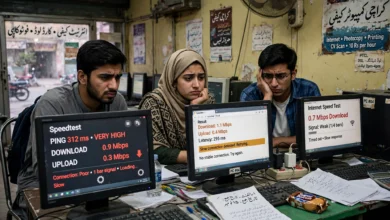
- Run speed tests at different times of day, including peak evening hours, and save screenshots.
- Test both a local server and an international server to see where the slowdown is.
- File a complaint with your ISP first and note the ticket number.
- If nothing improves, file a complaint with PTA through its online Complaint Management System, attaching your evidence.
These numbers give you leverage. A complaint backed by repeated tests showing 30% of your package speed is much harder for a provider to brush off.
6. Social Media Rules Under PECA and the New SMPRA
This is the most debated part of the PTA internet regulations picture, partly because the power is moving away from PTA. The Prevention of Electronic Crimes (Amendment) Act 2025 created a new body, the Social Media Protection and Regulatory Authority (SMPRA). It was formally set up in early 2026 with Ayaz Shaukat, a former Advocate General of Islamabad, as its first chairman, and it has started drafting its rules (ProPakistani).
What the new framework covers
- Social media platforms must register with SMPRA, and the authority is expected to push them to open local offices.
- SMPRA can order unlawful content to be blocked or removed.
- A Social Media Protection Tribunal hears appeals against SMPRA’s decisions, with a further appeal to the Supreme Court.
- The amended law includes penalties of up to three years in prison and a fine of up to Rs2 million for knowingly spreading false information.
Where PTA stands right now
Until SMPRA is fully running, PTA still handles content blocking requests on what it calls a best-efforts basis under the original PECA 2016 framework. In October 2026, PTA told the Islamabad High Court that it does not have the mandate to restrict social media access for children under 16, pointing to this transition and to technical limits like HTTPS encryption (Pakistan Press Foundation).
The debate around it
Supporters say the law gives the state a way to tackle fake news, harassment and online abuse, and gives victims a clear place to complain. Journalists’ unions, opposition parties and rights groups such as Amnesty International argue that the definition of false information is vague and could be used against critical reporting. Challenges to the amendments are pending in the Islamabad High Court. For everyday users, the sensible takeaway is to check before you share, keep records if you are harassed online, and know that complaints can now go to a dedicated authority.
7. Draft Rules for In-Flight Internet
The last change is smaller but shows where the PTA internet regulations are heading. In May 2026, PTA published a draft framework for in-flight internet and mobile services for public consultation (The Nation).
The main points of the draft:
- A proposed license fee of $10,000, with no spectrum charges at first.
- Connectivity delivered through satellite systems by licensed operators.
- Mobile services allowed only when the aircraft is above 3,000 metres.
- Ten-year licenses, with service required to start within a year.
- Local data storage and processing, plus privacy and security safeguards.
The consultation window closed on May 31, 2026. We could not confirm whether the final rules have been notified yet, so if you are a frequent flyer, keep an eye on airline announcements over the coming months.
A Quick Checklist for Pakistani Users
Reading about seven separate rules can feel like a lot. Here is the short version of what the PTA internet regulations ask of you, or allow you to do, in late 2026:
- Renew your CNIC if it has expired, so your SIMs stay active.
- Check the SIMs registered on your CNIC and disown any you do not use.
- Register your VPN on the PTA portal if you use it for freelance or business work.
- Run a few speed tests and compare them with 80% of your package speed.
- Save the PTA helpline (0800-55055) and WhatsApp number (0315-0055055) in your phone.
- Look up licensed local ISPs in your district if your current service is poor.
- Think twice before forwarding unverified news on social media.
Who is affected the most
Not every rule hits everyone equally. Here is a rough guide:
| User type | Rules that matter most |
|---|---|
| Freelancers and remote workers | VPN registration, broadband speed rights |
| Students and families | SIM ownership rules, social media rules |
| Small business owners | District ISP licenses, VPN registration |
| Journalists and content creators | PECA amendments and SMPRA |
| Frequent travellers | In-flight internet framework, SIM rules |
Frequently Asked Questions About PTA Internet Regulations
Are VPNs banned in Pakistan?
No law bans VPNs outright. PTA’s position is that VPNs used for business should be registered, and it now licenses local VPN providers. Registration is free and quick, so freelancers and companies are better off registering than risking disruption.
Why was my SIM blocked?
The most common reasons are an expired or cancelled CNIC, a SIM flagged in PTA’s crackdown on illegally issued connections, or too many SIMs on one CNIC. Renew your CNIC through NADRA and contact your operator to restore service.
Can I buy a SIM at night?
Not between 12:00 AM and 6:00 AM. Under the 2026 SIM sale ban, authorised outlets cannot sell, activate or issue duplicate SIMs during those hours.
Do the new local peering rules make my internet faster?
They can help with local websites and services, because traffic no longer has to leave Pakistan and come back. PTA has not published speed figures, so results will vary by operator.
How do I complain to PTA about slow internet?
Complain to your provider first. If the issue is not fixed, use PTA’s online Complaint Management System or the PTA CMS app and attach your speed test results.
Does PTA still block social media content?
Yes, for now. PTA handles blocking requests under PECA 2016 until SMPRA is fully operational. After that, SMPRA will take the lead on social media content under the updated PTA internet regulations and PECA framework.
Conclusion
The PTA internet regulations of 2026 pull in two directions, and both affect you: tighter controls on SIMs, VPNs and social media on one side, and better access through district ISP licenses, local traffic routing and enforced speed standards on the other.
Most of what you need to do is simple, like keeping your CNIC valid, checking the SIMs on your name, registering your VPN if you work online and holding your provider to the 80% speed rule, while the bigger questions around SMPRA and online speech will keep developing in courts and Parliament, so it is worth checking PTA’s official announcements every few months to stay ahead of the next change.