Best Free Antivirus Software for Pakistani Users
Free antivirus options for Pakistani users compared honestly, with real privacy cases, scam warnings and safe setup tips for Windows PCs and Android.
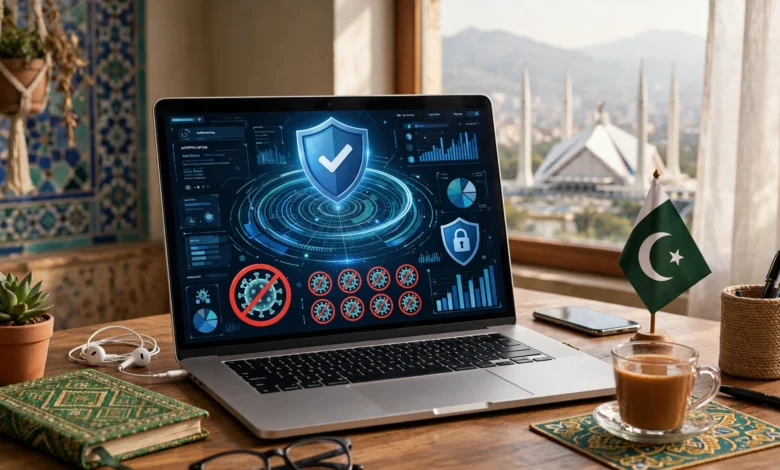
Best Free Antivirus Software for Pakistani Users
Introduction
Free antivirus is what most Pakistani users actually rely on, whether they realise it or not. Paid suites cost thousands of rupees a year, international cards are a hassle, and the computer shop down the road will happily install a “full version” with a cracked key for a few hundred rupees. The result is a lot of laptops running either expired trials, pirated security software or nothing at all.
The good news is that you don’t need to pay to be reasonably safe. Windows already includes solid built-in protection, and several well-known companies offer genuinely useful free antivirus software that scores well in independent lab tests. The bad news is that “free” sometimes comes with strings attached, and the antivirus industry has its own record of privacy violations and scams.
This guide looks at the best free antivirus options for Pakistani users on Windows and Android, with honest notes on what each one does well and what it costs you in data, pop-ups or upsells. It also walks through real cases, including the US Federal Trade Commission’s $16.5 million order against Avast for selling browsing data and the forced replacement of Kaspersky software for US users in 2024.
The aim is practical. By the end, you should know which free antivirus to install, how to set it up properly, and which “security” offers to ignore completely.
What Free Antivirus Needs to Handle in Pakistan
Before comparing products, it helps to be clear about the threats Pakistani users actually face. A free antivirus that’s perfect for a US office worker may not address the problems that come up here most often.
Cracked software and “full version” downloads
Pirated Windows, Office, Adobe and game installers are still common, whether from a shop, a USB stick or a Telegram channel. Security researchers have repeatedly found these downloads used to spread password-stealing malware and crypto miners. This is where real-time malware protection earns its place, because the infection usually arrives through something you chose to install.
Shared USB drives
Print shops, university labs and office PCs pass USB drives around constantly. The classic “shortcut virus” that hides your files and replaces them with shortcuts still spreads this way. A good antivirus should scan removable drives automatically.
Phishing and banking fraud
Fake bank SMS messages, JazzCash and Easypaisa scams, “BISP” lottery messages and WhatsApp account takeovers mostly rely on tricking people rather than infecting devices. Antivirus helps when you click a malicious link on a PC, through web protection and phishing filters, but it can’t stop you reading out a one-time code to a caller. Awareness matters as much as software here.
Android phones
For most Pakistanis, the phone is the main device. Fake loan apps, modded WhatsApp versions and “online earning” apps installed from outside the Play Store are a bigger risk than PC viruses for many families. Android antivirus starts with Google Play Protect and the habit of not sideloading APKs.
Older hardware
Many people run Windows on older laptops with 4 to 8GB of RAM. A heavy security suite can make them crawl, so lightweight antivirus with low system impact matters more here than fancy extras.
When Security Software Became the Problem: Real Cases
Antivirus programs get deeper access to your computer than almost any other software. That’s necessary for them to work, but it also means a bad decision by the vendor affects you directly. These cases are worth knowing before you install any free antivirus.
Avast sold browsing data through Jumpshot
In 2024, the US Federal Trade Commission ordered Avast to pay $16.5 million and banned it from selling or licensing browsing data for advertising. The FTC alleged that from 2014 to 2020, Avast’s subsidiary Jumpshot sold browsing information collected through Avast’s antivirus software and browser extensions to more than 100 third parties, while Avast marketed those products as protecting users from tracking (FTC press release). Avast closed Jumpshot in 2020. Avast and AVG, now part of Gen Digital, are still widely used and test well, but this history is why privacy settings matter if you choose them.
Kaspersky’s forced switch in the United States
In June 2024, the US government banned Kaspersky from selling software or pushing updates in the country, citing national security concerns linked to Russia. Kaspersky denied the allegations, and US officials didn’t publish evidence to support them. In September 2024, US customers found Kaspersky had removed itself and automatically installed UltraAV, a product from US company Pango, often without clearly understanding that this would happen (TechCrunch). Kaspersky said the move avoided gaps in protection. Outside the US, Kaspersky is still sold in many countries, and security experts’ opinions on it differ. Regardless of where you land, the episode shows how much control a security vendor has over your machine.
Fake “free scans” that cost millions
Restoro and Reimage agreed in 2024 to pay $26 million to settle FTC charges that they used fake Windows-style pop-ups to scare people into running “scans,” then sold $27 to $58 software and pushed technician services costing hundreds more. They settled without admitting wrongdoing. Fake antivirus, sometimes called scareware, remains one of the oldest tricks online.
The CCleaner supply-chain attack
In 2017, attackers compromised the build system of CCleaner, a popular cleanup tool owned at the time by Avast’s Piriform unit, and distributed a malicious version through the official download servers to millions of users. It’s a reminder that even trusted tools can be hijacked, so updates and layered protection matter.
Lessons for Pakistani users
- Choose a vendor with a long track record and regular independent lab testing.
- Read the privacy settings during installation and switch off data sharing you don’t want.
- Never install antivirus from a pop-up, an ad or a “cracked” key.
- Don’t run two real-time antivirus programs at once.
7 Best Free Antivirus Options for Pakistani Users
These picks are based on independent lab results from organisations such as AV-TEST and AV-Comparatives, along with how well each product suits typical Pakistani hardware and habits. Download every one of them only from the official website or app store.
1. Microsoft Defender (Windows Security): the default that’s good enough
Every Windows 10 and 11 PC already has Microsoft Defender built in. It now regularly earns top protection scores in lab tests, updates through Windows Update, and shows no ads or upsells.
- Best for: most home users, students and anyone on an older laptop.
- Strengths: zero cost, no extra install, ransomware protection through Controlled Folder Access.
- Weaknesses: phishing protection works best in Microsoft Edge, and it can slow full scans on very old machines.
2. Bitdefender Antivirus Free: the strongest detection with minimal fuss
Bitdefender’s free edition uses the same detection engine as its paid suites, which consistently sit near the top of lab results. It runs quietly with very few settings to configure.
- Best for: users who want stronger protection than Defender without adding clutter.
- Strengths: excellent detection, light on resources, web attack prevention.
- Weaknesses: very few extra features, and occasional prompts to upgrade.
3. Avira Free Security: the most features for free
Avira bundles antivirus with extras such as a limited free VPN, a password manager and update checks for your software.
- Best for: users who want an all-in-one free toolkit.
- Strengths: good detection and useful extras.
- Weaknesses: frequent upsell prompts, and the free VPN has a small monthly data cap. Avira is also part of Gen Digital, the same group as Avast and Norton.
4. Avast Free Antivirus: feature-rich, with a privacy history
Avast’s free product performs very well in lab tests and includes Wi-Fi network scanning, a sandbox for suspicious files and web shields.
- Best for: experienced users who will take time to adjust privacy settings.
- Strengths: strong scores and many free features.
- Weaknesses: the 2024 FTC order over Jumpshot. If you use it, turn off optional data sharing in settings, and decline bundled browser or cleaner offers during installation.
5. AVG AntiVirus Free: Avast’s sibling with a simpler look
AVG shares Avast’s detection engine and company, so the protection is similar with a slightly simpler interface.
- Best for: people who like Avast’s protection but prefer a cleaner dashboard.
- Strengths: reliable detection, email and web shields.
- Weaknesses: same privacy considerations and upgrade prompts as Avast.
6. Malwarebytes Free: the second-opinion scanner
Malwarebytes Free isn’t a full real-time antivirus. It’s an on-demand scanner you run when you suspect something is wrong, such as a browser hijacker or adware after installing a dodgy download.
- Best for: cleaning up an infection alongside Defender.
- Strengths: catches adware and potentially unwanted programs that others sometimes miss.
- Weaknesses: no real-time protection in the free version.
7. Google Play Protect: the baseline for Android phones
Play Protect is built into Android phones with Google services. It scans apps from the Play Store and can check apps installed from elsewhere.
- Best for: every Android user in Pakistan.
- Strengths: no install, runs automatically, removes known harmful apps.
- Weaknesses: it can’t save you from apps you sideload and then grant risky permissions to. The best Android protection is still avoiding APK files from WhatsApp groups and unknown websites.
Free Antivirus Comparison at a Glance
This table sums up how each free antivirus option fits common Pakistani use cases.
| Antivirus | Platform | Real-time protection | Ads or upsells | Privacy notes | Good on older PCs |
|---|---|---|---|---|---|
| Microsoft Defender | Windows | Yes | None | Sends threat data to Microsoft | Yes |
| Bitdefender Antivirus Free | Windows | Yes | Occasional | Standard telemetry | Yes |
| Avira Free Security | Windows, Mac, Android | Yes | Frequent | Gen Digital group | Mostly |
| Avast Free Antivirus | Windows, Mac, Android | Yes | Frequent | 2024 FTC order over data sales | Mostly |
| AVG AntiVirus Free | Windows, Mac, Android | Yes | Frequent | Same company as Avast | Mostly |
| Malwarebytes Free | Windows, Mac | No (scanner only) | Occasional | Standard telemetry | Yes |
| Google Play Protect | Android | Yes | None | Part of Google services | Yes |
Short answer: keep Microsoft Defender on, add Malwarebytes Free as a second-opinion scanner, and switch to Bitdefender Antivirus Free if you want stronger detection without much clutter.
Is Free Antivirus Enough? Free vs Paid, and How to Set It Up
For most Pakistani home users, a well-configured free antivirus plus good habits is enough. Paid security makes sense in specific situations, and setup matters more than the brand you pick.
When free is enough
- You use your PC for study, browsing, office work and entertainment.
- You install software only from official sources.
- You keep Windows and your browser updated.
- You back up important files.
When paying makes sense
- You’re a freelancer or small business holding client data or handling payments.
- You manage several family devices and want parental controls.
- You want extras like identity monitoring, a full VPN or dedicated support.
If you do pay, buy directly from the vendor or an authorised reseller. Cheap “lifetime keys” sold through social media or marketplace listings are often stolen, shared or fake, and they can be revoked without warning.
How to set up your free antivirus properly
- Remove expired trials first. Preinstalled McAfee or Norton trials that have expired can block Defender from switching on. Uninstall them from Settings.
- Check Windows Security. Open Windows Security and make sure Virus and threat protection, Firewall and App and browser control all show green ticks.
- Turn on ransomware protection. Under Virus and threat protection, enable Controlled folder access to protect your Documents, Pictures and Desktop folders.
- Keep SmartScreen on. It blocks known malicious downloads and phishing sites.
- Scan USB drives before opening them. Right-click the drive in File Explorer and choose a scan.
- Run an offline scan if you suspect an infection. Microsoft Defender Offline restarts your PC and scans before Windows loads, which helps with stubborn malware.
- Back up important files. Use OneDrive, Google Drive or an external drive. Antivirus can’t recover files that ransomware has already encrypted.
Habits that matter more than any software
- Turn on two-factor authentication for email, WhatsApp, banking apps and social media.
- Never share a one-time code with anyone, including callers claiming to be from your bank or PTA.
- Avoid cracked software and modded apps completely.
- Update your phone and apps regularly.
Frequently Asked Questions
Which is the best free antivirus for Windows 11 in Pakistan?
For most people, Microsoft Defender is the best starting point because it’s already installed, has no ads and tests well. If you want stronger detection, Bitdefender Antivirus Free is the most popular lightweight upgrade.
Is Windows Defender enough without any other antivirus?
For typical home use, yes, as long as Windows stays updated and you avoid cracked software. Adding Malwarebytes Free as an occasional scanner gives you a useful second opinion.
Is it safe to use cracked antivirus keys?
No. Cracked or pirated antivirus is software piracy, it often stops receiving updates, and the crack itself can carry malware. A legitimate free antivirus is far safer than a pirated paid one.
Do I need antivirus on my Android phone?
Google Play Protect covers most users if you only install apps from the Play Store. The biggest risks on Android in Pakistan come from sideloaded APKs, fake loan apps and phishing messages, which good habits prevent better than any app.
Can I run two free antivirus programs together?
Not two real-time antivirus programs. They can conflict and slow your PC. You can safely pair one real-time antivirus with an on-demand scanner like Malwarebytes Free.
Conclusion
The best free antivirus for most Pakistani users is the one already on their PC: Microsoft Defender, properly switched on and kept updated, paired with Malwarebytes Free as a second-opinion scanner and Google Play Protect on Android. Bitdefender Antivirus Free is the strongest lightweight upgrade, while Avira, Avast and AVG offer more features at the cost of frequent upsells and, in Avast’s case, a documented privacy history that ended in a $16.5 million FTC order. Cases like Kaspersky’s forced switch in the US, the Restoro and Reimage scareware settlement and the CCleaner supply-chain attack show that security software deserves as much scrutiny as anything else you install. Choose a trusted free antivirus from its official site, remove expired trials, enable ransomware protection, back up your files, avoid cracked software and keys, and remember that two-factor authentication and caution with links protect you from the scams no antivirus can catch.