How to Choose a Bluetooth Speaker That Actually Sounds Good
Bluetooth speaker buying tips that focus on real sound: size, drivers, watts, codecs, battery and IP ratings, plus how to spot counterfeit JBL models.
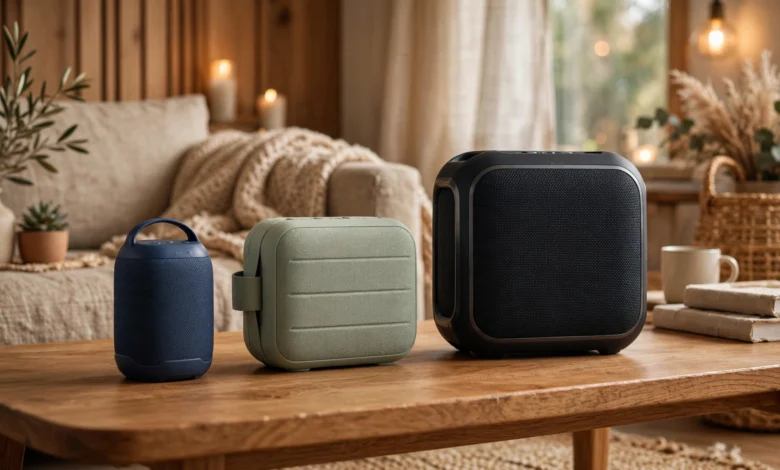
Bluetooth Speaker Buying Guide: 9 Proven Tips to Pick One That Actually Sounds Great
Introduction
A Bluetooth speaker should make your music sound better, not just louder. Yet most of us have owned at least one that looked great in the box and sounded thin, harsh, or muddy the moment we turned it up. The problem usually isn’t bad luck. It’s that the numbers printed on the packaging rarely tell you how a speaker will actually sound.
Boxes shout about “1000W peak power” and “super bass,” but those claims say very little about real speaker sound quality. What matters more is the size of the speaker, the drivers inside it, how it handles bass, and whether the brand behind it can be trusted.
This guide explains how to choose a Bluetooth speaker that genuinely sounds good. We cover the specs worth reading, the ones you can ignore, and the features that matter for real life, like battery life, waterproofing, and pairing two speakers for stereo sound.
We also look at a side of the market most buying guides skip. US Customs once seized more than 70,000 counterfeit Apple and JBL items in a single shipment, and JBL’s parent company has raided shops and factories selling fake speakers. A fake Bluetooth speaker doesn’t just sound worse. It often comes with untested batteries and no warranty.
By the end, you’ll know how to pick a portable Bluetooth speaker you’ll enjoy for years, and how to use it without damaging your hearing or annoying your neighbours.
Why So Many Bluetooth Speakers Disappoint
Most disappointing Bluetooth speakers fail for the same reason: they’re sold on numbers that don’t predict sound. Understanding three realities will save you from most bad purchases.
- Physics limits small speakers. Deep bass needs moving air, and moving air needs space. A pocket-sized Bluetooth speaker can’t produce the same low bass as a lunchbox-sized one, no matter what the box says. Clever tuning can fake a sense of bass, but it can’t break physics.
- Loudness isn’t quality. Many cheap speakers are tuned to sound loud in a shop. Turn them up at home and the sound becomes harsh and distorted, because the drivers and amplifier can’t keep up.
- Specs are easy to inflate. Peak watts, “PMPO” figures, and frequency ranges without any tolerance are marketing numbers. Honest brands publish fewer, more meaningful figures.
The good news is that a great-sounding Bluetooth speaker doesn’t have to be expensive. You just need to know which details actually matter, and that’s what the next section covers.
9 Proven Tips to Choose a Bluetooth Speaker That Sounds Good
The best way to choose a Bluetooth speaker is to match its size to where you’ll use it, read the specs that reflect real sound, and buy a known brand from an authorised seller. These nine tips show you how.
1. Size and Drivers Matter More Than Any Spec
Inside every Bluetooth speaker are drivers: the parts that move to create sound. Larger drivers and larger cabinets produce fuller, deeper sound. Many good speakers also use passive radiators, extra membranes that move with the air pressure inside the box and boost bass without adding another powered driver.

A useful rule: if bass matters to you, go up a size. A speaker the size of a water bottle usually sounds noticeably fuller than one that fits in a pocket.
2. Ignore Peak Watts and PMPO
“1000W” on a palm-sized Bluetooth speaker is meaningless. Peak power and PMPO (peak music power output) describe a brief burst, not the speaker’s ability to play loud music cleanly.
Look for RMS watts instead, which measure continuous power. Even then, watts only hint at loudness. A well-designed 20W speaker can sound louder and cleaner than a poorly designed 40W one. If a brand only lists peak or PMPO figures, treat that as a warning sign.
3. Read the Frequency Response Carefully
Frequency response shows the range of sound a Bluetooth speaker can play, from deep bass (low hertz) to treble (high hertz). A speaker rated down to 60Hz will have more convincing bass than one that stops at 100Hz.
Be cautious with very wide claims like “20Hz to 20kHz” on a small speaker. Without a tolerance figure (like ±3dB), the number tells you little. Independent reviews with measurements are far more useful than the box.
4. Choose Between Mono, Stereo, and 360-Degree Sound
Most small speakers are mono, meaning one channel of sound. Larger ones may offer stereo from a single box, though the left and right speakers are so close together that the effect is limited.
360-degree sound spreads audio in every direction, which works well in the middle of a room or outdoors with people around you. If you want real stereo, the best option is pairing two identical speakers, covered in tip 7.
5. Don’t Overpay for Codecs
Bluetooth codecs like SBC, AAC, aptX, and LDAC affect how audio is compressed between your phone and speaker. They matter more for good headphones than for speakers.
For most portable speakers, the speaker’s own hardware is the real limit on sound quality. AAC works well with iPhones, and aptX or LDAC can help with some Android phones. But a well-built Bluetooth speaker using basic SBC will still sound better than a poorly built one with LDAC on the box.
6. Check Real Battery Life, Not Just the Headline Number
Battery claims are usually measured at moderate volume. Play loudly outdoors and you might get half the advertised time.
- For home and casual use: 10 to 12 hours is plenty
- For trips and outdoor use: look for 15 hours or more
- Nice extras: USB-C charging, and the ability to charge your phone from the speaker
7. Look at Stereo Pairing and Party Features
Pairing two speakers is the easiest way to get real stereo sound or fill a bigger space. Most major brands support this, but usually only with their own models. JBL, Sony, Ultimate Ears, and others each have their own pairing systems, and newer speakers increasingly support Auracast, a Bluetooth standard for broadcasting to multiple speakers.
If you plan to add a second speaker later, buy from a brand whose lineup you like.
8. Use an App With an Equaliser
A companion app with an equaliser (EQ) lets you adjust bass and treble to suit your room and your music. It’s one of the most underrated features on a Bluetooth speaker. Apps also deliver firmware updates that can fix bugs and sometimes improve sound.
9. Buy a Real Brand From an Authorised Seller
The most reliable predictor of a good-sounding Bluetooth speaker is a brand with a reputation to protect, bought from a seller who can honour the warranty. This also protects you from counterfeits, which are a bigger problem than most people realise, as the cases below show.
Which Bluetooth Speaker Type Fits You? Quick Reference
Most people get the best balance of sound and portability from a water-bottle-sized Bluetooth speaker. Use this table to match the type to your use.
| Speaker type | Typical size | Best for | Bass | Battery to look for | Water resistance |
|---|---|---|---|---|---|
| Mini / pocket | Fits in a pocket | Showers, desk, cycling | Light | 6 to 10 hours | IP67 |
| Portable | Water bottle size | Bedroom, picnics, travel | Moderate | 12 hours or more | IP67 |
| Large portable | Lunchbox size | Outdoor gatherings, beach | Strong | 15 hours or more | IP67 |
| Party speaker | Suitcase size, often with handle or wheels | Events, big rooms | Very strong | 12 to 24 hours | Splash-resistant or better |
| Home smart speaker | Shelf-sized, usually plugged in | Living room, kitchen | Moderate to strong | Mains power | Not needed |
IP67 means dust-tight and able to survive submersion in about one metre of water for 30 minutes. IPX7 offers the same water protection but no tested dust protection, which matters at the beach.
The Reality Check: Fake Bluetooth Speakers and Inflated Claims
JBL is one of the most counterfeited audio brands in the world, and fake speakers turn up everywhere from airport cargo to local accessory markets. These real cases show how big the problem is and what it means for you.
Case 1: 70,000 Fake Apple and JBL Items Seized in Houston
In 2021, US Customs and Border Protection officers at the Houston seaport intercepted more than 70,000 counterfeit Apple and JBL electronics shipped from China, with a combined retail value of over $4 million had they been genuine. The shipment included fake AirPods Pro, Apple Watches, cables, cases, and JBL speakers. The trademark owners confirmed the items were counterfeit, according to US Customs and Border Protection.
CBP warned that buyers think they’re getting a genuine product at a discount, but end up with counterfeits that carry no manufacturer warranty. It also noted that counterfeit production can involve forced labour.
The lesson: a “JBL” Bluetooth speaker at a suspiciously low price may be part of a large, organised trade, not a lucky deal.
Case 2: Raids on Fake JBL Sellers and Factories in India
HARMAN, the Samsung-owned parent company of JBL, has run repeated raids with law enforcement in India. Investigators seized counterfeit JBL products from wholesalers in Jabalpur and counterfeit JBL Professional speakers from manufacturing units in Kolkata, and took criminal action against those involved. In Delhi, HARMAN reported seizing fake JBL and Infinity car speakers and subwoofers from shops and manufacturing units, as described in HARMAN’s own announcement. A March 2024 raid on car accessory shops at Delhi’s Kashmiri Gate turned up 54 more counterfeit JBL car speakers.
The lesson: fakes aren’t only sold online. They sit on shelves in ordinary-looking shops, and the same supply chains reach markets across South Asia. Where you buy matters as much as what you buy.
Case 3: The Scale of the Counterfeit Trade
Counterfeit electronics are big business. CBP recorded more than 23,700 seizures of counterfeit goods in fiscal year 2019 alone, worth an estimated $1.2 billion. Audio gear is a favourite target because it’s small, popular, and hard for buyers to judge before they listen.
What a Fake Bluetooth Speaker Actually Costs You
- Worse sound. Fakes copy the shell, not the engineering. Cheap drivers and poor tuning mean thin, distorted sound.
- Untested batteries. Counterfeit speakers skip safety testing, so their lithium batteries are more likely to swell or overheat.
- Fake waterproofing. An “IP67” label on a fake means nothing. One trip to the pool can kill it.
- No warranty or updates. The brand won’t repair it, and the official app usually won’t recognise it.
- Supporting crime. Counterfeiting funds organised operations that cheat legitimate businesses and, in some cases, exploit workers.
Inflated Specs Are a Grey Area Too
Not every misleading Bluetooth speaker is a counterfeit. Some unbranded speakers are sold under their own names but advertise “1000W” or “10,000mAh” figures that their size makes impossible. It may not be a trademark crime, but it’s still dishonest. If a spec sounds too good for the size and price, assume it is.
How to Test a Bluetooth Speaker and Spot a Fake
The best way to judge a Bluetooth speaker is to listen to it yourself. If you can test one in a shop, or if you’ve just received one online, run through these checks.
Listening Test in Five Minutes
- Use music you know well. Play two or three songs you’ve heard many times, ideally with clear vocals and real bass.
- Listen at three volumes. Low, medium, and about 80 percent. Good speakers keep their balance as volume rises. Cheap ones turn harsh or lose bass.
- Listen for distortion. Crackling, buzzing, or a “boxy” sound at higher volume means the speaker is being pushed past its limits.
- Check vocals. Voices should sound natural, not hollow or shouty.
- Walk around it. Notice how much the sound changes as you move. This tells you whether it suits the middle of a room or works best against a wall.
Counterfeit Checks
- Compare the price. If a branded Bluetooth speaker costs far less than at every authorised seller, assume it’s fake.
- Inspect the packaging. HARMAN warns that fake JBL packaging is often flimsy and missing details like certifications, place of manufacture, address, and trademark information.
- Check the logo. On fakes, logo placement is often slightly off and the colours don’t quite match the genuine product.
- Connect the official app. A genuine JBL, Sony, or Anker speaker should be recognised by the brand’s app and offer firmware updates. Fakes usually aren’t.
- Feel the weight and build. Real speakers feel dense and solid. Fakes often feel light and hollow, with uneven seams or loose buttons.
- Verify the serial number on the brand’s website or with its support team where possible.
- Buy from authorised sellers. This is the single most effective protection, and every brand in the cases above recommends it.
Using Your Bluetooth Speaker Responsibly
A great-sounding Bluetooth speaker is easy to turn up too far. Protecting your hearing and respecting the people around you are part of owning one.
Protect Your Hearing
The World Health Organization estimates that more than one billion young people aged 12 to 35 are at risk of hearing loss from exposure to loud sound, including personal audio devices and entertainment venues, through its Make Listening Safe initiative. Hearing damage from loud sound is permanent, and it builds up slowly, so you often don’t notice until it’s too late.
- Keep volume moderate for long sessions. If you have to shout to talk to someone a metre away, it’s too loud.
- Take breaks during long listening sessions.
- Don’t sit right next to a loud party speaker for hours.
- Watch children’s use, since kids often turn speakers to maximum.
Respect Neighbours and Public Spaces
Many cities and housing societies have noise rules, especially at night, and loud music is a common cause of complaints and disputes. A portable speaker on a beach, park, or public transport affects everyone nearby.
A simple rule: your music should reach your group, not the whole street. Use headphones in shared spaces, keep volumes down late at night, and turn it down when someone asks.
Look After the Battery
Like any lithium-ion device, a Bluetooth speaker should be kept out of direct sun and hot cars, charged with a decent USB-C charger, and retired if it ever swells or overheats.
Frequently Asked Questions About Choosing a Bluetooth Speaker
What makes a Bluetooth speaker sound good?
Mostly its size, driver quality, and tuning. A larger cabinet with good drivers and passive radiators produces fuller sound than a tiny speaker, regardless of the watts printed on the box.
Are more watts always better in a Bluetooth speaker?
No. Peak watts and PMPO figures are marketing numbers. RMS watts are more meaningful, but design and tuning matter more than raw power.
Is aptX or LDAC important for a Bluetooth speaker?
Not very. Codecs matter more for good headphones. For most portable speakers, the hardware limits sound quality long before the codec does.
How can I tell if a JBL speaker is fake?
Check the price against authorised sellers, inspect the packaging and logo, make sure the JBL app recognises it, and buy only from authorised retailers. Flimsy packaging and missing certification details are common signs of a fake.
What does IP67 mean on a Bluetooth speaker?
It means the speaker is dust-tight and can survive being submerged in about one metre of water for 30 minutes. It doesn’t make it safe for long swims or salt water without rinsing afterwards.
Conclusion
Choosing a Bluetooth speaker that actually sounds good means looking past the marketing: size and driver quality matter more than peak watts or PMPO, frequency response only helps when it’s honest, codecs matter less than the speaker’s own hardware, and practical features like real battery life, IP67 protection, stereo pairing, and an app with an equaliser make the difference in daily use; just as important is where you buy it, because the 70,000 fake Apple and JBL items seized in Houston and HARMAN’s raids on counterfeit JBL sellers and factories in India show how common fakes are, and a counterfeit Bluetooth speaker brings worse sound, untested batteries, and no warranty, so test with music you know, buy a real brand from an authorised seller, and enjoy it at a volume that protects your hearing and respects the people around you.