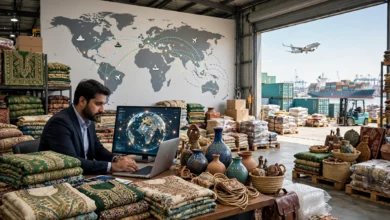
How to Price Your Products Correctly in the Pakistani Market
Product pricing in Pakistan made practical: cost, inflation, competition, and legal limits, with real cartel and hoarding cases sellers should know.
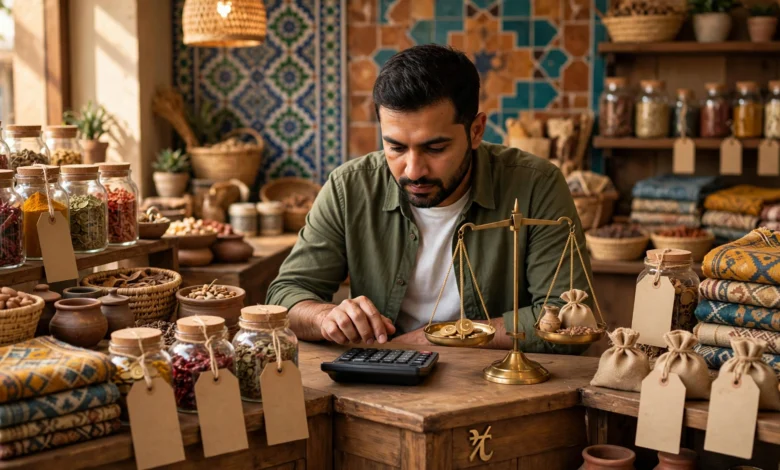
Product Pricing in Pakistan: 9 Smart, Proven Steps to Set Fair Prices That Sell
Introduction
Product pricing in Pakistan is one of the hardest calls a business owner makes, and most people get it wrong in one of two ways. They either copy the shop next door and hope for the best, or they add a random margin on top of cost and wonder why the money never seems to be there at the end of the month. Neither approach lasts long in a market where electricity bills, fuel costs, and the rupee can all move in a single quarter.
There is also a side of pricing that most guides skip. In Pakistan, the line between smart pricing and illegal pricing has been crossed many times, sometimes by entire industries. Sugar mills, cement makers, and crisis-time hoarders have all faced regulators for fixing or inflating prices. Those cases are worth studying, not because you plan to form a cartel, but because they show exactly where the legal and ethical limits sit.
This guide walks through a practical, step-by-step approach to product pricing in Pakistan. You will see how to work out your real cost, read your competitors, choose a pricing strategy that suits local buyers, protect your profit margin against inflation, and sell online without losing money on cash on delivery. Along the way, we look at real enforcement cases so you can set prices that are profitable, fair, and easy to defend if anyone ever asks questions.
Why Product Pricing in Pakistan Is Harder Than It Looks
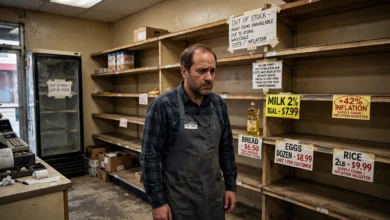
Pricing theory is the same everywhere. Cost, demand, and competition decide where your number should land. What makes product pricing in Pakistan different is how fast those three things change and how little room for error most small businesses have.
Inflation and the Rupee Keep Moving the Goalposts
If you import anything, or buy from someone who does, your cost is tied to the exchange rate. Over the past few years, many traders saw the price of the same carton of goods change several times in one season. A price you set in January can be a loss-making price by April, even if you sold out.
Domestic costs move too. Electricity tariffs, gas prices, petrol, and rent all feed into what it costs to make and deliver a product. Any approach to product pricing in Pakistan that treats cost as a fixed number is going to break sooner or later.
Buyers Are Extremely Price Sensitive
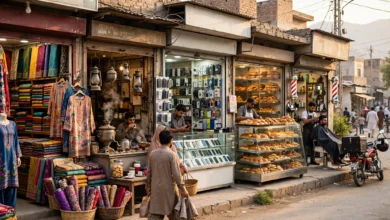
Most Pakistani households run on tight monthly budgets. People compare prices across shops, ask relatives what they paid, and check Daraz or Facebook groups before buying. Bargaining is normal in many categories, so your listed price often becomes the starting point of a conversation rather than the final number.
That does not mean the cheapest seller always wins. It means customers need a clear reason to pay more, such as reliability, a warranty, better service, or trust in your brand.
The Informal Economy Distorts Comparisons
A large share of trade still happens in cash, with little paperwork. A seller who does not pay sales tax, uses unbilled stock, or deals in smuggled goods can undercut a fully compliant business. When you look at competitor prices, you are sometimes comparing yourself to someone playing by different rules. Good product pricing in Pakistan means accepting that you cannot always match those prices, and building value elsewhere instead.


Step 1: Know Your True Cost Before You Set Any Price
Every sound decision about product pricing in Pakistan starts with an honest cost sheet. Most small sellers count the obvious costs and forget the rest, which is how a “profitable” product quietly loses money.
Direct Costs
These are the costs you can tie to each unit:
- Raw material or wholesale purchase price
- Labour for making, stitching, packing, or assembling
- Packaging, labels, and inserts
- Inward freight from your supplier
Hidden Costs Most Sellers Miss
These are spread across all your sales, so you need to divide them per unit:
- Rent, electricity, internet, and staff salaries
- Marketing spend, including Facebook and Instagram ads
- Courier charges you absorb when offering “free delivery”
- Returned and refused cash on delivery parcels
- Marketplace commissions and payment gateway fees
- Sales tax and income tax obligations (check current rates on the Federal Board of Revenue (FBR) website)
- Damaged, expired, or unsold stock
A Simple Worked Example
Say you sell a printed lawn three-piece suit online. Fabric and printing cost Rs 1,800. Packaging adds Rs 80, your share of delivery is Rs 150, ad spend per sale averages Rs 250, returns cost you about Rs 100 per order on average, and overheads work out to Rs 120 per unit. Your real cost is Rs 2,500, not Rs 1,800.
Now the margin. If you want a 30% profit margin, divide cost by 0.70, which gives about Rs 3,570. Many sellers instead add 30% to cost and charge Rs 3,250, which is only a 23% margin. That small confusion between markup and margin is one of the most common reasons small businesses feel busy but broke.
Step 2: Study Competitors Without Copying Them
Competitor research is a core part of product pricing in Pakistan, but copying is not a strategy. You do not know their costs, their volume, or whether they are even making money.
Here is a better way to do it:
- List five to ten sellers offering something close to your product.
- Note their price, delivery charges, return policy, and warranty.
- Compare quality honestly. Order a sample if you can.
- Mark where you are clearly better and where you are weaker.
- Decide whether you want to sit below, at, or above the market, and write down why.
If a competitor is far cheaper, ask how. Sometimes they buy in bulk. Sometimes they cut corners on quality, tax, or labour. You should only follow a low price when your own cost sheet supports it.
Step 3: Choose a Pricing Strategy That Fits the Pakistani Market
There is no single best pricing strategy. The right one depends on your product, your customer, and your goal. These are the ones that work most often for product pricing in Pakistan.
Cost-Plus Pricing
You add a fixed margin on top of total cost. Cost-plus pricing is simple and safe, and it works well for manufacturers, wholesalers, and anyone selling commodity-style goods. Its weakness is that it ignores what customers are actually willing to pay.
Value-Based Pricing
With value-based pricing, you set the price according to the value the customer gets. A tutor with strong board results, a skincare brand with a loyal following, or a software tool that saves a business hours every week can charge more because buyers see the benefit. This approach needs strong branding and real proof of quality.
Competitive Pricing
Competitive pricing means pricing close to similar sellers. It is common in electronics, mobile accessories, and grocery, where customers compare prices quickly. It only works if your costs are as low as or lower than your rivals’.
Penetration Pricing
You launch at a low price to win customers, then raise it later. This is popular with new online brands. Be careful: Pakistani customers remember the launch price, so plan the increase and explain it when it comes.
Psychological Pricing
Prices like Rs 999 or Rs 1,499 still work because shoppers read the first digit. Bundles such as “buy two, get one free” also do well, provided the numbers are honest and the margin survives the free item.
Step 4: Build Inflation Into Your Pricing Plan
A price is not a one-time decision. In a high-inflation economy, product pricing in Pakistan needs a review system.
- Review your cost sheet every month, or every time a major input changes.
- Set a trigger, for example “if costs rise more than 5%, we revisit prices.”
- Keep a small buffer in your margin for currency swings if you import.
- Prefer smaller, regular increases over one large jump that shocks customers.
- Watch official inflation data from the Pakistan Bureau of Statistics so your increases track real cost pressure.
Step 5: Price Correctly for Online Selling and Cash on Delivery
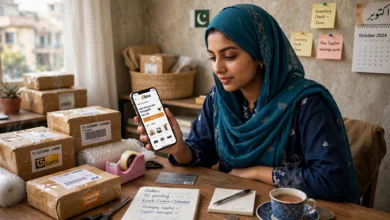
Online selling adds costs that do not exist in a physical shop. Cash on delivery is still the default for many Pakistani buyers, and refused parcels are a real expense. You pay courier charges both ways and your stock is stuck in transit.
To protect your margin:
- Track your COD return rate and add its cost into your per-unit price.
- Offer a small discount for advance payment through bank transfer or mobile wallets.
- Include marketplace commissions, such as those on Daraz pricing tiers, before you list.
- Be clear about delivery fees upfront, so customers do not refuse the parcel at the door.
Step 6: Set Clear and Honest Discount Rules
Sales during Ramadan, Eid, 11.11, and Black Friday can move a lot of stock. They can also wreck your margins if you discount without a plan. Decide in advance how deep you can go on each product without selling below cost.
One rule matters more than the rest: a discount must be real. Raising the price a week before a sale so the “50% off” looks bigger is misleading, and in Pakistan it can count as deceptive marketing under competition law. We look at that more closely in the next section.
Where Product Pricing in Pakistan Crosses the Legal Line
Most pricing advice stops at strategy. The reality of product pricing in Pakistan is that some of the biggest pricing stories in the country have been about illegal behaviour, not clever tactics. Knowing these cases helps you recognise risky practices early, whether they come from you, your suppliers, or your trade association.
The main law here is the Competition Act 2010, enforced by the Competition Commission of Pakistan (CCP). Provinces also have price control and anti-hoarding laws, and district administrations publish official rate lists for essential items.
The Sugar Cartel Case
In August 2021, the CCP imposed a record penalty of about Rs 44 billion on the Pakistan Sugar Mills Association and its member mills for cartelisation, price fixing, and market manipulation, as reported by Dawn. The commission found that mills had collectively decided how much sugar to export, which in turn controlled domestic supply over several years.
The order also fined 22 mills Rs 50 million each for colluding on a 2010 Utility Stores Corporation tender. The case has since moved through courts and the appellate tribunal, so the final outcome has taken years. The lesson for any business is simple: agreeing with competitors on prices, output, or bids is illegal, even if it happens quietly through an association.
The Cement Cartel Case
In 2009, the CCP fined cement manufacturers roughly Rs 6.3 billion for coordinating prices and market shares through their industry body. It was one of the first major cartel cases in the country and showed that even large, well-connected industries are not immune.
For smaller businesses, the warning is about informal agreements. A WhatsApp group of local dealers deciding “nobody sells below this price” is the same behaviour on a smaller scale.
Hoarding and Price Gouging During Crises
During the early months of COVID-19 in 2020, face masks and hand sanitiser prices jumped sharply, and provincial authorities raided warehouses where stock was being held back. Wheat flour and sugar shortages in the same period also triggered official inquiries into hoarding and profiteering.
The Price Control and Prevention of Profiteering and Hoarding Act 1977, along with provincial laws, allows authorities to seize hoarded goods and penalise sellers. Price gouging may look like smart business during a shortage, but it is often illegal and almost always destroys customer trust.
Deceptive Pricing and Fake Sales
Section 10 of the Competition Act prohibits deceptive marketing, which includes misleading information about price. Common examples include:
- Inflating the “original” price to make a discount look larger
- Advertising a low price that applies to almost no stock
- Hiding delivery or service charges until checkout
- Claiming “lowest price in Pakistan” without any basis
The CCP has acted against companies for misleading marketing claims, and complaints from customers or competitors can start an inquiry.
Selling Above Notified or Printed Prices
For essentials like flour, milk, meat, and vegetables, district price control committees publish official rate lists. Price magistrates regularly fine shopkeepers who charge above them. Selling packaged goods above the printed retail price is also an offence under consumer protection rules. If you sell regulated items, your pricing freedom is limited, and you need to stay within the notified rates.
What These Cases Teach Every Seller
- Never agree prices, discounts, or output with competitors.
- Do not hold back stock to push prices up during a shortage.
- Make every discount and “was” price genuine and provable.
- Show all charges upfront.
- Follow official rate lists for regulated items.
Ethical product pricing in Pakistan is not only about avoiding fines. Customers talk, screenshots spread, and a single exposed fake sale can cost more than any extra margin it earned.
Step 7: Test, Measure, and Adjust Your Prices
Good product pricing in Pakistan is built on data, not gut feeling. You do not need expensive software to start. A simple spreadsheet will do.
- Track units sold, revenue, and margin for each product every week.
- Try a small price change on one product and watch what happens for two to four weeks.
- Compare conversion rates on your website or social pages before and after a change.
- Ask regular customers directly what they think is fair. Many will tell you.
If sales barely drop after a price increase, your product had room to grow. If they collapse, you either overshot or failed to explain the value.
Step 8: Communicate Price Changes Honestly
Customers in Pakistan are used to rising prices, but they react badly to surprises. When you raise prices, give notice where you can and explain the reason in plain language, such as higher fabric costs or a new courier rate.
Some businesses quietly reduce pack sizes instead, a practice often called shrinkflation. It is legal if the new weight is clearly printed, but customers notice, and it can feel like a trick. Being upfront usually protects loyalty better than hiding the change.
Step 9: Keep Records and Stay Tax Compliant
The last step in product pricing in Pakistan is the one most people avoid: paperwork. Keep invoices from suppliers, record every sale, and register for sales tax if your turnover requires it. Proper records let you prove your costs if a regulator ever questions your prices. They also make it easier to get bank financing and to sell on larger platforms that require tax registration.
Common Mistakes in Product Pricing in Pakistan
Even experienced sellers fall into these traps:
- Pricing from memory. Costs changed months ago, but the price did not.
- Confusing markup with margin. A 30% markup is not a 30% margin.
- Ignoring returns and COD failures. These costs are real and often large.
- Racing to the bottom. Matching the cheapest seller in a Facebook group rarely ends well.
- Running fake sales. Short-term clicks, long-term damage, and possible legal trouble.
- Never raising prices. Fear of losing customers can slowly kill a healthy business.
Conclusion
Product pricing in Pakistan works best when it rests on three things: an honest cost sheet, a clear view of what customers value, and a firm commitment to fair dealing. Start by calculating your true cost, including the hidden expenses of ads, returns, and overheads, then choose a pricing strategy that matches your product and market, whether that is cost-plus, value-based, competitive, or penetration pricing. Review prices regularly because inflation and the rupee will not wait for you, price online sales with cash on delivery losses in mind, and keep every discount genuine. The sugar and cement cartel cases, crisis-time hoarding raids, and fines for overcharging all show that shortcuts on pricing can bring heavy penalties and lasting damage to trust, while sellers who price transparently and keep good records build businesses that customers return to and regulators have no reason to question.
T