Top Motorcycle Safety Tips for Riding in Pakistani Traffic
Motorcycle safety tips for Pakistani traffic: helmets, lane sense, legal rules, and real one-wheeling cases showing what reckless riding really costs.
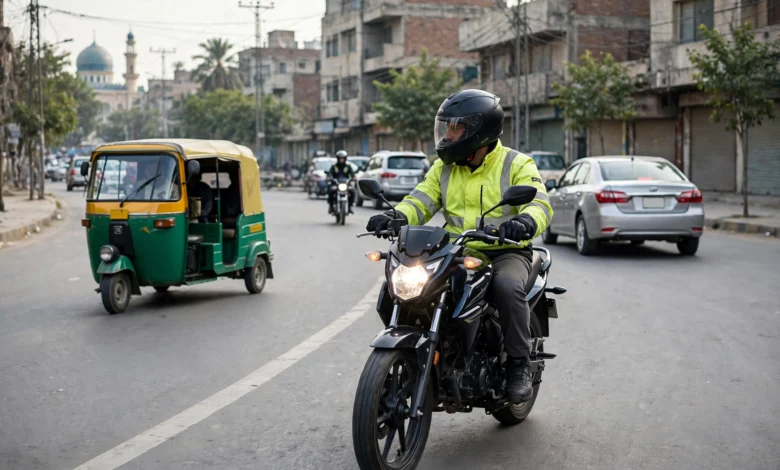
Motorcycle Safety Tips: 15 Proven Ways to Ride Safe in Pakistani Traffic
Introduction
Motorcycle safety tips sound like something you hear once in a driving school and forget by the next signal. In Pakistan, they decide whether you get home tonight. A motorcycle here is not a hobby. It is how millions of people get to work, drop kids at school, deliver food, and carry the family to a wedding on a single seat.
That convenience comes at a heavy price. Punjab’s Rescue 1122 responded to more than 482,000 road accidents in 2025, and motorcycles were involved in about 75 percent of them. Deaths in the province rose 19 percent in a single year. Behind each number is usually a young man, often the main earner of his household, who left home without a helmet or tried to squeeze through a gap that wasn’t there.
This guide is not a lecture. It is a practical set of motorcycle safety tips written for the roads we actually ride on: buses that stop anywhere, wrong-way traffic on service lanes, open manholes, rain-flooded underpasses, and drivers who treat indicators as decoration. We will also look honestly at the illegal habits that keep filling hospital wards, from one-wheeling on Canal Road to underage riding and modified silencers, using real police cases from Lahore and Karachi.
If you ride every day, or someone in your house does, these bike safety tips for Pakistan are worth ten minutes of your time.
Why Motorcycle Safety Tips Matter More in Pakistan
Before getting into the tips, it helps to see the scale of the problem. Numbers don’t make anyone a better rider, but they do kill the idea that “it won’t happen to me.”
What the accident data actually shows
According to Rescue 1122’s annual figures reported by The Express Tribune, Punjab recorded 420,387 accidents and 3,967 deaths in 2023, 467,561 accidents and 4,139 deaths in 2024, and 482,870 accidents with 4,791 deaths in 2025. Accidents grew by under 6 percent last year, but deaths grew by 19 percent. In plain words, crashes are getting more violent, and higher speed is the most likely reason.
Karachi tells a similar story. A 2024 report covered by Business Recorder found that around 500 people are injured on the city’s roads every day, and about 70 percent of them are young motorcyclists. More than 1,400 people died in Karachi road accidents in 2023 alone.
Who gets hurt the most
The pattern is depressingly consistent across studies:
- Young men aged 20 to 29 make up the largest group of victims in Lahore hospital data.
- Head injuries are the strongest predictor of death, which points straight at the missing helmet.
- Breadwinners are disproportionately affected, so one crash can push a whole family into debt.
- Pillion riders, including women sitting sideways and children squeezed between adults, have almost no protection and rarely wear helmets.
Why our roads are harder than most
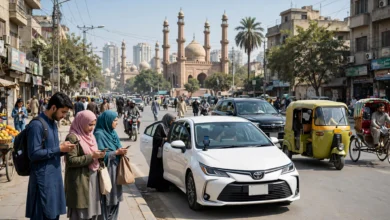
Riding in Pakistan is not the same as riding in a country with marked lanes and patient drivers. You deal with mixed traffic where a donkey cart, a Suzuki pickup, a rickshaw, and a 22-wheeler share the same lane. Road surfaces change without warning. Speed breakers appear unpainted. Service roads carry two-way traffic even when they are marked one-way. That is exactly why generic motorcycle safety tips from foreign websites only go so far. You need advice built for this chaos.
One doctor at Rescue 1122 Punjab put it simply: keeping motorcycle speed under 50 km/h would cut a huge share of deaths, because every extra 1 km/h raises the chance of a fatal crash by roughly 4 to 5 percent.
Motorcycle Safety Tips for Gear and Protection
Most riders in Pakistan treat gear as something you wear to avoid a challan. That mindset is the first thing to change. Gear is the only thing between your body and the road.
Tip 1: Wear a proper helmet, not a challan-saver
The Rs. 400 plastic shell sold at traffic signals is built to fool a camera, not to survive an impact. According to the World Health Organization’s helmet manual, a safe, quality helmet cuts the risk of death by more than six times and brain injury by up to 74 percent. Head trauma is the leading cause of death for riders worldwide, and Pakistani hospital data says the same.
When buying a helmet, look for:
- A certification mark such as DOT or ECE (PSQCA-approved models are increasingly available).
- A thick EPS foam layer inside, not just soft cushioning.
- A full-face or at least an open-face design with a visor to protect your eyes from dust and insects.
- A snug fit that does not rotate when you shake your head.
This is the single most important of all motorcycle safety tips. If you take nothing else from this article, take this.
Tip 2: Fasten the strap every single time
A helmet hanging off the handlebar or sitting loose on your head is useless. In a crash, an unfastened helmet flies off before your head hits the ground. WHO notes that improperly fastened helmets actually raise the risk of death and injury. Click the buckle even for a two-minute trip to the bakery.
Tip 3: Put a helmet on your pillion rider too
Wife, sister, child, or friend, the person behind you takes the same impact you do, often with less grip and worse balance. Sindh’s helmet rule now covers the rider and the passenger. Keep a second helmet at home and make it a family habit. For children, never let them stand on the fuel tank or sit in front of the handlebar.
Tip 4: Dress for a fall, not just for the weather
Shalwar kameez and chappals are what most people ride in, and that is reality. You can still lower your risk:
- Closed shoes protect your feet from the chain, hot exhaust, and road rash.
- Gloves save your palms, which hit the road first in almost every fall.
- A jacket or thick full-sleeve shirt reduces skin damage on a slide.
- Tuck in loose clothing, especially dupattas and chadars, which can wrap around the rear wheel and cause serious neck injuries.
Tip 5: Make yourself visible
Car and truck drivers often say “I didn’t see the bike.” Help them see you. Use a working headlight during the day, add reflective strips to your helmet and the back of the bike, and avoid riding in a car’s blind spot. A cheap reflective vest is one of the most underrated bike safety tips for night riders and delivery workers.
Defensive Riding: Motorcycle Safety Tips for Pakistani Traffic
Gear protects you after something goes wrong. Defensive riding stops it from going wrong in the first place. The core idea is simple: assume every other road user is about to make a mistake, and leave yourself room to react.
Tip 6: Keep your speed honest
Speed is the biggest killer in Rescue 1122’s data, and it is the one thing fully in your control. A 70cc or 125cc bike was never designed for 80 km/h on a broken city road. Within cities, staying around 40 to 50 km/h gives you time to brake when a rickshaw cuts across or a child runs out from between parked cars. Arriving five minutes late is better than not arriving.
Tip 7: Stay out of blind spots and away from buses
Buses, coaches, and dumpers in Karachi and Lahore stop wherever passengers wave, and their drivers rarely check mirrors for bikes. Some practical rules:
- Never ride alongside the left side of a bus or truck. That is where it pulls over.
- If you cannot see the driver’s face in his side mirror, he cannot see you.
- Don’t overtake a heavy vehicle at a turn. Its rear wheels cut inward and can crush a bike.
- Keep at least a two-second gap behind any vehicle so you are not trapped when it brakes.
Tip 8: Put the phone away
Riding with a phone wedged between the helmet and ear, or worse, holding it in one hand to check a delivery address, is now routine on our roads. It is also one of the easiest ways to die. Mount your phone on the handlebar for navigation, use voice prompts, and pull over to the side before replying to anything. Safe City cameras in major cities are now built to detect mobile phone use too.
Tip 9: Respect signals, especially when the road looks empty
Running a red light at night because “nobody’s coming” is how many fatal side-impact crashes happen. Cars coming from the cross road are thinking the same thing. Stop fully at red lights, check left and right at green lights before moving, and never use the zebra crossing or footpath as a shortcut. Pedestrians make up more than 10 percent of road crash victims in Punjab, and bikes on footpaths add to that.
Tip 10: Never ride the wrong way, even for 50 metres
Wrong-way riding on service roads and near U-turns is so common that many riders don’t even think of it as a violation. It is, and it is deadly. Oncoming drivers are not expecting you, and the closing speed in a head-on collision is double your own. Sindh’s revised traffic rules now treat wrong-way driving as one of the more serious offences for exactly this reason. Taking the longer U-turn is one of those motorcycle safety tips that costs a minute and could save your life.
Quick checklist before every ride
- Helmet on and strapped
- Pillion helmet on
- Brakes and horn working
- Headlight and indicators working
- Phone mounted or in pocket
- Licence and registration papers with you
Illegal Riding Habits and the Real Cases Behind Them
Any honest article on motorcycle safety tips in Pakistan has to talk about the stuff people do knowing it is illegal. These habits are not accidents of bad luck. They are choices, and the police files show where they lead.
One-wheeling: a stunt that keeps ending in funerals
One-wheeling has become almost a youth culture in Punjab, fuelled by TikTok and Instagram views. The results are grim:
- In September 2025, two people were killed in a one-wheeling crash on Lahore’s Canal Road, according to PakWheels reporting on the City Traffic Police crackdown.
- By late July 2025, Lahore police had arrested 1,187 people for one-wheeling that year and registered 1,067 cases. The city police chief also ordered action against mechanics who modify bikes for stunts.
- In October 2025, a video of a boy, a girl, and their group doing stunts in Ichhra went viral. The Express Tribune reported that an FIR was filed under rash and negligent driving (Section 279 PPC), driving without a licence (Section 99-A of the Motor Vehicles Ordinance 1965), obstructing police, and public nuisance. Lahore Traffic Police said its cyber patrolling team now watches social media around the clock.
- The crackdown has continued into 2026. By the end of April, Lahore police had arrested 637 more one-wheelers and registered 604 cases, according to The Nation.
- In Karachi, police near Sea View once arrested 34 people in a single night of racing and one-wheeling, seizing 14 motorcycles along with several cars.
The lesson is not just “you might get caught.” It is that a stunt filmed for a few thousand views can end with a criminal record, a confiscated bike, or a family burying a teenager.
Underage riding and riding without a licence
It is common to see 12- and 13-year-olds riding to school or tuition, sometimes with younger siblings on the back. Parents often see it as convenience. Police see it as a violation, and doctors see it as a head injury waiting to happen. Children lack the judgment and reaction time that traffic in Pakistan demands. Lahore’s police leadership has repeatedly asked parents directly not to hand bikes to underage children.
Adults without a licence are a bigger problem than most people admit. A licence test is not perfect, but it at least means you know the basic rules. Riding without one is now a heavier-fined offence in several provinces, and it is one of the charges police add when an unlicensed rider causes a crash.
Removed silencers, pressure horns, and illegal modifications
Pulling the silencer off for a louder exhaust note is illegal and is specifically targeted in recent Lahore operations, along with workshops that do the work. Pressure horns, extra-wide handlebars, and blinding aftermarket lights also make you a danger to others. Modifications don’t make a 70cc bike faster in any useful way. They make it louder, harder to control, and more likely to be impounded.
Overloading and triple riding
Four people on one motorcycle, or a rider balancing a gas cylinder, a stack of crates, or a sheet of glass, is a daily sight. The Punjab Traffic Police lists pillion riding by more than two persons as a separate offence. Beyond the law, overloading changes how the bike brakes and turns. A sudden stop becomes a fall.
Fake, fancy, or missing number plates
Bikes with no plates, handwritten plates, or “fancy” plates are often tied to street crime, which is why police check them closely. With automatic number plate cameras now issuing e-challans, some riders hide or bend plates to dodge fines. That turns a traffic violation into a criminal matter, and it makes your bike a suspect in any snatching case in the area.
Rules apply to everyone
In May 2026, Karachi’s mayor drew public criticism after riding an e-bike into the Sindh Assembly without a helmet, at the same time the city was issuing heavy helmet fines to ordinary riders. Whatever one thinks of the politics, the point is useful: a helmet protects a mayor’s skull exactly as much as a delivery rider’s. Following traffic rules for bikers is not about who is watching. It is about physics.
Motorcycle Safety Tips for Weather, Night Riding, and Maintenance
Pakistan throws every kind of condition at riders: 45°C summers, monsoon flooding, thick winter smog and fog in Punjab, and dust storms. Your riding has to change with the season.
Tip 11: Treat monsoon roads as a different road
The first rain after a dry spell lifts oil and dust off the road and turns it slippery. Flooded streets hide open manholes and deep potholes, a problem Karachi residents know well.
- Slow down by at least a third and brake earlier and more gently.
- Avoid riding through standing water if you can’t see the bottom.
- Stay off road paint, metal plates, and drain covers, which become ice-like when wet.
- If water reaches the exhaust, the engine can stall in the middle of traffic. Wait it out or take another route.
Tip 12: Ride smarter in fog and at night
Winter fog on GT Road and around Lahore regularly drops visibility to a few metres. At night, many trucks and tractor-trolleys run with no tail lights at all. Use low beam in fog (high beam reflects back and blinds you), keep your visor clean, and cut your speed to match what you can actually see. If visibility is close to zero, park somewhere safe and wait. Tractor-trolley crashes rose 27 percent in Punjab last year, and many happen at night when an unlit trolley appears from nowhere.
Tip 13: Maintain your bike like your life depends on it
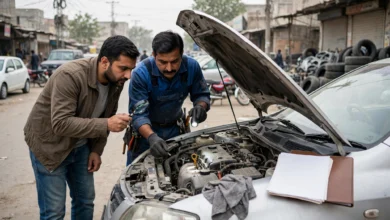
Because it does. Most riders only visit a mechanic when the bike won’t start. A small monthly check prevents most mechanical failures:
- Brakes: Replace worn brake shoes and adjust free play so the bike stops straight and quickly.
- Tyres: Check air pressure weekly and replace bald tyres. Tyre bursts are a known cause of fatal crashes.
- Chain: Keep it lubricated and properly tensioned. A loose chain can jump off and lock the rear wheel.
- Lights and indicators: Fix any dead bulb immediately, especially the brake light.
- Mirrors: Keep both mirrors on. Many riders remove them to look sporty, then wonder why they never see the bus behind them.
Good motorcycle maintenance costs a few hundred rupees a month. A crash costs far more.
Tip 14: Watch for hazards unique to our roads
Some dangers you won’t find in any foreign safety guide:
- Kite string (dor): Chemical-coated or metal string has slit the throats of riders in Punjab during kite-flying season. A simple neck guard or a raised scarf, plus a wire antenna fitted in front of the handlebar, can save your life.
- Unmarked speed breakers: Ride slower on unfamiliar streets, especially at night.
- Animals on the road: Stray dogs, cattle on highways, and donkey carts in the city all appear without warning.
- Street snatchers: Keep your phone out of your hand at signals and avoid empty roads late at night, particularly in parts of Karachi where bike-based snatching is common. Never resist an armed snatcher. Your phone is not worth your life.
Know the Law: Licences, Helmet Rules, and E-Challans
Tip 15: Get your papers right and take e-challans seriously
The old habit of settling a challan on the spot or hoping no warden is standing at the corner no longer works. Enforcement in Pakistan has gone digital.
Sindh launched its automated e-challan system in October 2025 under the Traffic Regulation and Citation System (TRACS). Cameras across Karachi read number plates and issue fines for helmet violations, signal jumping, wrong-way driving, overspeeding, and mobile phone use. Fines were raised sharply, and unpaid challans can affect your vehicle’s registration.
Punjab and Islamabad run similar Safe City camera systems, and the helmet law in Pakistan applies to riders in all major cities. Motorcycles are also not allowed on motorways at all.
Here is what every rider should have sorted:
| Requirement | Why it matters |
|---|---|
| Valid motorcycle driving licence | Riding without one is a separate offence under Section 99-A of the Motor Vehicles Ordinance 1965 and gets added to FIRs after crashes |
| Registration in your name | Prevents e-challans and crime suspicion landing on you for a bike you sold |
| Standard number plate | Fancy or missing plates draw fines and police attention |
| Helmet for rider and pillion | The most common violation caught by cameras |
| Regular e-challan check | Unpaid challans pile up and can block registration transfers |
Fine amounts are being revised often (Punjab, for example, approved cuts to several challans in 2026 while Sindh raised its own), so check your provincial traffic police or Safe City portal for the current list. The cheapest challan is still the one you never get.
What to do if you are in an accident
Even careful riders get hit. If it happens:
- Move to the side of the road if you can do so safely.
- Call Rescue 1122 (Punjab, KP, and other areas) or Edhi / Chhipa in Karachi, or the Motorway Police helpline 130 on highways.
- Do not remove an injured rider’s helmet unless they are not breathing, since it can worsen a neck injury.
- Take photos of the scene and the other vehicle’s number plate.
- Report it at the nearest police station if there are injuries or serious damage.
Conclusion
Riding a motorcycle in Pakistan will never be risk-free, but most of the deaths in Rescue 1122’s records are not random. They come from the same handful of choices: no helmet or a fake one, too much speed, riding the wrong way, ignoring signals, carrying too many people, letting children ride, and treating one-wheeling as entertainment. The motorcycle safety tips in this guide target exactly those choices, from buying a certified helmet and strapping it every time to staying clear of bus blind spots, adjusting for monsoon and fog, keeping your bike maintained, and getting your licence and registration in order before a camera or a crash forces the issue. The real cases from Lahore and Karachi show that police are now watching roads and social media alike, but the better reason to follow these motorcycle safety tips is the family waiting for you at home, so ride like you want to see them again tonight.