How to Reduce Sugar Intake Without Giving Up Pakistani Desserts
Reduce sugar without giving up kheer, gulab jamun or Eid mithai. Practical desi swaps, portion tips and the fake sweet traps every family should know.
Reduce Sugar Intake: 9 Smart Ways to Enjoy Pakistani Desserts Without Guilt
If you want to reduce sugar in a Pakistani home, you are up against centuries of tradition. Good news is shared with a box of mithai. Guests get chai with three spoons of cheeni. Eid means sheer khurma, weddings mean gulab jamun and gajar ka halwa, and Ramazan iftar is rarely complete without jalebi and Rooh Afza. Telling someone to simply “quit sugar” in this culture is not realistic advice, but learning to reduce sugar step by step is.
But the need to reduce sugar is real. Pakistan now has one of the highest rates of diabetes in the world, with roughly one in three adults affected according to the International Diabetes Federation. Many of them do not even know it yet.
The aim of this guide is not to ban dessert. It is to show you how to reduce sugar intake while still enjoying the sweets that make Pakistani food culture so special. You will find practical recipe swaps, portion tricks, spice tips and smarter choices for chai, sharbat and festive occasions.
We will also look at an uncomfortable reality. Food authorities in Punjab regularly seal sweet shops for using textile colours, adulterated khoya and banned or non-food-grade sweeteners. Knowing these cases helps you buy safer mithai and avoid “sugar-free” traps.
Small changes that reduce sugar, repeated every day, can make a big difference to your weight, blood sugar and long-term health, without taking the joy out of your table.
Why You Should Reduce Sugar in Pakistan
Diabetes has become one of Pakistan’s most serious health crises. According to the IDF Diabetes Atlas country report for Pakistan, around 34.5 million adults were living with diabetes in 2024, and the country has the highest age-standardised diabetes prevalence in the world. The number is projected to roughly double by 2050.
Too much added sugar is not the only cause of diabetes, but it plays a major role through weight gain, belly fat and insulin resistance. Learning to reduce sugar can help:
- Control weight and reduce belly fat
- Lower the risk of type 2 diabetes and help manage existing diabetes
- Protect your heart by improving triglycerides and blood pressure
- Prevent tooth decay, especially in children
- Keep energy steady and avoid the post-mithai slump
How Much Sugar Is Too Much?
The World Health Organization healthy diet guidance recommends limiting free sugars to less than 10 percent of total daily energy, with further benefits below 5 percent. For most adults, 5 percent is roughly 25 grams, or about six teaspoons a day.
Now compare that with a typical Pakistani day, before any effort to reduce sugar:


| Item | Approximate Added Sugar |
|---|---|
| 1 cup of doodh patti with 2 teaspoons | 8 g |
| 1 glass of sweetened sharbat | 20–30 g |
| 1 can of soft drink | 35 g |
| 2 gulab jamun with syrup | 30–40 g |
| 1 piece of jalebi | 15–20 g |
Four cups of chai alone can use up more than the daily ideal limit. That is why the best way to reduce sugar often starts with everyday drinks, not just desserts.
Free Sugar vs Natural Sugar
Free sugars include cheeni, gur, shakkar, honey, syrups and fruit juice. Sugar naturally present in whole fruit and plain milk is not counted the same way because it comes with fiber, protein and nutrients. This matters when you reduce sugar and choose sweeteners for desserts.
9 Smart Ways to Reduce Sugar Without Giving Up Pakistani Desserts
1. Cut the Sugar in Home Recipes by a Quarter or a Third
The easiest way to reduce sugar is in the kitchen. Most family recipes for kheer, zarda, suji ka halwa, gajar ka halwa and sheer khurma use more sugar than needed. Start to reduce sugar by 25 percent. Most people will not notice. After a few weeks, cut a little more.
Tip: To reduce sugar further, add it at the end of cooking and taste first. Milk-based desserts like kheer and phirni become naturally sweeter as milk reduces.
2. Let Natural Sweetness Do the Work
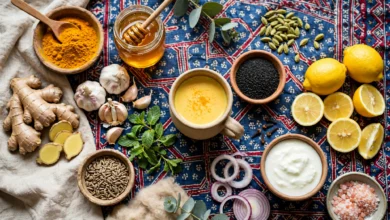
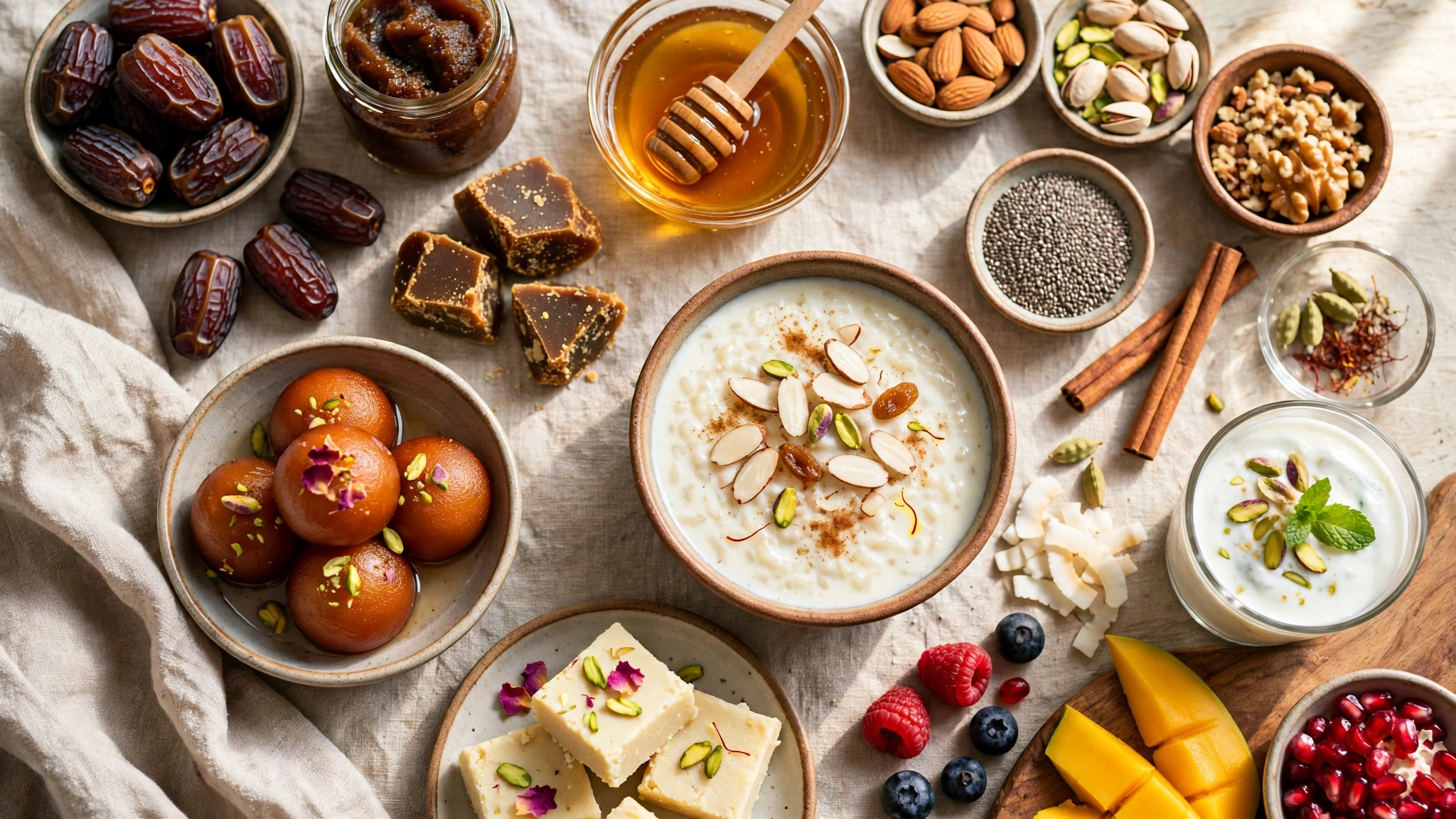
Pakistani markets are full of naturally sweet ingredients that help reduce sugar:
- Khajoor (dates): Blend into sheer khurma or use date paste in halwa.
- Ripe bananas: Mash into oat cakes or use in shakes without added sugar.
- Anjeer (figs) and kishmish (raisins): Add sweetness and fiber to kheer and daliya.
- Seasonal fruit: Mango, chikoo, guava and apples can top yogurt or custard.
Honest note: Dates and dried fruit still contain a lot of sugar. They are better than plain cheeni because of fiber and nutrients, but portions still matter, especially for people with diabetes.
3. Use Spices and Aromas to Boost Sweetness
Your brain links certain smells with sweetness. Use this to reduce sugar without losing flavour:
- Elaichi (cardamom) in kheer, chai and halwa
- Darchini (cinnamon) in custard, fruit chaat and oats
- Kewra and rose water in phirni and sheer khurma
- Zafran (saffron) in zarda and kheer
- Vanilla and nutmeg in baked desserts
A pinch of these can reduce sugar needs while making a dessert taste richer.
4. Choose Smaller Portions and Smaller Bowls
You do not need to give up gulab jamun to reduce sugar. You need one instead of three.
- Serve desserts in small katoris instead of large bowls.
- Cut barfi and halwa into smaller pieces.
- Share a dessert at restaurants and weddings.
- Eat dessert after a meal, not as a separate snack, to reduce blood sugar spikes.
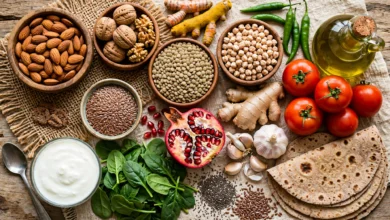
5. Pick Desserts With Protein, Fiber and Nuts
When you want to reduce sugar, some Pakistani desserts are better choices than others:
| Better Choices | Eat Less Often |
|---|---|
| Kheer or phirni with less sugar | Jalebi |
| Sheer khurma with nuts and dates | Gulab jamun in syrup |
| Fruit chaat without added sugar | Chamcham and rasgulla in syrup |
| Daliya or oat kheer | Deep-fried sweets like imarti |
| Besan or atta laddoo in small sizes | Heavily coloured bakery cakes |
Milk, nuts and whole grains help reduce sugar spikes and slow down absorption compared with fried dough soaked in syrup.
6. Drain the Syrup and Go Lighter on Fried Sweets
If you love gulab jamun, rasgulla or chamcham, simply draining the syrup before serving can reduce sugar in each serving significantly. For jalebi and imarti, enjoy a single piece on special occasions rather than buying them by the kilo every weekend.
7. Fix Your Chai, Sharbat and Cold Drinks First
For many families, drinks are the biggest hidden source of sugar and the fastest place to reduce sugar. To reduce sugar intake quickly:
- Reduce sugar in chai gradually, from two spoons to one and a half, then one.
- Try elaichi or darchini chai, which tastes sweeter with less sugar.
- Replace sharbat with lemon water, mint water or lassi without sugar.
- Limit soft drinks and packaged juices to rare occasions.
- At iftar, start with water and dates instead of a large glass of sweet sharbat.
8. Do Not Fall for the Gur, Shakkar and Honey Myth
Many people believe gur, shakkar, brown sugar or honey are “healthy sugar.” They may contain tiny amounts of minerals, but your body treats them almost the same as white sugar, so switching to them will not reduce sugar intake. If you are trying to reduce sugar, these count too.
9. Plan Ahead for Eid, Weddings and Ramazan
Festive seasons are when sugar intake explodes. A little planning helps you reduce sugar without missing out:
- Eid: Make one home dessert with reduced sugar instead of buying several mithai boxes.
- Weddings: Choose one dessert and take a small portion.
- Ramazan: Avoid fried sweets every evening; keep them for weekends.
- Gifting: Give dry fruit, fresh fruit baskets or nuts instead of a large box of mithai.
The Reality: Illegal Practices in Pakistan’s Sweet Industry
When you try to reduce sugar, quality matters as much as quantity. Food authorities have uncovered serious violations in sweets, khoya and sweeteners, which matter to anyone trying to reduce sugar safely.
Textile Colours and Chemicals in Mithai
The Punjab Food Authority (PFA) has sealed sweet and bakery units in Lahore for using Rongalite (rangkat), textile colours and chemicals in sweets. These substances are not meant for food and can harm health.
Large-Scale Crackdowns on Sweet Shops
In March 2026, the PFA inspected 818 bakery units and 1,478 sweet shops in a province-wide campaign, sealing 10 units and imposing fines of more than Rs13 million on 653 outlets.
Adulterated and Fake Khoya
Khoya is the base of many Pakistani sweets. In Kabirwala, the PFA destroyed 60 kg of khoya found adulterated with starch and registered an FIR. In Kot Momin, near Sargodha, it discarded 1,200 kg of adulterated khoya and sealed two production units. Other raids found fake khoya made with harmful chemicals.
Illegal and Non-Food-Grade Sweeteners
- In 2020, the PFA sealed a food company in Lahore and confiscated 20,000 kg of artificial sweeteners and 3,000 litres of corn syrup.
- In Vehari, the PFA seized ice lollies made with non-food-grade ingredients, including artificial sweeteners, and fake packaging.
- In Lahore, the PFA raided a factory making imitation soft drinks with artificial sweeteners, chemicals and contaminated water.
In 2026, officials also told a parliamentary committee that frequent use of artificial sweeteners and flavoured drinks may contribute to early-onset diabetes and other serious illnesses, and lawmakers asked for stricter standards.
Why This Matters
These cases show that “cheap mithai” can hide harmful ingredients, and that “sugar-free” does not automatically mean safe. If you reduce sugar but switch to unlabelled sweeteners or adulterated sweets, you may simply trade one risk for another.
How to Buy Safer Sweets and Sweeteners
- Buy from licensed, clean shops with visible food authority licences, even when you reduce sugar and buy less.
- Avoid unnaturally bright colours in barfi, laddoo and jalebi.
- Check labels and expiry dates on packaged sweets and syrups.
- Choose recognised, registered brands if you use sugar substitutes, and avoid loose sweetener powders.
- Make desserts at home when you can, so you can reduce sugar and control ingredients.
- Report suspicious products to your provincial food authority.
Are Artificial Sweeteners a Good Way to Reduce Sugar?
Approved sweeteners from reputable brands can help some people, especially those with diabetes, reduce sugar in chai or desserts. But they are not a magic solution:
- They can keep your craving for very sweet tastes alive.
- Some people experience digestive discomfort.
- Research on long-term effects is still evolving.
The healthiest long-term way to reduce sugar is to retrain your taste buds to enjoy less sweetness overall, using sweeteners sparingly if at all.
Ethical Choices Around Sugar and Sweets
- Sweet shop owners and caterers should never use non-food colours, fake khoya or illegal sweeteners to cut costs.
- Parents can set a good example by not using sweets as constant rewards for children.
- Hosts can help guests reduce sugar by offering less-sweet chai or fruit without making anyone feel judged.
- Respect people with diabetes who need to reduce sugar at gatherings by offering lower-sugar options instead of insisting “just one piece.”
Simple Weekly Plan to Reduce Sugar
- Week 1: Reduce sugar in chai by half a spoon.
- Week 2: Replace sharbat and cold drinks with water, lemon water or plain lassi.
- Week 3: Reduce sugar in home desserts by 25 percent and add spices.
- Week 4: Limit fried, syrup-soaked sweets to one day a week.
Within a month of trying to reduce sugar, many people find that old favourites taste too sweet, which is a sign that your palate is adjusting.
Conclusion
You can reduce sugar without giving up Pakistani desserts by cutting sugar in home recipes by a quarter or a third, using dates, fruit and spices like elaichi, darchini, kewra and saffron for flavour, serving smaller portions, choosing milk- and nut-based sweets over syrup-soaked fried ones, draining syrups, fixing chai and sharbat habits, ignoring the myth that gur and honey are healthy, and planning ahead for Eid, weddings and Ramazan; with diabetes affecting roughly one in three Pakistani adults, these changes matter more than ever, and real cases of sweets made with textile colours, starch-filled khoya and illegal sweeteners show why families should buy from licensed shops, avoid unlabelled “sugar-free” products, report adulteration and make more desserts at home so they can enjoy their traditions in a healthier and safer way.