What to Know Before Importing a Car Into Pakistan
Importing a car into Pakistan involves strict rules, duties, and age limits. Here's what buyers should confirm before shipping a vehicle.
Importing a car into Pakistan sounds simple until you actually start reading the rules. Between changing import policies, customs duties that can double the price of the vehicle, and a paperwork process that trips up even experienced buyers, this is not a decision to make on a whim. A lot of people find out too late that the car they wanted isn’t even eligible for import, or that the “final cost” they budgeted for was missing thousands of dollars in taxes.
If you’re an overseas Pakistani planning to bring a vehicle home, or a resident thinking about importing under one of the government’s approved schemes, this guide walks through everything that actually matters. We’ll cover who is allowed to import a car, which schemes apply to you, how duties are calculated, what documents you need, and the mistakes that cost people the most money and time.
This isn’t a general overview pulled from a brochure. It’s a practical breakdown of the process as it stands today, written for people who are actually about to sign shipping paperwork and want to get it right the first time. By the end, you should know exactly what to check before you commit to importing a vehicle, and where to go for the official, up-to-date numbers before you spend a single rupee.
Who Is Allowed to Import a Car Into Pakistan?
Not everyone can walk into this process. Pakistan’s import policy for vehicles is built around specific categories of people, and each one comes with its own conditions.
Overseas Pakistanis
This is the most common route. Pakistanis who have lived abroad for a certain period can import a vehicle under schemes designed specifically for them, usually tied to how long they’ve resided outside the country and whether they’re bringing the car back permanently or temporarily.
Transfer of Residence
If you’re moving back to Pakistan permanently after living abroad, you may qualify to bring your personal vehicle with you as part of a “transfer of residence.” This typically requires proof that you owned and used the car abroad for a minimum period before shipping it.
Gift Scheme
Overseas Pakistanis can also send a car as a gift to a relative in Pakistan. This scheme has its own duty structure and eligibility rules, and it’s a popular option for families splitting the cost of a vehicle across borders.
Personal Baggage Scheme
Returning residents can bring a car as part of their personal baggage allowance when relocating, subject to residency duration requirements and documentation proving the move is genuine.
Each of these categories has different age limits for the vehicle, different duty rates, and different paperwork. Before you go further, figure out which category actually applies to your situation, because it changes every number that follows.


Vehicle Age Limits: What You Can and Cannot Import
One of the first things that catches people off guard is the age restriction on imported vehicles. Pakistan does not allow the import of just any used car, no matter how good the deal looks.
Generally speaking:
- Vehicles must fall within a specific age bracket from the date of manufacture, and this limit is reviewed periodically by the government.
- Older vehicles, even if mechanically sound, are typically barred from import regardless of how well-maintained they are.
- Commercial vehicles and passenger cars can have different age thresholds depending on the current policy.
Because these limits change with policy updates, the single most important step before importing a car into Pakistan is confirming the current age limit directly with a customs agent or the relevant government department. Don’t rely on last year’s numbers or advice from someone who imported a car two or three years ago. Policies shift, and shipping a vehicle that doesn’t meet the current age requirement means it can be held at port, or worse, refused entry entirely.
Understanding Duties and Taxes on Imported Vehicles
This is where most budgets fall apart. People often price out the car itself and forget that duties, taxes, and port charges can add a substantial percentage on top of the vehicle’s value.
What Gets Calculated
Import duty on a vehicle is generally based on a combination of:
- Engine capacity – Larger engines are taxed at higher rates.
- Vehicle value – Assessed either on invoice value or a government-set reference value, whichever framework applies to your import category.
- Depreciation – Older vehicles (within the allowed age range) may get a depreciation allowance that reduces the taxable value.
- Additional taxes – Sales tax, withholding tax, and other levies can stack on top of the base customs duty.
Why This Matters Financially
A car that costs $15,000 abroad can easily end up costing significantly more once duties are added, especially for larger engine sizes. This is precisely why so many buyers in Pakistan lean toward smaller-engine vehicles when importing privately, since the tax brackets are structured to make big engines dramatically more expensive to bring in.
Before committing to a purchase, get an official duty estimate. The Federal Board of Revenue publishes updated customs valuations and duty structures, and checking directly with FBR’s official portal is the most reliable way to get current figures rather than relying on estimates from a dealer or forum post.
Documents You’ll Need for a Smooth Import Process
Paperwork is where delays happen most often. Missing even one document can hold your vehicle at the port for weeks, racking up demurrage charges the whole time.
Typical documentation includes:
- Original sale invoice or purchase receipt for the vehicle
- Bill of lading from the shipping company
- Import authorization or permit, depending on which scheme you’re using
- Proof of residency abroad (for transfer of residence or personal baggage schemes)
- Passport copies and CNIC (or NICOP for overseas Pakistanis)
- Vehicle registration documents from the country of origin
- Certificate of roadworthiness or inspection report, where required
Every document should be cross-checked against the exact requirements of your chosen import scheme before the vehicle leaves its port of origin. Fixing paperwork gaps after the car has already shipped is far harder, and far more expensive, than sorting it out before departure.
Choosing the Right Import Scheme for Your Situation
Since the scheme you choose determines duty rates, age limits, and required documents, it’s worth spending real time comparing your options rather than defaulting to whatever a shipping agent recommends.
Comparing the Main Schemes
- Gift scheme: Good for families abroad who want to send a vehicle to a relative in Pakistan without relocating themselves. Duty structures here are distinct from personal-use imports.
- Transfer of residence: Best suited to people permanently moving back and bringing a vehicle they’ve genuinely owned and used abroad.
- Personal baggage: Similar to transfer of residence but framed around relocation logistics and baggage allowances.
- Commercial import: For businesses or dealers importing vehicles for resale, which involves an entirely different regulatory and licensing framework.
If you’re not sure which scheme fits your circumstances, it’s worth consulting a licensed customs clearing agent before shipping anything. A short consultation upfront can save you from a costly misclassification later.
Shipping and Port Clearance: What Actually Happens
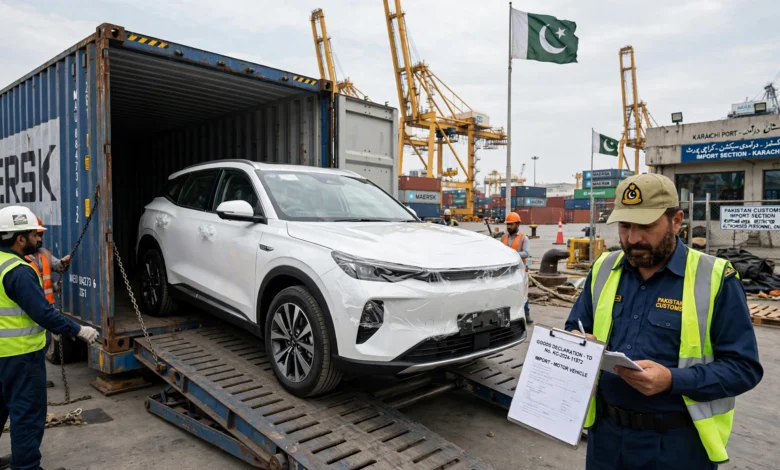
Once the vehicle leaves its origin country, the process shifts to logistics and customs clearance at a Pakistani port, usually Karachi.
The General Sequence
- Booking the shipment with a freight forwarder, either as a full container or roll-on/roll-off, depending on the vehicle type and route.
- Transit time, which varies widely depending on the country of origin and can range from a few weeks to over a month.
- Arrival at port, where the vehicle enters customs bonded storage until clearance is completed.
- Customs assessment, where duties are calculated based on the documentation and current valuation tables.
- Payment of duties and taxes, which must typically be settled before the vehicle is released.
- Release and local registration, after which the car can be registered with the relevant provincial excise and taxation department.
Delays at any one of these stages can add unexpected storage fees, so it helps to work with a clearing agent who has a track record of moving vehicles through the specific port you’re using.
Common Mistakes People Make When Importing a Car
Some mistakes show up again and again, and most of them are avoidable with a bit of upfront research.
- Assuming last year’s duty rates still apply. Policies and valuation tables get revised, sometimes more than once a year.
- Buying a vehicle that’s too old to qualify. Always confirm the current age cap before purchasing, not after.
- Underestimating total landed cost. Factor in shipping, insurance, duties, taxes, port handling, and local registration fees, not just the vehicle price.
- Choosing the wrong import scheme. This can mean paying far more in duty than necessary, or having the vehicle rejected altogether.
- Skipping a reputable clearing agent. Trying to handle customs clearance without professional help often costs more in delays than the agent’s fee would have cost upfront.
- Ignoring engine size when budgeting. Larger engines push you into higher duty brackets, sometimes by a significant margin.
Registering Your Imported Vehicle Locally
Once your car clears customs, it still needs to be registered before it can legally be driven in Pakistan. This involves the provincial excise and taxation department where you plan to keep the vehicle registered, and typically requires:
- Proof of customs clearance and duty payment
- Original import documents
- CNIC or NICOP
- A roadworthiness or emission inspection, depending on provincial requirements
Registration fees and processes differ slightly between provinces, so it’s worth checking with your local excise office, or a resource like the Excise and Taxation Department websites, for province-specific requirements before you finalize plans.
Is Importing a Car Into Pakistan Worth It?
For many overseas Pakistanis, importing a personal vehicle they already own and love makes sense, especially under schemes with favorable duty treatment. For others, once duties, shipping, and registration costs are added up, buying locally or purchasing a car already registered in Pakistan turns out to be more economical.
The honest answer depends on:
- The vehicle’s engine size and current market value
- Which import scheme you qualify for
- How long you’re willing to wait for shipping and clearance
- Whether you have access to a trustworthy clearing agent
Running the full cost comparison before committing, rather than after the vehicle has already shipped, is the difference between a smooth import and an expensive lesson.
Final Thoughts
Importing a car into Pakistan can be a genuinely good option if you understand the rules going in, but it rewards careful planning and punishes shortcuts. Know which import scheme applies to you, confirm the current vehicle age limits and duty rates directly with official sources, gather every required document before the car ships, and budget for the full landed cost rather than just the purchase price.
Do that groundwork properly, and the process, while still paperwork-heavy, becomes far more predictable. Skip it, and you risk a vehicle stuck at port, unexpected charges, or a car that never should have been shipped in the first place.