Common Car Problems Pakistani Drivers Face and How to Fix Them
Car problems in Pakistan, from overheating and weak AC to bad fuel and fake parts, explained with clear fixes and the repair scams drivers must avoid.
Car Problems in Pakistan: 10 Common Faults, Proven Fixes and Costly Repair Scams to Avoid
Introduction
Car problems in Pakistan have a local flavour. Summer temperatures above 45°C push radiators and AC systems to their limits, monsoon rains flood underpasses and drown engines, broken roads wreck suspensions, and stop-and-go traffic in Karachi and Lahore chews through brakes and clutches. Add petrol at around Rs390 a litre, and every breakdown hurts twice: once in repairs and again in lost time.
Some of the most damaging car problems are not mechanical at all. They come from illegal activity. A 2024 intelligence report found that around 10 million litres of smuggled Iranian petrol and diesel were entering Pakistan every day, much of it sold at unauthorised roadside outlets with no quality control. Industry estimates have put most aftermarket spare parts sold in Pakistan in the fake or illegal category. And substandard CNG cylinders fitted by unlicensed roadside workshops have caused deadly fires, including a 2020 van fire on the M9 Motorway that killed at least 17 people.
This guide covers the ten most common car problems Pakistani drivers face, how to spot each one early, and how to fix it, whether that means a simple DIY check or a trip to a trusted mechanic. It also explains how to avoid bad fuel, fake parts and dishonest workshops, which often turn small car problems into expensive ones. Fix the basics early, and most car problems never become emergencies.
10 Common Car Problems in Pakistan and How to Fix Them
These ten car problems account for most workshop visits across Pakistan. For each one, you will find the warning signs, the usual causes and the fix.
1. Engine Overheating in Summer Heat
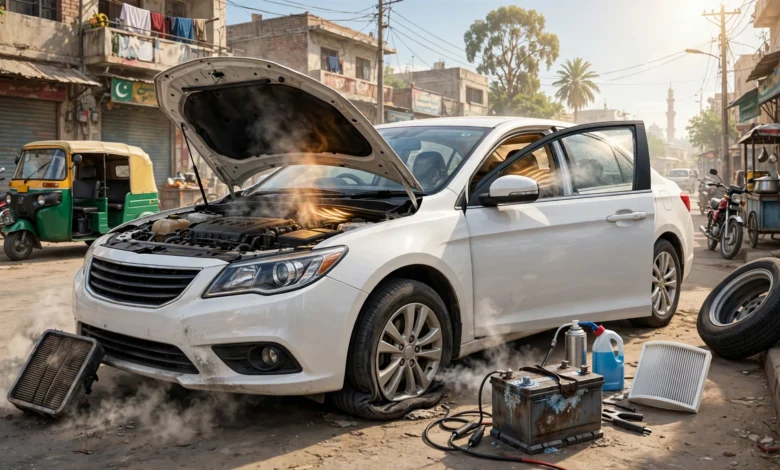
Car overheating is the classic summer complaint among car problems in Pakistan. Watch for a temperature needle climbing past the middle, steam from the bonnet, or a sweet smell of coolant.
Common causes: low coolant, plain water used instead of coolant, a clogged radiator, a faulty radiator fan, a stuck thermostat or a worn water pump.
How to fix it:
- Check the coolant level only when the engine is cold. Never open a hot radiator cap.
- Use proper coolant mixed as the manufacturer recommends, not just tap water, which causes rust and scale.
- Flush the radiator before summer and clean dust and insects from its fins.
- If the fan does not switch on when the engine is hot, have the fan motor, relay and fuse checked.
If the car overheats while driving, turn off the AC, turn the heater to full to pull heat away from the engine, and stop safely as soon as you can.
2. AC Not Cooling Properly
When the AC blows warm air in June, it becomes one of the most urgent car problems a driver can have. Signs include weak airflow, cooling that fades in traffic, or a hissing sound.
Common causes: a refrigerant leak, a dirty condenser blocked by dust, a clogged cabin filter, a slipping compressor belt or a failing compressor.
How to fix it: Clean or replace the cabin filter, wash the condenser in front of the radiator, and ask for a proper leak test rather than a quick gas top-up. Topping up a leaking system only hides the real car problems and wastes money.
3. Weak or Dead Battery
Heat shortens battery life, so battery-related car problems often appear sooner in Pakistan than in cooler countries. A slow crank in the morning, dim headlights or a clicking sound when you turn the key are early warnings.
How to fix it: Clean white or green corrosion from the terminals, make sure the clamps are tight, and have the battery and alternator tested. When replacing, buy a battery from an authorised dealer with a written warranty and a clear manufacturing date.
4. Worn or Noisy Brakes
Stop-and-go traffic makes brake wear one of the most frequent car problems. Squealing, grinding, a soft pedal or the car pulling to one side when braking are signs you should not ignore.
How to fix it: Replace pads in pairs, check disc condition, and change brake fluid at the interval in your owner’s manual. Insist on genuine or reputable branded pads. Fake brake parts are among the most commonly counterfeited items in the country, and brakes are the last place to save money.
5. Suspension Damage From Potholes and Speed Breakers
Broken roads and badly designed speed breakers cause some of the most expensive car problems over time. Listen for knocking over bumps, and look for uneven tyre wear or a car that drifts on straight roads.
How to fix it: Have shocks, bushes, ball joints and link rods inspected, then get a wheel alignment after any suspension repair. Slowing down for speed breakers and avoiding deep potholes saves more money than any repair.
6. Flooded Engine in the Monsoon
Every monsoon, cars stall in flooded underpasses and low-lying streets. If water enters the air intake, it can bend engine parts in seconds, a failure known as hydrolock. This is one of the costliest car problems a driver can face, and it is almost entirely avoidable.
How to fix it:
- Never drive through water deeper than the middle of your wheels.
- If the engine stalls in water, do not try to restart it. Push or tow the car out.
- Have a mechanic check the air filter, intake and engine oil for water before starting. Milky oil means water has entered the engine.
- Dry and inspect electrical connectors, and check brakes, which work poorly when wet.
7. Poor Fuel Average, Knocking and Rough Running From Bad Fuel
A sudden drop in fuel average, engine knocking, hard starting or a check-engine light after a fill-up can point to adulterated petrol. Fuel from unregulated roadside outlets may not meet engine standards, and contaminated fuel can clog filters and injectors.
How to fix it: Fill up at licensed, reputable stations and keep receipts. If you suspect bad fuel, stop using it, replace the fuel filter, and have the injectors and spark plugs checked. Report suspicious stations to the Oil and Gas Regulatory Authority (OGRA) or your district administration, so fewer drivers face the same car problems.
8. Clutch and Gearbox Wear
Heavy traffic makes clutch wear one of the most common car problems in manual cars. A slipping clutch, high engagement point, burning smell or difficulty changing gears all signal wear. Automatic and AGS cars can show jerky shifts or delayed engagement.
How to fix it: Avoid resting your foot on the clutch, use neutral at long signals, and do not hold the car on a slope with the clutch. Change gearbox oil at recommended intervals, and for automatics, use only the fluid type the manufacturer specifies.
9. Tyre Problems in Extreme Heat
Hot roads, underinflation and overloading cause tyre-related car problems such as blowouts and fast wear. Bulges, cracks in the sidewall, uneven wear and frequent air loss are warning signs.
How to fix it: Check tyre pressure weekly when tyres are cold, follow the pressure on the door sticker, and rotate tyres regularly. When buying new tyres, check the manufacturing date code on the sidewall. Old stock sold as new is a common trick, and tyres age even when unused.
10. Electrical Faults and Warning Lights
Modern cars use more electronics, and cheap add-ons such as poorly wired lights, alarms and music systems cause many electrical car problems. Flickering lights, a battery that drains overnight, blown fuses or warning lights on the dashboard need attention.
How to fix it: Never ignore a red warning light, especially oil pressure, battery or temperature. Have the fault codes read with a diagnostic scanner, check alternator output, and remove or rewire badly installed accessories. Use the correct fuse rating, never a thicker wire or foil as a shortcut.
The Illegal Activity Behind Many Car Problems
Some car problems start long before anything breaks. They begin at an illegal fuel outlet, a shop selling fake parts, or a roadside workshop cutting corners. Knowing these risks helps you avoid them.
Smuggled and Adulterated Fuel
Fuel smuggling has been a long-running problem in Pakistan. According to Dawn’s reporting on the fuel black market, an April 2024 intelligence report estimated that around 10 million litres of Iranian petrol and diesel were smuggled into Pakistan every day, causing a revenue loss of over Rs227 billion, and identified 533 illegal petrol stations. The same report noted that tracking reforms were meant partly to reduce engine damage from adulterated fuel. In May 2026, Pakistan’s refineries warned the regulator that smuggling was surging again, with smuggled diesel estimated at nearly a quarter of national demand, much of it sold at unauthorised roadside outlets.
For drivers trying to avoid car problems, the lesson is simple. A few rupees saved per litre at a roadside drum can cost thousands in fuel filters, injectors and spark plugs.
Fake and Illegal Spare Parts
The Pakistan Association of Automotive Parts and Accessories Manufacturers (PAAPAM) estimated in 2019 that the fake and illegal aftermarket was worth Rs22 billion to Rs25 billion, with roughly four in five components sold falling into that category. Brake parts, filters, clutch parts, bearings and lamps were among the most commonly faked, usually priced 20 to 30 percent below genuine items. A fake oil filter or brake pad can turn a routine service into serious car problems.
Substandard CNG Cylinders and Unlicensed Workshops
Many Pakistani cars still run on CNG, and poor installations have caused deadly fires. After a passenger van caught fire on the M9 Motorway in September 2020, killing at least 17 people, the Sindh government launched a crackdown on substandard CNG cylinders. In a related court hearing, OGRA’s counsel told the Sindh High Court that licensed workshops charged about Rs10,000 to install a cylinder, while uncertified roadside mechanics charged as little as Rs2,000. OGRA had already banned CNG and LPG cylinders in public service vehicles and school vans in 2019. If your car uses CNG and you want to avoid dangerous car problems, make sure the kit and cylinder are certified, installed by a licensed workshop and inspected regularly.
Dishonest Workshop Practices
Not every mechanic is honest. Common tricks include replacing parts that did not need replacing, fitting used or fake parts while charging for new ones, and topping up AC gas without fixing the leak. These practices make car problems more expensive and more frequent. Ask to see old parts, request written estimates and keep invoices for every repair.
A Simple Maintenance Schedule to Prevent Car Problems
Most car problems are cheaper to prevent than to repair. The intervals below are general guidelines; always follow your owner’s manual first, and service more often if you drive in heavy traffic, dust or extreme heat.
| What to check | How often | Why it matters |
|---|---|---|
| Tyre pressure and visible damage | Weekly | Prevents blowouts and uneven wear |
| Coolant, engine oil and brake fluid levels | Monthly | Catches leaks before they cause overheating or brake failure |
| Engine oil and oil filter change | Per manual, usually every 5,000 to 10,000 km | Protects the engine from wear |
| Air filter and AC cabin filter | Every service, more often in dusty areas | Keeps fuel average and cooling strong |
| Battery terminals and charge | Every few months and before summer | Avoids sudden no-start mornings |
| Brake pads and discs | Every service | Keeps stopping distances safe |
| Radiator flush and AC service | Once a year, before summer | Prevents overheating and weak cooling |
| Wheel alignment and balancing | After suspension work or if the car pulls | Saves tyres and steering parts |
Handling Car Problems on the Road: Emergency Kit and Honest Mechanics
Even well-maintained cars run into car problems on the road. A small kit and a trusted mechanic make the difference between a delay and a disaster.
What to Keep in the Car
- A spare tyre in good condition, a jack and a wheel spanner
- Jumper cables or a portable jump starter
- A litre of coolant and a bottle of drinking water
- A small fire extinguisher, especially in CNG cars
- A torch, reflective warning triangle and basic tools
- Emergency contact numbers, including Motorway Police (130) and Rescue 1122
How to Find an Honest Mechanic
- Ask around. Recommendations from friends and neighbours who have used the same workshop for years are worth more than any advertisement.
- Get written estimates before work starts, listing parts and labour separately.
- Ask for the old parts back so you can see what was replaced.
- Buy parts yourself from authorised dealers when possible, or ask for invoices showing their source.
- Use authorised dealerships for warranty work and complex electronic car problems.
A good mechanic explains car problems in plain words and does not pressure you into urgent repairs you do not understand.
Car Problems You Should Never Ignore
Some car problems need you to stop driving straight away:
- A red oil pressure or temperature warning light
- Smoke from under the bonnet
- A burning smell of rubber, plastic or fuel
- A brake pedal that sinks to the floor
- A smell of gas in a CNG car
In any of these cases, stop safely, switch off the engine and call for help rather than trying to reach home.
FAQs About Car Problems in Pakistan
What are the most common car problems in Pakistan?
Overheating, weak AC, battery failure, brake wear, suspension damage, monsoon flooding, bad fuel, clutch wear, tyre damage and electrical faults top the list, largely because of heat, traffic, road conditions and fuel quality.
Why does my car overheat in summer?
Usually because of low coolant, plain water instead of coolant, a clogged radiator or a faulty radiator fan. Check the coolant when the engine is cold and have the fan and thermostat tested.
How can I tell if I got bad petrol?
A sudden drop in fuel average, knocking, rough running or hard starting right after a fill-up are common signs of fuel-related car problems. Use licensed stations and keep receipts.
Are cheap spare parts worth it?
Not for safety-critical parts. Fake brake pads, filters and bearings are common in Pakistan and can fail without warning and cause serious car problems. Buy from authorised dealers whenever possible.
Can these car problems be prevented?
Most can. Regular checks of fluids, tyres, brakes and batteries, plus good fuel and genuine parts, prevent the majority of car problems and breakdowns.
Conclusion
The most common car problems Pakistani drivers face, from overheating, weak AC and dead batteries to worn brakes, damaged suspension, flooded engines, bad fuel, clutch wear, tyre failures and electrical faults, are shaped by extreme heat, monsoon rains, broken roads and heavy traffic, and most can be prevented with simple checks and timely servicing. Many of the costliest car problems, though, trace back to illegal activity: smuggled fuel sold at an estimated 533 illegal petrol stations, a fake spare parts trade once valued at up to Rs25 billion, and substandard CNG cylinders fitted by unlicensed workshops that have cost lives, including at least 17 people in the 2020 M9 Motorway van fire. Fill up at licensed stations, buy genuine parts from authorised dealers, use certified CNG installations, keep an emergency kit, find a mechanic who shows you the old parts, and follow a regular maintenance schedule, and you will spend less time stranded and far less money fixing car problems that never needed to happen.