Best Time of Year to Buy a Car in Pakistan for the Best Price
Best time to buy a car in Pakistan explained: year-end deals, budget timing, loan rates, own money traps and booking scams, so you can pay a fair price.
Best Time to Buy a Car in Pakistan: 6 Smart Windows to Save Big
Introduction
Best time to buy a car in Pakistan is a question with a frustrating answer: it depends. Western guides say December is king because dealers chase annual targets. That logic only partly works here. Pakistani car prices are pushed around far more by the rupee, the federal budget, interest rates and supply shortages than by any dealer’s sales calendar.
Still, timing matters a lot. Buy a week before a new tax kicks in and you can save hundreds of thousands of rupees. Buy when deliveries are slow and you may end up paying “own money”, the illegal premium that research by the Pakistan Institute of Development Economics estimated at Rs150 to 170 billion over five years. Buy in a rush and you might hand your booking money to a dealer who disappears.
This guide looks at the real forces behind car prices in Pakistan and turns them into practical buying windows for both new and used cars. You will see when year-end deals actually help, why the June budget matters more than December, how policy rates change your car financing costs, and which months carry hidden risks such as flood-damaged cars. We also cover past scams and illegal practices in the market, from inflated premiums to fraudulent dealerships, so you can spot them early. The goal is simple: pay a fair price, legally, without getting caught in someone else’s game.
What Really Drives Car Prices in Pakistan
Before picking a month, you need to know what moves prices here. Unlike markets where dealers compete hard on discounts, Pakistan’s prices are set mostly by automakers and the government. These five forces matter most.
1. The Rupee and Imported Parts
Even locally assembled cars rely heavily on imported kits, engines and electronics paid for in dollars. When the rupee falls, automakers usually raise prices within weeks. When it stabilises or strengthens, price hikes slow down and, occasionally, companies trim prices or offer discounts. Watching the exchange rate is one of the simplest ways to time a purchase.
2. The Federal Budget and Tax Changes
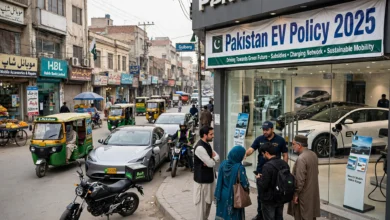
The budget is announced in June and most changes take effect from 1 July. Sales tax, federal excise duty, withholding tax on registration and special levies can all change overnight. In Budget 2026-27, for example, the government applied federal excise duty to cars above 2,000cc and to luxury imported EVs, while extending the 1 percent sales tax on eligible locally made EVs to June 2027. PakWheels published a detailed breakdown of the budget’s impact on cars.
3. Interest Rates and Car Loans
A large share of buyers in Pakistan rely on bank financing. The State Bank’s policy rate decides how expensive that financing is. When the rate is high, monthly installments jump and demand falls, which can actually ease delivery times and premiums. When rates drop, financing gets cheaper, demand rises and waiting lists can come back.
4. Supply, Waiting Times and Own Money
When automakers cannot meet demand, delivery times stretch to months and middlemen start selling instant delivery at a premium. That premium, known locally as “own money”, can add hundreds of thousands of rupees to the real price. When supply is good, it shrinks or disappears.
5. Model Year and Model Changes
In Pakistan, the registration year strongly affects resale value. A car bought in December but registered that year is treated as one year older at resale than an identical car bought in January. New model launches or facelifts also push down prices of the outgoing version, both new and used.
The takeaway: the best time to buy a car in Pakistan is less about the calendar and more about catching these forces at the right moment.
6 Smart Windows: The Best Time to Buy a Car in Pakistan
With those forces in mind, here are six windows where buyers usually have the upper hand. None of them is a guarantee. Combine two or three and your odds improve.
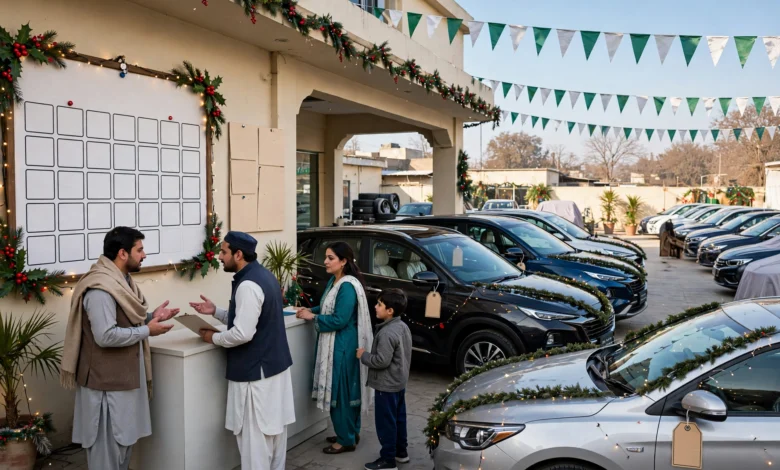
Window 1: Late November to December for New Cars (With a Catch)
Dealers want to clear stock carrying the current year’s model, because buyers prefer a car registered in the new year. That gives you room to ask for free registration, insurance, accessories or a small discount on in-stock cars.
The catch: a car registered in December counts as a year older the moment January arrives. If you plan to sell within three or four years, the resale hit can cancel out the discount. Year-end buying makes most sense if you plan to keep the car for a long time.
Window 2: Early January for Model Year Freshness
If resale value matters to you, January is often the better pick. You get a car with the new year’s registration, and showroom traffic tends to be calmer after the year-end rush. Some automakers also announce new-year price changes, so compare the December and January prices before deciding.
Window 3: May to Mid-June, Before the Budget Takes Effect
This is the most important window in Pakistan, and most foreign guides miss it entirely. Budget proposals usually leak in May and early June. If credible reports suggest higher sales tax, excise duty or levies on the category you want, buying and getting invoiced before 1 July can save you a large amount.
Budget 2026-27 shows how this works. Cars above 2,000cc and luxury imported EVs faced new federal excise duty, while locally assembled EVs kept their concessional tax. Buyers who tracked the proposals could plan ahead.
Be careful: budget rumours are not always accurate, and sometimes taxes fall instead of rising. Do not pay own money or rush into a deal based on a WhatsApp forward. Check credible news and official announcements.
Window 4: When the Rupee Is Stable or Strengthening
When the rupee has been steady for a few months, automakers have less reason to raise prices and sometimes respond to weak sales with discounts, free registration or financing offers. If the rupee is sliding sharply, buying sooner usually beats waiting, because price hikes tend to follow.
Window 5: When Policy Rates Fall
If you are financing, the State Bank’s rate decisions matter more than any month. A cut of a few percentage points can lower your monthly installment noticeably over a five-year loan. Follow the State Bank of Pakistan policy announcements and compare offers from at least three banks before you commit.
Window 6: Launch and Slow-Sales Periods
When a new competitor launches, especially in crowded segments where Chinese brands are now pushing hard, established brands often respond with limited-time offers. Slow months after big holidays, when showroom traffic drops, can also give you more negotiating room. Ask about:
- Free registration and token tax for the first year
- Free or discounted insurance
- Free periodic maintenance or extended warranty
- Reduced markup or interest-free installment plans
Best Time to Buy a Used Car in Pakistan
Used car prices follow new car prices, but with their own patterns.
- After new car price hikes: used car prices often rise quickly afterward, so buying a used car just before an expected new car price increase can be smart.
- After a facelift or new generation: owners trade in older versions, and their prices soften.
- January: cars from the previous model year lose some value as they become “a year older” on paper.
- Before Eid and holiday travel: demand often rises as families plan trips, so sellers tend to hold firm.
A Monsoon Warning
After heavy monsoon rains and urban flooding, water-damaged cars sometimes appear in the market after a quick clean-up. Flood damage can ruin electrics, engines and safety systems, and it is not always obvious. Between August and October, inspect used cars extra carefully: check for silt under carpets, rust on seat rails, musty smells and moisture in the light housings.
Quick Reference: Month by Month
| Period | What usually happens | Buyer move |
|---|---|---|
| January | New model year registrations, calmer showrooms | Good for new cars if resale matters |
| February to April | Mixed; driven by rupee and rates | Watch exchange rate and offers |
| May to June | Budget proposals and announcements | Buy before 1 July if taxes are set to rise |
| July | New taxes take effect, possible price changes | Avoid panic buying; compare new prices |
| August to October | Monsoon; some flood-damaged used cars appear | Inspect used cars very carefully |
| November to December | Year-end stock clearance | Good deals if you plan to keep the car long |
Reality Check: Illegal Practices That Wreck Good Timing
Perfect timing means nothing if you get caught in one of the market’s long-running scams. These are documented problems, not rumours.
Own Money: The Premium That Should Not Exist
Own money is an extra payment, above the official price, for faster delivery. The government and automakers have repeatedly described it as an illegal practice. In 2019, Toyota’s assembler ran public ads urging buyers to refuse premiums, book only through authorised dealers, make payments only in the company’s name and avoid private investors.
The scale is huge. A Pakistan Institute of Development Economics study on own money estimated that 80 to 90 percent of passenger cars were being sold with own money in some years, and that Rs150 to 170 billion changed hands this way over five years, largely undocumented. In 2021, a special assistant to the prime minister told the federal cabinet that investors were charging up to Rs800,000 on large vehicles and Rs100,000 to Rs500,000 on smaller cars.
How it worked: investors booked several cars at once, sometimes many on a single CNIC, paying only the required partial booking amount. That choked supply. They then sold their delivery slots to impatient buyers at a premium, often handing over cars on an open letter without an invoice in the buyer’s name. Dealers have also been accused of taking part directly.
Regulators Stepped In
The Competition Commission of Pakistan opened an inquiry into the auto sector covering own money, delayed deliveries and price increases on cars already booked with full or partial payment. Business Recorder reported on the CCP inquiry, which led some carmakers to revise their booking terms. The government also introduced extra taxes on cars transferred soon after delivery to make quick flipping less profitable.
Lesson for timing: the worst time to buy is when waiting lists are long and own money is high. If a car you want carries a premium, either book officially and wait, or choose a model with immediate delivery at the list price.
Booking Money That Disappears
Some of the worst losses come from paying booking money to the wrong people.
- Gujranwala dealership fraud: PakWheels reported that the owner of a Toyota dealership in Gujranwala collected customer money and fled the country, reportedly to Canada.
- Online booking gang: The FIA arrested members of a gang that pretended to book cars and took payments into their own bank accounts. One complainant alone had transferred Rs10.55 million.
- Luxury dealership complaints in Lahore: At least 15 customers lodged police complaints against the local dealer of an international luxury brand over undelivered cars. The company’s representative disputed the claims, saying the brand’s head office had refused deliveries, which shows how messy these cases can get even with well-known names.
Hidden Charges and Forced Add-Ons
Buyers often find the final invoice higher than the official price because of unexplained freight, “dealer fees” or overpriced accessory packages. Ask for a written, itemised quotation that matches the automaker’s official price list, and refuse add-ons you did not ask for.
Used Car Fraud Peaks When Demand Peaks
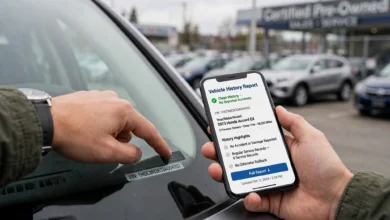
When prices are rising and buyers are in a hurry, fraudsters take advantage. In one case reported in 2025, cricketer Sohaib Maqsood publicly alleged that a Multan showroom sold his car without his consent and gave him another vehicle with fake documents. Whatever the season, verify ownership and documents through the provincial Excise portal and complete a proper transfer.
A Practical Plan to Buy a Car in Pakistan at the Best Price
Timing works best when it is part of a plan. Here is a simple step-by-step approach.
- Set your budget and keep a buffer. Include registration, token tax, insurance, withholding tax and the first year of maintenance, not just the sticker price.
- Shortlist two or three models. Flexibility gives you leverage. If one model has a waiting list or premium, switch to one with immediate delivery.
- Track prices for a few weeks. Watch the automakers’ official price lists, the exchange rate and the State Bank’s rate decisions. Note any budget proposals in May and June.
- Compare financing offers. Get quotes from several banks and check the total markup over the full loan, not just the monthly installment.
- Book only through authorised dealers. Pay by pay order or bank transfer in the automaker’s name, never cash to an individual, and keep every receipt.
- Ask for the full, itemised invoice. Check that the price matches the official list, and remove add-ons you do not need.
- Negotiate value, not just price. Free registration, insurance, servicing or an extended warranty can be worth more than a small discount.
- Inspect before taking delivery. Check the car for transport damage, verify engine and chassis numbers, and make sure the invoice is in your name.
Smart Moves for Used Car Buyers
- Compare prices on several platforms for the same model, year and condition.
- Verify registration and ownership on the provincial Excise portal before paying anything.
- Get an independent inspection, especially after the monsoon season.
- Pay through a traceable method and complete the official transfer, with biometric verification where required.
- Walk away from deals that are far below market price; they often hide fraud or damage.
The Ethics of Getting a Good Deal
Saving money is smart. Doing it fairly keeps the market healthier for everyone.
Do Not Feed the Own Money Market
Every buyer who pays a premium makes it more profitable for investors to block supply. Research on own money has pointed out that buyers who keep paying premiums help keep the system alive. If you can wait for an official delivery, do so.
Do Not Become an “Investor” Yourself
Booking several cars to resell at a premium may look like easy profit, but it harms genuine buyers, has been called illegal by the government, and now attracts extra tax. It also carries real risk when prices or rules change suddenly.
Be Honest in Trade-Ins and Private Sales
If you are selling your old car to fund a new one, disclose accidents, repainted panels and meter replacements. A fair deal on both sides avoids disputes, and in some cases, legal trouble.
Report Fraud
If you face a booking fraud, forged documents or a dealer who refuses to deliver after taking payment, file a complaint with the police or the FIA, and inform the automaker directly. Complaints help authorities build cases and protect the next buyer.
Conclusion
The best time to buy a car in Pakistan is not one magic month but a moment when several forces line up in your favour. Year-end clearance can bring real discounts on new cars if you plan to keep the vehicle for years, while January protects resale value with a fresh registration year. The most powerful window is usually May to mid-June, when you can act on credible budget proposals before new taxes take effect on 1 July, as Budget 2026-27 showed with new excise duty on cars above 2,000cc and luxury imported EVs. A stable rupee, falling policy rates and new competitor launches add extra leverage, and used car buyers should watch for price jumps after new car hikes and take extra care with flood-damaged cars after the monsoon. Timing also means avoiding the market’s worst habits: own money premiums that PIDE estimated at Rs150 to 170 billion over five years, investors hoarding bookings, dealers who vanish with booking money and hidden invoice charges. Book only through authorised dealers, pay in the automaker’s name, compare financing, verify documents, and refuse to pay premiums, and you will give yourself the best chance of a fair price with no nasty surprises.