Top Things to Check During a Test Drive in Pakistan
Test drive in Pakistan checklist covering papers, engine, brakes, accident signs and real car scams, so you can buy a used car without nasty surprises.
Test Drive in Pakistan: 15 Essential Checks to Avoid a Bad Car Deal
ntroduction
Test drive in Pakistan is where most car deals are won or lost, yet many buyers treat it like a short spin around the block. They check the AC, listen to the music system, and agree on a price before the car has even warmed up. A few weeks later they discover a repainted roof, a tired gearbox, or worse, registration papers that the Excise office says are fake.
That last part is not an exaggeration. The FIA has caught gangs selling stolen and non-custom paid cars on OLX with forged papers, and Karachi police have arrested groups who tampered with stolen cars before listing them online. On the other side, sellers in several countries have lost their cars to fake buyers who simply drove off during a test drive.
This guide gives you a practical test drive checklist built for local conditions: dusty roads, speed breakers every few hundred metres, 45 degree summers and a used car market where accident cars and tampered meters are common. You will learn what to verify before you touch the keys, what to inspect with the engine off, what to feel for on the road, and how to stay safe and honest whether you are buying or selling. Follow it step by step and buying a used car in Pakistan becomes a lot less of a gamble.
Why a Careful Test Drive in Pakistan Matters: Real Cases
A test drive in Pakistan is not only about how the car feels. It is your best chance to spot fraud before money changes hands. These real cases show what goes wrong when buyers and sellers skip the basics.
Stolen Cars Sold on OLX With Fake Papers
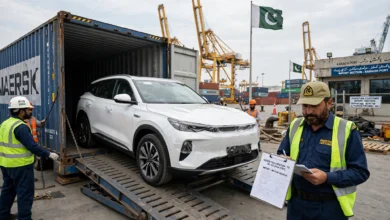
In one FIA case in Karachi, a buyer purchased a car through OLX and only learned the truth when he went to the Excise and Taxation office to transfer it. The verification and registration documents were fake. The FIA Cyber Crime Circle arrested two suspects in Federal B Area, and investigators found the gang used phone numbers not registered in their names and accepted only cash, never cheques or pay orders. The investigation also suggested that some showroom owners were complicit. The News reported the full FIA case here.
Red flags to remember: cash-only deals, a phone number that does not match the seller’s CNIC, and pressure to close fast.
Tampered Stolen Cars Listed Online in DHA Karachi
Karachi’s Anti-Vehicle Lifting Cell arrested a three-member gang in DHA that was trying to sell a stolen car on OLX after tampering with it. Around the same time, police arrested the alleged ringleader of a group that had snatched dozens of Toyota Hilux Revos in the city. Dawn covered the AVLC operation.
Lesson: Tampering usually leaves marks. Mismatched engine or chassis numbers, fresh welding or new stickers in odd places should stop the deal.
“Doubling”: Two Cars, One Registration
Islamabad’s Anti-Car Lifting Cell once described a gang that only bought and sold stolen cars. Forgers copied the registration details of a genuine car onto a stolen one of the same model, a trick police call doubling. Two cars end up on the road with the same papers, one of them stolen. The gang had reportedly been in business for six years before it was caught.

Lesson: Papers that verify online are not enough. The numbers on the car itself must match the papers exactly.
Meter Rollback and Used Airbag Fraud
Long-running discussions on PakWheels forums warn that odometers can be reprogrammed or replaced to show low mileage, and that some cars carry replaced or fake airbag parts after an accident. Neither shows up in an advert photo. Both show up when you look closely at wear and warning lights.
When the “Buyer” Is the Thief
Test drive fraud runs both ways. In the UK, a 23-year-old posed as a buyer, test drove a Mercedes with the seller in the passenger seat, and sped off when the seller stepped out to swap seats. He was jailed for 21 months. In Dhaka, a supposed buyer took a luxury car for a test drive, picked up two “friends” on the way, and one of them forced the owner’s relative out at gunpoint. In India, a man selling his Swift through OLX lost it when the fake buyer asked him to check the bonnet and drove away. Pakistani sellers listing cars online face the same risk.
Lesson: Sellers should verify the buyer as carefully as buyers verify the car.
Before the Test Drive: Paperwork and Identity Checks
The smartest test drive in Pakistan starts before the engine does. If the papers fail, there is no point judging the gearbox. These four checks take about 20 minutes and filter out most fraud.
1. Match the Seller to the Registration Book
Ask to see the original registration book or smart card and the seller’s original CNIC. The name should match. If the seller is not the registered owner, ask for an open transfer letter signed by the owner and a copy of the owner’s CNIC, and ideally speak to the owner on the phone. Be extra careful with “open letter” cars that have changed hands several times without a proper transfer.
2. Verify the Car Online With the Excise Department
Each province runs its own vehicle database. Punjab uses MTMIS, and Sindh, Khyber Pakhtunkhwa and Islamabad have their own Excise portals. Enter the registration number and compare the owner name, make, model, colour, registration date and engine number with what you see. Use only official government portals, since fake look-alike sites exist. PakWheels explains the MTMIS Punjab vehicle verification process if you have not done it before. In Karachi, it is also worth asking CPLC whether the vehicle has been reported stolen.
3. Match Engine and Chassis Numbers on the Car
This is the check that beats doubling. Find the chassis number (usually stamped on the firewall or floor and printed on a plate) and the engine number on the block. They must match the registration book exactly. Look for scratched digits, uneven stamping, fresh paint or weld marks around the numbers. Any doubt means walk away or take the car to the Excise office for physical verification.
4. Check Token Tax, Challans and Transfer Status
Confirm that token tax is paid and that there are no pending e-challans against the vehicle number. Unpaid dues usually become the buyer’s problem. Ask the seller to agree upfront to a proper transfer at the Excise office, with biometric verification where the province requires it, rather than an open letter.
Quick paperwork red flags:
- The seller only accepts cash and refuses a pay order
- The phone number in the ad is not in the seller’s name
- Photocopies only, with excuses about where the originals are
- A price far below the market rate for the same model and year
- Pressure to decide today because “another buyer is coming”
Engine-Off Checks: Body, Engine Bay and Interior
Do these in daylight, on level ground, ideally before the seller has warmed up the car. A used car inspection in good light reveals far more than one done under showroom bulbs at night.
5. Paint, Panel Gaps and Accident Signs
In the local market, original paint and “total genuine” claims carry a big price premium, so they are also the most common lie. Walk around the car and look along each side at an angle. Check for:
- Slight colour differences between doors, bonnet and fenders
- Uneven gaps between panels, especially around the bonnet and boot
- Paint overspray on rubber seals, plastic trims or under the bonnet
- Bolts on fenders and door hinges with spanner marks, a sign they were removed
- Ripples or wavy reflections that suggest filler (a small paint thickness gauge settles most arguments)
A repaired scratch is normal. A replaced roof pillar or chassis rail is not, and it affects safety in a crash.
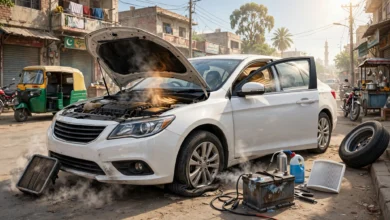
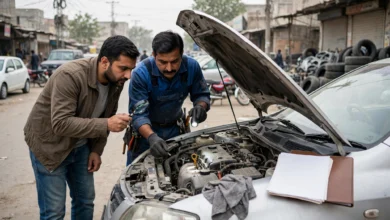
6. Under the Bonnet and the Cold Start
Put your hand on the engine before it runs. If it is already warm, the seller may be hiding a hard start or smoke. Then check:
- Engine oil level and colour; milky oil can mean coolant mixing with oil
- Coolant level and any brown sludge in the reservoir
- Oil leaks around the valve cover, sump and gearbox
- Belts for cracks and hoses for swelling
- Battery terminals for heavy corrosion
On the cold start, watch the exhaust. A puff of white vapour that clears is fine. Blue smoke suggests burning oil. Thick white smoke that stays can mean a head gasket problem. Black smoke points to a rich fuel mix. Listen for knocking, ticking or rattling during the first minute. For CNG-fitted cars, check that the cylinder has valid inspection papers and the kit was installed professionally.
7. Tyres and Suspension Basics
Uneven tyre wear tells you about alignment or suspension damage, sometimes from an accident. Check the manufacture date stamped on the sidewall too. Old tyres crack and are dangerous in summer heat. Press down hard on each corner of the car. It should bounce once and settle. Repeated bouncing means worn shocks, which are common after years on broken roads and speed breakers.
8. Interior, Electrics and Safety Lights
Sit in the driver’s seat and test everything: power windows, mirrors, central locking, wipers, indicators, all lights, horn, and the infotainment system. Run the AC on full and feel how quickly it cools. In a Pakistani summer, a weak AC is a costly repair, not a minor annoyance.
When you turn the key to the first position, every warning light should come on briefly and then go off once the engine starts. The airbag light deserves special attention. If it never lights up, or stays on, the airbag system may be faulty or tampered with after an accident.
9. Odometer Versus Real Wear
Compare the mileage on the meter with what you see and touch. A car showing 40,000 km with a shiny, worn steering wheel, a sagging driver’s seat, smooth pedal rubbers and a loose gear knob has probably done much more. Ask for service records and old oil change stickers, and compare the mileage written on them. Meter tampering is illegal and dishonest, but it still happens, so trust the wear over the number.
On the Road: What to Check During a Test Drive in Pakistan
Now for the drive itself. Plan a route of at least 20 to 30 minutes that includes stop-and-go traffic, a few speed breakers, a rough patch, and a stretch where you can safely reach 80 to 100 km/h, such as a main road or bypass. Turn the music off. Your ears are one of the best tools you have.
10. Steering and Wheel Alignment
On a straight, flat road, loosen your grip slightly. The car should hold a straight line. If it pulls left or right, it may need alignment, or the suspension or chassis may be bent. Turn the steering fully left and right in a parking area and listen for clicking or knocking, which often points to worn CV joints. The steering should feel smooth, with no excessive play in the centre.
11. Brakes
At a safe moment with no traffic behind you, brake firmly from around 50 km/h. The car should stop straight without pulling to one side. Watch for:
- Vibration or pulsing in the pedal, usually warped discs
- Squealing or grinding, which means worn pads or worse
- A soft or sinking pedal, a possible fluid leak or air in the lines
- The ABS light staying on in cars that have ABS
Also test the handbrake on a slope. It should hold the car firmly.
12. Gearbox and Clutch
For a manual car, every gear should go in smoothly without crunching. A clutch that bites very high near the top of the pedal travel is close to the end of its life. Try pulling away in second gear briefly; if the engine revs climb but the car barely speeds up, the clutch is slipping.
For automatics and CVTs, shifts should be smooth and timely, with no jerks, delays when you select Drive or Reverse, or a flaring rev needle between gears. Replacing an automatic gearbox can cost a large share of the car’s value, so take any doubt seriously.
13. Suspension Over Speed Breakers and Bad Roads
Local roads are a real stress test, so use them. Drive over a few speed breakers at sensible speed and through an uneven patch. Listen for clunks, knocks or rattles from the front and rear. The car should feel settled, not floaty or crashy. Noises here usually mean worn bushes, links or shocks.
14. Engine Under Load and the Temperature Gauge
Accelerate firmly from low speed and on the highway stretch. Power should build smoothly, without hesitation, misfires or a smell of burning oil. Keep an eye on the temperature gauge for the whole drive, especially with the AC running in heat and traffic. If the needle climbs above the middle, the cooling system has a problem, and overheating is one of the fastest ways to destroy an engine in a Pakistani summer.
If the car runs on both petrol and CNG, drive on each fuel and check that the switch is smooth.
15. After the Drive: Look, Listen and Smell Again
Park the car and leave the engine idling for a few minutes. Then:
- Check under the car for fresh drips of oil, coolant or brake fluid
- Pop the bonnet again and look for leaks or smoke that were not there before
- Smell for burning oil, coolant or a hot clutch
- Make sure no new warning lights have come on
- Restart the warm engine to confirm it starts as easily as it did cold
This final check catches problems that only appear once the car is fully hot.
Staying Safe During a Test Drive in Pakistan
Car checks are only half the job. The cases earlier show that the meeting itself can be risky for both sides.
Safety Tips for Buyers
- Meet in daylight, in a busy public place, or at a showroom with CCTV
- Bring a friend or family member, and tell someone else where you are going
- Never carry the full payment in cash to a first viewing
- Do not get into a car with strangers you have not verified, and do not let the route change to an unknown area
- If anything feels off, leave; no deal is worth your safety
Safety Tips for Sellers
- Ask for the buyer’s original CNIC and driving licence, and take a clear photo before the drive
- Always ride along in the passenger seat, and never hand over the keys and step away
- Do not leave the car running when you get out, even for a moment
- Keep the drive to a route you know, and do not let “friends” join midway
- Refuse late-night viewings in quiet areas
If a test drive turns into a robbery, do not resist an armed person. Call 15 immediately, and in Karachi also inform CPLC.
The Ethics of a Test Drive: Being a Fair Buyer and Seller
A test drive is a trust exercise. Doing it the right way protects everyone.
For Buyers
Carry a valid driving licence and drive the way you would with your own car. Follow traffic rules, keep speeds legal, and do not treat someone else’s vehicle as a joyride. If you damage it, you are responsible. Be honest about how serious you are, and do not use findings you invented to push the price down.
For Sellers
Disclose accident history, repainted panels, meter replacements and known faults. Hiding a replaced airbag or a rolled-back odometer is not just bad manners; it can amount to cheating and fraud under the law. Selling a car with forged papers or a doubled registration is a serious crime, as the FIA and police cases above show.
For Dealers and Showrooms
The FIA found that some showroom owners were complicit in moving stolen and non-custom paid cars. Genuine dealers protect their reputation by verifying every car they stock, keeping copies of seller documents and refusing deals that look suspicious.
After the Test Drive: Inspection, Payment and Transfer
If the car passed your test drive checklist, you are close, but not done.
- Get a professional inspection. Take the car to a trusted mechanic or a paid car inspection service. They can put it on a lift, check the chassis, run a diagnostic scan and measure paint thickness.
- Compare the market price. Check recent listings for the same make, model, year and condition. Use the inspection report to negotiate fairly.
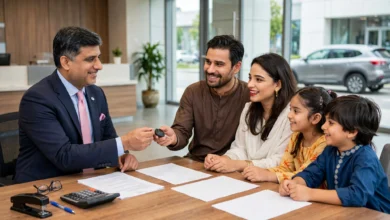
- Write a sale agreement. Include both CNICs, registration, engine and chassis numbers, price, date and a clause about who pays pending dues.
- Pay safely. Use a pay order or bank transfer instead of a bag of cash, and get a signed receipt.
- Complete the transfer. Visit the Excise office together and finish the official transfer, with biometric verification where required. Do not rely on an open letter.
- Update the details. Change the insurance and any tracker subscription into your name, and keep copies of every document.
Conclusion
A careful test drive in Pakistan is your best defence against overpaying for a tired car and your strongest protection against outright fraud. Real cases, from stolen cars sold on OLX with fake papers to doubled registrations in Islamabad and fake buyers who drive off with a seller’s car, show that the risks go well beyond a noisy suspension. Start with the paperwork: match the seller to the registration book, verify the car on the official Excise portal, and confirm that engine and chassis numbers on the car match the documents. Then inspect the body, engine bay and interior in daylight, judge the meter against real wear, and use a proper route with traffic, speed breakers and highway speed to test steering, brakes, gearbox, suspension and cooling. Stay safe by meeting in public and verifying identities on both sides, act honestly whether you are buying or selling, and finish with a professional inspection, a written agreement, safe payment and an official transfer. Follow these 15 checks and buying a used car in Pakistan becomes a decision you make with facts, not hope.