Top Apps Pakistani Small Businesses Use for Invoicing
Invoicing apps for Pakistani small businesses compared on FBR compliance, Urdu support, pricing, and fake invoice cases to keep your records clean
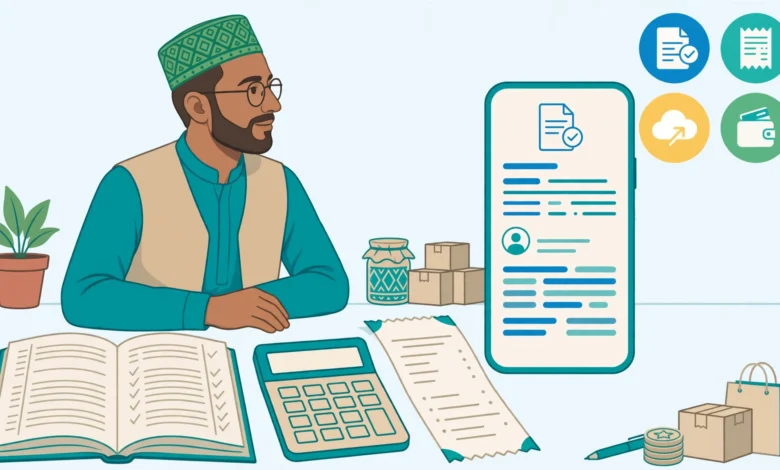
Invoicing Apps for Pakistani Small Businesses: 8 Best Proven Tools for 2026
Introduction
Invoicing apps are changing how Pakistani small businesses get paid. A few years ago, most shops, freelancers, and wholesalers in Pakistan ran on a handwritten register, a carbon-copy bill book, and a lot of trust. Payments came late, records went missing, and at tax time nobody could say for sure what had been sold.
Today a garment supplier in Faisalabad can send a professional invoice on WhatsApp in under a minute. A Karachi software freelancer can bill a client in dollars and track the payment. A kiryana store in Rawalpindi can keep a digital khata of every customer’s udhaar. That is real progress, and it saves hours every week.
But invoicing in Pakistan is not just about convenience. The Federal Board of Revenue has been pushing businesses toward digital, traceable invoices for years, largely because of a long history of fake and “flying” invoices used to steal billions of rupees in sales tax refunds. The rules have tightened, and the app you choose now affects whether you stay compliant.
This guide compares the tools Pakistani small businesses actually use, from global platforms like Zoho and QuickBooks to local khata apps built for Urdu-speaking shopkeepers. It explains what FBR expects, which features matter, and what past fraud cases teach about keeping your records honest. By the end, you should know which app fits your business and how to use it the right way.
What Top-Ranking Pages on Invoicing Apps Miss
I reviewed the pages ranking for “invoicing apps Pakistan,” “best billing software Pakistan,” and “digital khata app” in October 2026. Results are a mix of App Store listings, Indian GST billing apps that show up for Pakistani searches, global software review sites, and vendor blogs.
The gaps are obvious:
- Many lists recommend Indian apps built for GST, which does not apply in Pakistan
- Few explain FBR’s digital invoicing and POS integration rules
- Almost none mention the fake invoice scandals that drove those rules
- Most treat a khata app and a tax-compliant invoicing system as the same thing, which they are not
Primary keyword
- invoicing apps (focus keyword)
Secondary and LSI keywords used in this article
- invoicing software in Pakistan
- FBR digital invoicing
- sales tax invoice
- digital khata app
- billing software
- small business accounting
- POS integration
- fake invoices
- Urdu invoicing app
- cloud accounting
FBR Rules Every Pakistani Business Should Know Before Choosing Invoicing Apps
Before comparing invoicing apps, it helps to know which rules apply to you. The answer depends on whether you are registered for sales tax.

FBR digital invoicing for sales tax registered businesses
In April 2025, FBR issued S.R.O. 709(I)/2025 under Rule 150Q of the Sales Tax Rules, 2006. It requires sales tax registered persons to connect their invoicing systems to FBR’s computer system, either through a licensed integrator or through PRAL, FBR’s own IT company. FBR’s digital invoicing FAQ lists 1 June 2025 for corporate registered persons and 1 July 2025 for non-corporate ones, and later notifications set further phased dates by business category.
Under FBR digital invoicing, each compliant sales tax invoice must:
- Follow FBR’s prescribed format
- Carry a unique FBR invoice number in a QR code
- Be digitally signed and sent to FBR in real time
- Keep a log of every edit, cancellation, and system event
FBR’s FAQ also says a digital invoice is needed for every sale reported in Annexure-C of the sales tax return.
POS integration for Tier-1 retailers
Larger retailers, such as chain stores, shops in air-conditioned malls, and outlets above certain size or electricity bill thresholds, must use POS integration with FBR so every receipt is reported live. Customers can verify these receipts through FBR’s Tax Asaan app.
What if you are not registered for sales tax?
Most small shops, home businesses, and freelancers in Pakistan are not sales tax registered. For them, FBR integration is not required yet. But clean digital records still matter for income tax returns, bank loans, and any future registration. A simple invoicing app or digital khata app is enough for now, as long as it keeps an honest, complete record.
Tax rules change often. Confirm your obligations with FBR or a qualified tax adviser before choosing software.
What to Look For in Invoicing Apps for Pakistan
Not all invoicing apps suit Pakistani conditions. Use this checklist before you commit.
Must-have features
- PKR and multi-currency billing. Freelancers and exporters need to invoice in USD, GBP, or AED and record the rupee value received.
- Pakistani tax fields. You should be able to add your NTN, STRN, and sales tax rate, and show tax separately on each invoice.
- FBR integration path. If you are sales tax registered, check whether the app connects through PRAL or a licensed integrator, or can export data to one.
- WhatsApp sharing. Most Pakistani customers prefer receiving a PDF invoice on WhatsApp over email.
- Payment tracking. Record payments from bank transfer, Raast, JazzCash, Easypaisa, and cash, and see who still owes you.
- Offline mode. Power cuts and weak signals are common, so the app should work offline and sync later.
- Urdu or Roman Urdu interface. An Urdu invoicing app makes a big difference for staff and shopkeepers more comfortable in Urdu.
- Edit logs. Good billing software records who changed or cancelled an invoice and when. This protects you during an audit and discourages internal fraud.
Nice-to-have features
- Inventory and stock tracking
- Recurring invoices for monthly clients
- Multi-user access with role permissions
- Bank feeds and cloud accounting reports such as profit and loss
Red flags
- Apps that let you edit or delete invoices with no record
- Tools built only for Indian GST, with no way to remove GST labels
- Unknown developers with no privacy policy, asking for access to contacts and SMS
Best International Invoicing Apps Used in Pakistan
These global platforms are popular with Pakistani freelancers, agencies, IT exporters, and growing SMEs. Prices are usually in dollars, so check current rates on each official site.
1. Zoho Invoice and Zoho Books
Zoho Invoice is free and covers professional invoices, quotes, payment reminders, and client portals. When you need full small business accounting, Zoho Books adds bank reconciliation, inventory, and reports. Zoho has a strong presence in South Asia, and many Pakistani accountants already know it.
- Best for: freelancers and small agencies starting out
- Watch out for: you will need to set up Pakistani tax fields yourself, and FBR integration is not built in
2. QuickBooks Online
QuickBooks is one of the most widely used accounting platforms in the world. It handles invoicing, expenses, multi-currency, and detailed reports, and many Pakistani firms serving US clients use it because their clients’ accountants already do.
- Best for: businesses with foreign clients or investors
- Watch out for: it is designed around US and UK tax systems, so local tax reporting needs manual work
3. Xero
Xero is a clean cloud accounting platform with good invoicing, unlimited users on most plans, and a large app marketplace. It suits companies that want an accountant to log in and review the books remotely.
- Best for: SMEs working with an outside accountant
- Watch out for: monthly cost adds up for very small businesses
4. Wave
Wave offers free invoicing and basic accounting. For a one-person business that just needs neat invoices and simple records, it is hard to beat on price.
- Best for: solo freelancers on a tight budget
- Watch out for: Wave’s built-in online payment features are mainly for the US and Canada, so Pakistani users record payments manually
5. Odoo
Odoo is an open-source business suite with invoicing, inventory, POS, and accounting modules. The Community edition is free, and several Pakistani implementation partners customise it for local tax needs and FBR integration.
- Best for: manufacturers, distributors, and retailers who need inventory plus invoicing
- Watch out for: setup usually needs a paid partner, and a poor setup causes more problems than it solves
Pakistani Invoicing Apps and Digital Khata Tools
For shopkeepers, wholesalers, and traders, local apps often fit better than global software. They speak Urdu, work on low-cost Android phones, and match how business is actually done in Pakistani bazaars.
6. Udhaar Book
Udhaar Book is one of the best-known digital khata app options in Pakistan. Its App Store listing describes a free app that combines a credit book, cash book, and simple invoices, with English, Urdu, and Sindhi language support. Shopkeepers can send SMS reminders to customers who owe money and restore their data on a new phone using their number.
- Best for: kiryana stores, pharmacies, garment and fruit wholesalers
- Watch out for: a khata app is a record of credit, not an FBR-compliant sales tax invoice system
7. DigiKhata
Founded in 2019, DigiKhata is a free Pakistani bookkeeping app with unlimited ledger accounts, a cash book, and PDF reports you can share on WhatsApp. It supports English, Roman Urdu, Urdu, Sindhi, and Pashto, which makes it practical across different regions.
- Best for: small traders managing customer and supplier balances
- Watch out for: features like airtime resale are useful but separate from proper invoicing; keep your business records tidy
8. FBR-integrated POS and ERP from licensed integrators
If you are sales tax registered or a Tier-1 retailer, a khata app is not enough. You need invoicing software in Pakistan that connects to FBR, either through PRAL or one of FBR’s licensed integrators. Many local POS and ERP vendors now offer this, often bundled with inventory, barcode scanning, and branch reporting.
- Best for: registered manufacturers, distributors, restaurants, and retail chains
- Watch out for: confirm the vendor is actually on FBR’s licensed integrator list, and get the integration tested before you rely on it
Why many businesses use two apps
It is common to see a Pakistani business using a khata app for daily customer credit and a separate accounting or POS system for formal invoices and tax. That is fine, as long as both tell the same story. Problems start when the khata shows one set of numbers and the tax records show another.
Invoicing Apps Comparison Table
A quick view of the eight options. “FBR route” means how you would meet FBR digital invoicing rules if they apply to you.
| App | Best for | Urdu support | Free option | FBR route |
|---|---|---|---|---|
| Zoho Invoice / Books | Freelancers, agencies | No | Yes (Invoice) | Export data to an integrator |
| QuickBooks Online | Firms with foreign clients | No | Trial only | Export data to an integrator |
| Xero | SMEs with an accountant | No | Trial only | Export data to an integrator |
| Wave | Solo freelancers | No | Yes | Not suited to registered businesses |
| Odoo | Distributors, manufacturers | Partial via partners | Yes (Community) | Local partners can build integration |
| Udhaar Book | Shops and wholesalers | Yes | Yes | Not designed for FBR invoicing |
| DigiKhata | Small traders | Yes | Yes | Not designed for FBR invoicing |
| Licensed integrator POS / ERP | Registered businesses, Tier-1 retail | Varies | Rarely | Built in |
Confirm current features and FBR status with each vendor before buying, since both change often.
Fake Invoices in Pakistan: Real Cases That Shaped Today’s Rules
Pakistan’s push toward traceable invoicing apps did not come from nowhere. For years, organised networks have sold fake invoices and “flying invoices” to businesses that wanted to cut their sales tax bill. Here is how it works and what happened to those caught.
What fake and flying invoices are
- Fake invoices are bills for sales that never happened, usually issued by a dummy firm.
- Flying invoices are real-looking invoices sold to a buyer so the buyer can claim input tax on purchases it never made from that seller.
The buyer lowers its sales tax payable or claims a refund, the dummy firm never pays its own tax, and the national treasury loses the difference.
Case 1: Faisalabad textile network, Rs1.3 billion in invoices
In 2020, FBR’s Inland Revenue intelligence directorate in Faisalabad uncovered a network of dubiously registered firms issuing fake and flying invoices. One arrested proprietor had issued fake invoices worth about Rs104 million to a firm called Arrow International, which investigators found did not actually exist. The wider network involved 65 units and invoices worth about Rs1.3 billion, and an FIR was registered against the firm’s buyers, suppliers, and beneficiaries under the Sales Tax Act (FBR press release).
Case 2: Inside help and a Rs11.6 billion loss
In September 2023, FBR’s intelligence directorate in Karachi broke up an inter-provincial gang that caused an estimated Rs11.6 billion revenue loss. One suspect was filing fake sales tax returns for dummy firms from his home. Another worked at a PRAL call centre and was allegedly handing login details of inactive registered businesses to the fake invoice network (ProPakistani report).
That second detail matters for every small business owner: your own FBR login and an inactive registration can be hijacked and used in someone else’s fraud.
Case 3: Beneficiaries face consequences too
In these cases, FBR did not only pursue the people selling invoices. FIRs named the buyers and beneficiaries as well. A business that “buys” invoices to reduce tax can face recovery of the evaded tax, penalties, blocked registration, and criminal proceedings.
What this means for choosing invoicing apps
FBR’s digital invoicing system exists largely to stop this. When every sales tax invoice gets a unique FBR number, a QR code, and a real-time record, it becomes much harder to invent sales. The practical lessons for small businesses:
- Choose invoicing apps that keep an edit and cancellation log
- Never buy or sell invoices, even if an agent says “everyone does it”
- Verify suppliers’ sales tax registration and active status before claiming input tax
- Protect your FBR IRIS login like a bank password, and close registrations you no longer use
Ethical Invoicing: How to Set Up Invoicing Apps the Right Way
The best invoicing apps only help if you use them honestly and set them up with care. These habits protect your business, your customers, and your reputation.
Setting up your app
- Enter correct business details. Add your legal business name, address, NTN, and STRN if registered. Wrong details on an invoice can cause disputes and tax problems.
- Use sequential invoice numbers. Never skip or reuse numbers. Gaps raise questions during an audit.
- Show tax clearly. If you charge sales tax, show the rate and amount separately. If you are not registered, do not add a tax line or imply that tax is included.
- Turn on user roles. Give staff only the access they need. A salesperson should not be able to delete invoices.
- Back up regularly. Export reports monthly and store a copy safely, even if the app is cloud-based.
Honest practices that keep you safe
- Issue an invoice for every sale, including cash sales. Under-reporting is the most common route to trouble with FBR.
- Cancel, never delete. If an invoice is wrong, cancel it and issue a corrected one, so the record shows what happened.
- Match your khata and your accounts. Customer credit in a digital khata app should match sales in your accounting records.
- Do not accept or issue invoices for goods that did not move. This is exactly how flying invoice schemes work.
- Respect customer data. Phone numbers and addresses in your invoicing app belong to your customers. Do not share them or use them for unrelated marketing without consent.
Protecting yourself from fraud
Invoice fraud does not only come from tax schemes. Watch for these common tricks:
- Fake supplier messages asking you to send payment to a “new” bank account
- Staff creating invoices for fake customers and pocketing payments
- Phishing messages pretending to be FBR, asking for your IRIS login
Always confirm bank detail changes by phone with a known contact, review your invoice and payment reports weekly, and turn on two-step login wherever your invoicing software offers it.
Invoicing Apps FAQs
Are free invoicing apps good enough for a small business in Pakistan?
For unregistered shops and freelancers, yes. Free invoicing apps such as Zoho Invoice, Wave, Udhaar Book, and DigiKhata cover professional invoices and credit tracking. Once you register for sales tax, you will need software that can connect with FBR.
Do invoicing apps automatically make me FBR compliant?
No. Most invoicing apps simply create invoices. FBR compliance for registered businesses requires integration through PRAL or a licensed integrator, correct registration details, and honest reporting.
Which invoicing apps support Urdu?
Local tools such as Udhaar Book and DigiKhata offer Urdu and Roman Urdu interfaces. Most global invoicing apps work in English only, though you can usually add Urdu text to invoice notes.
Can freelancers use invoicing apps for foreign clients?
Yes. Zoho, QuickBooks, Xero, and Wave all support invoicing in foreign currency. Keep records of the rupee amount received through your bank, since that is what matters for tax.
Conclusion
The right invoicing apps can save Pakistani small businesses hours every week, speed up payments, and keep records clean, but the best choice depends on where your business stands: freelancers and agencies do well with Zoho, QuickBooks, Xero, or Wave; shopkeepers and wholesalers benefit from local Urdu-friendly khata apps like Udhaar Book and DigiKhata; and sales tax registered businesses and Tier-1 retailers need FBR-integrated POS or ERP systems through PRAL or a licensed integrator under S.R.O. 709(I)/2025. Pakistan’s long history of fake and flying invoices, from the Rs1.3 billion Faisalabad network to the Rs11.6 billion Karachi gang that relied on stolen FBR logins, explains why the rules have tightened and why honesty matters as much as features, so pick software with proper edit logs, issue an invoice for every sale, cancel rather than delete, verify suppliers, guard your IRIS login, and keep your khata and tax records telling the same story.