Best Apps to Learn Coding for Free in Pakistan
Learn coding for free in Pakistan with trusted apps and platforms, a realistic roadmap and real cases showing why fake degrees and shortcuts backfire.
Best Apps to Learn Coding for Free in Pakistan
Introduction
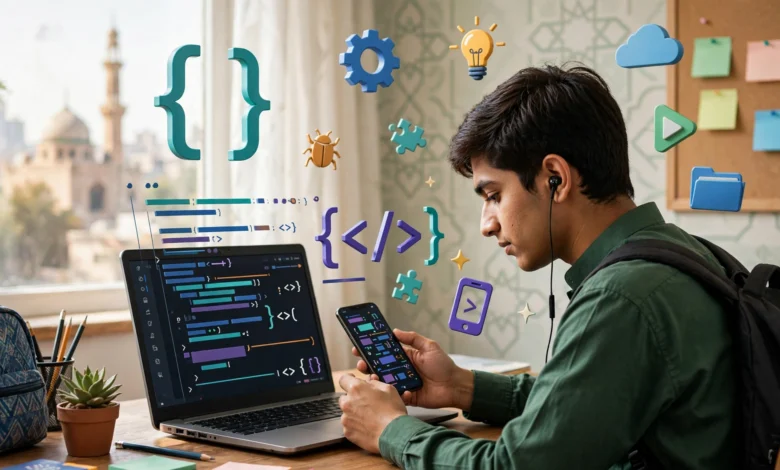
Learn coding in Pakistan today and you’re joining one of the fastest-growing groups of young earners in the country. Software exports, freelancing and remote jobs have turned programming into a real path out of limited local salaries. The good news is that you no longer need expensive academies or a computer science degree to start. Some of the best coding courses in the world are free, and several excellent ones are run right here in Pakistan.
The less comfortable truth is that free resources only work if you use them properly. Many beginners collect certificates without building anything, binge tutorials without writing code, or chase shortcuts: pirated paid courses, “guaranteed job” academies, or hacking groups promising quick money. Pakistan has also lived through one of the world’s biggest education scams, the Axact fake degree scandal, which showed how far fake credentials can travel before they collapse.
This guide focuses on what genuinely works. It covers the best free coding apps and platforms for Pakistani learners, including DigiSkills, freeCodeCamp, Harvard’s CS50 and more, with honest notes on data use, devices and English level. It also gives you a realistic six-month roadmap and explains which shortcuts to avoid.
Whether you’re a student, a career-switcher or a parent guiding a teenager, the aim is simple: to help you learn coding properly, legally and in a way employers and clients actually respect.
What It Really Takes to Learn Coding in Pakistan
Before choosing an app, it helps to be honest about the conditions most Pakistani learners face. The best platform for you is the one that fits these realities.
Phone or laptop?
You can learn coding basics on a phone, and apps like Sololearn and Mimo are built for that. But real projects, debugging and job-ready skills need a laptop or desktop. Even an older laptop with 4 to 8GB of RAM can run a code editor like VS Code, a browser and Python comfortably. If you only have a phone, start there, but plan to get access to a computer within a few months, whether your own, a family member’s or a university lab.
Internet and data costs
Video-heavy courses eat mobile data quickly. Text-based platforms such as freeCodeCamp and The Odin Project use far less data than hours of video lectures. Download videos on Wi-Fi when you can, and choose platforms that let you code in the browser without heavy downloads.
English level
Most programming documentation is in English, so your English reading skills will improve along with your coding. If you’re not confident yet, start with Urdu-language explanations on YouTube or DigiSkills videos, then gradually move to English resources. Don’t let English stop you from starting.
Time and consistency
One focused hour a day beats a ten-hour weekend binge. Most people who learn coding successfully do it through months of steady practice, not a few weeks of motivation.

The job market reality
Pakistani companies and international clients hire for programming skills and proof of work, not certificates alone. A GitHub profile with real projects, a simple portfolio website and the ability to explain your code will matter far more than a stack of course completion PDFs.
9 Best Free Apps to Learn Coding in Pakistan
Every option below is free to start, legal, and widely used. Some offer paid upgrades or certificates, but you can learn coding with all of them without spending money.
1. DigiSkills.pk: Pakistan’s own free training program
DigiSkills.pk is a Government of Pakistan initiative run by Ignite and executed by the Virtual University. It has trained over four million people since 2018. The DigiSkills 3.0 phase expanded its catalogue to include courses such as AI using Python, full stack development with MERN, mobile app development and cloud computing, alongside freelancing-focused courses.
- Best for: beginners who want structured, Urdu-friendly lessons with a Pakistani e-certificate.
- Watch out for: enrolment runs in batches with deadlines, so check the website for the next intake.
2. freeCodeCamp: the best free web development curriculum
freeCodeCamp is a non-profit with thousands of hours of interactive lessons in HTML, CSS, JavaScript, Python, data analysis and more. You code directly in the browser and earn free certifications by building projects.
- Best for: aspiring web developers and anyone who learns by doing.
- Watch out for: it’s self-paced, so you need your own schedule and discipline.
3. Harvard CS50: the best foundation in computer science
Harvard’s CS50 is a world-famous introduction to computer science, available free online with lectures, problem sets and an active community.
- Best for: learners who want to understand how computers and programming really work, not just copy syntax.
- Watch out for: it’s challenging, and lectures are long and video-heavy, so plan data use.
4. The Odin Project: the best free full-stack path
The Odin Project is an open-source curriculum that guides you through setting up a real development environment and building full-stack web projects.
- Best for: serious learners who want job-ready web development skills.
- Watch out for: you’ll need a laptop, and it expects you to read documentation rather than watch videos.
5. Sololearn: the best phone-first coding app
Sololearn offers short lessons, quizzes and an in-app code playground for Python, JavaScript, C++, SQL and more.
- Best for: students who only have a phone right now, or learners who want daily practice on the go.
- Watch out for: the free version has ads and limits, and phone practice alone won’t make you job-ready.
6. Mimo: bite-sized lessons for beginners
Mimo teaches coding through short, game-like lessons on your phone, with a focus on web development and Python.
- Best for: complete beginners building a daily habit.
- Watch out for: many advanced features sit behind a subscription.
7. Khan Academy: the gentlest start for school students
Khan Academy’s free computing courses teach JavaScript drawing, animation and SQL basics in a friendly way.
- Best for: school-age learners and parents introducing children to coding.
- Watch out for: it covers fundamentals, not professional development.
8. Coursera and edX (audit mode): university courses for free
Many courses from universities and companies can be audited for free, giving you access to lectures and readings. Coursera also offers financial aid for certificates on many courses.
- Best for: learners who want university-style courses in Python, data science or cloud.
- Watch out for: graded assignments and certificates may require payment or financial aid.
9. Cisco Networking Academy: free networking, cybersecurity and Python courses
Cisco Networking Academy offers free self-paced courses, including Python Essentials and Introduction to Cybersecurity. In 2026, Pakistan’s education ministry also partnered with Cisco to offer free technology courses to students.
- Best for: learners interested in networking, cybersecurity or Python fundamentals with recognised digital badges.
- Watch out for: some programs have eligibility rules and deadlines.
Quick Comparison: Where Should You Learn Coding?
This table helps you pick the right place to learn coding based on your device, level and goals.
| Platform | Works on phone | Data use | Level | Certificate | Best for |
|---|---|---|---|---|---|
| DigiSkills.pk | Yes (Android) | Medium | Beginner | Free e-certificate | Structured local courses |
| freeCodeCamp | Partly | Low | Beginner to intermediate | Free | Web development |
| Harvard CS50 | Partly | High (video) | Beginner, demanding | Free; verified option paid | Computer science foundations |
| The Odin Project | No | Low | Beginner to job-ready | None | Full-stack web development |
| Sololearn | Yes | Low | Beginner | Paid | Daily mobile practice |
| Mimo | Yes | Low | Beginner | Paid | Building a habit |
| Khan Academy | Yes | Medium | Beginner | None | School students |
| Coursera / edX (audit) | Yes | High (video) | All levels | Paid or financial aid | University-style courses |
| Cisco Networking Academy | Partly | Medium | Beginner | Free badges on many courses | Networking, cybersecurity, Python |
A practical combination for most Pakistani beginners: DigiSkills or CS50 for foundations, freeCodeCamp or The Odin Project for building projects, and Sololearn for daily practice on your phone.
Shortcuts That Backfire When You Learn Coding
When money is tight and the goal is a job or freelance income, shortcuts can look tempting. Here are the ones that have caused real damage, and the honest alternatives.
Fake degrees and certificates: the Axact lesson
In 2015, a New York Times investigation exposed Axact, a Karachi-based software company, for running hundreds of fake online university and accreditation websites that sold diplomas worldwide. The FIA raided its offices and arrested its chief executive. In 2018, an Islamabad court convicted him and 22 employees, though appeals followed and higher courts later acquitted him. Separately, an Axact executive, Umair Hamid, pleaded guilty in the United States and was sentenced to 21 months in prison for his role in the scheme (OCCRP).
The wider lesson for learners is that fake credentials eventually get checked. Employers and clients increasingly verify certificates through QR codes and issuing websites. A genuine free certificate from DigiSkills, freeCodeCamp or Cisco is worth more than any purchased “degree.”
Pirated paid courses
Torrents and Telegram channels offering paid Udemy or bootcamp courses for free are common. Beyond violating copyright, these downloads are a known malware route. In 2023, security firm CloudSEK reported a sharp rise in YouTube videos offering cracked software and paid tools that actually delivered password-stealing malware. You don’t need pirated material when so much high-quality learning is legitimately free.
“Hacking” for quick money
Some beginners are drawn into groups that use basic coding skills for account takeovers, carding, phishing pages or selling stolen data. In Pakistan, unauthorised access and online fraud are crimes under the Prevention of Electronic Crimes Act (PECA) 2016, and the FIA’s cybercrime wing actively investigates them. Ethical paths exist: cybersecurity courses, bug bounty programs with clear rules, and Capture the Flag competitions let you use those skills legally.
Copied portfolios and fake work
Cloning someone else’s GitHub project and presenting it as your own, or submitting AI-generated code you don’t understand, gets exposed in interviews or client work quickly. Build smaller projects you truly understand and can explain line by line.
“Guaranteed job” academies
Be careful with paid institutes that promise guaranteed jobs or dollar income after a short course. Ask for verifiable alumni outcomes, check reviews outside their own social pages, and remember that many of the skills they sell are taught free on the platforms above.
A Realistic 6-Month Plan to Learn Coding for Free
This roadmap assumes about one to two hours a day. Adjust the pace to your schedule, but keep the order.
Month 1: Pick one path and learn the basics
Choose either web development (HTML, CSS, JavaScript) or Python. Don’t try both at once. Use freeCodeCamp, Sololearn or a DigiSkills course to learn variables, conditions, loops and functions. Set up VS Code on your laptop and write code every day, even if it’s only 20 lines.
Month 2: Build tiny projects
Make small things: a calculator, a to-do list, a tip calculator in rupees, a quiz game. Create a free GitHub account and upload every project. This becomes your public record of progress.
Month 3: Strengthen fundamentals
Work through the first several weeks of Harvard’s CS50 or a structured section of The Odin Project. Focus on problem-solving, not speed. Practise on beginner-friendly coding challenge sites.
Month 4: Build a real project
Pick something useful in a Pakistani context: a simple shop inventory tracker, a school timetable app, a prayer time display or a budgeting tool. Real problems make better portfolio pieces than generic tutorials.
Month 5: Learn tools professionals use
Get comfortable with Git, the command line, reading documentation and using a framework such as React for web or Django or Flask for Python. Contribute a small fix to an open-source project if you can.
Month 6: Prepare for work
- Build a simple portfolio website with three to five projects.
- Write clear README files explaining what each project does.
- Create a LinkedIn profile and, if you plan to freelance, a Fiverr or Upwork profile with small, realistic services.
- Apply for internships, junior roles or small freelance tasks.
By the end of six months, you won’t be an expert, but you’ll have real skills, real projects and a far stronger position than someone holding ten certificates with nothing built.
Frequently Asked Questions
Can I learn coding for free in Pakistan and get a job?
Yes. Many working developers learned through free resources. What gets you hired is a portfolio of real projects, problem-solving skills and the ability to explain your code, not whether you paid for a course.
Which programming language should I learn first?
Python is the easiest general starting point and is used in data, AI and automation. JavaScript is the best choice if you want to build websites and web apps. Pick one and stay with it for at least three months.
Can I learn coding on my phone?
You can learn the basics on a phone with apps like Sololearn, Mimo or DigiSkills on Android. For real projects and job readiness, you’ll eventually need a laptop or desktop.
Are DigiSkills certificates valuable?
They’re issued by the Virtual University of Pakistan and show you completed structured training. On their own they won’t get you hired, but combined with projects they add credibility, especially for local employers and freelance profiles.
How long does it take to learn coding?
You can grasp the basics in two to three months of daily practice. Becoming job-ready usually takes six months to a year, depending on your consistency and the depth of your projects.
Conclusion
You can learn coding for free in Pakistan using some of the best resources available anywhere: DigiSkills for structured, Urdu-friendly local training, freeCodeCamp and The Odin Project for hands-on web development, Harvard’s CS50 for strong foundations, Sololearn, Mimo and Khan Academy for phone-friendly practice, Coursera and edX audits for university-style learning, and Cisco Networking Academy for networking, cybersecurity and Python. Success depends less on which app you choose and more on consistency, a laptop when possible, and building real projects you can show on GitHub. The Axact fake degree scandal, malware hidden in pirated courses and cracked tools, and the legal risks of using coding skills for hacking under PECA all show that shortcuts cost more than they save. Choose one path, practise daily, build things that solve real problems, and let your work, not a purchased certificate, prove that you can learn coding and deliver.