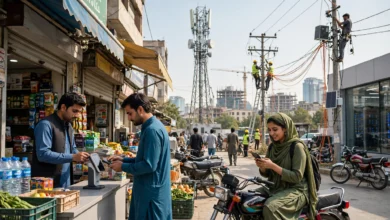
Top Challenges Facing Pakistan’s Digital Transformation
Pakistan's digital transformation faces 10 serious challenges, from shutdowns and data leaks to cybercrime and skills gaps, with real cases and data.
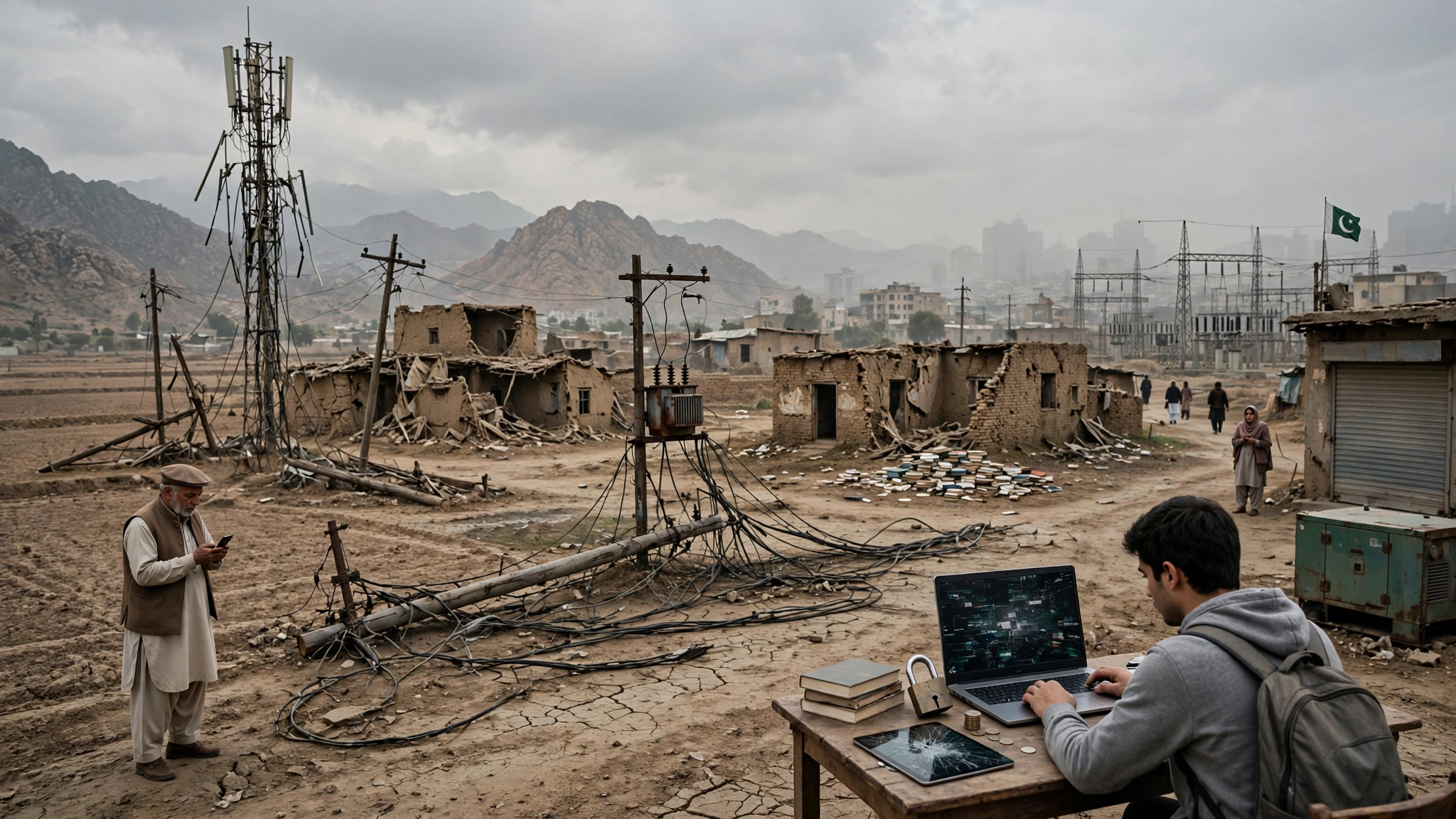
Top Challenges Facing Pakistan’s Digital Transformation
Introduction:
Where Pakistan’s Digital Transformation Stands Today
Pakistan’s digital transformation is moving faster than many people realize. According to the Economic Survey 2025-26, broadband penetration reached 64.2 percent by March 2026, almost double the 2019 level, and telecom subscriptions crossed 207 million. In March 2026, the Pakistan Telecommunication Authority held a 5G spectrum auction that raised about $509.6 million. IT exports hit a record $4.6 billion in fiscal year 2025-26, up about 21 percent, making technology the country’s largest services export. Freelancers, startups and software houses now form one of the most promising parts of the economy.
Yet the same period also exposed deep weaknesses. Repeated internet shutdowns and slowdowns have cost businesses and gig workers dearly. A government investigation confirmed that personal data of 2.7 million citizens was stolen from NADRA records and sold abroad. A Pakistan-based cybercrime network, HeartSender, was dismantled in a joint operation with the FBI and Dutch police. And the country still has no comprehensive personal data protection law.
This article looks at ten of the biggest challenges holding back the Digital Pakistan vision, from connectivity and data security to cybercrime, regulation, skills and investment. Each section uses published figures and documented cases, and where views differ, it presents both the government’s position and its critics’ concerns. The aim is not to dismiss real progress but to show clearly what must be fixed for that progress to last.
10 Critical Challenges Facing Pakistan’s Digital Transformation
1. Internet Shutdowns and Throttling
No challenge has drawn more criticism than deliberate internet shutdowns. Authorities have suspended or slowed mobile internet and social media during elections, protests and security operations, arguing that this is needed to protect public order and stop the spread of misinformation. Critics, including the IT industry, say the economic cost is too high.
What the data shows:
- A report by Top10VPN estimated that Pakistan suffered the world’s highest economic losses from deliberate internet disruptions in 2024, about $1.62 billion, across 18 shutdowns lasting 9,735 hours.
- Research by the Pakistan Institute of Development Economics estimated that a single 24-hour shutdown costs around Rs1.3 billion.
- Digital rights group Access Now ranked Pakistan third in the world for internet restrictions in 2025, with more than 20 shutdowns reported.
- The longest recorded case was in the former tribal areas, where about 4.5 million residents faced a mobile internet shutdown lasting nearly four years, from 2016 to 2021.
Why it matters: Freelancers, ride-hailing drivers, delivery riders and small online sellers lose income immediately, while foreign clients lose confidence in Pakistani suppliers. For Pakistan’s digital transformation to succeed, connectivity has to be reliable enough for international businesses to depend on.
2. Fragile Infrastructure and Slow Speeds
Even without shutdowns, Pakistan’s internet infrastructure is under strain. The country relies on a small number of submarine cables, and when one is damaged or under maintenance, the whole country feels it. During a slowdown linked to cable maintenance in February 2026, industry estimates suggested online businesses risked losing nearly Rs200 million a day. Pakistan has also ranked near the bottom of global speed indices, placing 100th out of 111 countries for mobile speed and 141st out of 158 for broadband in Ookla’s rankings cited in 2025.
Signs of progress:
- The March 2026 5G spectrum auction raised about $509.6 million across 480 MHz of spectrum.
- Home internet connections rose from 1.9 million in 2024 to 5.1 million in 2026, according to the Prime Minister’s Office.
- Mobile coverage now reaches 92 percent of the population.
The challenge ahead: Turning spectrum into real coverage requires fiber backhaul, more cable landing points and lower costs for operators, which are all expensive and slow to build.


3. No Comprehensive Data Protection Law
Pakistan has digitized identity, banking, tax and health records at scale, but it still has no comprehensive data protection law. A Personal Data Protection Bill has gone through several drafts since 2018, and versions date back even further, but none has become law. In June 2026, the IT ministry released a draft Data Governance Policy for public consultation, to be overseen by the new Pakistan Digital Authority created under the Digital Nation Pakistan Act 2025. Rights groups welcome the effort but argue that a policy cannot replace enforceable legal rights.
Real case: A Joint Investigation Team led by the Federal Investigation Agency’s cybercrime wing found that personal data of about 2.7 million Pakistanis was stolen from NADRA records between 2019 and 2023. According to the investigation, the data moved from Multan to Peshawar, then to Dubai, and was eventually sold in Argentina and Romania. NADRA later told a parliamentary committee that six officials, including a Grade 19 officer, had been dismissed. Earlier, in 2018, government officials in Punjab were accused of sharing login credentials that allowed citizens’ records, call data and police information to be sold online for as little as Rs100.
Why it matters: Without a clear law, citizens have limited rights when their data is misused, and foreign companies hesitate to send data to Pakistan for processing, which limits higher-value IT exports.
4. Pakistan-Based Cybercrime Networks Damage Trust
Most Pakistani freelancers and tech firms are honest, but a small number of criminal networks have harmed the country’s reputation abroad.
Real case: In January 2025, the FBI and Dutch police seized 39 domains and servers used by HeartSender, a Pakistan-based group that sold phishing kits, scam page templates and spam tools to criminals worldwide for more than a decade. US authorities linked the tools to millions of dollars in fraud losses. In May 2025, Pakistan’s National Cyber Crime Investigation Agency arrested 21 people in raids in Lahore and Multan, including the alleged ringleader, Rameez Shahzad, who used the alias Saim Raza. Cases were registered under the Prevention of Electronic Crimes Act 2016, and investigators began tracing 142 cryptocurrency wallets.
Why it matters: Cases like this make foreign payment providers and clients more cautious, which hurts legitimate businesses. The joint operation also showed a positive trend: Pakistani agencies cooperating with international partners to tackle cybercrime in Pakistan.
5. The Digital Divide Is Narrowing but Still Wide
Pakistan has made striking progress in digital inclusion. The GSMA Mobile Gender Gap Report 2026 found that the mobile internet gender gap fell from 25 percent in 2024 to 8 percent in 2025, one of the fastest improvements recorded anywhere.
But deep gaps remain:
- Pakistan still has the widest mobile phone ownership gender gap among the countries surveyed, with 68 percent of women owning a phone compared with 93 percent of men.
- About 28 percent of women who use mobile internet rely on someone else’s phone.
- Rural areas, especially in Balochistan, Khyber Pakhtunkhwa and Gilgit-Baltistan, still lag in coverage, speed and digital literacy.
- High taxes and duties on imported phones keep smartphones expensive for many households.
Why it matters: GSMA estimates that closing the mobile internet gender gap over eight years could add up to $55 billion to Pakistan’s GDP. The digital divide is not only a social issue but an economic one.
6. Skills Gaps and the Low-Value Trap
Pakistan has one of the world’s largest freelance workforces and a young population, and government programs such as DigiSkills.pk delivered more than 5.14 million trainings in fiscal year 2025-26. But much of the IT export base still depends on lower-margin outsourcing and freelance work rather than high-value products, intellectual property and advanced engineering. Analysts writing about the Economic Survey warned that the country risks a “low-value trap” if it does not move up the value chain.
Key gaps:
- Too few graduates with strong skills in cloud, cybersecurity, data engineering and AI
- Weak links between universities and industry
- Talented engineers leaving for the Gulf, Europe and North America, a trend industry leaders say worsens after major internet disruptions
Why it matters: Pakistan IT exports reached $4.6 billion, but industry leaders say this is a fraction of the country’s potential. Higher-value work needs deeper skills and stable conditions to keep talent at home.
7. Online Regulation and Freedom of Expression
The rules governing online speech have become one of the most debated parts of Pakistan’s digital transformation. In early 2025, Parliament amended the Prevention of Electronic Crimes Act (PECA) to create a new social media regulatory authority and make spreading false information online a criminal offence carrying prison terms. The government says the changes are needed to fight fake news, hate speech and online harassment. Journalist unions, rights groups and opposition parties argue that the vague wording could be used to punish criticism and that it chills free expression.
Platform access has also been unpredictable. X (formerly Twitter) was blocked nationally in February 2024 and only became accessible again in 2025, and authorities have discussed or tested a national web monitoring system, sometimes described in the media as a firewall, which the industry has linked to slowdowns.
Why it matters: Clear, narrowly defined rules with independent oversight would help both sides. Investors and global platforms want predictability, and citizens want protection from both online abuse and overreach.
8. Cybersecurity in Government Systems
As more public services move online, government systems become bigger targets. The NADRA breach showed how insider access and weak controls can expose millions of records. In 2025, Pakistan’s National Cyber Emergency Response Team (PKCERT) warned citizens that login credentials of more than 180 million internet users in Pakistan had appeared in a global data breach and urged people to change passwords.
What needs strengthening:
- Strict access controls and audit logs for anyone handling citizen data
- Encryption of sensitive records so stolen data is useless
- Mandatory breach reporting, as proposed in the draft Data Governance Policy 2026
- Regular independent security audits of critical systems
- Faster, transparent action when officials misuse access
9. Digital Fraud and Consumer Trust
Digital payments have grown rapidly, helped by the State Bank of Pakistan’s Raast instant payment system and mobile wallets. But fraud has grown alongside them, including phishing calls pretending to be from banks, fake prize messages, social media investment scams and SIM-related fraud. In 2023, the Securities and Exchange Commission of Pakistan took action against unlicensed digital lending apps after widespread complaints that they charged extreme interest and harassed borrowers and their contacts.
Why it matters: Every fraud case makes people more likely to return to cash. Building trust requires faster complaint handling, stronger identity checks, public awareness and real consequences for fraudsters.
10. Funding, Payments and Policy Uncertainty
Tech companies need predictable rules, access to global payment systems and patient investment. Pakistan has made progress on some fronts, such as the preferential 0.25 percent final tax regime on IT export income. But challenges remain:
- Global payment platforms such as PayPal and Stripe are still not directly available for Pakistani businesses, forcing freelancers and startups to use workarounds.
- Startup funding fell sharply after 2022 as global investors grew cautious and local economic conditions weakened.
- Frequent changes to tax rules, import duties and foreign exchange policies make long-term planning difficult.
Why it matters: Investors weigh risk across the region. Stable policy, reliable internet and strong legal protections are what turn a promising Pakistan digital economy into a place where global companies build long-term operations.
What Is Working, and What Must Change
A fair assessment has to recognize real progress alongside the problems.
Progress Worth Building On
- Record IT exports of $4.6 billion in fiscal year 2025-26
- Broadband penetration of 64.2 percent and a completed 5G spectrum auction
- One of the fastest declines in the mobile internet gender gap ever recorded
- A legal framework for digital public infrastructure through the Digital Nation Pakistan Act 2025
- International cooperation that led to arrests in the HeartSender case
Priorities for the Next Phase
- Keep the internet on. Use targeted, transparent and time-limited measures instead of broad shutdowns, and publish the legal basis for any restriction.
- Pass a strong data protection law with an independent regulator, breach notification rules and real penalties.
- Invest in infrastructure, including more submarine cables, fiber backhaul and fair rules for sharing towers and spectrum.
- Narrow and clarify online speech laws so they target genuine harms without chilling legitimate criticism.
- Raise cybersecurity standards across government systems that hold citizens’ data.
- Make devices and data affordable, especially for women and rural households.
- Move up the value chain through deeper technical education, research and support for product companies.
The GSMA’s July 2026 report, Digital Pakistan 2030: The Next Phase of Digital Transformation, argues that policy should now focus on whether people can use digital services meaningfully, not just on counting connections. The Ministry of IT and Telecommunication’s draft Data Governance Policy 2026 shows how the government plans to manage public data while a full privacy law is still pending.
Conclusion
Pakistan’s digital transformation has real momentum, with record IT exports of $4.6 billion, broadband penetration above 64 percent, a successful 5G auction and one of the world’s fastest declines in the mobile internet gender gap, but its future depends on solving ten connected challenges: frequent internet shutdowns and throttling, fragile infrastructure, the lack of a data protection law, Pakistan-based cybercrime networks such as HeartSender, a persistent digital divide, skills gaps and brain drain, contested online speech rules under PECA, weak cybersecurity in government systems highlighted by the NADRA breach of 2.7 million records, rising digital fraud, and uncertain funding and payment access. Each of these is fixable, and the documented cases show the cost of leaving them unaddressed, so the clearest path forward is reliable connectivity, strong and fair laws, secure public systems, inclusive access and stable policies that give citizens, freelancers and investors the confidence to build Pakistan’s digital future.