How to Choose Between Android and iOS for Your Next Phone
Android vs iOS in 2026: compare real costs in Pakistan, updates, privacy, app stores, and resale value with 9 honest factors to pick your next mobile.
Android vs iOS: How to Choose Your Next Phone
Introduction
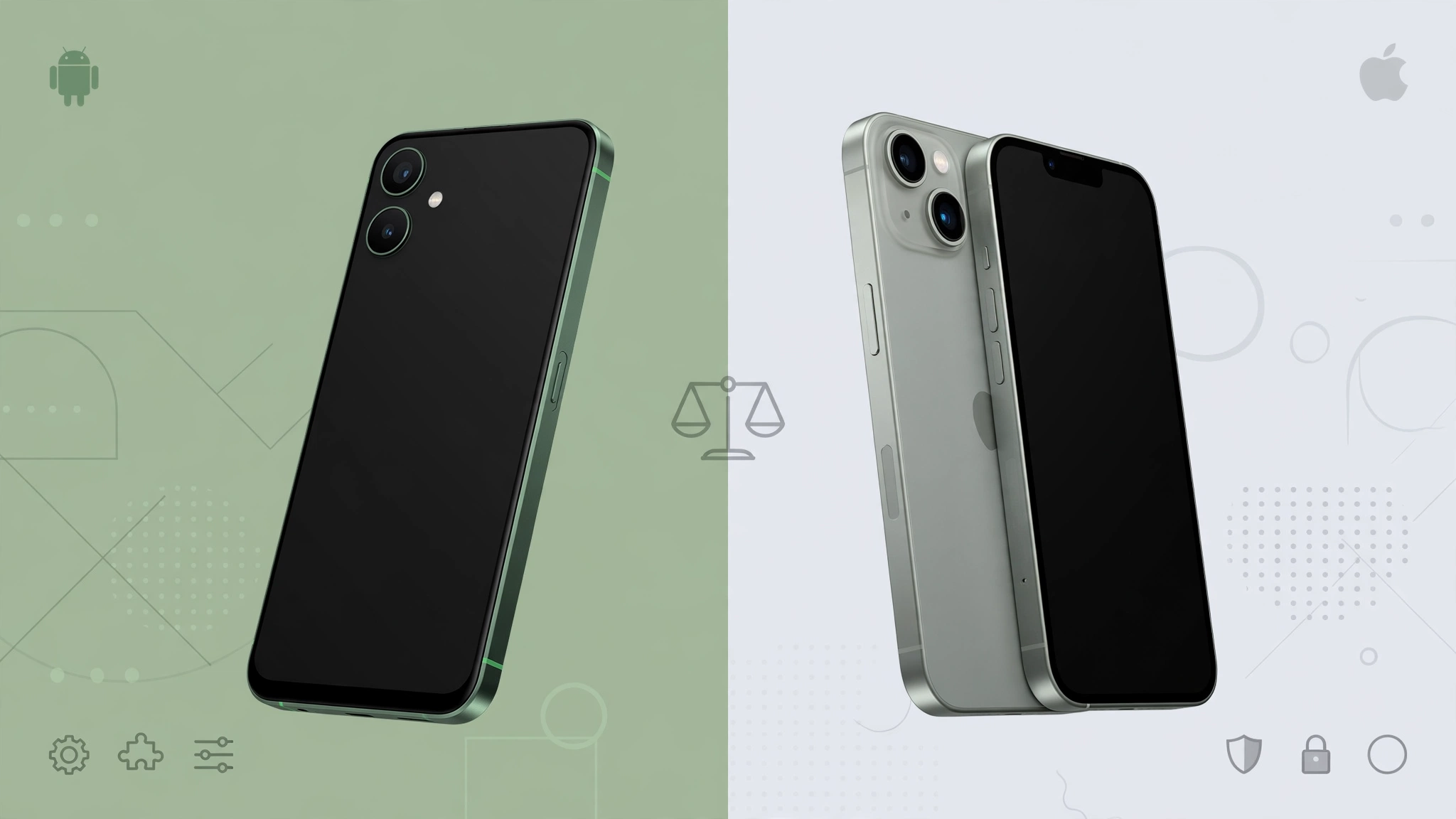
The Android vs iOS question usually turns into an argument between fans, and arguments rarely help anyone buy the right phone. Both platforms are mature, secure enough for daily life, and capable of running everything most people need, from WhatsApp and banking apps to video editing. The real differences are about cost, control, how long your phone stays supported, and which devices you already own.
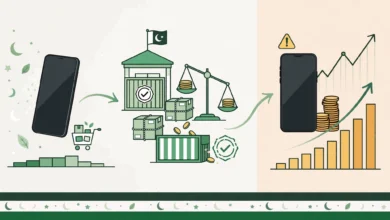
In Pakistan, the decision has an extra twist. Android dominates, running on about 91% of phones according to StatCounter’s August 2026 figures, while iOS holds roughly 9%. Part of the reason is price. Many Android phones are assembled locally and sold with lower taxes, while iPhones are imported and carry heavy PTA registration charges. A choice that looks simple in a US review can look very different once those costs are added.
This guide compares the two platforms across nine practical factors, including total cost, software updates, privacy, app stores, ecosystem, repairs, and resale value. It aims to be fair to both sides rather than pick a winner for everyone.
It also looks at the legal and criminal cases that reveal how each platform really works: the antitrust rulings that forced Google and Apple to open their app stores, malware that slipped into official stores, spyware that targeted iPhones, and the battery throttling scandal. By the end, you should know which platform fits your budget and habits.
Android vs iOS at a Glance
| Factor | Android | iOS (iPhone) |
|---|---|---|
| Price range in Pakistan | About Rs 30,000 to Rs 580,000 | Roughly Rs 175,000 and up, depending on model |
| Phone makers | Samsung, Xiaomi, Tecno, Infinix, Vivo, Oppo, Google, and more | Apple only |
| Software updates | Varies: up to 6 to 7 years on Samsung and Pixel, much less on many budget phones | Typically 6 years or more for all models |
| App installation | Google Play plus other stores and direct installs | App Store, with limited exceptions in some regions |
| Customization | Very high | Moderate and improving |
| Local assembly | Many models assembled in Pakistan | Imported, with PTA tax for personal imports |
| Resale value | Varies widely by brand | Generally strong |
9 Factors to Decide Android vs iOS
Work through these honestly. The right answer depends on your budget and how you use your phone, not on which logo your friends prefer.
1. Total cost in Pakistan
This is the biggest factor for most buyers. Android covers every budget. You can buy a capable, locally assembled phone with official warranty for under Rs 40,000, or a flagship like the Galaxy S26 Ultra starting at Rs 424,999. There is a phone at almost every price in between.
iPhones start much higher. Apple’s official distributors price the iPhone 18 Pro from about Rs 565,000. Importing one yourself means paying a PTA tax that has been reported at around Rs 216,000 on a passport and Rs 238,000 on a CNIC for the 18 Pro. Even older models carry heavy charges: reported PTA tax on the base iPhone 17 is around Rs 154,000 on a CNIC.
Bottom line: if your budget is under Rs 150,000, Android gives you far more choice. If you can afford an iPhone, include PTA tax or official pricing in your comparison, not just the dollar price you see abroad.
2. Choice of hardware
Android’s biggest strength is variety. You can choose a phone for its battery, camera, memory card slot, two physical SIMs, foldable screen, or rugged build. iOS gives you a smaller, simpler range. Every iPhone is well made, but you cannot get one with a 7,000mAh battery, a microSD slot, or a sub-Rs 100,000 price tag.

3. Software updates and long-term support
Updates keep your phone secure and add features. Apple has a strong record here. iPhones typically receive iOS updates for six years or more, and every model gets updates on the same day.
Android has improved a lot but varies by brand. Google promises seven years of updates on recent Pixels, Samsung offers up to seven years on recent Galaxy S flagships and up to six major upgrades on newer budget models like the Galaxy A07 and A17. Many cheaper brands still offer only two or three years. Software updates should be one of your first checks when buying any Android phone.
4. Privacy and security
Both platforms are reasonably secure if you keep them updated and install apps carefully. iOS is more locked down by design, which limits what apps can do and makes it harder to install malicious software. That same control also means fewer choices. Android offers more freedom, including installing apps from outside Google Play, which is useful but riskier for less careful users.
Neither platform is immune, as the spyware and malware cases below show. Your habits matter as much as the logo.
5. App stores and sideloading
Android lets you install apps from Google Play, other app stores, or directly from files. iOS has traditionally limited users to Apple’s App Store, though European rules and court rulings have started to open this up in some regions. For most Pakistani users, every important app, including banking apps, mobile wallets, and government services, is available on both.
6. Ecosystem
If you already own a MacBook, iPad, or Apple Watch, an iPhone works smoothly with them through features like AirDrop, shared clipboard, and iMessage. If you use a Windows laptop or a mix of brands, Android often fits better. Samsung, Google, and Xiaomi each have their own growing ecosystems of watches, earbuds, and tablets.
7. Customization
Android lets you change launchers, icon packs, default apps, and almost every part of the interface. iOS has added home screen widgets and more personalization in recent years but remains more uniform. If you enjoy tweaking your phone, Android wins. If you want something that just works the same way every day, iOS is simpler.
8. Repairs and service in Pakistan
Android brands like Samsung, Tecno, Infinix, Xiaomi, Vivo, and Oppo have wide service networks across Pakistan, and parts are usually cheaper. iPhone repairs through authorized channels are more limited and expensive, and the market for unofficial iPhone parts is full of low-quality and counterfeit components.
9. Resale value
iPhones generally hold their value well, which reduces the real cost of ownership if you upgrade every few years. Android resale value varies. Samsung flagships hold up reasonably, while many budget phones lose value quickly. In Pakistan, PTA approval status strongly affects resale for both, since a non-PTA phone is worth far less.
Who Should Choose Android and Who Should Choose iOS
Android is likely better for you if:
- Your budget is under Rs 150,000.
- You want two physical SIMs, a memory card slot, or a very large battery.
- You like customizing your phone.
- You use Windows or a mix of devices.
- You want cheaper, easier repairs.
iOS is likely better for you if:
- You can afford the official or PTA-registered price.
- You already use a Mac, iPad, or Apple Watch.
- You want long, consistent software updates with minimal setup.
- You value strong resale value.
- You prefer a simple, consistent interface for yourself or an older family member.
StatCounter’s mobile operating system share for Pakistan shows how strongly the local market leans toward Android, largely because of price and choice.
Real Cases That Shape the Android vs iOS Choice
Marketing tells you how each platform wants to be seen. Court rulings, regulators, and security researchers show how they actually behave. Both Apple and Google have been found to break rules, and both platforms have been targeted by criminals.
Google’s Play Store ruled an illegal monopoly
In 2023, a US jury in San Francisco sided with Epic Games, the maker of Fortnite, finding that Google had engaged in anticompetitive practices with its Play Store and billing system. Judge James Donato later ordered Google to allow rival app stores inside Google Play, give them access to Play’s app catalogue, and stop forcing developers to use Google’s billing. A federal appeals court upheld the verdict in July 2025, and the US Supreme Court refused Google’s request to pause the changes. The Register’s report on the appeals court decision explains the ruling.
Google was also fined €4.34 billion by the European Commission in 2018 for using Android to strengthen its search dominance, one of the largest antitrust fines in EU history, later reduced slightly on appeal.
What it means for you: Android is becoming even more open, with more app store choices and payment options, especially in the US. Pakistani users already benefit from Android’s openness, but should still install apps carefully.
Apple fined €500 million under EU rules
Epic sued Apple on the same day it sued Google, but largely lost, with the court only requiring Apple to let developers link to outside payment options. Regulators in Europe went further. In 2025, the European Commission fined Apple €500 million under the Digital Markets Act over rules that stopped developers from steering users to cheaper offers outside the App Store. Apple is appealing, and changed its App Store terms in the EU in response.
What it means for you: Apple’s tight control over iOS is part of its security model, but regulators have found that control was also used to limit competition. Changes are mostly limited to Europe for now.
Malware inside official app stores
Official stores are safer than random downloads, but not perfect. Over the years, security researchers have repeatedly found malicious apps in Google Play, including the Joker family of malware, which secretly signed users up for paid subscriptions and was removed in waves after being spotted. Outside official stores, the risk is higher: the Loapi trojan, uncovered by Kaspersky in 2017, spread through fake antivirus apps on third-party sites and mined cryptocurrency so aggressively that a test phone’s battery bulged within two days.
The App Store has had fewer large outbreaks, partly because Apple restricts installation sources, though malicious and scam apps have also slipped through its review process at times.
Spyware that targeted iPhones
The locked-down design of iOS has not stopped well-funded attackers. NSO Group’s Pegasus spyware used so-called zero-click exploits to infect iPhones without the victim tapping anything, and was used against journalists and activists in several countries. In 2025, a US jury ordered NSO to pay about $168 million in damages to WhatsApp over attacks on its users, though the judge later reduced the award. Apple sued NSO in 2021 and introduced Lockdown Mode for users at high risk of targeted attacks.
What it means for you: no phone is unhackable. Keeping either platform updated is the most important protection, because updates close the holes that spyware and malware rely on.
Apple’s battery throttling scandal
In 2016 and 2017, Apple slowed older iPhones with worn batteries without telling owners. It led to fines of €10 million in Italy and €25 million in France, and a US settlement of up to $500 million. Samsung was also fined €5 million in Italy over a software update that hurt older phones’ performance. The result is that both platforms now show battery health information more clearly.
Grey-market phones in Pakistan
In Pakistan, both iPhones and Android phones are smuggled to avoid PTA taxes. Customs at Khunjerab Pass seized 166 phones in August 2026, including 147 used and carrier-locked iPhones, and the PTA and FIA have raided shops in several cities over IMEI tampering. Whichever platform you choose, buy a PTA approved phone with official warranty and check the IMEI on the PTA’s DIRBS system before paying.
Conclusion
The Android vs iOS decision comes down to budget, habits, and the devices you already own rather than which platform is objectively better: Android, which runs on about 91% of phones in Pakistan, offers far more choice, locally assembled models with lower taxes, cheaper repairs, and features like memory card slots and two physical SIMs, while iOS offers long and consistent software updates, a tightly integrated ecosystem, strong resale value, and a simpler experience at a much higher price once official pricing or PTA tax is included. Real cases on both sides, from the Epic v. Google ruling and Google’s €4.34 billion EU fine to Apple’s €500 million Digital Markets Act penalty, Pegasus spyware on iPhones, malware in app stores, and the battery throttling scandal, show that neither company is above the rules and neither platform is unhackable, so whichever you choose, keep it updated, install apps carefully, and buy a PTA approved phone with official warranty.