How PTA Taxes Affect Smartphone Prices in Pakistan
PTA tax can add up to 54% to an imported phone in Pakistan. Here is how rates work, what Budget 2026-27 changed, and why illegal shortcuts backfire.
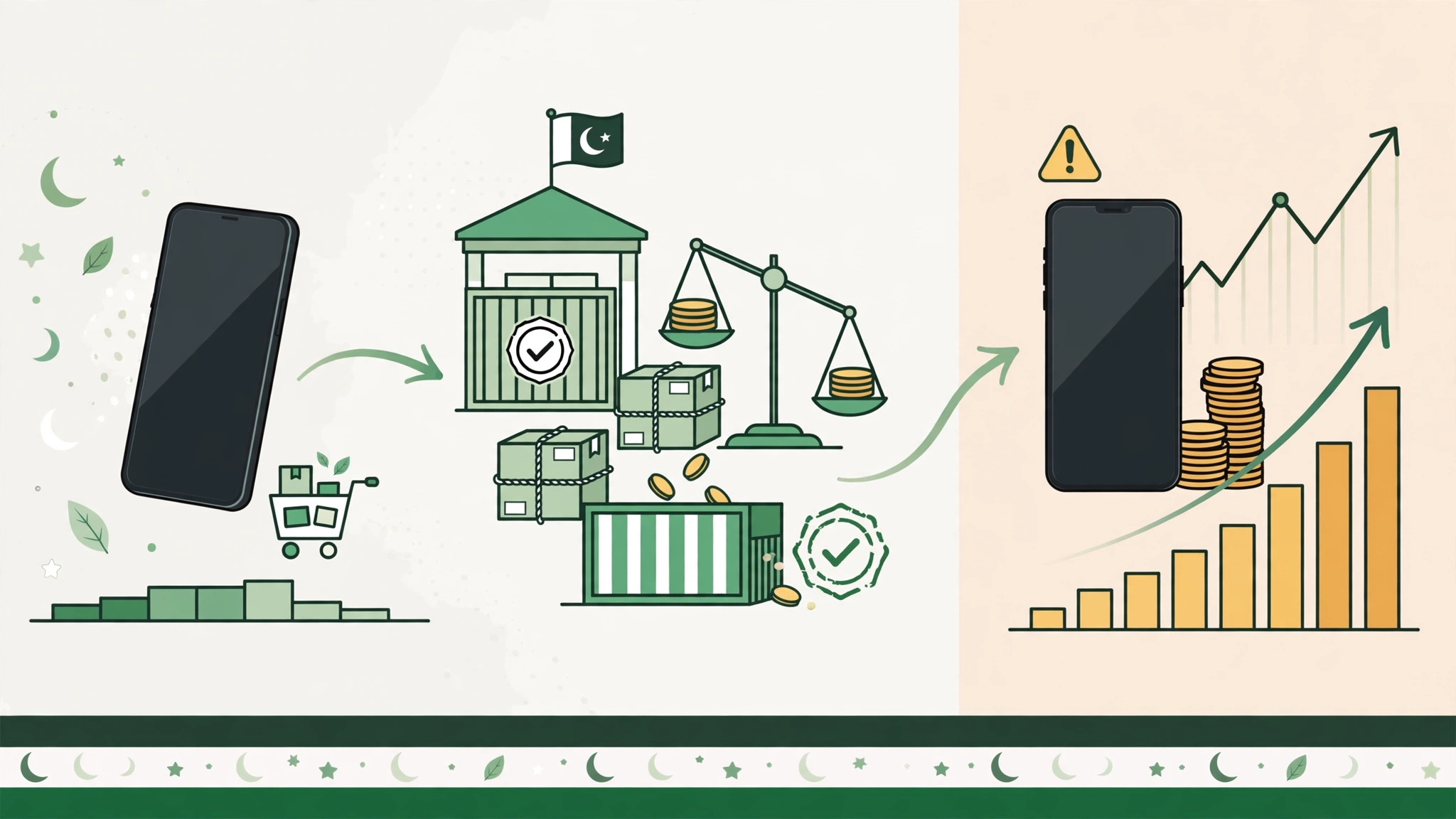
PTA Tax on Smartphones: 7 Shocking Truths Behind Phone Prices in Pakistan
Introduction
PTA tax is the reason a phone that costs $800 in Dubai can cost you well over Rs. 300,000 in Karachi or Lahore. Ask anyone who has tried to bring an iPhone home from abroad, and you will hear the same story: the phone works for a few weeks, then the network goes dead until you pay up.
The term itself is a bit misleading. The Pakistan Telecommunication Authority does not set the rates. It runs the registration system, while the Federal Board of Revenue (FBR) decides how much you owe through customs duty, sales tax, regulatory duty and withholding tax. Together these charges shape smartphone prices in Pakistan more than almost any other factor, including the dollar rate.
This matters because a phone is no longer a luxury here. It is your bank, your office, your classroom and your family group chat. When the PTA tax on mobile phones pushes a device out of reach, people look for workarounds, and some of those workarounds have landed buyers and shopkeepers in serious legal trouble.
In this guide, we break down how the PTA tax is calculated, what changed in Budget 2026-27, how it affects new and used phone prices, and what really happened to people who tried to cheat the system. We also cover practical, legal ways to save money, so you can make a smart decision before your next phone purchase.
What Is PTA Tax and Why Does It Exist?
The PTA tax is the bundle of import duties you pay to register a phone that entered Pakistan without going through an official importer. Once paid, the phone’s IMEI number is whitelisted on the national network, and it becomes a PTA approved phone.
How DIRBS Registration Works
In 2018 and 2019, the PTA rolled out the Device Identification, Registration and Blocking System, better known as DIRBS. Every phone on a Pakistani network has a 15-digit IMEI. DIRBS checks that number against a central database.
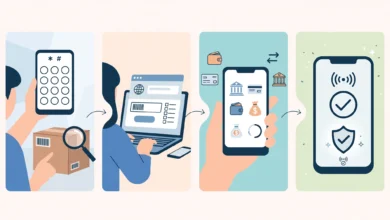
Here is the basic flow:
- You insert a local SIM into a phone bought abroad.
- DIRBS flags the IMEI as unregistered and gives you a grace period.
- You apply through the official PTA DIRBS portal using your CNIC or passport.
- The system generates a payment slip (PSID) with the exact PTA tax amount.
- You pay at a bank or through an app, and the phone is registered permanently.
If you skip step 5, the phone is blocked from cellular service. It still works on Wi-Fi, which is why so many non-PTA phones are sold as “Wi-Fi only” devices.

Why the Government Charges It
The official reasons are fairly simple:
- Revenue: FBR officials told a parliamentary committee in 2026 that imported phones bring in about Rs. 37 billion a year, and Apple devices alone account for roughly Rs. 21 billion of that.
- Fighting smuggling: Before DIRBS, a large share of phones came in through grey channels with no tax paid at all.
- Security: Phones with fake or duplicate IMEIs are hard to trace, which makes them useful for fraud and extortion.
- Protecting local assembly: Higher mobile phone import duty gives locally assembled brands a price advantage.
You may agree or disagree with the rates, but the system is not going anywhere. Understanding it is the first step to paying less, legally.
How PTA Tax Is Calculated in 2026
The PTA tax you pay depends on three things: the phone’s customs value in US dollars, whether you register on a CNIC or a passport, and which tax slab the phone falls into.
The Five Parts of the Bill
When you look at a DIRBS payment slip, the total is usually built from these pieces:
- Customs duty: A fixed rupee amount per slab.
- Regulatory duty: An extra charge on imports, also fixed per slab.
- Sales tax: Currently 18% on most imported phones.
- Withholding or income tax: Higher for non-filers.
- Mobile levy: A smaller charge that varies by price bracket.
What the FBR Says the Effective Rates Are
In a 2026 briefing to the National Assembly finance committee, FBR officials shared the effective tax burden by price bracket. Phones up to $30 face about 25%, phones between $31 and $100 about 36%, and the $101 to $200 range around 40%. Phones from $201 to $350 sit at 38%, $351 to $500 at 40%, and anything above $500 at 41%. The average across all categories was 39.6%, with per-phone tax ranging from roughly Rs. 1,500 to Rs. 141,500.
Other officials at an April 2026 committee meeting described the total burden on phones above $500 as close to 54% once every component is included, compared with about 25% on locally assembled phones. The gap between the two figures comes down to how each charge is counted, but either way, the PTA tax on a premium phone is a big number.
What Changed in Budget 2026-27
The Finance Act 2026-27 cut taxes on mid-range imported phones in the $101 to $200 bracket from July 1, 2026:
- Regulatory duty dropped from Rs. 7,500 to Rs. 6,000.
- Income tax fell from Rs. 930 to Rs. 100.
- The mobile levy was reduced.
- The 18% sales tax stayed the same.
The same budget also allowed people to pay PTA tax in installments, as long as every installment is cleared before the end of the financial year in which the phone was imported. The detailed procedure was left to be notified separately, so check the DIRBS portal for the current process.
Passport vs CNIC Tax
The passport vs CNIC tax question confuses a lot of people. Overseas Pakistanis and returning travelers who register on a passport within the allowed window usually pay a lower PTA tax than someone registering the same phone on a CNIC. The passport route exists to help travelers, but as we will see later, it is also the route criminals abused the most.
FBR Customs Value Revisions
In January 2026, FBR issued a valuation ruling that lowered the FBR customs value for dozens of older and used phone models imported in commercial quantities. Social media called it a tax cut. It was not. The rates stayed the same, but because the tax is calculated on a lower assumed value, the final PTA tax on many used iPhones and Samsung flagships dropped noticeably.
How PTA Tax Affects Smartphone Prices in Pakistan: Real Examples
Numbers make this clearer than any explanation. Below are published estimates from Pakistani tech sites in 2026. Treat them as a guide only, because the DIRBS payment slip is always the final word.
| Model | CNIC tax (PKR) | Passport tax (PKR) | Note |
|---|---|---|---|
| iPhone 17e | ~110,000 | ~95,000 | New device estimate |
| iPhone 15 Pro Max | ~50,604 | ~44,984 | Used, Jan 2026 FBR values |
| iPhone 15 Pro | ~47,580 | ~41,960 | Used, Jan 2026 FBR values |
| iPhone 15 | ~34,101 | ~31,640 | Used, Jan 2026 FBR values |
Source: MobileKiShop rate pages, figures approximate.
Example 1: The New Flagship Buyer
Say Ahmed’s cousin brings him a brand new iPhone from Dubai. The phone itself costs around Rs. 250,000 at the exchange rate. Add a PTA tax of over Rs. 100,000 on CNIC, and Ahmed has paid roughly 40% more than his cousin did. This is why PTA approved new iPhones in local shops often look shockingly expensive next to prices abroad.
Example 2: The Used iPhone Shopper
Sara wants a used iPhone 15. A non-PTA unit might sell for much less than a PTA approved one in the same condition. The price gap between the two is roughly the PTA tax amount. After the January 2026 valuation change, that gap narrowed for many older models, which made registering a used phone more reasonable than it was a year earlier.
Example 3: The Budget Android Buyer
Bilal buys a locally assembled Infinix or Tecno phone. He never sees a PTA tax bill because the phone is already registered at the factory. His phone is taxed too, but at a lower effective rate, and the cost is built into the shelf price.
What This Means for the Market
The pattern is clear:
- Premium imported phones carry the heaviest PTA tax, often tens of thousands of rupees.
- Mid-range imports got some relief in 2026, but sales tax still applies in full.
- Budget local phones are the cheapest route to a working device.
FBR data shared with parliament shows that nearly 44% of imported handsets fall in the $31 to $100 bracket, which tells you most people importing phones are not buying luxury devices.
The Wider Impact of PTA Tax on Pakistan’s Phone Market
The PTA tax does more than raise the price of a single phone. It has reshaped how Pakistanis buy, sell and use mobile devices.
The Rise of Local Assembly
The PTA chairman told a parliamentary committee in late 2025 that around 94% of phones in use in Pakistan are now locally assembled, with only about 6% imported. That is a huge shift from a decade ago, when imported and smuggled phones dominated the market. Higher mobile phone import duty made local assembly attractive for brands like Samsung, Xiaomi, Infinix, Tecno, Vivo and Oppo.
The upside is jobs and investment. The downside is less choice. Many phones sold globally never get a local version, and Apple has no assembly plant here, so iPhone buyers carry the full PTA tax burden.
The Non-PTA Phone Economy
A whole parallel market has grown around non-PTA phones. You will see them listed online as “non-PTA, Wi-Fi only” in almost every online marketplace. These phones:
- Sell for far less than PTA approved units.
- Work fine on Wi-Fi for apps, calls on WhatsApp and browsing.
- Cannot use a Pakistani SIM for calls, SMS or mobile data.
- Lose resale value fast, because the next buyer faces the same limits.
Lawmakers on the finance committee pointed out in 2026 that millions of these phones are in circulation, which is partly why the installment option was introduced.
Pressure on Overseas Pakistanis
Overseas workers often bring phones home as gifts. The PTA tax can turn a thoughtful present into a financial headache. The government acknowledged in Parliament in 2026 that overseas Pakistanis have repeatedly asked for relief, and said the issue was under consideration.
The Used Phone Market
In the used market, the PTA tax acts like a fixed price tag attached to every imported phone. A PTA approved used iPhone holds its value better because the tax has already been paid. That is why sellers advertise “PTA approved” as prominently as storage size or battery health.
Dodging PTA Tax: What Really Happened to People Who Tried
Whenever a tax feels too high, people look for shortcuts. With the PTA tax, those shortcuts have a long and messy history. Here are the main schemes, with real cases from public records.
1. Stolen Passport Data for Fake Registrations
This was the biggest scandal of the early DIRBS years. Because travelers get a tax exemption or a lower rate, gangs got hold of passenger data from travel agents and airport records and used it to register phones that had never left a shop in Pakistan.
In May 2019, the PTA told a Senate committee that it had referred 750 data theft cases to the FIA and that several arrests had been made. Within weeks, the FIA’s cybercrime wing reported more arrests in Karachi and Gujranwala. A later investigation found that data from 47,017 travelers had been misused, and the FIA confirmed that three of its own officials were arrested for their role in fake registrations.
The lesson for buyers: phones registered this way were later traced and blocked. People who paid a shopkeeper for a “cheap registration” lost both the phone service and their money.
2. IMEI Tampering and Cloning
The second trick is to rewrite a phone’s IMEI so it copies the number of a phone that is already PTA approved. Repair shops do this with software tools, and the phone appears legal to the network.
Enforcement has been steady for years:
- Sheikhupura, September 2020: PTA and FIA raided a shop on Sargodha Road, arrested a person involved in IMEI changing, and seized the equipment. The PTA’s own notice on the raid warns that such devices will be blocked.
- Gujranwala, June 2025: Two raids targeted shops selling cloned phones. One seized phone carried an IMEI linked to Disney Mobile, a brand that was never sold in Pakistan.
- Faisalabad: Raids on retail and repair shops recovered seventeen patched handsets and a laptop running IMEI tampering software. Five people were arrested.
- Gilgit: Four repair shops in the NLI Market were raided for the same activity.
Cloned phones are dangerous for a reason beyond tax. Two devices sharing one IMEI make tracking impossible, which is exactly why criminals use them for fraud, extortion and kidnapping calls. If your phone shares an IMEI with a criminal’s phone, you could end up answering awkward questions.
3. Smuggling Through Grey Channels
Before DIRBS, phones were smuggled in bulk through land routes and personal baggage. Smuggling still happens, but the phones now hit a wall the moment a local SIM goes in. Smugglers have simply shifted risk onto the final buyer, who ends up with a phone that needs the full PTA tax or stays Wi-Fi only.
4. Software “Patches” and Hardware Mods
Some shops sell “patched” phones, especially iPhones, using hardware or software workarounds to bypass registration. These often break after a software update, and the buyer has no warranty and no legal protection.
Why None of These Shortcuts Pay Off
Across all of these cases, the pattern is the same:
- The seller takes a cut and disappears.
- The buyer’s phone gets blocked in a later sweep.
- Anyone whose identity was misused can be caught up in an investigation.
- Shopkeepers face arrest, FIRs and confiscated equipment.
Paying the PTA tax feels painful, but every illegal route has ended up costing people more.
Is PTA Tax Fair? An Honest Look at Both Sides
It is easy to call the PTA tax a scam, and plenty of people online do. The reality is more mixed.
The Case Against High Rates
- A phone is now a basic tool for banking, education and work, not a luxury.
- Members of Parliament themselves have questioned charging income tax on top of sales tax on the same device.
- High rates push honest people toward the grey market, which hurts tax collection.
- Overseas Pakistanis, who send billions home in remittances, feel penalized for bringing a gift.
The Case for Keeping It
- It funds the government at a time when revenue is tight.
- It has helped build a local assembly industry with real jobs.
- DIRBS has made stolen and cloned phones harder to use.
- Rates have been adjusted, as seen in 2026, which suggests the system can respond to pressure.
The fair middle ground is this: you can push for lower rates through public debate and still choose to follow the law while you wait.
How to Pay Less PTA Tax Legally
Here are practical, legal ways to reduce your PTA tax bill or avoid it altogether:
- Use the passport route if you qualify. If you are traveling, register within the allowed window after arrival. The rate is usually lower than on a CNIC.
- Use the installment option. From July 2026, the law allows the PTA tax to be paid in installments within the same financial year. Check the DIRBS portal for the current procedure.
- Check the latest FBR customs value. Older and used models got lower valuations in 2026. A two-year-old flagship may cost far less to register than you expect.
- Consider a locally assembled phone. Samsung, Xiaomi, Infinix, Tecno and others sell PTA approved phones with no extra registration step.
- Buy PTA approved used phones. You pay the seller a little more, but you skip the tax bill and the risk.
- Always verify the IMEI. Dial *#06#, then send the IMEI by SMS to 8484 or check it on the DIRBS site before handing over cash.
- Get a proper receipt. A shop that refuses to give one is a red flag.
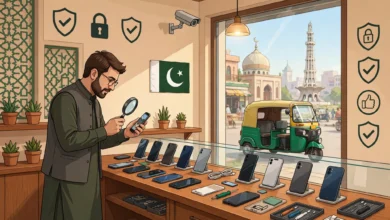
Red Flags When Buying a Phone
Walk away if a seller says any of these:
- “I can register it on someone else’s passport.”
- “It’s PTA approved, but the box IMEI is different.”
- “It’s patched, it works on all networks.”
- “Registration is half price through my contact.”
Each of these is a version of the schemes that led to raids and arrests in the past.
Conclusion
The PTA tax is one of the biggest reasons smartphone prices in Pakistan feel so high, adding anywhere from a few thousand rupees on a basic phone to well over Rs. 100,000 on a new flagship, with effective rates around 40% on most imported devices. Budget 2026-27 brought some relief for mid-range phones and introduced installment payments, while lower FBR customs values made many used phones cheaper to register. At the same time, the history of stolen passport data, IMEI cloning, smuggling and patched devices shows that every shortcut has ended in blocked phones, lost money and, for many sellers, arrests. The smart move is to understand the rates, use the legal options available, verify every IMEI before buying, and push for fairer PTA tax policy through open debate rather than through the black market.