Top Reasons Smartphone Prices Keep Rising in Pakistan
Smartphone prices in Pakistan keep climbing in 2026. Here are 7 real reasons, from memory chip costs and taxes to the rupee, plus clever ways to save.
Why Smartphone Prices Keep Rising in Pakistan
Introduction
Smartphone prices in Pakistan have become a moving target. A phone you priced in January might cost Rs 3,000 to Rs 5,000 more by summer, and flagship iPhones now cost more than many used cars once tax is added. On 1 June 2026 alone, five major brands, Realme, Vivo, Infinix, Tecno, and Oppo, sent price increase notices to dealers on the same day. Samsung and Tecno followed with their own hikes later in the year.
Most people blame taxes, and taxes are part of the story. But they are not the whole story. This year, the biggest new pressure actually comes from outside Pakistan: a global shortage of memory chips driven by artificial intelligence data centres, which has made RAM and storage the most expensive parts inside many phones. Add a weaker rupee, revised duties under the 2026-27 budget, and rising logistics costs, and the increases start to make sense.
There is also a less visible side. Smuggled phones, under-invoiced imports, and fake PTA registrations drain tax revenue and distort the market, which makes it harder to lower legal taxes and pushes honest buyers to pay more.
This guide explains the seven main reasons phones keep getting more expensive, backed by figures from industry analysts and Pakistani reporting. It also covers real smuggling and fraud cases, and gives practical ways to save money without risking a phone that gets blocked or has no warranty.
7 Reasons Smartphone Prices in Pakistan Keep Rising
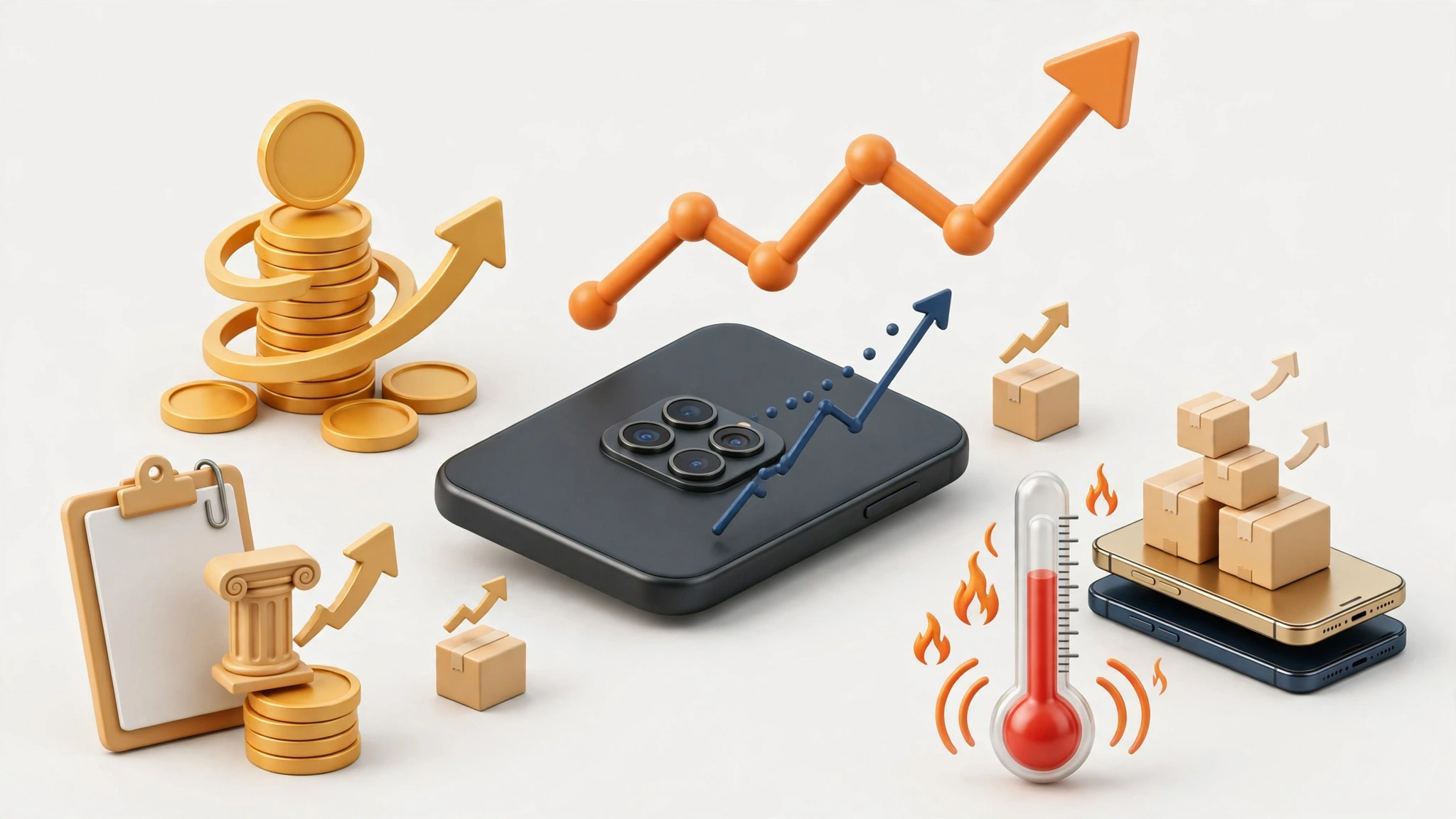
No single factor explains the increases. These seven pressures stack on top of each other, and each one passes through to the final shelf price.
1. The global memory chip shortage
This is the biggest new driver in 2026. Major chipmakers, including Samsung, SK hynix, and Micron, have shifted much of their production toward high-bandwidth memory for AI data centres. That has tightened the supply of the ordinary RAM and storage chips that go into phones.
The effect on costs is large. Market research firm TrendForce estimates that memory used to make up 10% to 15% of a smartphone’s bill of materials, and now accounts for an estimated 30% to 40%. Counterpoint Research has forecast that average smartphone selling prices worldwide could rise by about 6.9% in 2026 as brands pass these costs on. ProPakistani’s report on rising memory costs summarizes the TrendForce findings.
Who is hit hardest: budget phones. They run on thin profit margins, so brands have little room to absorb the increase. Samsung, which makes its own memory, may be better placed than brands that buy all their chips.


2. Rupee depreciation
Phones and their components are priced in US dollars. When the rupee weakens, the same phone costs more in rupees even if its dollar price does not change. According to Minute Mirror, the rupee lost about 4.2% against the dollar between January and March 2026, and prices of several mid-range and high-end models rose roughly 6% to 9% during that period.
3. Taxes, duties, and the 2026-27 budget
Taxes are a large and visible part of smartphone prices in Pakistan. Under the 2026-27 federal budget, customs duties, regulatory duties, and sales tax on mobile devices were revised. Reporting by Minute Mirror says phones in the roughly $100 to $500 range can face a combined import tax burden of up to around 25%, with the standard 18% sales tax making up most of it. Its example: a phone that sold for around Rs 40,000 could approach Rs 48,000 after the cumulative effect of duties and taxes.
The government’s position is that these taxes raise needed revenue and encourage local assembly over imported finished phones. Critics, including many traders and consumer voices, argue that high taxes push prices beyond what ordinary buyers can afford and make smuggling more profitable. Both effects are visible in the market.
4. PTA registration charges on imported phones
If you bring a phone from abroad, you must register it through the PTA’s DIRBS system and pay a PTA tax based on the phone’s value. For flagships, this can be close to half the phone’s price. Reported registration charges for the iPhone 18 Pro, for example, are around Rs 216,000 on a passport and around Rs 238,000 on a CNIC. These charges set the price ceiling for the whole premium market, because official prices only need to stay below the cost of importing and registering a phone yourself.
5. Brand price notices and post-launch hikes
In 2026, price increases have arrived in waves of official dealer notices:
- January 2026: Samsung raised prices on budget models including the Galaxy A06, A07, and A17, with most changes in the Rs 500 to Rs 2,000 range.
- March 2026: Oppo and OnePlus announced increases on some models, citing the rising cost of memory and other parts.
- 1 June 2026: Realme, Vivo, Infinix, Tecno, and Oppo all issued price increase notices on the same day. PhoneWorld’s list of the June 2026 price increases shows the model-by-model changes.
- 17 July 2026: Infinix raised Hot 60 series prices by Rs 4,000 to Rs 5,000.
- 1 October 2026: Tecno raised Spark series prices by Rs 2,000 to Rs 5,000.
Reports also suggest some brands are considering raising prices on phones that are already on sale, which is unusual and shows how strong the memory cost pressure is.
6. Local assembly helps, but parts are still imported
Pakistan’s Mobile Device Manufacturing Policy has grown local assembly a great deal. Around 161.6 million mobile phones had reportedly been assembled domestically by March 2026. Local assembly reduces the tax burden compared with importing finished phones, which is why locally made budget models are usually the cheapest legal option.
But assembly is not manufacturing from scratch. Chipsets, memory, displays, and cameras are still imported in dollars, so local plants cannot escape exchange rates or global chip prices.
7. Rising demand for imported premium phones
Demand has not fallen as prices rise. Pakistan’s mobile phone import bill reached about Rs 530.49 billion in fiscal year 2025-26, up from Rs 416.94 billion the year before, an increase of around 27%. Imports of fully built CBU smartphones jumped from around 290,000 units in FY25 to 1.04 million units in FY26, according to customs figures reported by TechJuice. Strong demand for imported brands, especially iPhones and Samsung flagships, gives sellers little reason to cut prices.
Bonus factor: logistics and energy costs
Fuel prices and energy costs feed into transport, warehousing, and retail overheads. PhoneWorld noted that fuel-linked logistics inflation was one of the pressures behind the June 2026 price resets.
How Illegal Activity Affects Smartphone Prices in Pakistan
High taxes create a strong incentive to cheat the system. Smuggling, under-invoicing, and fake registrations do not make phones cheaper for honest buyers. They reduce the revenue that could allow lower legal taxes, distort competition with legitimate sellers, and leave buyers holding phones that can be blocked.
Smuggled phones seized at the borders and in cities
Pakistan Customs regularly intercepts phones brought in without duty:
- Sost Dry Port, July 2026: customs officers found 317 used and refurbished smartphones hidden in compartments of a prime mover arriving from China, valued at about Rs 77 million. An FIR was registered and investigators said they were pursuing the wider network.
- Khunjerab Pass, August 2026: a joint operation recovered 166 phones worth about Rs 20 million hidden inside a bus, including 147 used and carrier-locked iPhones. Dawn reported that earlier joint operations on the same route had already confiscated around 90,000 phones.
- Gilgit-Baltistan, early 2026: customs reported seizing 59,000 Nokia 105 phones along with other smuggled goods at Sost Dry Port.
- Karachi, December 2025: customs recovered 564 high-end phones, including Google Pixel and Motorola models worth Rs 64 million, hidden inside a tampered, non-duty-paid Land Cruiser Prado.
- Karachi, March 2025: the Anti-Smuggling Organisation seized 10,008 phones from 11 brands hidden in cartons labelled as car coolant.
Why it matters to you: many smuggled phones are used, refurbished, or carrier-locked models sold as new. They often reach buyers through informal sellers at prices that look attractive but come with no warranty and uncertain registration.
Fake registrations using stolen identities
In 2019, the PTA told the Senate that leaked traveller data had been used to register smuggled phones through DIRBS. A later investigation found data from 47,017 travellers had been misused, and around 45,000 cases were referred to the FIA, which made arrests in Karachi and Gujranwala. Phones registered this way can be blocked once the fraud is traced, so buyers who thought they were saving money lose the whole phone.
IMEI tampering
Another way to dodge PTA tax is to copy an approved IMEI onto an unregistered phone. The PTA and FIA have raided shops in Faisalabad, Gujranwala, Sheikhupura, and Gilgit for this. Tampered phones can be permanently blocked, and both sellers and knowing buyers can face legal action.
Under-invoicing
Some importers declare a lower value than they actually paid, cutting the duty owed. Customs has caught several such cases across different goods. When importers cheat this way, honest importers who declare full value cannot compete on price, and the tax system leans harder on the goods that are declared correctly.
The non-PTA price gap
Non-PTA phones are often sold 15% to 30% below comparable registered phones. The saving can disappear quickly: the phone may be blocked from SIM use, and paying the PTA tax later can cost more than buying an official unit in the first place.
How to Save Money Without Breaking the Law
Prices may keep rising, but you can still buy smart:
- Buy locally assembled models from Samsung, Infinix, Tecno, Xiaomi, Vivo, Oppo, and Realme. They usually carry a lower tax burden than imported phones.
- Buy before announced price changes. Brand price notices are often reported a few days before they take effect.
- Consider last year’s model. Older flagships and upper mid-range phones often get price cuts when new models launch.
- Compare official stores and authorized retailers. Prices can differ by several thousand rupees.
- Use official installment plans from banks or authorized sellers, but check the total amount repaid, not just the monthly payment.
- Avoid paying for storage you will not use. With memory now the most expensive part, a smaller storage tier can save real money.
- Check every IMEI before paying by sending it to 8484 or on the PTA DIRBS portal, and get a proper receipt.
- Keep your current phone longer with a battery replacement and a software clean-up instead of upgrading every year.
Conclusion
Smartphone prices in Pakistan keep rising because several pressures hit at once: a global memory chip shortage that has pushed memory to an estimated 30% to 40% of a phone’s build cost, a rupee that lost around 4.2% against the dollar early in 2026, revised duties and an 18% sales tax under the 2026-27 budget, steep PTA registration charges on imported flagships, waves of brand price notices from Samsung, Realme, Vivo, Infinix, Tecno, and Oppo, imported components inside even locally assembled phones, and record demand for imported premium models. Smuggling, under-invoicing, fake DIRBS registrations, and IMEI tampering add to the problem by draining revenue and leaving buyers with phones that can be blocked, so the smartest response is to buy locally assembled or previous-generation models from authorized sellers, time purchases around announced price changes, check every IMEI before paying, and keep a good phone running longer.