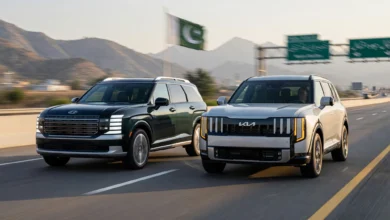
How Chinese Car Brands Are Competing in the Pakistani Market
Chinese car brands in Pakistan win buyers with price, features, and EVs. A fact-based look at their strategy, past controversies, and key buyer risks.
Chinese Car Brands in Pakistan: 7 Powerful Ways They Are Winning the Market
Introduction
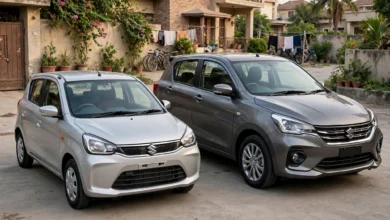
Chinese car brands in Pakistan were a punchline not long ago. People joked about tin bodies, missing spare parts, and cars that lost half their value the day you drove them home. For three decades, the market belonged to the Japanese trio of Suzuki, Toyota, and Honda, and buyers paid whatever they were asked, often with a premium on top just to get a delivery date.
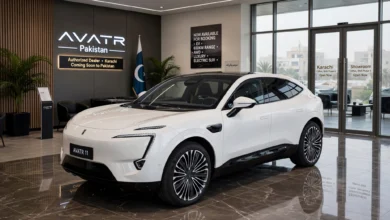
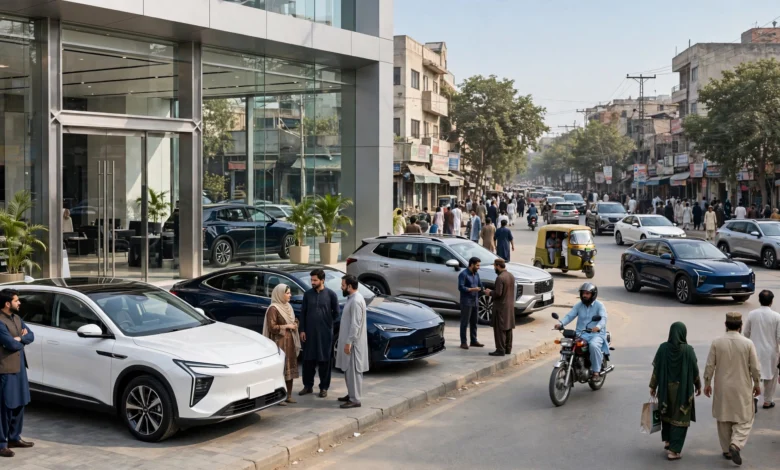
That picture has changed fast. Walk through DHA Lahore or Clifton in Karachi today and you will see Haval H6s, Changan Oshans, MG HS SUVs, and BYD Atto 3s parked beside Corollas and Civics. In April 2026, the Haval H6 sat just behind the Suzuki Alto as one of the best-selling models in PAMA’s monthly figures. BYD is finishing a $150 million assembly plant near Karachi, and new names like Jetour, Tank, Chery, and Deepal keep arriving.
This article looks at how Chinese cars in Pakistan actually won that ground: price, features, SUVs, electrified powertrains, local partnerships, and policy support. It also takes an honest look at the uglier side of the story, including the MG under-invoicing probe, the misuse of import schemes, and the “own money” culture that has hurt buyers across every brand.
Whether you are thinking of buying a Chinese car or just trying to understand where the Pakistani car market is heading, this is the full picture without the showroom gloss.
Chinese Car Brands in Pakistan: Where the Market Stands in 2026
The short version: Suzuki still owns the bottom of the market, but Chinese car brands in Pakistan now lead much of the SUV and electrified segment and are steadily eating into Toyota and Honda’s middle ground.
What the sales numbers show
According to PAMA figures reported by PakWheels’ April 2026 sales breakdown, the Suzuki Alto remained the top seller with 7,567 units, while Haval sold 2,208 units, up 27 percent from March. Jetour and Tank appeared in PAMA’s data for the first time that month, with 305 and 16 units.
One caveat matters a lot here. Several big Chinese players, including Changan and MG, are not PAMA members, so their sales do not show up in these monthly reports. The real share of Chinese cars in Pakistan is therefore larger than PAMA’s tables suggest.
Who is here and who builds them
| Brand | Chinese parent | Local partner | Known for |
|---|---|---|---|
| Haval, Tank | Great Wall Motors | Sazgar Engineering, Lahore | H6 and Jolion SUVs, hybrid H6 HEV |
| Changan | Changan Automobile | Master Changan Motors, Karachi | Alsvin sedan, Oshan X7, Karvaan |
| MG | SAIC Motor | MG JW Automobile, Lahore | HS and HS PHEV, ZS |
| BYD, Denza | BYD | Mega Motor Company (Hub Power) | Atto 3, Seal, Shark 6, Sealion 6 |
| Chery, Omoda, Jaecoo | Chery | Master Group | Tiggo crossovers, Omoda and Jaecoo SUVs |
| JAC | JAC Motors | Ghandhara | T9 pickup, light trucks |
| Jetour | Chery group | Local assembly since 2025 | Dashing and T2 SUVs |
Why China is pushing so hard now
China’s home market is crowded with more than 70 brands fighting price wars, and Western markets are adding tariffs. Exporting to growing right-hand-drive markets like Pakistan is a logical outlet. For Pakistani buyers, that pressure has translated into more choice and sharper pricing than this market has seen in decades.
7 Ways Chinese Car Brands in Pakistan Are Competing
None of this happened by accident. The rise of Chinese car brands in Pakistan follows a clear playbook, and each part of it targets a weakness the older players left open.
1. More features for the same money
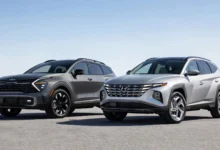
For years, a Pakistani buyer paying for a Corolla or City got cloth seats, a basic stereo, and two airbags if lucky. Chinese brands flipped that. A similarly priced Haval or Changan typically comes with a large touchscreen, 360-degree camera, panoramic sunroof, push-start, multiple airbags, and driver-assist features like lane-keep and adaptive cruise on higher trims.
This “spec sheet advantage” is the single biggest reason buyers took the risk. It also forced Toyota, Honda, and Suzuki to add features they had held back for years, which benefits everyone.
2. Betting big on SUVs and crossovers
Pakistani buyers want height, road presence, and ground clearance for broken roads and flooded streets. Japanese brands offered few affordable SUVs, leaving a gap between small hatchbacks and the expensive Fortuner. Haval Pakistan, Changan, MG, Chery, and Jetour filled it with crossovers priced below what an equivalent Japanese SUV would cost. The SUV market in Pakistan is now one of the most competitive segments, and Chinese models lead it.
3. Local assembly instead of pure imports
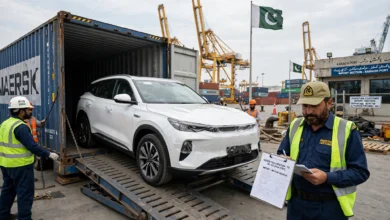
Imported CBU cars face heavy duties. Brands that partner with local companies and assemble from CKD kits pay much less, which keeps prices competitive. Haval assembles with Sazgar in Lahore, Changan with Master Motors in Karachi, and MG with its JW partner in Lahore. BYD Pakistan is the latest to commit: according to Dawn’s report on BYD’s Karachi plant, its partner Mega Motor Company is building a facility with an initial capacity of 25,000 units a year, starting with imported parts and some locally made non-electric components. BYD has since said the Sealion 6 will be its first locally assembled model from late 2026.
Local assembly also creates jobs and slowly builds a parts supply chain, which is the long-term test of whether these brands are here to stay.
4. Leading the shift to hybrids and EVs
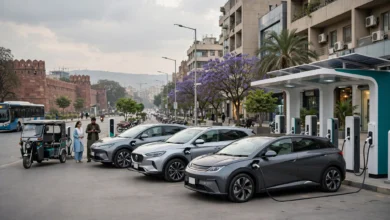
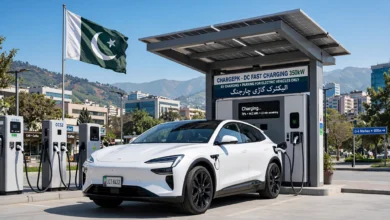
Japanese brands were slow to bring affordable electrified cars to Pakistan. Chinese brands moved first with plug-in hybrids, full hybrids, and fully electric cars in Pakistan: the MG HS PHEV, Haval H6 HEV, BYD’s Atto 3 and Seal, Deepal models, and small city EVs. With petrol prices high and changing often, a car that runs on electricity for daily commutes is a strong pitch, even though charging infrastructure is still thin outside major cities.
5. Using the new-entrant incentives in auto policy
Pakistan’s Auto Industry Development and Export Policy 2021 to 2026 offers reduced duties and tax incentives to new entrants that set up local assembly. Chinese companies used these “greenfield” and “brownfield” incentives more aggressively than anyone else. Government support for EV adoption has added another push. This is legal and intended by policy, but it does mean part of the price advantage comes from public incentives rather than pure efficiency.
6. Faster model cycles and aggressive launches
Toyota and Honda have historically kept the same model in Pakistan for years with small facelifts. Chinese brands launch new models and updated versions much faster, often within a year of their debut in China. Auto shows like PAPS 2026 now feel dominated by Chinese stands. That pace keeps buyers interested and creates a sense that the Chinese option is the “newer” car.
7. Flexible deals, bank financing, and warranties
To overcome fears about reliability and resale, many Chinese brands offer long warranties, free service packages, buyback guarantees on some models, and tie-ups with banks for car financing. As interest rates have eased, financing has become a real sales driver. A long warranty is basically the company putting money behind its claim that the car will last.
At a glance
| Strategy | Who benefits | Main risk |
|---|---|---|
| More features per rupee | Buyers | Electronics are costly to repair after warranty |
| SUV focus | Families, buyers on rough roads | Higher fuel use than smaller cars |
| Local assembly | Economy, jobs, pricing | Low localization means import dependence |
| Hybrids and EVs | Fuel savings | Weak charging network, battery cost questions |
| Policy incentives | New entrants, buyers | Incentives can change with the next policy |
| Fast model cycles | Buyers wanting new tech | Faster depreciation of older versions |
| Warranties and financing | First-time buyers | Fine print and dealer service quality vary |
The Darker Side: Illegal Practices and Real Cases in the Car Market
Any honest account of this market has to include what went wrong. Some controversies involve Chinese brands directly. Others are market-wide problems that shaped the space Chinese brands entered. It is important to separate proven wrongdoing from allegations.
The MG under-invoicing probe (2021 to 2022)
In February 2021, media reports claimed that MG had imported 400 HS SUVs from China at a declared customs value of about $11,632 per unit, while the same model sold for over $27,000 in other countries. Under-invoicing means declaring a lower value at customs to pay less duty, and if proven it is both tax evasion and a form of trade-based money laundering.
Here is how it actually played out:
- The FBR referred the case to its Directorate General of Post-Clearance Audit for a detailed review.
- Business Recorder reported at the time that customs raised the assessable value of the MG SUVs by 14.5 percent using the fallback valuation method under Section 25(9) of the Customs Act, 1969, and MG then raised the HS price by Rs. 300,000.
- After a six-month investigation with Chinese customs verifying documents, The News reported that MG was cleared of under-invoicing.
- In April 2022, the National Assembly’s Public Accounts Committee ordered the FBR to reopen the probe. MG called it a conspiracy against Chinese investment, and some officials suggested established automakers were behind the pressure.
The fair takeaway is that MG was investigated, a valuation adjustment was applied, and the company was later cleared, while the episode became tangled in politics and industry rivalry. For buyers, it is a reminder that import pricing in Pakistan is opaque, and that the price you pay depends heavily on how customs values a car.
Misuse of personal baggage and gift schemes
For years, schemes meant to let overseas Pakistanis bring a car home for personal use were turned into a commercial channel. Dealers were widely reported to pay expatriates for the use of their passports, and thousands of used Japanese cars entered the market this way, competing with locally assembled vehicles while paying less than a commercial importer would.
The government finally acted. Dawn reported in August 2026 that the Personal Baggage Scheme for used vehicles was abolished because of commercial misuse, while the Gift and Transfer of Residence schemes were kept with stricter rules, including a three-year gap between imports and a one-year ban on resale. Commercial import of used cars up to five years old was opened separately with an additional 40 percent duty.
This matters for the Chinese brands because tighter import channels push more demand toward locally assembled cars, which is exactly where they have invested.
The “own money” premium
“Own money” is the extra cash dealers and investors charge on top of the official price for immediate delivery. It grew because automakers took bookings far beyond their production capacity, and investors booked cars only to flip them. It is a market abuse that has hit buyers of Japanese and Chinese cars alike, including early Haval and MG models when demand outran supply. Buyers who pay own money often have no receipt for it and no legal recourse if the deal goes bad.
The government has periodically tried to curb it with withholding taxes on transfers within a short period and rules requiring bookings in the buyer’s own name. Better supply from new entrants has done more to shrink it than any rule.
Smuggled and non-custom-paid vehicles
Non-custom-paid (NCP) cars smuggled through porous borders remain a problem in parts of Khyber Pakhtunkhwa and Balochistan. These vehicles pay no duty, have no legal registration, and are often linked to crime. They undercut legal sellers and leave buyers with a car that can be seized at any checkpoint. The Finance Minister has stated plainly that no region of Pakistan allows duty-free or tax-free car imports.
What these cases teach
- Allegations are not convictions. Report what was proven and what was cleared.
- Opaque import valuation creates room for abuse and for accusations used as business weapons.
- Weak enforcement of import schemes distorts competition for every brand.
- Buyers carry the final cost of every one of these practices, through higher prices, premiums, or seized cars.
Challenges Chinese Cars in Pakistan Still Face
Winning sales is one thing. Keeping trust for ten years is harder. These are the weak spots buyers and analysts keep raising.
Resale value
The biggest fear is depreciation. A Corolla or Civic holds value because buyers know it will be easy to sell and repair. Many Chinese models lose value faster, partly because new versions arrive quickly and partly because the used-car market is still unsure about long-term reliability. Resale value is improving for well-established models like the Haval H6 and Changan Alsvin, but it is still the main reason cautious buyers stick with Japanese brands.
After-sales service and spare parts
A dealer network takes years to build. Outside big cities, finding an authorized workshop or a specific part for a newer Chinese model can mean days of waiting. Earlier, MG faced reported spare-parts delays that left some customers stuck. After-sales service quality varies a lot between brands and even between dealerships of the same brand.
Delivery delays and broken promises
Several brands, including BYD in 2026, have faced complaints about deliveries running past promised dates, largely because cars were still imported while local plants were being finished. Late delivery after paying full price in advance is a serious problem in a market with high inflation.
Low localization
Most Chinese cars here are still assembled from imported kits with limited locally made parts. That leaves prices exposed to the rupee-dollar rate and import restrictions. The real long-term win for Pakistan is not assembly but deeper localization of components, which is still at an early stage.
Complex electronics and EV batteries
Feature-heavy cars have more things that can fail. Once the warranty ends, replacing a touchscreen, a sensor, or an EV battery can be very expensive, and few independent mechanics have the training or tools for it. Battery replacement cost is the biggest unknown for early electric car owners.
Policy uncertainty
The current auto policy runs until 2026, and duties and taxes in Pakistan change with almost every budget. A new policy that cuts incentives, or a sudden rise in sales tax, could change the price advantage overnight.
Buying Guide: Choosing Among Chinese Car Brands in Pakistan
If you are considering one of the Chinese car brands in Pakistan, a little homework protects you from most of the problems above.
Before you book
- Check the dealer network in your city. Visit the nearest authorized workshop, not just the showroom, and ask how long common parts take to arrive.
- Read the warranty in full. Look at what is excluded, especially batteries, electronics, and wear items, and whether the warranty transfers to a second owner.
- Compare resale prices. Look up two- and three-year-old versions of the same model on used-car sites to see real depreciation.
- Ask about the delivery timeline in writing. Get the promised date on your booking document, along with any penalty or compensation for delays.
- Test drive on bad roads. Suspension, ground clearance, and cabin noise matter more on Pakistani streets than a spec sheet shows.
Red flags to avoid
- Any seller asking for own money in cash without a receipt.
- Cars offered far below market price with “papers to follow later,” which may be NCP or stolen.
- Imported used cars whose import scheme and duty payment you cannot verify.
- Dealers who refuse to put verbal promises about free services or delivery in writing.
Hybrid or EV: a quick reality check
A plug-in hybrid or EV makes the most sense if you have reliable home charging, drive mostly within the city, and plan to keep the car for several years. If you live in an area with long power cuts, drive long distances on highways without chargers, or plan to sell within two years, a petrol or regular hybrid model may be the safer choice for now.
Conclusion
Chinese car brands in Pakistan have moved from a risky experiment to a serious force by giving buyers more features for their money, filling the SUV gap the Japanese brands ignored, assembling locally with partners like Sazgar, Master, MG JW, and Mega Motor, and leading the move to hybrids and EVs with help from new-entrant incentives in auto policy. The rise has not been clean in every respect, as the MG under-invoicing probe, the long misuse of baggage and gift import schemes, the own money culture, and smuggled NCP vehicles all show, though it matters to keep proven wrongdoing separate from allegations that were later cleared. Resale value, after-sales service, delivery delays, and low localization are still real weaknesses, so the smart move for buyers is to check the dealer network, warranty, and used-market prices before booking, and the real test for Chinese car brands in Pakistan over the next few years will be whether they turn today’s sales into long-term trust and genuine local manufacturing.
Keywords