AI Voice Cloning A Growing Risk for Pakistani Mobile Users
AI voice cloning scams now target Pakistani mobile users with fake calls and voice notes. See how the fraud works and how to keep your family safe
AI Voice Cloning: 7 Alarming Scams Putting Pakistani Mobile Users at Risk
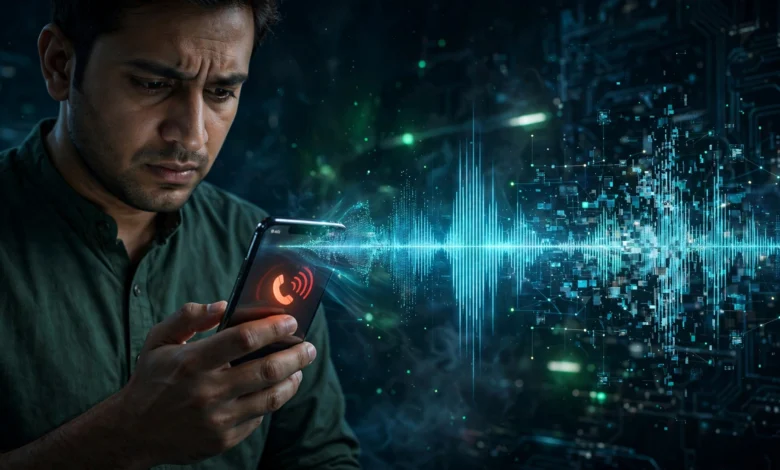
AI voice cloning has quietly moved from tech demos into the hands of ordinary criminals, and Pakistani mobile users are squarely in the target zone. Picture this: your phone rings late at night. It’s your brother’s voice, shaky and scared. He says he’s been in an accident, the police are involved, and he needs Rs. 150,000 sent to a JazzCash number right now. Don’t tell Ammi. Please hurry.
Every detail sounds right. The tone, the way he says your name, even the little pause before he asks for money. But your brother is asleep at home, and the voice on the phone was built by software in a few minutes.
This is not a far-off threat. Scammers only need a few seconds of someone’s voice, and in Pakistan we hand that material out freely through WhatsApp voice notes, TikTok videos and Facebook reels. Add instant mobile wallet transfers and millions of families with relatives working abroad, and you have almost perfect conditions for voice cloning scams to spread.
This article looks at the problem honestly. It explains how AI voice cloning works, why Pakistan is especially exposed, what real past crimes teach us, and the practical steps that actually stop these scams. No panic, no hype. Just what you need to know to protect yourself and the people you love.
What Is AI Voice Cloning and How Does It Work?
At its core, AI voice cloning is software that studies a recording of someone’s voice and learns to reproduce it. These systems are trained on audio samples to learn the unique acoustic characteristics of a person’s voice, including pitch, cadence, accent, tone, and speed. Once trained, the tool can make that “voice” say anything the operator types or speaks. Adaptive Security
The technology itself isn’t evil. It’s used for audiobooks, dubbing, accessibility tools and helping people who’ve lost their ability to speak. The problem is that the same tools are cheap, easy to find, and require almost no technical skill.
How Much Audio Does a Scammer Need?
Far less than most people assume. TrendLife researchers have confirmed that just three seconds of audio can be enough to clone someone’s voice. In McAfee testing, three seconds of audio produced an 85% voice match, and longer samples improve quality further. TrendLife BlogHive Security
Think about how many three-second clips of your voice exist online right now. One Eid greeting video, one birthday reel, one forwarded voice note in a family group. That’s enough raw material for AI voice cloning tools.
Scammers also collect samples directly. Police in India have described how criminals get voice samples from social media posts and videos, or simply by talking to the person over the phone while pretending it’s a wrong number. That “wrong number” call you got last week, where the caller kept you talking for a while? It may not have been random. pressreader


Why Cloned Voices Now Sound So Real
A few years ago, fake voices sounded robotic. That’s no longer true. Strange pauses or vocal fluctuations used to be red flags, but those signals may no longer be present now that AI has advanced. CNN
Some criminals go further with live tools. Attackers can use “voice skinning,” which changes a scammer’s voice in real time so they sound like the person they’re imitating, allowing a back-and-forth conversation. This means the fake caller can respond to your questions instead of playing a pre-recorded message. CNN
Why AI Voice Cloning Is a Bigger Risk for Pakistani Mobile Users
AI voice cloning is a global problem, but several things about how Pakistanis use their phones make the risk sharper here.
We Live on Voice Notes
In Pakistan, WhatsApp voice notes are often the default way families talk. Grandparents who don’t type comfortably send voice messages. Siblings abroad send long audio updates. Business deals happen over voice notes. Every one of those recordings is potential training data if an account gets hacked, a group gets infiltrated, or a phone gets stolen.
Millions of Families Have Relatives Abroad
A huge number of Pakistani households have a son, daughter, husband or cousin working in Saudi Arabia, the UAE, the UK or elsewhere. That distance is exactly what voice cloning scams exploit. When your relative is thousands of kilometres away, you can’t just walk into the next room to check on them. A panicked call saying “I’ve been arrested in Dubai” is hard to verify quickly, and scammers know it.
Money Moves in Seconds
JazzCash, Easypaisa, Raast and instant bank transfers have made life easier for everyone, including fraudsters. Once money is sent to a mobile wallet, it can be withdrawn or moved within minutes, often through accounts opened with borrowed or bought CNIC details. The speed that makes digital payments convenient also makes mobile wallet fraud hard to reverse.
Phone Fraud Networks Already Exist
Pakistan already has organised phone scam operations. The tools are new but the networks aren’t. In September 2026, the NCCIA targeted groups allegedly obtaining citizens’ financial information by posing as bank officials and service company representatives, and illegal call centres using VoIP services to call victims in Pakistan and abroad. In a separate raid, NCCIA teams from Lahore and Faisalabad raided an alleged illegal call centre in DHA Phase 6, Lahore, arresting 21 people and recovering 29 mobile phones and 10 PCs. The StarMinistryofcyberaffairs
These groups already have scripts, call infrastructure and money mule accounts. Adding AI voice cloning to that setup is a small step, and it makes their calls far more convincing.
Real Cases: What Past Voice Cloning Crimes Tell Us
Looking at real incidents helps separate fact from fear. These cases come from different countries, but the pattern is the same one Pakistani users face.
The Fake Kidnapping Call in Arizona
One of the most widely reported fake kidnapping calls involved an American mother, Jennifer DeStefano. She heard what sounded exactly like her daughter Briana crying for help. The sobbing voice was an AI clone. Her daughter was safe the whole time. The lesson: even a parent can’t reliably tell a cloned voice from the real one. Deepfake Detector
The Father Whose “Son” Was Arrested in Dubai
This case from Mumbai is almost a mirror of how the scam would play out in Pakistan. A 68-year-old man received a WhatsApp call from an unfamiliar number. The caller claimed to work at the Indian Embassy in the UAE and said the man’s Dubai-based son had been arrested. When the father asked to speak to his son, the caller arranged a brief conversation, and hearing his “son” in distress sent him into a panic. The fraudster extracted ₹80,000 under the guise of helping the son. pressreaderpressreader
Replace “Indian Embassy” with “Pakistani consulate” and “G-Pay” with “JazzCash,” and you have a script that would work on thousands of Pakistani families tonight.
The Nephew “in Canada”
Another case followed the same emotional formula. A 59-year-old woman got a late-night call from someone who sounded exactly like her nephew in Canada. The cloned voice said he’d been in an accident, faced jail, and needed money quietly. She transferred about 1.4 lakh rupees before the family discovered the fraud. Notice the phrase “needed money quietly.” Secrecy is a core part of the trick, because it stops you from checking with anyone. Deepfake Detector
The Corporate Heists
Businesses aren’t safe either. A single incident at engineering firm Arup reportedly involved a $25 million loss due to deepfake deception. In another widely cited case, audio deepfakes tricked an energy firm’s manager into sending €220,000 via an impersonated CEO’s voice. Pakistani companies, especially those with finance teams that take instructions over WhatsApp, face the same deepfake vishing risk. American Bar AssociationAmerican Bar Association
The Scale of the Problem
These aren’t isolated stories. According to the FBI, Americans lost more than $893 million to AI-related scams last year, including voice cloning attacks, AI-generated phishing emails, romance scams and other hoaxes. A UK survey for Starling Bank found nearly half of people didn’t know this type of scam even existed, and one in 12 said they would send whatever money was requested, even if the call seemed strange. CNNaol
Pakistan doesn’t yet publish detailed data on AI voice cloning fraud specifically, and underreporting is a real issue everywhere. Research suggests fewer than 5% of voice-clone victims file an official report. So the true number of Pakistani victims is almost certainly higher than anyone knows. Firestorm Cyber
7 AI Voice Cloning Scams Pakistani Users Should Watch For
Based on past cases and the fraud methods already active in Pakistan, these are the seven scenarios most likely to hit Pakistani mobile users.
- The accident or hospital call. A cloned voice of your child, sibling or spouse says they’ve been in a road accident and need money for treatment or to settle with the other driver before police arrive.
- The overseas arrest. Your relative in the Gulf or Europe “calls” saying they’ve been detained. A fake lawyer or embassy official then takes over and asks for fees to release them.
- The fake kidnapping. The scariest version. You hear your loved one crying, then a stranger demands ransom and warns you not to call the police.
- The “bank manager” upgrade. Pakistan already has fake bank officer calls asking for OTPs and card details. With AI voice cloning, the caller could sound like your actual relationship manager, or even like a family member asking you to “just read out the code I sent.”
- The boss on WhatsApp. An employee gets a voice note from the “CEO” or “owner” asking for an urgent payment to a new supplier. This is how companies lose large sums.
- The voice note from a hacked account. Someone takes over a friend’s WhatsApp, then sends a cloned voice note to their contacts asking for a quick loan. Because it comes from the real account and sounds like the real person, people pay.
- Political and reputational fakes. Not all misuse is about money. Cloned audio of politicians, religious figures or ordinary people can be used to spread false statements, blackmail, or damage someone’s reputation. In one Indian case, a legislator filed a police complaint alleging miscreants had cloned his voice in a viral audio clip, saying the allegations were false and it had hurt his reputation. In a heated political climate like Pakistan’s, fake audio can spread on WhatsApp faster than any correction. deccanherald
Warning Signs of an AI Voice Cloning Call
Here’s the uncomfortable truth: you probably can’t tell a good clone from a real voice just by listening. Experts now suggest a different approach. Instead of trying to determine whether a voice is authentic, look for other general scam warning signs. CNN
Watch for these red flags in any call involving AI voice cloning risk:
- Extreme urgency. You’re told to act in the next few minutes, with no time to think or check.
- Emotional pressure. Crying, pleading, shouting, or threats. Scammers use tactics like sobbing or pleading tones to create urgency and distress. pressreader
- A request for secrecy. “Don’t tell Abbu,” “Don’t call the police,” “Keep this between us.”
- Unusual payment methods. Money to an unknown mobile wallet, a random bank account, or someone else’s JazzCash number.
- A handover to a stranger. The familiar voice speaks briefly, then a “police officer,” “lawyer” or “doctor” takes over. The cloned voice delivers a few emotional lines, then a “police officer,” “lawyer,” or “kidnapper” takes over. Deepfake Detector
- An unknown or international number. Scammers often call from new numbers and claim the person’s phone was broken or taken.
- Short, dodgy answers. When you ask personal questions, the “person” goes quiet, changes the subject, or the line suddenly gets “bad.”
If you notice even two of these together, assume it’s a scam until you’ve verified otherwise.
How to Protect Yourself from AI Voice Cloning Scams
The good news is that simple habits beat sophisticated technology. You don’t need expensive apps. You need a plan your family agrees on before anything happens.
Set Up a Family Safe Word
This is the single most effective defence against voice cloning scams. Agree on a word or phrase that only your close family knows. Something random, not your pet’s name or your street. If anyone calls in an “emergency” asking for money, ask for the safe word. A cloned voice can copy how your son sounds, but it can’t know a secret it never heard.
Share it in person, not over WhatsApp, and make sure elderly parents know it too.
Hang Up and Call Back
If you get a distressing call, end it and call the person directly on the number you already have saved. Police advise contacting the supposed caller through a known, verified number to confirm their identity before taking any action. If they don’t pick up, call their spouse, roommate, colleague or someone who can physically check on them. A real emergency will still be real in five minutes. A scam usually falls apart. pressreader
Ask Questions Only They Would Know
Ask about something recent and private. What did you eat at Nani’s house last week? What’s the name of your cousin’s new baby? Avoid things visible on social media. AI voice cloning tools copy sound, not memories.
Reduce Your Voice Footprint
You don’t have to disappear from the internet, but be thoughtful:
- Make social media accounts private where possible, especially children’s and teenagers’ accounts.
- Avoid posting long clips of yourself talking publicly if you don’t need to.
- Be careful with “fun” apps that ask you to record your voice to make a funny filter or singing clip.
- Don’t stay on the line chatting with unknown callers. Short answers give scammers less to work with.
Secure Your WhatsApp and Mobile Wallet
Turn on two-step verification in WhatsApp (Settings, then Account, then Two-step verification) so a hacker can’t easily take over your account and use it to send cloned voice notes. For JazzCash, Easypaisa and banking apps, set transaction limits you’re comfortable with and never share OTPs or PINs with anyone on a call, no matter who they sound like.
Talk to Your Elders
Older parents and grandparents are prime targets because they’re often less familiar with AI voice cloning and more likely to act immediately to help a child or grandchild. Sit with them, explain the scam in simple words, and practise the “hang up and call back” rule. It feels awkward, but it’s the conversation that saves families money and heartbreak.
For Businesses: Verify Every Payment Request
Any payment instruction received by call or voice note should be confirmed through a second channel. Security experts recommend mandating out-of-band verification for any high-value transaction, with no exceptions for urgency or seniority of the requester. If the “owner” calls asking for an urgent transfer, the accountant should call the owner back on a known number. No exceptions, even if the boss gets annoyed. Hive Security
What Pakistani Law Says About AI Voice Cloning Fraud
Pakistan doesn’t have a law written specifically for AI voice cloning, but existing cybercrime law covers most of the harm it causes. The Prevention of Electronic Crimes Act 2016 (PECA 2016) includes offences such as electronic forgery, electronic fraud, and unauthorised use of someone’s identity information. Using a cloned voice to trick someone into sending money, or to impersonate a real person, falls within these offences, alongside the regular fraud and cheating provisions in the Pakistan Penal Code.
Enforcement now sits with the NCCIA. The National Cyber Crime Investigation Agency was established by the Government of Pakistan on 3 May 2024 to investigate cyber crime within the country. It’s worth being realistic here, though. Cybercrime units are stretched, recovering money sent to mule accounts is difficult, and the agency itself has faced criticism. In November 2025, a corruption scandal was reported involving 13 NCCIA officers who allegedly took about Rs 15 million every month from 15 illegal call centres. Reporting still matters, because it builds a record and sometimes leads to arrests, but prevention is far more reliable than recovery. WikipediaWikipedia
What to Do If You’ve Been Targeted
If you think you’ve received a cloned voice call or already sent money, act fast:
- Call your bank or mobile wallet provider immediately. Ask them to block the transaction and flag the receiving account. The first hour matters most.
- Save everything. Keep the phone number, call logs, voice notes, screenshots of chats, and transaction IDs. Don’t delete anything.
- File a complaint with the NCCIA through its official complaint channels, and include all the evidence you saved.
- Warn your contacts. If your voice or WhatsApp account was used, tell friends and family so they don’t fall for follow-up requests.
- Report the number to your mobile operator and the PTA so it can be investigated and blocked.
- Don’t blame yourself. These scams are designed by professionals to overwhelm anyone. Talking openly about what happened helps protect others.
The Ethical Side: Voice Cloning Is Not the Villain
It would be unfair to paint all AI voice cloning as criminal. The same technology helps people with speech disorders get their voice back, lets content creators dub videos into Urdu, Punjabi or Sindhi, and makes educational material accessible to people who can’t read. Pakistani startups and creators could use it in genuinely useful ways.
The line is consent and honesty. Cloning your own voice for your YouTube channel is fine. Cloning someone else’s voice without permission, or using any cloned voice to deceive people, is where it becomes harmful and illegal. As these tools get easier to use, Pakistan will need clearer rules on consent, labelling of synthetic audio, and faster responses from platforms and telecom companies. Until then, awareness is our strongest protection.
For more background, CNN’s reporting on how AI voice cloning scams are rising and how to protect yourself is a useful read, and the American Bar Association has a detailed piece on the rise of AI-cloned voice scams targeting families. McAfee’s research on how cybercriminals use AI voice cloning tools also explains the technical side in plain language.
Conclusion
AI voice cloning has turned the most trusted sound in your life, the voice of someone you love, into a tool criminals can copy from a few seconds of audio, and Pakistani mobile users are especially exposed because of how much we rely on voice notes, how many families have relatives abroad, how quickly money moves through mobile wallets, and how many phone fraud networks already operate in the country. Real cases from the US, India and elsewhere show the same pattern every time: a familiar voice, a sudden emergency, a demand for secrecy, and pressure to send money right now. You can’t always hear the difference between a real voice and a fake one, but you don’t need to. A family safe word, the habit of hanging up and calling back, a smaller voice footprint online, secured WhatsApp and wallet accounts, and an honest conversation with elderly parents will stop most voice cloning scams before they start, and reporting incidents to your bank and the NCCIA helps protect everyone else.