How Scammers Are Using AI Voice Cloning to Target Pakistanis
AI voice cloning scams are hitting Pakistani families with fake emergency calls. Real cases, warning signs, and simple steps to protect your family
AI Voice Cloning Scams: 7 Alarming Tricks Targeting Pakistanis and How to Stay Safe
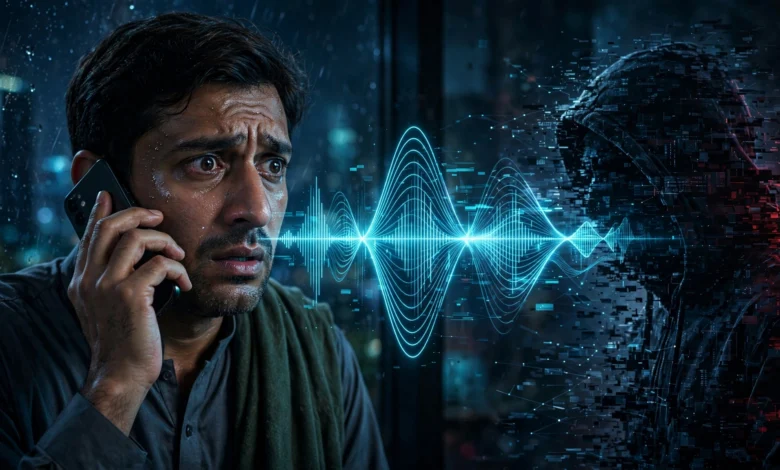
AI voice cloning scams have turned an old Pakistani con into something far more convincing. For years, families here have received calls claiming a son has been arrested, a brother has had an accident, or a relative has been picked up by “the agencies.” Many people learned to spot these calls because the voice on the other end simply didn’t sound right.
That protection is disappearing. With a short audio clip, now easy to find in WhatsApp voice notes, TikTok videos, and Facebook reels, criminals can use AI tools to create a voice that sounds very much like someone you love. A mother hears her daughter crying. A father hears his son begging for help. In that moment of panic, few people stop to question whether the voice is real.
Pakistan is especially exposed. We are heavy users of voice notes, many families have members working in the Gulf or Europe, digital literacy is uneven, and phone fraud was already widespread before AI arrived. Older parents who rely on phone calls rather than apps are often the main targets.
This article explains how these scams work, the most common tricks being used, and real cases from Pakistan and around the world. It also covers what the law says, where to report, and the simple habits that can protect your family. The goal isn’t to scare anyone. It’s to make sure that when a panicked call comes, you know exactly what to do.
What Is AI Voice Cloning?
AI voice cloning is technology that copies a person’s voice so software can make it say things they never said. It has legitimate uses, such as helping people who have lost their voice to illness, dubbing films, and creating audiobooks. The same technology, in the wrong hands, powers voice cloning fraud.
How It Works (In Simple Terms)
AI models learn the patterns of a person’s voice: their tone, pitch, accent, and speaking style. Once trained on a sample, the system can generate new speech that sounds like that person. Earlier tools needed hours of clean recordings. Modern tools can produce a rough but convincing copy from much shorter clips, sometimes just a few seconds long.
Why Short Clips Are Enough
In a real scam call, the fake voice doesn’t need to be perfect. The caller usually:
- Keeps the cloned voice brief, like a few crying words or “Ammi, please help me.”
- Adds background noise, such as traffic, sirens, or shouting, to hide flaws.
- Quickly hands the call to a “police officer” or “kidnapper” who speaks in their normal voice.
Panic does the rest. When you think your child is in danger, your brain isn’t analysing audio quality.
Why Pakistanis Are Especially Vulnerable
AI voice cloning scams in Pakistan thrive because of a few local conditions.


Voice Notes Are Everywhere
Pakistanis send huge numbers of WhatsApp voice notes every day. Many people also post videos on TikTok, Instagram, Facebook, and YouTube where they speak directly to the camera. Every public clip is potential raw material for a scammer.
Large Overseas Families
Millions of Pakistanis live and work abroad, especially in Saudi Arabia, the UAE, the UK, and Europe. Parents back home may speak to them only occasionally, often on poor connections. A distorted voice claiming “I’m in trouble in Dubai, send money” is harder to question when the real person is far away.
A Culture of Respect and Fear Around Authority
Scammers often pretend to be police, FIA or NCCIA officers, army officials, or intelligence personnel. Many Pakistanis, especially older people, are afraid to challenge someone who claims official power. That fear makes people comply instead of verifying.
Leaked Personal Data
Pakistan has experienced major data leaks, including a reported leak of millions of citizens’ NADRA records and SIM data being sold through Telegram groups. When scammers already know your name, your son’s name, your city, and your CNIC details, their story sounds far more believable.
Uneven Digital Literacy
Many older Pakistanis have never heard of deepfakes or voice cloning. They simply don’t know that a familiar voice can be fake.
7 Common AI Voice Cloning Scams Targeting Pakistanis
These are the main patterns seen in phone scams Pakistan has faced, now made more convincing with AI. They’re described so you can recognize them, not copy them.
1. The Fake Kidnapping Call
This is the most frightening version. A parent receives a call and hears what sounds like their child screaming or crying. Then a man takes over and says the child has been kidnapped. He demands immediate payment through a mobile wallet or bank transfer and threatens harm if the police are called.
Fake kidnapping calls existed before AI, but cloned voices make them far more convincing.
Warning signs:
- Extreme urgency and threats.
- Demands for payment through JazzCash, Easypaisa, or quick bank transfers.
- Instructions not to hang up or call anyone else.
2. The “Your Son Has Been Arrested” Call
The caller claims to be a police officer, FIA or NCCIA official, or customs officer. They say your son or husband has been arrested for a crime, perhaps drugs or a traffic accident, and can be released quietly for a “fee.” A short cloned clip of the relative saying “please do what they say” is used to seal the deal.
3. The Overseas Relative in Trouble
A relative working in the Gulf supposedly calls saying they’ve been detained, lost their passport, or had an accident, and need money urgently. The voice may sound slightly off, which the scammer explains as “bad network” or “I’m hurt.”
4. The WhatsApp Voice Note From a Friend
A scammer takes over someone’s WhatsApp account, often by tricking them into sharing a six-digit verification code. They then message contacts asking for urgent loans. With AI, they can now send voice notes in the owner’s voice, making the request much more believable. These WhatsApp scams spread quickly because the message comes from a trusted number.
5. The Fake Boss or Company Executive
Businesses are also targeted. An employee in the accounts department gets a call or voice note from what sounds like the company owner or CEO, asking for an urgent transfer to a new supplier or a “confidential deal.” Smaller Pakistani businesses, where the owner often gives instructions by phone, are especially exposed.
6. The Bank or Government Impersonation Call
Callers pretend to be from a bank, the State Bank, or programs like BISP, often using AI-generated professional voices and fake hold music. They ask you to “verify” your account by sharing OTPs, PINs, or card details. Once shared, your account is emptied.
7. Deepfake Audio of Public Figures
Cloned voices of politicians, religious scholars, celebrities, and TV anchors are used to promote fake investment schemes, fake prize draws, and fraudulent donation appeals. Deepfake audio of well-known people also spreads political misinformation, especially around elections.
Real Cases: Voice Cloning and Impersonation Fraud
Looking at real incidents helps show that these threats are not theoretical.
The UK Energy Company CEO Case
In 2019, the Wall Street Journal reported that the chief executive of a UK-based energy firm was tricked into transferring around €220,000 after receiving a call from someone who sounded exactly like the head of the German parent company. The caller used AI to mimic the executive’s accent and tone. The money was quickly moved through other accounts. It’s widely cited as one of the first known cases of AI voice fraud against a business.
Lesson: Even experienced executives can be fooled by a familiar voice giving urgent instructions.
The Arizona Fake Kidnapping Case
In 2023, Jennifer DeStefano, a mother in Arizona, received a call in which she heard what sounded exactly like her 15-year-old daughter sobbing, followed by a man demanding ransom. Her daughter was actually safe on a ski trip. DeStefano later testified before the US Senate about the experience, describing how completely convinced she was that the voice was her child’s.
Lesson: The emotional impact of hearing a loved one’s voice can overwhelm anyone’s judgment.
The Hong Kong Deepfake Video Call
In 2024, an employee at the Hong Kong office of engineering firm Arup was reportedly tricked into transferring about $25 million after joining a video call where the company’s CFO and several colleagues appeared. All of them were deepfakes. This shows that scammers are moving beyond voice to full video impersonation.
The New Hampshire Robocall
In January 2024, voters in New Hampshire received robocalls with an AI-generated voice imitating President Joe Biden, telling them not to vote in the primary. The US Federal Communications Commission responded by ruling that AI-generated voices in robocalls fall under existing restrictions, and it proposed a $6 million fine against the political consultant behind the calls, who also faced criminal charges.
Lesson: Voice cloning is being used for political manipulation, not just money.
Pakistani Fake Call and Impersonation Scams
In Pakistan, fake arrest and kidnapping calls have been a problem for years, with families losing money after callers pretended to be police or security officials. Pakistani authorities, banks, and the PTA have repeatedly warned the public about fake calls, fraudulent SMS messages claiming BISP payments or lottery prizes, and WhatsApp account takeovers. As AI tools spread, these same criminal networks have better tools to make their calls believable.
Pakistan has also seen deepfake audio and video targeting politicians, including female public figures, and fake clips circulating around the 2024 election. These cases show that the technology is already in use here.
Lesson: The scam networks already exist. AI is simply making their work easier.
What the Law Says in Pakistan
Victims of voice cloning fraud in Pakistan do have legal options.
PECA 2016
The Prevention of Electronic Crimes Act 2016 is Pakistan’s main cybercrime law. Several of its provisions can apply to voice cloning scams:
- Electronic fraud: Using an information system to deceive someone into causing them harm or loss.
- Electronic forgery: Creating or altering data to make it look genuine for fraudulent purposes.
- Unauthorized use of identity information: Using someone else’s identity, which can include their voice and likeness.
- Offences against a person’s dignity: Sharing manipulated content that damages a person’s reputation.
Pakistan Penal Code
Traditional laws also apply. Cheating by impersonation, extortion, and criminal intimidation are all offences under the Pakistan Penal Code, whether the fake voice came from a human actor or an AI tool.
Who Handles Cybercrime
Since 2025, cybercrime cases in Pakistan are handled by the National Cyber Crime Investigation Agency (NCCIA), which took over from the FIA’s cybercrime wing. Complaints can be filed through its official online portal or listed helplines. Always get contact details from the official government website, not from social media posts, because scammers also create fake “complaint” pages.
How to Spot an AI Voice Cloning Scam
Knowing the signs of AI voice cloning scams gives you a few seconds of clarity when it matters most.
Red Flags During the Call
- Extreme urgency. “Send money in the next 10 minutes.”
- Secrecy. “Don’t tell anyone. Don’t call the police.”
- Unusual payment methods. Mobile wallets, cash drops, gift cards, crypto, or transfers to unknown accounts.
- The loved one’s voice is short. A few words, then someone else takes over.
- Background noise hiding the voice. Crying, sirens, shouting, or “bad network.”
- Unknown or international numbers, or a number that looks official but isn’t.
- Questions that feel off. The “relative” avoids personal details or can’t answer something only they would know.
Signs in the Voice Itself
AI voices are improving, but you might notice:
- Flat or odd emotional tone.
- Strange pauses or robotic transitions.
- Words pronounced slightly differently from how your relative speaks.
- The voice doesn’t respond naturally to your questions.
Don’t rely on these alone. The safest assumption is that a voice can be faked.
How to Protect Yourself and Your Family
The best defence against AI voice cloning scams isn’t technology. It’s simple habits that the whole family agrees on in advance.
Set Up a Family Code Word
A family code word is one of the most effective protections available.
- Choose a word or phrase that only your close family knows.
- Don’t make it something guessable, like a pet’s name that’s on Facebook.
- Agree that anyone claiming to be in trouble must say the code word.
- Make sure elderly parents know and remember it.
If the caller can’t give the code word, treat the call as fake.
Always Hang Up and Call Back
Caller verification is simple: end the call and call your relative directly on the number you already have saved. If they don’t answer, call someone who is with them, such as their spouse, roommate, office colleague, or friend. Scammers will try to keep you on the line. Hanging up breaks their control.
Ask Personal Questions
If you can’t reach your relative, ask questions only they would know, such as what you ate together last Eid or a nickname from childhood. Avoid anything that’s visible on social media.
Never Pay Under Pressure
No real police officer in Pakistan will ask you to settle an arrest through JazzCash. No real kidnapper situation is solved by panicking alone. If you truly believe someone is in danger, contact the police through official channels at the same time.
Protect Your WhatsApp
- Never share your WhatsApp verification code with anyone, including someone claiming to be a friend or from WhatsApp.
- Turn on two-step verification in WhatsApp settings.
- Tell friends and family immediately if your account is compromised.
Reduce Your Public Voice Footprint
You don’t need to disappear from the internet, but you can be careful:
- Make social media accounts private where possible.
- Think twice before posting long videos of children speaking.
- Be cautious about answering unknown calls where someone keeps you talking for no reason, as recordings may be collected.
Protect Your Bank Accounts
- Never share OTPs, PINs, or card details over the phone. Banks don’t ask for them.
- Set transaction limits and SMS alerts on your accounts.
- The State Bank of Pakistan and all major banks repeatedly warn customers that their staff will never ask for PINs or OTPs.
Protecting Businesses
Social engineering attacks on businesses can be stopped with clear procedures:
- Never approve payments based on a phone call or voice note alone.
- Require written confirmation through official email or a second person’s approval.
- Use a callback rule: verify any unusual payment request by calling the person on their known number.
- Train accounts staff on voice and video deepfakes.
Talking to Elderly Parents About Voice Scams
Older family members are often the main targets, and they may feel embarrassed to ask about new technology. Here’s how to approach the conversation.
Keep It Simple
Explain that computers can now copy anyone’s voice, including yours. Play them a short example of an AI-generated voice from a news report if possible. Seeing, or hearing, is believing.
Give Them a Clear Rule
Something like: “If anyone calls saying I’m in trouble and asks for money, hang up and call me directly. Even if it sounds exactly like me.”
Make It Okay to Question Authority
Tell them it’s perfectly fine to hang up on someone claiming to be police or an official, and verify through official numbers. Real officers won’t be offended by verification.
Put Important Numbers Somewhere Visible
Write down family members’ numbers and official helpline numbers on paper near the phone, so they don’t depend on the caller’s information.
What to Do If You’ve Been Scammed
If you’ve already sent money or shared information, act quickly.
- Contact your bank or mobile wallet provider immediately. Ask them to block the transaction or freeze the receiving account if possible. Speed matters.
- Save evidence. Screenshot call logs, messages, voice notes, and transaction receipts.
- File a cybercrime complaint with the NCCIA through its official channels.
- Report the number through the Pakistan Telecommunication Authority complaint system so it can be investigated and blocked.
- Change passwords and secure accounts if you shared any login details or codes.
- Tell family and friends, so the scammers can’t use the same trick on them.
Don’t Blame Yourself
Victims often feel ashamed, but these scams are built to exploit love and fear. Intelligent, educated people fall for them every day. Reporting helps authorities track networks and protects others.
The Ethical Side: Consent and Voice Cloning
Not every use of voice cloning is criminal, but the ethics matter.
- Consent. Cloning someone’s voice without their permission, even as a joke, can cause real harm and may break the law.
- Pranks can go wrong. Fake “kidnapping” pranks using cloned voices have caused panic and could be treated as criminal intimidation.
- Content creators. YouTubers and TikTokers who use cloned celebrity or politician voices can mislead audiences and face legal action.
- Disclosure. Any legitimate use of AI voices, such as in ads or dubbing, should be clearly labelled.
Regulators abroad are already acting. The US Federal Trade Commission has warned consumers about family emergency voice scams and has pushed for ways to detect and prevent voice cloning fraud.
Conclusion
AI voice cloning scams have made old frauds like fake kidnapping calls, false arrest claims, overseas relative emergencies, and WhatsApp loan requests far more convincing, and Pakistanis are especially exposed because of widespread voice notes, large overseas families, fear of authority, leaked personal data, and uneven digital awareness. Real cases, from the UK energy firm CEO fraud and the Arizona fake kidnapping to the $25 million Hong Kong deepfake call, the Biden robocall, and years of fake call scams in Pakistan, show that a familiar voice is no longer proof of identity. The protection is simple but powerful: agree on a family code word, hang up and call back on a known number, never pay under pressure, never share OTPs or WhatsApp codes, secure your accounts, talk openly with elderly parents, and report every attempt to the NCCIA, your bank, and the PTA.
Keywords: