How Digital Pakistan Is Supporting Women’s Access to Technology
Women's access to technology in Pakistan is rising fast, from mobile internet to bank accounts. Here is what changed, what still blocks women, and why.
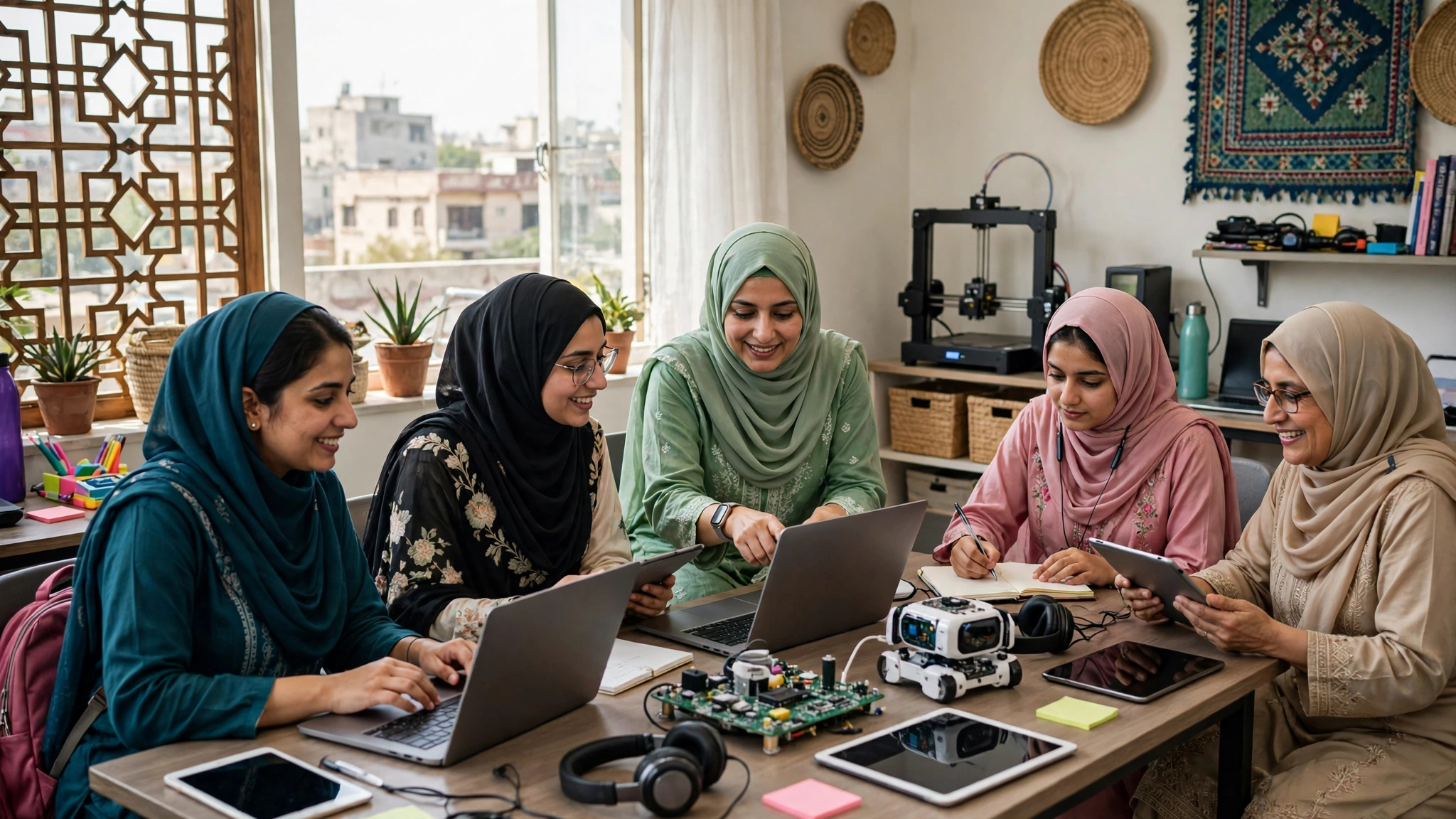
Women’s Access to Technology in Digital Pakistan: 7 Powerful Gains and the Hard Truths Women Still Face
Introduction
Women’s access to technology in Pakistan has changed more in the past three years than in the decade before. A young woman in a small Punjab town can now take a free online course, open a mobile wallet, and earn from clients overseas without leaving home. A mother can receive a remittance on her phone instead of waiting for a male relative to collect it. Female students are receiving laptops on merit, and women opened more than half of all new bank accounts in 2025.
These gains are real, and some of them are among the fastest anywhere in the world. Pakistan’s gap between men and women using mobile internet has narrowed sharply, according to the global mobile industry body GSMA.
There is another side to the story, and it is just as real. Women still own phones at much lower rates than men, and many use a device borrowed from a husband or brother. Women file most of the online harassment complaints recorded by Pakistan’s leading digital rights helpline. For years, men have blackmailed women with doctored photos. Retailers paid to deliver welfare payments have overcharged poor women for SIMs that were supposed to be free. Many women who technically have an account don’t control the money in it.
This article looks at how Digital Pakistan is supporting women’s access to technology: seven areas where real progress has happened, the crimes and barriers that still hold women back, and what has to change so that access also means safety, control and opportunity.
Where Pakistani Women Stand Today
The progress in numbers
The headline figures are encouraging. According to the GSMA Mobile Gender Gap Report 2026, 53% of women and 58% of men used mobile internet in 2025, while the GSMA report placed the country’s mobile internet gender gap at 8%. The ministry noted that the gap had narrowed dramatically from 71 percent in 2017 to 25 percent in 2024 and is now down to 8% in 2025, representing the lowest level recorded to date.
The gaps behind the headlines
Several harder numbers sit underneath that progress:
- Phone ownership: Pakistan continued to have the widest mobile phone ownership gender gap among all countries surveyed, with 68 percent of women owning a mobile phone compared with 93 percent of men.
- Borrowed devices: 28 percent of Pakistani women who use mobile internet rely on someone else’s phone.
- Financial access: in the Karandaaz survey, the male financial inclusion stood at 56pc compared to just 14pc for women.
- Control over money: the same survey reveals that only 11 per cent of women have a say in financial matters related to saving, purchasing.
So women’s access to technology is growing, but owning, controlling and safely using that technology are still separate battles.
7 Ways Digital Pakistan Is Supporting Women’s Access to Technology
1. A Historic Jump in Women’s Mobile Internet Use
The single biggest gain is mobile internet. In 2024, 8 million women came online – reducing the gender gap in mobile internet adoption from 38% in 2023 to 25% in 2024. Pakistan achieved the largest year-on-year reduction globally in the mobile internet gender gap that year, across 80 surveyed countries.

Policy played a part. GSMA highlighted that the Pakistan Telecommunication Authority had introduced the 2020 Digital Gender Inclusion Strategy, which significantly boosted internet usage among women. Once women have their own internet-enabled phone, they use it heavily: Among Pakistani women who own an Internet-enabled handset, 94 percent use mobile Internet every day.
2. More Women Opening Bank Accounts and Wallets
Digital finance is the second big area of progress. SBP Governor Jameel Ahmad reported that the number of active bank accounts held by women in Pakistan has increased to 37 million as of June 2025, up from 20 million in September 2021, while the gender gap in financial inclusion has narrowed from 39% to 30%. In 2025 alone, the financial system added more than 6.8 million new unique bank accounts during 2025, with women accounting for 55 percent of new account holders.
The hard truth: most credit for women is still small. Of the loans disbursed to women in a recent year, 93pc of these loans fall under microfinance, showing that most women remain concentrated in micro- and entry-level segments.
3. Free Online Skills Training
DigiSkills, Pakistan’s largest free online training program, has trained hundreds of thousands of women. Ignite says it has a strong emphasis on women empowerment, having provided over 800,000 trainings to women across Pakistan.
The hard truth: women are still a minority of trainees. Ministry data shows the total trainees comprise 73% males and 27% females. A parliamentary committee raised the same concern about freelance training more broadly: Only 28% of trainees were women, while 72% were men. Lawmakers stressed the urgent need to increase female involvement, calling for at least 50% representation.
4. Women-Only Digital Programs
Provinces have started running training designed specifically for women. In Punjab, a program for rural women says 27,000 rural women will receive scholarships during their online training, along with desktop computers and free Wi-Fi devices upon completion. Its curriculum includes essential skills like graphic design, social media management, freelancing, office automation, and cybersecurity.
Khyber Pakhtunkhwa has early results to show. A KPITB program with UN Women reported that in its first phase it exceeded its goals, successfully training over 3,035 women. More than 30% of the participants secured employment, collectively generating around PKR 225 million in annual income. Importantly, it also offers guidance on safe internet usage, mentorship opportunities, and support in accessing freelancing platforms.
The hard truth: not all women’s programs are free. One PITB women’s course was announced as running online and will last for two months, with a fee of Rs. 25,000. For many low-income women, that fee is a real barrier.
5. Laptops for Female Students
Device schemes are reaching female students too. At the University of Home Economics in Lahore, A total of 131 students of MPhil and BS programmes from more than fifteen departments of the university received laptops on merit under the Prime Minister’s scheme. Officials there said the government had been empowering female students through such initiatives.
6. Computer Labs, Tech Parks and Startup Quotas
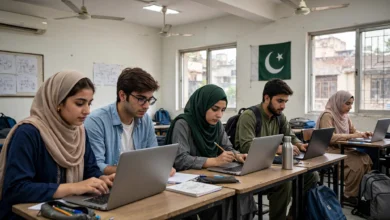
The federal IT ministry says its Digital Pakistan Policy and ICT for Girls Program have been instrumental in enhancing women’s access to technology by establishing computer labs in girls’ schools, particularly in underserved areas. National Incubation Centers also mandate that at least 25% of their founders be women, creating a more inclusive and diverse startup ecosystem.
7. Closing the Gender Gap on the Voter Rolls
Digital identity also affects women’s civic participation, because NADRA’s CNIC feeds directly into electoral rolls. According to the ECP Secretary, the Gender gap among Pakistan’s voters reduced from 11.8 per cent in 2018 to 7.1pc in 2025. Every woman who gets a CNIC also gains a path to a SIM in her own name, a bank account and a vote.
The Hard Truths: Illegal Activities and Barriers Women Still Face
The gains above come with serious risks. Some of these risks are crimes committed against women specifically because they came online.
Hard Truth 1: Women Bear the Brunt of Online Harassment
The Digital Rights Foundation (DRF) runs Pakistan’s best-known digital security helpline. In 2025, the helpline received 3,012 complaints in 2025, besides 776 follow-ups, averaging around 250 cases per month. Of these, 2,586 were related to cyber harassment. Women filed most of them: Women continued to bear the brunt of online abuse, reporting 1,709 cases. Common complaints include hacking, sextortion, threats, deepfake abuse.
Getting justice is still hard. Even though 79% of cyber harassment cases being referred to the National Cyber Crime Investigation Agency (NCCIA) for legal intervention, access to justice remains severely constrained. Only 51% of reported cyber harassment cases originated from cities with operational cybercrime offices, forcing many survivors to travel long distances.
Hard Truth 2: Blackmail With Doctored Photos
For years, men have used women’s photos to blackmail them. In one FIA case in Rawalpindi, officials said “The accused used to threaten three sisters to have illicit relations with him or he would doctor their photographs and upload them on social media”. In Lahore, a man named Zubair met women on Facebook, and according to the complainant took pictures and videos together. Zubair then edited these pictures and videos to use against them. In Hyderabad, investigators said a suspect blackmailed a woman who had left her phone for repairs. Instead of fixing it, the accused stole personal photos and demanded money.
The lesson: fear of this kind of abuse keeps many families from letting women own phones or go online. Safety is part of access, not something separate from it.
Hard Truth 3: Leaked Surveillance Footage
Public cameras built to protect citizens have been misused against women. The Lahore High Court directed Punjab’s Safe City Authority to investigate leaked footage after a petition was filed in 2019 in the wake of multiple incidents of blackmailing of women through release of the CCTV footage or secretly filmed videos. In Islamabad, an officer said images from the Safe City cameras were leaked due to which a couple ended up getting divorced.
Hard Truth 4: Welfare Fraud That Targets Poor Women
BISP is meant to support Pakistan’s poorest women, and part of the program involves giving them SIMs. Some retailers turned this into extortion. In Kot Addu, the FIA arrested retailers who, instead of providing free mobile SIMs to the women as required, were illegally charging Rs1,500 from each. Fake messages are also rising. BISP’s chairperson spoke amid reports suggesting an alarming rise in fraud cases in the name of the Benazir Income Support Programme (BISP), and stressed that only messages received from 8171 are genuine and reliable, while all other messages are fake.
The lesson: when technology reaches poor women through middlemen, those middlemen need close monitoring. Otherwise the poorest users pay a hidden tax.
Hard Truth 5: Laws That Don’t Yet See Women
Pakistan’s main digital law has been criticised for ignoring gender. One commentary argued that the Digital Nation Act does not recognise women as a distinct category of rights holders in digital ecosystems, nor does it mandate gender impact assessments, consent-based data processing, or safeguards against misuse of personal data.
Ethical Questions About Women’s Access to Technology
Is access real if the phone isn’t hers?
When nearly three in ten women internet users rely on someone else’s phone, they have less privacy and less freedom to seek help, learn or earn. Programs that help women own their own devices and SIMs matter as much as coverage.
Who carries the risk of going online?
Right now, women carry most of the risk of harassment and blackmail, and the justice system is hardest to reach for women outside big cities. That is an ethical failure, not just a technical one.
Are programs designed for women or just open to them?
A program that is “open to everyone” often ends up mostly male. Women-only cohorts, female trainers, flexible timing, offline support and free enrolment make a real difference.
Is success measured honestly?
Counting accounts, downloads and trainees is easy. Measuring whether women control their accounts, earn income and feel safe online is harder, and that is what actually matters.
What Needs to Happen Next
- Close the phone ownership gap with affordable handsets and instalment plans aimed at women, and SIMs registered in women’s own names.
- Make women-focused training free, especially for low-income and rural women.
- Set gender targets of at least 50% women in national programs like DigiSkills, as lawmakers have urged.
- Expand cybercrime offices and online reporting so survivors outside major cities can get justice.
- Train investigators to handle harassment cases sensitively and quickly.
- Monitor welfare agents and retailers who serve women, with strict penalties for deductions and fake charges.
- Add gender safeguards to digital law, including consent-based data handling and gender impact assessments.
- Pair every rollout with digital safety training, as the KPITB-UN Women program does.
For deeper data, the GSMA’s report on women’s digital inclusion in Pakistan tracks the gender gap, and the Digital Rights Foundation’s 2025 helpline report documents online abuse and gaps in access to justice.
Practical Safety Tips for Women Online
- Use your own phone and SIM where possible, and check SIMs registered on your CNIC by sending your CNIC number to 668.
- Turn on two-step verification for WhatsApp, Facebook, Instagram and email.
- Never hand an unlocked phone to repair shops without first removing private photos and logging out of accounts.
- Don’t share OTPs, PINs or CNIC photos with anyone, including people who claim to be from BISP or a bank.
- Trust only 8171 for BISP messages, and remember registration is free.
- Save evidence such as screenshots, links and phone numbers if you are harassed, then report to the NCCIA.
- Get confidential support from the DRF Digital Security Helpline at 0800-39393.
Conclusion
Women’s access to technology in Pakistan has made some of the fastest progress anywhere in the world. Eight million women came online in a single year, the mobile internet gender gap fell to 8% in 2025, women’s active bank accounts rose to 37 million, women opened 55% of new accounts in 2025, and programs from DigiSkills to Punjab’s rural women initiative and KPITB’s work with UN Women are teaching digital skills and creating income. The hard truths are just as clear: women still own phones far less often than men, many rely on borrowed devices, few control household finances, women are a minority of trainees, and they report most online harassment, from doctored-photo blackmail to sextortion and leaked surveillance footage. Retailers have overcharged poor women for SIMs that were meant to be free, and digital law still doesn’t treat women as a distinct group with specific risks. The next stage of Digital Pakistan has to go beyond counting connections: close the device gap, make training free and designed for women, set firm gender targets, expand cybercrime support beyond big cities, monitor middlemen, and build gender safeguards into law. When access also means safety and control, technology can change women’s lives across Pakistan.