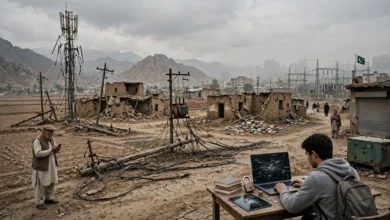
Digital Pakistan and Financial Inclusion How Far Have We Come
Financial inclusion in Pakistan is rising fast as 92% of retail payments go digital. Here is what worked, who is still left out, and what fraud taught us.
Financial Inclusion in Digital Pakistan: 7 Powerful Wins and Hard Truths for 2026
Introduction
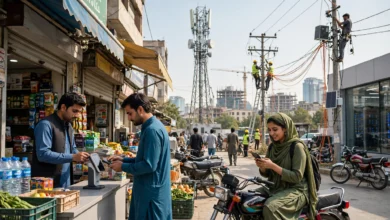
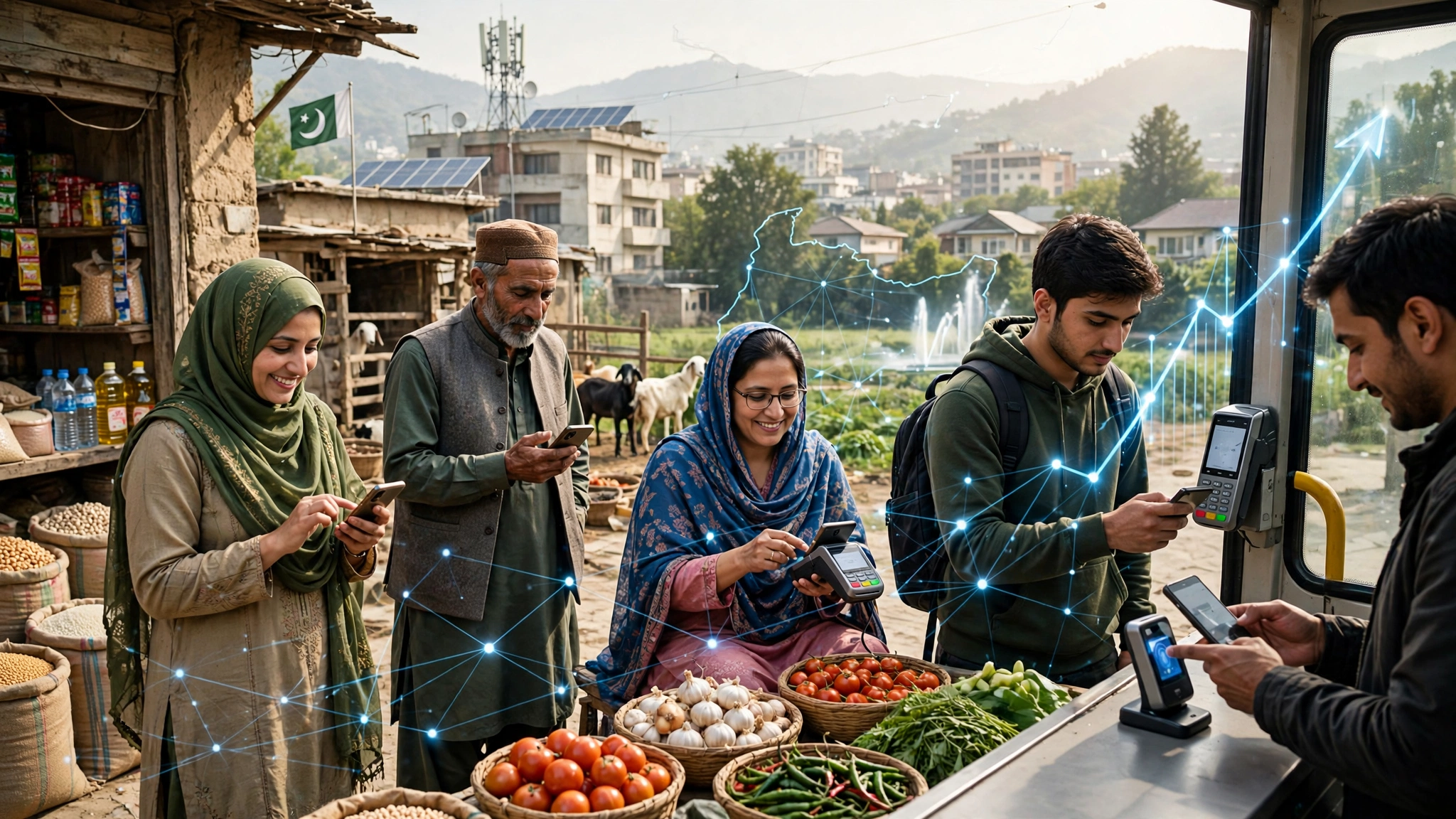
Financial inclusion in Pakistan has gone from a policy slogan to something you see at the corner shop. A vegetable seller in Rawalpindi takes payment by QR code. A daughter in Dubai sends money home in seconds. A widow in Badin gets her cash grant through a biometric device instead of waiting in a government office line. These are real changes, and they happened quickly.
Big numbers can also hide things. Opening an account doesn’t mean someone has a voice in their own money. Moving payments online doesn’t make them safe. Over the past decade, every gain in digital Pakistan has drawn people who wanted to exploit it: predatory loan apps, card skimmers, data thieves, fake call centres, and middlemen skimming cash from welfare payments for the poorest women in the country.
This article looks at financial inclusion in Pakistan honestly. It covers what the State Bank’s strategies achieved, how Raast and branchless banking changed everyday payments, and why the gender gap is still the biggest weak point. It also goes through the illegal activity that followed the digital boom, from the 2018 bank card breach to the 2023 loan app scandal and the BISP deduction rackets still being uncovered in 2026. Each case shows where the system was weak and what a fair, safe financial system needs next. The goal isn’t to cheer or complain. It’s to measure how far we have actually come.
What Financial Inclusion Really Means in Pakistan
In the simplest sense, financial inclusion means every adult can use useful, affordable financial services: an account, a way to pay and get paid, savings, credit, insurance, and protection when something goes wrong. In Pakistan, the SBP sets the agenda through its National Financial Inclusion Strategies.
Access, usage and quality
For years Pakistan measured progress mainly by counting accounts. That has started to change. At the end of 2025 the SBP introduced the Pakistan Financial Inclusion Index (P-FII), which measures the state of financial inclusion in the country taking into account the access, usage and quality of financial services. This matters because a dormant account opened only to receive one government payment says little about real financial inclusion.
Why the definition matters
The headline figures differ a lot depending on who is counting:
- SBP account ownership data counts unique account holders across banks, microfinance banks and wallets.
- Survey-based measures, such as the Karandaaz Financial Inclusion Survey, ask people whether they actually have and use an account.
- The P-FII index combines access, usage and quality into one score.
One analyst summed up the gap well: SBP data captures account ownership, but KFIS measures perception, usage, and control, whether people actually use and trust their accounts. Keep that difference in mind for the rest of this article.
How Far Have We Come? The Numbers Behind Financial Inclusion in Pakistan
From 16% to the high 60s
By SBP’s measure, the long-run trend is remarkable. Financial inclusion, i.e the share of the adult population operating a bank account, has jumped from 16 per cent in 2015 to 64pc in 2023. By late 2025, the central bank noted that 67% of the adult population has bank accounts.
NFIS 2024-28: targets and first-year results
The current plan is the NFIS 2024-28. It aims to raise the financial inclusion rate to 75 per cent and reduce the gender gap to 25 per cent by 2028. According to the first annual progress report, Pakistan’s financial system added more than 6.8 million new unique bank accounts during 2025, with women accounting for 55 percent of new account holders, and the SBP said all of its headline targets for the year were met.
The index tells a quieter story
The P-FII gives a more sober picture. The SBP first reported the overall financial inclusion level at 58.1 per cent for 2024. The CY25 results released in October 2026 showed the Pakistan Financial Inclusion Index (P-FII) rose to 59.5 in CY25 from 58.1 in CY24, a gain of 1.4 points, with usage leading the growth.
That is real progress, but slow progress. Survey data is even more modest: 35 per cent of adult Pakistanis in 2024 had a registered account with a formal institution, ie a bank, wallet or non-banking financial institution. So depending on the measure, financial inclusion in Pakistan is somewhere between a third and two-thirds of adults. That range is the most honest answer to “how far have we come.”
The Engines of Digital Pakistan
1. Branchless banking and mobile wallets
Branchless banking did most of the work. One Dawn analysis noted that branchless banking and electronic money institution wallets drove almost two-thirds of new account openings over the past decade. Mobile wallets let people without a nearby bank branch, a salary slip or a minimum balance open an account with only a CNIC and a SIM.
The physical network still matters. By March, Pakistan had 20,232 bank branches and 819,397 branchless banking agents. Most of the time, the agent at the local shop is what financial inclusion actually looks like on the ground.
2. Raast: Pakistan’s instant payment system
Raast, the SBP’s free instant payment system, made sending money between accounts nearly as easy as sending a text message. Its scale is now large. In the January to March 2026 quarter, Raast processed 742m transactions amounting to Rs23.27tr during the quarter. Businesses and government use it too: over 9 million transactions worth PKR 2.6 trillion were processed by government and corporates using Raast Bulk Service.
3. The cashless shift in retail payments
The headline figure for digital payments in Pakistan is striking. Digital payment channels processed 3.4bn transactions, accounting for a 92pc share in total retail payments by volume in early 2026.
Value is a different matter. Over the full fiscal year, the SBP’s annual review showed the share of digital channel payments increased from 29% in FY25 to 38% in FY26 by value. Most small transactions are now digital, but most of the money still moves through cash and branches. That gap shows how much financial inclusion work remains.
4. Digital Nation Pakistan Act 2025
The legal base for digital Pakistan was strengthened when Parliament passed the Digital Nation Pakistan Act. It became law in January 2025 as an Act to provide for the transformation of Pakistan into a digital nation, enabling a digital society, digital economy, and digital governance. It created the Pakistan Digital Authority (PDA) to plan and deliver digital transformation, including a unified digital identity.
The law has critics. One commentary argued that it does not recognise women as a distinct category of rights holders in digital ecosystems, nor does it mandate gender impact assessments, consent-based data processing, or safeguards against misuse of personal data. Given the data leaks covered below, that concern deserves attention.
The Gender Gap: Financial Inclusion’s Weakest Link
Progress on paper
The SBP’s Banking on Equality policy, launched in 2021, has moved the numbers. The Governor reported that the number of active bank accounts held by women in Pakistan has increased to 37 million as of June 2025, up from 20 million in September 2021, while the gender gap in financial inclusion has narrowed from 39% to 30%.
Reality in the field
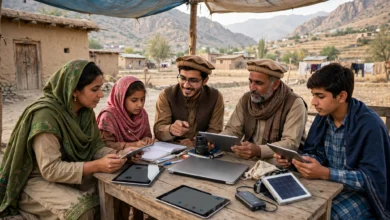
Survey data tells a very different story. In the Karandaaz survey, the male financial inclusion stood at 56pc compared to just 14pc for women. Part of the problem is basic access to phones: while 82% of men have one, only 46% of women have the same. As mobile wallet users must have SIMs registered in their own names, this means most women can’t open a mobile wallet.
Credit is also very uneven. Of the women’s loans disbursed between late 2024 and late 2025, 93pc of these loans fall under microfinance, showing that most women remain concentrated in micro- and entry-level segments.
Why the gap persists
- Phone ownership: many women use a phone registered to a husband, father or brother.
- Control: an account in a woman’s name is often run by a male relative.
- Literacy and trust: women are more often targeted by fraudsters posing as officials.
- Mobility: agents and branches may be far away or unwelcoming.
Without closing the gender gap, Pakistan can’t claim real financial inclusion, because half the adult population would still be left out.
The Dark Side: Illegal Activities That Exploited Digital Finance
Every growing financial system attracts criminals. The cases below aren’t here to scare anyone. They show where the system was weak, and each one led to new rules that make the system safer today.
Case 1: The 2018 bank card breach
In late 2018, Pakistan had its biggest card data scare. According to PakCERT, a total of 19,864 cards (banking clients’ data) of 22 Pakistan banks were compromised. The first victim of this possible cyber-attack was BankIslami, that reported an attack on October 27 in which at least Rs2.6 million was stolen from international payment cards.
The episode also showed how confused official communication was. The FIA’s cybercrime chief said nearly all banks were affected, while the SBP disputed this, and PakCERT said data was most likely leaked through card skimming.
The lesson: banks had to invest in cybersecurity, chip-based cards and transaction alerts. Regulators also learned that mixed messages during a crisis damage public trust as much as the breach does.
Case 2: Predatory loan apps and a tragedy in Rawalpindi
The most painful case came in July 2023. Muhammad Masood, a Rawalpindi father of two, died by suicide after repeated harassment by digital lenders. His wife told reporters that he had initially taken a loan of Rs13,000 from EasyLoan app, which quickly soared to Rs100,000 a few days later due to interest. He then borrowed from a second app to repay the first, and the debt kept growing.
The FIA raided the office of one app in Islamabad and found that five of its employees were foreigners. A recording reportedly showed an employee threatening to leak personal data from the borrower’s phone.
The crackdown that followed was significant:
- The SBP had already issued a Circular in June 2022, denying access to illegal Apps to banking/payment channels.
- Google introduced a Pakistan-specific Personal Loan App Policy that only allows SECP-approved apps.
- The SECP, working with Google, FIA and PTA, got 120 illegal apps removed from app stores.
- When operators switched to APK files shared through websites and WhatsApp, the SECP issued public warnings about fraud, data misuse, blackmail and harassment.
- By 2025, the regulator had banned 141 fraudulent digital loan applications.
The lesson: easy credit with no consumer protection is a debt trap, not financial inclusion. Borrowers should check the SECP’s list of approved and illegal lending apps before downloading anything.
Case 3: The NADRA data leak
Identity data is the foundation of digital finance. That makes this case serious. A joint investigation found that data of 2.7 million Pakistanis was compromised between 2019 and 2023, allegedly with the involvement of NADRA offices in Multan, Peshawar, and Karachi. The report also found that the data was obtained from Multan to Peshawar, then routed to Dubai, and was also reportedly sold in Argentina and Romania.
The lesson: when CNIC data leaks, fraudsters can open accounts, register SIMs and pass identity checks in someone else’s name. Data protection isn’t a side issue for financial inclusion. Pakistan still needs a strong, enforceable data protection law.
Case 4: Fake call centres and organised digital fraud
The biggest fraud trend in recent years is the illegal call centre. In 2025, cybercrime officials told a Senate panel that financial fraud through WhatsApp hacking has increased, with money being extorted from friends and family by compromising accounts.
The scale is large. The FIA formed a joint investigation team to look into an alleged Rs172 billion digital fraud and money-laundering scandal involving call centres in Islamabad. In Lahore, one raid on a fake trading call centre recovered 415 fake active SIM cards, 610 fake silicone thumb impressions, 56 ATM cards and 13 biometric verification devices, which shows how criminals defeat biometric checks.
Corruption made it worse. Some cybercrime officials were themselves accused of protecting these operations, with one group alleged to have extorted around Rs. 120 million between September 2024 and April 2025. Each call centre reportedly paid Rs. 1 million per month as a “protection fee.”
The lesson: technology alone can’t protect people when enforcement is weak or compromised. Accountability inside institutions matters as much as firewalls.
Case 5: BISP deduction rackets
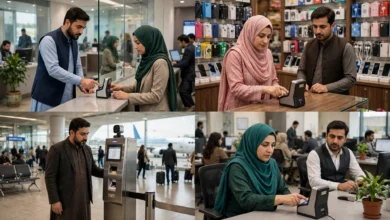
The Benazir Income Support Programme is Pakistan’s largest cash transfer scheme for poor women, and it pays out through biometric agents. That makes it a target. In July 2026, the FIA arrested retailers in Kot Addu who, instead of providing free mobile SIMs to the women as required, were illegally charging Rs1,500 from each.
The Public Accounts Committee was also told that funds had been withdrawn outside beneficiaries’ registered areas, with payments linked to beneficiaries from 39 districts processed through a single mobile shop franchise in Multan. In Badin, officials seized 16 devices, six plastic thumb-impression tokens, and over Rs 2.296 million in cash. BISP’s own monitoring in South Punjab blocked 508 retailers, getting registered 22 FIRs, resulting in the arrest of 23 persons in a single quarter.
The lesson: digital financial services reach the poorest people through human agents. If those agents aren’t monitored, the poorest users pay a hidden tax on every rupee they receive.
Ethical Questions Pakistan Must Answer
These cases raise questions that numbers alone can’t settle.
Is an account the same as inclusion?
No. An account that a woman can’t control, a wallet that only receives a government grant, or a loan that leads to harassment doesn’t improve anyone’s life. Ethical financial inclusion means people have choices, control and protection.
Who owns citizens’ data?
The push for a unified digital identity under the Digital Nation Act brings real benefits, but also risks. Centralising data without strong consent rules and independent oversight could turn the next leak into a disaster.
Is the burden shared fairly?
Too often, the poorest users carry the risk: a widow loses Rs1,500 to an agent, an unemployed man borrows from an app he can’t verify. Banks, telcos, app stores and regulators have the resources to take on more of that burden.
What Needs to Happen Next
Here are practical priorities for the next phase of digital Pakistan:
- Pass and enforce a strong data protection law with real penalties for both government and private bodies.
- Close the phone gap for women by supporting affordable handsets and SIMs registered in women’s own names.
- Use the P-FII, not only account counts, as the main measure of financial inclusion progress.
- Expand Raast to more merchants and to person-to-business payments, especially in rural areas.
- Monitor agents closely with mystery shoppers, complaint hotlines and fast action against deductions.
- Make dispute resolution quick and simple, so fraud victims get refunds within days, not months.
- Invest in financial literacy that teaches people to spot scams, fake loan apps and phishing calls.
- Clean up enforcement agencies so investigators can’t be bought by the criminals they are meant to stop.
Users can protect themselves too:
- Never share OTPs, PINs or CNIC photos with callers, even if they say they are from a bank or the FIA.
- Borrow only through SECP-licensed lenders and approved apps.
- Report fraud to your bank immediately and to the NCCIA cybercrime portal.
- BISP beneficiaries should report any deduction to the BISP helpline.
For official data and strategy documents, the State Bank of Pakistan’s financial inclusion page is the best primary source, and the SBP’s quarterly payment systems review tracks digital payment trends.
Conclusion
Financial inclusion in Pakistan has made real progress: account ownership rose from 16% of adults in 2015 to over two-thirds by SBP’s count, Raast and branchless banking made digital payments routine, and 92% of retail transactions by volume are now digital. Still, the P-FII score of 59.5, survey data showing only about a third of adults actively included, and a gender gap in which far fewer women than men use financial services show the job is unfinished. The illegal activity of the past decade, from the 2018 card breach and predatory loan apps to the NADRA data leak, fake call centres and BISP deduction rackets, shows that each step forward in digital Pakistan also opened a new weakness. The way forward is fair, ethical financial inclusion: strong data protection, real control for women, close monitoring of agents, honest enforcement, and measuring whether people’s financial lives are improving instead of only counting accounts. Pakistan has come far, but the hardest part, building trust, is still ahead.