Best Examples of Successful Digital Pakistan Projects So Far
Digital Pakistan projects like Raast, Pak-ID and DigiSkills are delivering real results. Here is what worked, what went wrong, and the lessons for 2027.
Digital Pakistan Projects: 7 Proven Success Stories and the Hard Truths Behind Them
Introduction
Digital Pakistan projects often get described in two ways that are both too simple. To some people, they are a story of apps, portals and ribbon-cutting ceremonies that change little on the ground. To others, they show Pakistan is about to become a tech powerhouse. The truth is somewhere in the middle, and the evidence lets us say where.
Some projects have clearly delivered. Instant payments have changed how Pakistanis send money. Identity documents can now be ordered from a phone. Land records that local revenue officials once controlled are mostly computerised in Punjab. IT exports and freelancer earnings hit record highs in the last fiscal year. These results can be measured, and they affect millions of people.
Each of these gains also came with a darker side. Digital lending grew into a debt-trap industry before regulators caught up. The national identity database leaked millions of records, and corrupt insiders sold genuine ID cards to foreigners. Fake “flying” invoices were used to cheat the tax system. Footage from Safe City cameras built to protect citizens leaked and was used against them. Ignoring these failures would make any success story incomplete.
This article reviews seven of the best examples of successful Digital Pakistan projects so far. For each one it covers what was achieved, the numbers behind it, and the illegal activity or weak spots that came with it. It ends with the lessons Pakistan needs to apply as digital transformation moves into its next phase.
What Counts as a “Successful” Digital Pakistan Project?
Before naming winners, it helps to be clear about what success means. A launch event or a download count isn’t enough. In this article, a project counts as successful if it meets most of these tests:
- Scale: it reaches millions of people or handles a large share of activity.
- Measurable outcomes: it saves time, money or reduces corruption in ways that can be shown.
- Sustainability: it has kept running beyond its launch or a single government.
- Trust: people keep using it voluntarily.
No project scores perfectly on all four. The seven below come closest.
7 Best Examples of Successful Digital Pakistan Projects
1. Raast and the Shift to Digital Payments
Raast, the State Bank’s instant payment system, is arguably the most successful of all Digital Pakistan projects. It lets people send money between accounts in seconds, usually for free. In the January to March 2026 quarter, Raast processed 742m transactions amounting to Rs23.27tr during the quarter. Government and businesses use it too: over 9 million transactions worth PKR 2.6 trillion were processed by government and corporates using Raast Bulk Service.
Raast is part of a wider shift. Digital payment channels processed 3.4bn transactions, accounting for a 92pc share in total retail payments by volume, according to the SBP. Financial access has grown alongside it: Pakistan’s financial system added more than 6.8 million new unique bank accounts during 2025, with women accounting for 55 percent of new account holders.
The hard truth: the rise of digital finance also attracted predatory lenders. In 2023, a Rawalpindi father of two died by suicide after being harassed by loan apps. His wife said he had initially taken a loan of Rs13,000 from EasyLoan app, which quickly soared to Rs100,000 a few days later due to interest. Regulators responded, and the SECP’s work with Google, FIA and PTA resulted in the removal of 120 illegal apps from the Google Play and App Store. Digital payments are a success. Digital lending only became safer after people had already been hurt.

2. NADRA’s Pak-ID App
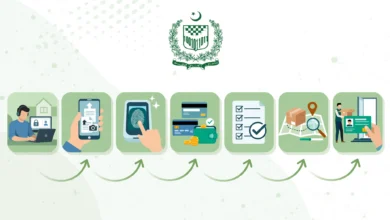
Getting an identity document used to mean a long queue at a NADRA centre. The Pak-ID app has changed that for millions of people. More than six million citizens obtained their identity documents through the Pak-ID mobile application during 2025, and by mid-2026 the total number of downloads of the app crossed 18.1 million. The digital card now carries legal weight: NADRA says the digital record and digital identity available through the Pak ID app now have the same legal status as the relevant physical identity document.
The app has also improved access for vulnerable groups. It includes an online “Proof of Life” feature in the Pak ID app, primarily aimed at pensioners facing challenges with fingerprint verification due to age or health issues.
The hard truth: the database behind the app has been abused. A joint investigation found that data of 2.7 million Pakistanis was compromised between 2019 and 2023, allegedly with the involvement of NADRA offices in Multan, Peshawar, and Karachi. Insiders have also sold real ID cards. In Balochistan, sources told Dawn that per card was being issued from Rs50,000 to Rs2 lakh in Quetta and other parts of Balochistan. As recently as April 2026, the FIA said a Nadra official, identified as Furqan Ahmed Khan Durrani, was “involved” in approving Computerised National Identity Cards (CNICs) issued to the two Afghan nationals. The app is a real success, but its credibility depends on cleaning up insider fraud.
3. Punjab’s Computerised Land Records
Few public services in Pakistan were as notorious as the land record held by the local patwari. Punjab’s land records digitisation project took that power on directly. The World Bank reported that the Land Records Management Information System (LRMIS) has been rolled out in all 36 districts of Punjab through 143 Arazi Record Centers (ARCs). Dawn described the system as having computerised Punjab’s entire record of 55m-acre, while making the database current, which is expected to improve ownership security and reduce litigation.
The Punjab Land Records Authority (PLRA) now runs the system and is extending it to cities. Its director general describes the digitisation of land records in Punjab as one of the largest governance reforms in the province’s history, and says the province is using it to tackle real estate fraud.
The hard truth: the old system didn’t give up easily. Dawn noted that the patwari culture had survived through effective support of local influential persons and lawmakers who use their powers to manage the posting of patwaris of their choice who then manipulate land records to their benefit. Early digitised records also had problems: one farmers’ group complained that the computerised record in Punjab’s tehsils was full of errors and wrong entries. In 2020, Dawn reported that the Punjab government has begun to reintroduce the patwari system in land revenue departments in the name of reforms. Digitisation succeeded, but only because it kept getting political support. Without that, reform can be reversed.
4. DigiSkills.pk: Free Training at National Scale
DigiSkills is Pakistan’s largest free online training program for freelancing and digital work. Since its launch, the program has enrolled more than 4.87 million individuals nationwide. Each batch opens with a total of 300,000 seats, and seats fill quickly.
The hard truth: enrolment is not the same as impact. Ministry data shows the total trainees comprise 73% males and 27% females. To its credit, Ignite has launched an independent third-party assessment of the DigiSkills.pk program to measure its overall impact on Pakistan’s digital skills and freelancing ecosystem. That kind of honest evaluation should be standard for every one of the Digital Pakistan projects.
5. Record IT Exports and Freelancer Earnings
IT exports aren’t a single project, but they are the clearest measure of whether skills programs, connectivity and digital policy are paying off. The results for FY26 were strong. Pakistan’s information technology (IT) exports climbed to a record $4.600 billion in fiscal year 2025-26, up 21% from the year before. Freelancers did even better: Pakistan’s freelancers earned a record $1.76 billion in foreign exchange during FY2025-26, up 78% from $984 million in the previous fiscal year, according to SBP data.
The hard truth: the growth isn’t guaranteed to last. Analysts warn that routine coding, design and support services are becoming increasingly exposed to automation. The target is also far away: Under the Uraan Pakistan plan, the government wants IT exports to reach USD10 billion by FY29. Meeting it would need much faster growth than Pakistan has achieved so far.
6. FBR’s Point of Sale Integration and E-Invoicing
Tax evasion through cash sales and fake invoices has cost Pakistan heavily for decades. The FBR’s POS integration system requires large retailers to send each sale to the tax authority in real time. Under the rules, these systems must perform various functions, including generating sales tax invoices, creating digital signatures, encrypting data, and transmitting invoices to the FBR’s system in real time. Coverage is growing: about 17,337 large retailers integrated with the Point of Sale (POS) network in the fiscal year 2025-26.
The project is meant to tackle a specific illegal practice. The FBR’s wider e-invoicing push aims to end the phenomenon of flying invoices, fake invoices, sales suppression, and fake input output claims. From July 2026, the new rules target fake invoices, unmatched input tax credits, and businesses that fail to integrate with FBR’s digital monitoring systems.
The hard truth: compliant businesses have sometimes been punished for the system’s own failures. The Chainstore Association said retailers faced sudden sealing of their businesses due to unverifiable invoices, often resulting from system failures rather than negligence. The Federal Tax Ombudsman later confirmed frequent synchronization failures between retailer invoices and FBR servers, as well as “fake disconnection” errors. A digital tax system only works if honest taxpayers trust it.
7. Biometric SIM Verification
After the Army Public School attack in Peshawar, Pakistan ran one of the world’s largest biometric verification drives. Mobile operators were ordered to re-verify 103 million SIMs through the BVS technology in 90 days. In the end, the Pakistan Telecommunication Authority (PTA) said it had biometrically verified nearly 75.5 million subscriber identity modules (SIMs) and blocked around 27.5 million active SIMs. Verified SIMs now support mobile wallets, one-time passwords and secure access to many e-government services.
The hard truth: biometric checks can be beaten. In one Lahore fraud raid, investigators recovered 415 fake active SIM cards, 610 fake silicone thumb impressions, 56 ATM cards and 13 biometric verification devices. Biometric security is only as strong as its weakest retailer and its oldest device.
Projects That Show Mixed Results
Some Digital Pakistan projects produced useful services alongside serious failures. Two stand out.
Safe City Surveillance
Safe City camera networks were set up in major cities to fight crime and terrorism. Leaks of footage damaged public trust. After images went viral in 2019, they sparked concerns among citizens about the intrusiveness of the programme as well as the misuse of captured footage. Islamabad officials said their investigation found the images were not captured by Safe City cameras in Islamabad, though a police officer noted four people had been dismissed over earlier leaks. In Punjab, the Lahore High Court directed the Punjab Safe City Authority to hold an inquiry into the incidents of videos and pictures of the citizens taken by its cameras that were leaked, in a petition filed after multiple incidents of blackmailing of women through release of the CCTV footage or secretly filmed videos.
The lesson: surveillance systems need strict access logs, legal limits on who can view footage, and real penalties for leaks.
The 2018 Result Transmission System
The RTS was supposed to speed up election results. Instead, the RTS allegedly crashed during the general election with the ECP and NADRA pointing finger at each other for the system’s failure. Political parties called it organised rigging, while others argued technical failure doesn’t prove manipulation. Either way, the episode became a lasting warning about launching critical systems without independent testing and clear accountability.
Common Patterns Behind the Illegal Activities
The cases above share some patterns that every future project should plan for:
- Insiders are the biggest risk. The NADRA leak, fake CNIC sales and Safe City leaks all involved people with legitimate access.
- Criminals move faster than regulators. Loan apps caused harm long before the rules caught up with them.
- Biometrics can be faked or misused. Silicone thumbs and cloned devices show that a fingerprint alone isn’t enough.
- System failures hurt honest users. Retailers who were sealed because of POS sync errors show how bad design punishes compliance.
- Political will decides whether reforms last. Land records digitisation nearly went backwards when priorities changed.
- Weak data protection makes every risk worse. Without an enforceable privacy law, leaks carry few consequences.
Lessons for the Next Phase of Digital Pakistan
Measure outcomes, not launches
Projects should publish impact data, such as time saved, fraud reduced and income earned, not just downloads and seats. DigiSkills’ third-party review is a good model.
Build for the most vulnerable user
Proof-of-Life checks for pensioners and support for users without smartphones should be standard design features, not afterthoughts.
Treat security and privacy as core features
Every project that collects personal data needs encryption, access logs, insider controls and breach disclosure. Pakistan still needs a strong, enforceable data protection law.
Protect honest users from system errors
When a system fails, the burden should fall on the institution that runs it, not on the citizen or business trying to comply.
Keep reforms above politics
Systems like Raast and Pak-ID have lasted across governments. That continuity is a big part of why they worked.
For official data, the SBP’s quarterly payment systems review tracks Raast and digital payments, and the World Bank’s write-up on Punjab’s land records digitisation explains how the land reform was built.
Conclusion
The best examples of successful Digital Pakistan projects show what the country can do when technology, policy and political will line up. Raast processes hundreds of millions of instant payments every quarter, digital channels handle 92% of retail transactions by volume, the Pak-ID app has moved millions of identity applications out of queues, Punjab has computerised its land records across 55 million acres, DigiSkills has enrolled close to five million learners, FBR’s POS system is bringing large retailers into the tax net, and IT exports and freelancer earnings hit records in FY26. Each success also came with hard lessons: predatory loan apps, the NADRA data leak and insider sales of ID cards, patwari resistance and record errors, fake invoices, fake silicone thumbs, Safe City footage leaks and the 2018 RTS failure. The way forward for digital transformation in Pakistan is to measure real outcomes, design for the most vulnerable users, make security and privacy core features, protect honest users from system errors, and keep good reforms going across governments. If those lessons are applied, the next set of Digital Pakistan projects can be both successful and trusted.