Best Yoga and Stretching Routines for Office Workers
Office yoga for busy desk workers: 12 safe stretches, quick daily routines and honest advice on posture, fake healers and choosing qualified teachers.
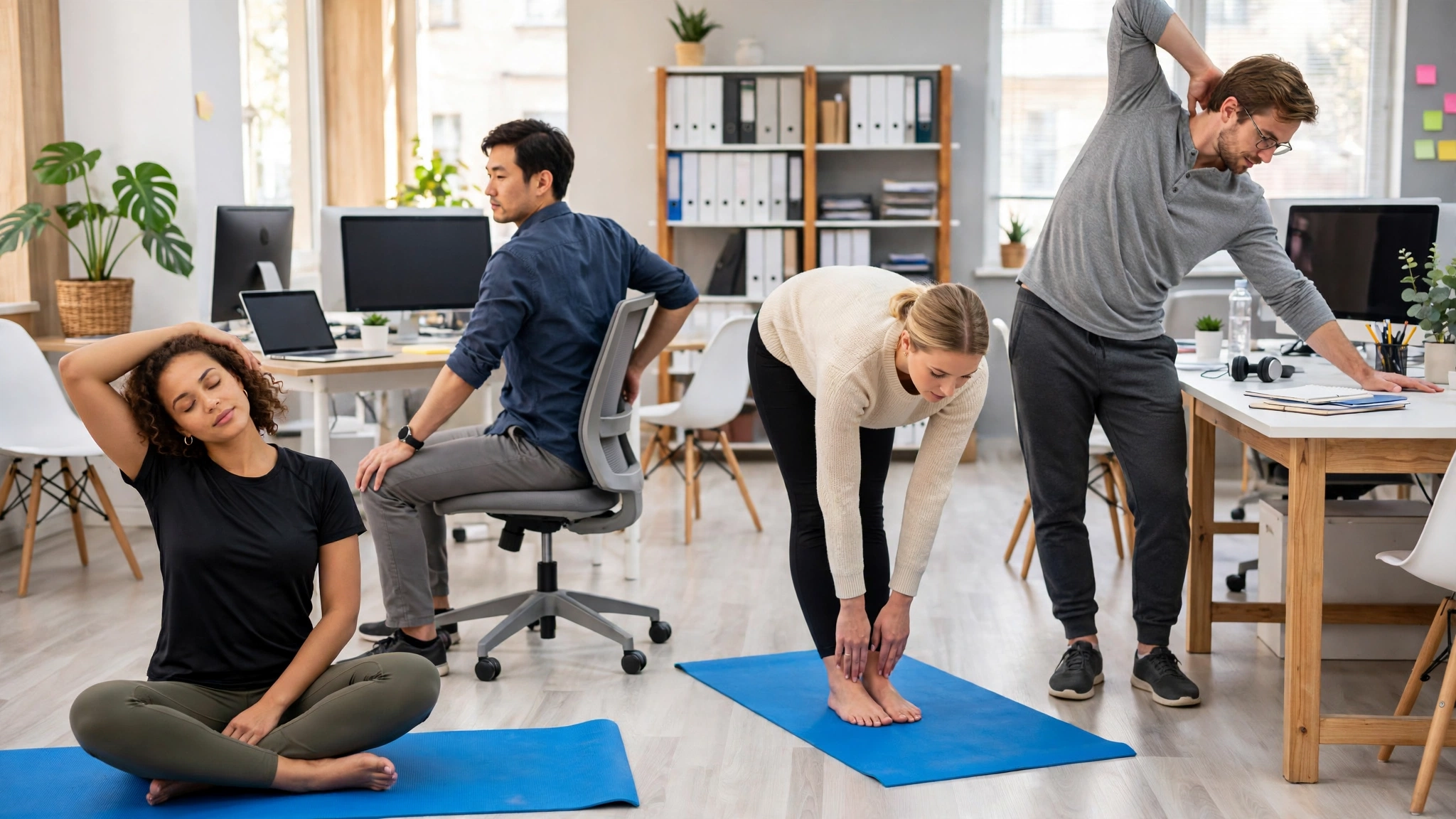
Office Yoga: 12 Best Desk Stretches and Easy Routines to Beat Back Pain at Work
Office yoga sounds like a trend, but for anyone who spends eight or nine hours a day at a desk, it is closer to a survival skill. Long hours in front of a laptop, a chair that was never designed for your spine, and a phone held at chest height slowly add up. The result is a stiff neck by noon, aching shoulders by evening and a lower back that complains every time you stand up.
Research from Pakistan confirms what many office workers already feel. Studies of bank officers, university staff and government employees in Lahore, Faisalabad and Peshawar have found high rates of neck, shoulder and lower back pain linked to prolonged sitting and too few breaks.
The good news is that office yoga does not need a yoga studio, a special mat or an hour of free time. A few minutes of simple desk stretches and gentle yoga movements, done regularly, can ease tension, improve posture and help you feel more alert.
This office yoga guide gives you 12 safe stretches you can do at your desk, ready-made routines for different parts of the day, and practical posture tips. It also takes an honest look at the wellness industry, including real legal cases involving yoga gurus and unqualified healers, so you know how to choose safe help when stretching is not enough.
Read on, stand up when you can, and give your body the break it has been asking for.
Why Office Yoga Matters for Desk Workers
Sitting is not harmful by itself, and office yoga is not about avoiding chairs. The problem is sitting for hours without moving, which is exactly what office yoga breaks up. When you stay still, muscles in the hips and chest tighten, muscles in the back and neck weaken, and blood flow slows.
What Pakistani Research Shows
- A study of 669 public sector office workers in Lahore found that nearly 30 percent were suffering from lower back pain.
- Among bank officers in the Faisalabad region, a majority reported lower back and neck problems over the previous year, linked to long hours of sitting.
- A survey of office employees in Punjab found that most reported neck and lower back discomfort at least once a week.
- A 2025 study of office workers in Peshawar on prolonged sitting concluded that prolonged sitting harms the musculoskeletal system and recommended short breaks and a more active work environment.
Benefits of a Regular Office Yoga Habit
A few minutes of office yoga each day can bring:
- Less neck and back pain from improved mobility and posture
- Better posture by stretching tight chest and hip muscles
- Lower stress through slower breathing and short mental breaks
- More energy and focus after long meetings or screen time
- Reduced wrist and hand strain for heavy keyboard and mouse users
- Better circulation, especially in the legs
The World Health Organization physical activity guidelines also recommend limiting sedentary time and replacing it with physical activity of any intensity. Office yoga is an easy way to do that.
Safety First Before You Start Office Yoga
Office yoga is gentle, but a few rules keep every office yoga session safe:


- Move slowly and never bounce into a stretch.
- Stretch to mild tension, not pain. Stop if you feel sharp pain, numbness or tingling.
- Breathe normally during office yoga; do not hold your breath.
- Use a stable chair without wheels for seated twists, or lock the wheels.
- Talk to a doctor or qualified physiotherapist first if you have a recent injury, a slipped disc, severe arthritis, high blood pressure or are pregnant.
12 Best Office Yoga Stretches You Can Do at Your Desk
Seated Office Yoga Stretches
1. Neck Side Stretch
Sit tall. Gently drop your right ear towards your right shoulder until you feel a stretch on the left side of your neck. Hold for 20 to 30 seconds, then switch sides.
Helps with: Neck stiffness from looking at screens. This is the easiest office yoga stretch to start with.
2. Chin Tucks
Look straight ahead and gently slide your chin backwards, as if making a double chin, without tilting your head down. Hold for five seconds and repeat ten times.
Helps with: Forward head posture, often called “tech neck,” which office yoga can help correct over time.
3. Shoulder Rolls and Shrugs
Lift your shoulders towards your ears, roll them back and down. Do ten slow rolls backwards, then five forwards.
Helps with: Tension in the upper back and shoulders, the classic office yoga target.
4. Seated Cat-Cow
Place your hands on your knees. As you breathe in, gently arch your back and lift your chest. As you breathe out, round your spine and drop your chin. Repeat eight to ten times.
Helps with: Spinal mobility and lower back stiffness. It is one of the most useful office yoga moves for people who sit all day.
5. Seated Spinal Twist
Sit sideways or tall in your chair, feet flat. Place your right hand on the outside of your left knee and your left hand on the back of the chair. Turn gently to the left. Hold for 20 seconds and switch sides.
Helps with: Mid-back tightness after lunch, making it a favourite office yoga twist.
6. Seated Side Bend
Raise your right arm overhead and lean gently to the left, keeping both hips on the chair. Hold for 20 seconds, then switch.
Helps with: Tight muscles along the sides of the torso, a quick office yoga win.
7. Wrist and Finger Stretch
Stretch your right arm forward, palm up. With your left hand, gently pull your fingers back. Hold for 15 seconds, then turn the palm down and repeat. Finish by opening and closing your fists.
Helps with: Wrist strain from typing and using a mouse. Office yoga for wrists is often overlooked.
8. Seated Figure-Four Hip Stretch
Cross your right ankle over your left knee. Keep your back straight and lean forward slightly until you feel a stretch in the right hip. Hold for 20 to 30 seconds and switch.
Helps with: Tight hips and lower back pain linked to sitting, a key target for office yoga.
9. Eagle Arms
Cross your right arm under your left at the elbows and bring your palms together if you can. Lift your elbows slightly. Hold for 20 seconds, then switch arms.
Helps with: Tension between the shoulder blades.
Standing Office Yoga Stretches
10. Desk-Supported Forward Fold
Stand facing your desk and place your hands on its edge. Walk your feet back until your arms and back form a straight line, hips over feet. Let your chest gently sink. Hold for 20 to 30 seconds.
Helps with: Shoulders, hamstrings and the full length of the spine. It is one of the most satisfying office yoga poses.
11. Doorway Chest Opener
Stand in a doorway, place your forearms on the frame at shoulder height and step one foot forward until you feel a stretch across the chest. Hold for 20 to 30 seconds.
Helps with: Rounded shoulders from leaning towards a screen.
12. Standing Quad Stretch and Calf Raises
Hold your desk for balance. Bend one knee and hold your ankle behind you for 20 seconds, then switch. Finish with 15 slow calf raises.
Helps with: Circulation in the legs and tight thigh muscles, rounding off your office yoga set.
Bonus: Eyes and Breathing
- Eye breaks: Every 20 minutes, look at something about 20 feet away for 20 seconds to reduce eye strain.
- Simple breathing: Breathe in through your nose for a count of four and out for a count of six, for one to two minutes. This calms the body before a stressful meeting.
Ready-Made Office Yoga Routines for Every Part of the Day
You do not need to do all 12 stretches at once. Pick an office yoga routine that fits your day.
| Routine | When | Stretches | Time |
|---|---|---|---|
| Micro-break | Every 45 to 60 minutes | Neck stretch, shoulder rolls, stand and walk | 2 minutes |
| Morning start | Before opening email | Chin tucks, cat-cow, side bend, breathing | 5 minutes |
| Lunch reset | After lunch | Spinal twist, figure-four, forward fold, chest opener | 10 minutes |
| Afternoon slump | Around 3 to 4 PM | Eagle arms, wrist stretch, quad stretch, calf raises | 5 minutes |
| End of day | Before leaving | Forward fold, hip stretch, slow breathing | 5 minutes |
Making the Habit Stick
- Set an office yoga reminder on your phone or computer every hour.
- Link stretches to existing habits, such as after every call or before refilling your water.
- Use natural movement breaks. Many Pakistani office workers already step away for namaz, chai or lunch. Add a minute of stretching to these breaks.
- Invite a colleague to join your office yoga break, but never pressure anyone.
Fix Your Workstation Too
Office yoga helps, but posture and set-up matter just as much.
- Screen at eye level, about an arm’s length away. A stack of books works if you use a laptop.
- Feet flat on the floor, knees roughly level with hips.
- Lower back supported with a cushion or rolled towel.
- Elbows close to your body and wrists straight while typing.
- Phone at eye level instead of bending your neck down.
- Stand or walk during calls when possible.
The Reality Check: Fake Healers, Bad Advice and Legal Cases
The wellness world is full of genuine teachers, but it also has people who misuse trust, make false claims or practise without qualifications. Knowing the risks helps you choose office yoga teachers and therapists safely.
When a Famous Yoga Guru Faced the Law
Bikram Choudhury built a global hot yoga empire. In 2016, a Los Angeles jury awarded his former legal adviser around $6.8 million after she accused him of sexual harassment. When he failed to pay, a California judge issued an arrest warrant in 2017 and set bail at $8 million. According to Courthouse News coverage of the appeal ruling, an appeals court found he had hidden assets, including a fleet of luxury cars, and left the United States to avoid the judgment.
Lesson: Fame does not equal trustworthiness, whether you join a studio or a workplace office yoga class. Choose teachers and studios with clear codes of conduct and proper complaint systems.
Quacks Posing as Therapists in Pakistan
When office yoga and stretching do not fix back or neck pain, many people turn to bone-setters (haddi jor), unlicensed “physiotherapy” shops or self-styled experts. The Punjab Healthcare Commission (PHC) has repeatedly sealed such businesses. In one Lahore drive, its sealed list included a so-called physiotherapy centre alongside fake dentists, hakeems and a bone-setter. By 2024, the PHC had raided more than 196,000 treatment centres and closed over 54,000 quackery outlets across Punjab.
Forceful neck “cracking” or aggressive manipulation by untrained people can worsen injuries.
Lesson: For persistent pain, see a doctor or a licensed physiotherapist. Ask for their qualifications and registration.
False Health Claims
Be cautious of anyone who claims office yoga or a special breathing technique can cure diabetes, slipped discs, cancer or serious mental illness. Office yoga can support health, but it does not replace medical treatment.
Ethical Office Yoga at Work
Office yoga should make the workplace better for everyone, not more awkward.
For Employees
- Respect colleagues’ privacy and comfort. Not everyone wants to join group office yoga.
- Avoid stretching in ways that block walkways or disturb others.
- Do not share unqualified medical advice with colleagues in pain.
For Employers and HR Teams
- Encourage regular breaks rather than rewarding people who never leave their desks.
- Provide decent chairs and screen setups where possible.
- Keep office yoga and wellness sessions voluntary and inclusive for men and women, with modest, comfortable movements.
- Hire qualified instructors for workplace office yoga programmes and check their background.
- Never use wellness data from apps or challenges to judge or punish staff.
When to See a Professional
Office yoga is not a cure for everything, and pain that ignores office yoga needs attention. See a doctor or licensed physiotherapist if you have:
- Pain that lasts more than a few weeks
- Numbness, tingling or weakness in arms or legs
- Pain that wakes you at night
- Pain after a fall or injury
- Headaches with neck pain and dizziness
Conclusion
Office yoga offers a simple, low-cost way for desk workers to fight the neck, shoulder, wrist and lower back pain that Pakistani research links to prolonged sitting, using 12 safe moves such as neck stretches, chin tucks, shoulder rolls, seated cat-cow, spinal twists, side bends, wrist stretches, hip stretches, eagle arms, desk-supported forward folds, chest openers and leg stretches, built into short routines throughout the day alongside better workstation habits; at the same time, real cases such as the Bikram Choudhury judgment and the Punjab Healthcare Commission’s crackdown on quacks and fake therapy outlets show why workers should choose qualified teachers and licensed professionals, reject miracle cures, keep workplace wellness voluntary and respectful, and seek medical care for persistent or serious symptoms.