AI in Pakistan 2026: 7 Powerful Ways It’s Transforming Everyday Life
AI in Pakistan is reshaping banking, farming, healthcare, and education in 2026. Here's how ordinary Pakistanis are feeling the change.
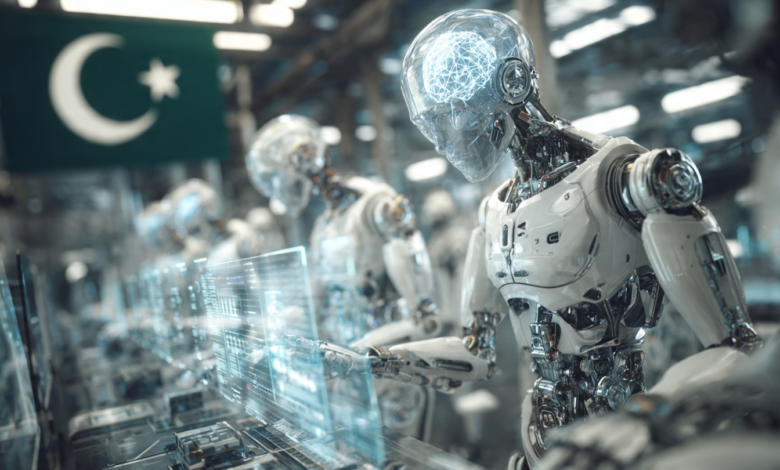
AI in Pakistan is no longer a talking point reserved for tech conferences in Islamabad or startup pitch decks in Lahore. It has quietly moved into daily routines: the chatbot that resolves a banking complaint at 2 a.m., the app that tells a farmer in Multan exactly when to irrigate, the diagnostic tool that flags a chest X-ray a doctor might have missed on a busy shift.
This shift didn’t happen overnight. It’s the result of years of infrastructure building, a growing pool of local tech talent, and a government that finally put real money behind its ambitions, including a $1 billion national AI investment commitment through 2030.
What makes 2026 different is scale. Artificial intelligence used to live in pilot projects run by a handful of well-funded companies. Now it’s showing up in small retail shops, government service counters, university classrooms, and rural health clinics. Pakistan’s IT exports have climbed past $4 billion, freelancers are earning more than ever on AI-adjacent work, and the country hosted its first national AI week to bring policymakers, founders, and students into the same room.
This article walks through exactly where artificial intelligence in Pakistan is showing up in everyday life right now, from your banking app to your doctor’s office, and what it actually means for the average person, not just the investors watching from the sidelines.
1. AI in Banking and Mobile Finance
Pakistan’s financial sector was one of the earliest adopters of AI in Pakistan, and it remains the most mature. Banks and fintech platforms sit on enormous volumes of transaction data, which makes them a natural fit for machine learning.
Fraud Detection and Real-Time Security
Every time you swipe a card or move money through a mobile wallet, machine learning models are quietly watching. These systems compare your current transaction against your normal spending habits and flag anything unusual within seconds. This has meaningfully cut down on card fraud and unauthorized transfers across major banks.
Credit Scoring for the Unbanked
Millions of Pakistanis have no formal credit history, which historically locked them out of loans. AI-driven credit scoring now looks at alternative data points, mobile phone usage, utility bill payments, and transaction patterns, to assess creditworthiness. This has opened up microloans and small business financing to people who would have been rejected by traditional banks.
Chatbots and Customer Service
- Banks like HBL, UBL, and Meezan now run AI-powered chat assistants that handle balance inquiries, card blocking, and dispute filing without a human agent.
- Digital wallets such as Easypaisa and JazzCash use automated systems to detect suspicious top-ups and flag SIM-swap fraud.
- Customer complaints that once took days to resolve are increasingly triaged and routed automatically, cutting resolution time significantly.
2. AI in Agriculture: Helping Farmers Do More With Less
Agriculture still employs a large share of Pakistan’s workforce, and it’s under real pressure from water shortages, unpredictable weather, and rising input costs. This is where AI adoption in Pakistan is arguably having its most direct impact on livelihoods.
Precision Farming
AI models now process satellite imagery, soil sensor data, and weather forecasts to tell farmers exactly when to irrigate and how much fertilizer to apply. Instead of guessing based on tradition or a neighbor’s advice, farmers get field-specific recommendations delivered through simple mobile apps, often in Urdu or regional languages.

Crop Disease Detection
A farmer can now photograph a diseased leaf and get an instant diagnosis through image recognition tools built specifically for South Asian crops like cotton, wheat, and sugarcane. Catching disease early, before it spreads across a field, is the difference between a manageable loss and a wiped-out season.
Livestock and Aquaculture Monitoring
Several Pakistani AgriTech firms, particularly those based in Karachi and Islamabad, are combining AI with IoT sensors to monitor livestock health and water quality in fish farms. Early risk detection here reduces losses that used to go unnoticed until it was too late.
This matters because Pakistan’s food security depends on smallholder farmers, and these are exactly the people who previously had the least access to expert agronomic advice.
3. AI in Healthcare: Extending the Reach of Too Few Doctors
Pakistan has a well-documented shortage of doctors relative to its population, and that shortage is worse outside major cities. AI in Pakistan’s healthcare system is starting to close that gap, not by replacing doctors, but by extending what a small medical team can handle.
AI-Assisted Diagnostics
Hospitals in Lahore and Karachi are piloting AI tools that scan X-rays, CT images, and lab results for early signs of tuberculosis, pneumonia, and certain cancers. These tools don’t replace a radiologist’s judgment, but they act as a second set of eyes, especially valuable in facilities where specialists are stretched thin.
Telemedicine and Symptom Tracking
Mobile health apps now let patients describe symptoms and get guided toward the right type of specialist before they even leave home. In areas with limited medical infrastructure, this kind of triage can mean the difference between a wasted trip to a crowded hospital and getting the right care faster.
Medication and Chronic Disease Management
Apps aimed at diabetic and hypertensive patients use AI to send personalized reminders and flag concerning patterns in blood sugar or blood pressure readings, nudging patients to see a doctor before a small problem becomes an emergency.
According to the World Health Organization, AI has real potential to strengthen health systems in countries facing workforce and infrastructure constraints, which describes Pakistan’s situation almost exactly.
4. AI in Education: From Rote Learning to Personalized Support
Pakistan’s education system has long struggled with overcrowded classrooms and uneven access to quality teaching, particularly outside the major cities. Artificial intelligence is starting to chip away at that problem in a few concrete ways.
Adaptive Learning Platforms
Ed-tech startups are building platforms that adjust difficulty based on a student’s performance in real time. A student struggling with algebra gets more practice problems and simpler explanations, while one who’s ahead gets pushed further, something a single teacher managing 50 students simply can’t do consistently.
Automated Grading and Feedback
Teachers are using AI tools to grade objective assessments and even provide first-pass feedback on essays, freeing up hours that used to go into paperwork. That time is increasingly going back into actual teaching.
Language and Skill Training
AI-powered English language apps and coding bootcamps are helping young Pakistanis build the skills that global remote employers are actually paying for. This ties directly into the freelance economy boom, where AI-adjacent skills now command noticeably higher rates on international platforms.
5. AI in E-Commerce and Retail
Online shopping in Pakistan has grown steadily, and AI in Pakistan’s retail sector is now shaping how people discover and buy products.
- Personalized recommendations: Platforms like Daraz use browsing and purchase history to surface products shoppers are actually likely to buy, rather than showing everyone the same homepage.
- Demand forecasting: Small retailers are starting to use AI-based tools to predict which products will sell well during specific seasons, cutting down on wasted inventory.
- AI-powered customer support: Automated chat handles order tracking, returns, and basic complaints, which matters a lot during high-traffic periods like Eid sales.
- Dynamic pricing: Some sellers use AI to adjust prices based on demand and competitor activity, a practice borrowed from larger global marketplaces.
For small traders operating on thin margins, even modest gains in forecasting accuracy can be the difference between a profitable month and a stockroom full of unsold goods.
6. AI in Government Services and Public Sector Delivery
The government’s role in AI adoption in Pakistan has shifted from writing policy papers to actual rollout. Following the Indus AI Summit in Islamabad, Pakistan formally adopted the Islamabad AI Declaration, laying out national principles for sovereign and responsible AI use, alongside the earlier commitment to invest $1 billion in the sector by 2030.
Practical Applications Already in Use
- NADRA and identity verification: Facial recognition and document verification tools have sped up ID card and passport processing.
- Traffic and urban management: Cities including Lahore and Islamabad are piloting AI-powered traffic camera systems to manage congestion and issue automated violations.
- Disaster response: Early-warning systems that use AI to analyze weather and satellite data are being tested for flood-prone regions, an area of obvious urgency given Pakistan’s recent history with monsoon flooding.
- Public service chatbots: Several provincial government departments now use basic AI assistants to answer citizen queries about services, cutting down on long queues at physical counters.
You can review the government’s official framework directly through the National AI Policy published by Pakistan’s Ministry of IT and Telecommunication, which lays out the roadmap for institutional AI adoption through 2026 and beyond.
7. AI and the Freelance and Startup Economy
This is arguably where the everyday economic impact of AI in Pakistan is most visible. Pakistan has long been known as a back-office hub for global software development. That reputation is shifting.
Freelancers Earning More
Pakistani freelancers have seen a significant jump in foreign exchange earnings, with AI-adjacent skills, prompt engineering, data labeling, AI integration work, commanding higher per-project rates on international platforms than traditional coding gigs did just a couple of years ago.
Homegrown AI Startups
A new generation of Pakistani-founded AI startups is attracting serious international investment, building products in fintech, healthcare workflows, and tax automation aimed at both local and global markets. This is a meaningful shift from Pakistan’s historical role as an outsourcing destination toward becoming a source of original AI products.
What This Means for Ordinary Job Seekers
- Software firms are folding AI tools directly into their development workflows to cut delivery timelines.
- Agencies now sell AI consulting as a standalone service rather than an add-on.
- Universities and training centers are rapidly adding AI and machine learning courses to keep graduates employable.
Challenges Standing in the Way
It would be misleading to present AI in Pakistan as a smooth success story with no friction. Several real obstacles remain:
- Power outages continue to disrupt data centers and connectivity, particularly outside major cities.
- AI skills shortages mean demand for trained engineers and data scientists outpaces supply.
- Patchy data infrastructure makes it harder to build reliable AI models for local conditions.
- Regulatory and mindset gaps persist among businesses still skeptical of automation.
- Uneven access means rural areas and lower-income households benefit far less than urban, connected populations.
These aren’t small issues, and closing them will determine whether Pakistan’s AI momentum turns into lasting change or stays concentrated in a handful of well-funded pockets.
What to Expect Next
Pakistan’s approach going forward looks less like scattered pilot projects and more like coordinated national planning. With the $1 billion investment commitment, a formal national AI declaration, and a growing base of homegrown startups, the direction is set even if execution remains uneven.
Expect AI adoption in Pakistan over the next few years to lean heavily into agriculture, healthcare, and financial inclusion, the three areas where the gap between need and current service delivery is widest, and where AI can realistically close that gap faster than traditional infrastructure spending alone.
Conclusion
AI in Pakistan has moved well past the experimental stage and is now woven into how people bank, farm, get medical care, learn, shop, and earn a living. From fraud detection on your banking app to crop disease alerts on a farmer’s phone, from AI-assisted X-ray readings to personalized tutoring platforms, the technology is solving real, local problems rather than just following global hype.
Genuine challenges around power infrastructure, skills gaps, and unequal access remain, and they will shape how evenly these benefits spread across the country. But with serious government investment, a maturing startup ecosystem, and rising international demand for Pakistani AI talent, 2026 is shaping up to be the year this transformation became impossible to ignore.