AI in Journalism How Newsrooms in Pakistan Are Adapting
Pakistani newsrooms are using AI for speed, translation, and fact-checking. A realistic look at deepfakes, PECA, ethics, and what journalists face

AI in Journalism: 7 Powerful Ways Pakistani Newsrooms Are Adapting Amid Serious Risks
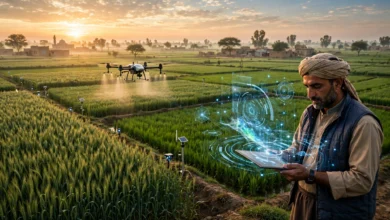
AI in journalism is no longer a conference topic in Pakistan. It is already inside the newsroom. Reporters use chatbots to transcribe press conferences, sub-editors run translations between English and Urdu, and digital desks use AI tools to write headlines and social media captions. Some channels have even experimented with AI-generated news presenters.
At the same time, Pakistani journalism is working under heavy pressure. Newsrooms have faced layoffs and delayed salaries, social media platforms have been blocked for long stretches, and the 2025 amendments to PECA made spreading “fake news” a criminal offence, a change many journalists see as a threat to reporting itself. Into this environment comes a technology that can produce convincing fake audio and video in minutes.
The result is a strange mix. AI can help underfunded newsrooms work faster and check facts better. It can also flood the public with deepfakes, get reporters into legal trouble, and embarrass a respected paper when someone forgets to delete a chatbot’s reply before printing.
This article looks at how Pakistani newsrooms are actually adapting. We will cover where AI is helping, where it has gone wrong, real cases of deepfakes and misuse in Pakistan and abroad, and the laws journalists need to understand. The goal is a clear, honest picture for reporters, editors, media students, and readers who want to know how their news is being made.
What AI in Journalism Actually Looks Like
When people hear AI in journalism, they often imagine robots writing entire newspapers. The reality is more ordinary and more useful.
Everyday Newsroom Tasks
Most AI use in newsrooms today falls into a few practical areas:
- Transcription. Turning hour-long press conferences, court hearings, and interviews into text.
- Translation. Moving copy between English, Urdu, and sometimes regional languages.
- Summarizing. Condensing long reports, budget documents, or court judgments.
- Headline and caption drafts. Suggesting social media posts, SEO headlines, and short summaries.
- Research help. Background on a topic or person, which reporters must then verify.
Generative AI vs Traditional Automation
Newsrooms have used automation for years, such as automatic stock tickers, weather updates, and cricket scorecards. Generative AI is different because it produces new text, images, audio, and video. That makes it far more powerful and far more dangerous, because it can produce content that looks real but isn’t.
7 Ways Pakistani Newsrooms Are Adapting to AI
Here’s how AI in journalism Pakistan is taking shape in practice. Adoption varies widely. Large English dailies and major TV channels are ahead, while smaller regional outlets are often still experimenting with free tools.
1. Faster Transcription and Translation
Pakistan’s news cycle moves at TV speed. A press conference ends, and the ticker needs to update within minutes. AI transcription tools have cut this work dramatically, especially for English. Urdu transcription has improved a lot, although accuracy still drops with poor audio, heavy accents, and mixed Urdu-Punjabi speech.


Translation is also a big use case. Bilingual outlets produce content in both English and Urdu, and AI gives translators a first draft. Good editors treat it as a draft, because machine translation often misses tone, political sensitivity, and legal nuance.
2. Digital Desk Productivity
Most Pakistani outlets now depend on YouTube, Facebook, and TikTok for traffic. Digital teams use AI news tools to generate headline options, video captions, thumbnails, and short explainers. This helps small teams keep up with platforms that reward volume.
The risk is clickbait. When AI is asked to maximize engagement, it tends to produce sensational headlines, which already damage trust in Pakistani media.
3. Experiments With AI News Anchors
Several Pakistani channels and digital outlets have tested AI news anchors, computer-generated presenters that read news bulletins. They cost less than human anchors and can work around the clock.
So far these are mostly novelty projects. Audiences tend to trust human faces more, and there are real ethical questions about replacing presenters during a period of layoffs, and about whether viewers always know they are watching a synthetic person.
4. Fact-Checking and Verification
This is where AI can do real good. Fact-checking teams, both inside newsrooms and at independent organizations, use AI tools to:
- Reverse-search images to find where a photo first appeared.
- Check whether video frames have been edited or recycled from old events.
- Detect signs of AI-generated audio or images.
- Scan social media for viral claims that need checking.
Detection tools are not perfect. They give probabilities, not proof, and a skilled deepfake can pass. Good fact-checkers combine AI tools with old-fashioned methods like calling sources and checking locations.
5. Data Journalism and Document Analysis
Pakistani reporters often deal with huge government documents: federal budgets, audit reports, court records, and procurement data. AI can help find patterns and summarize hundreds of pages, making investigative work more manageable for small teams.
The golden rule still applies. Every number that goes into print should be checked against the original document.
6. Newsroom AI Policies
Some outlets have started writing internal rules about AI use. These policies usually cover disclosure, editorial review, and a ban on using AI to create realistic images of real people. As we’ll see below, having a policy doesn’t guarantee it will be followed, but it’s a necessary start.
7. Training and Newsroom Culture
Press clubs, journalism schools, and media development groups in Pakistan have been running workshops on AI tools and deepfake detection. Younger reporters often adopt tools faster than senior editors, which creates a culture gap. The newsrooms that handle AI best are the ones where editors understand the tools well enough to question their output.
Deepfakes in Pakistan: The Biggest Threat to Trust
Deepfakes Pakistan has become a serious concern for journalists, politicians, and ordinary citizens. Pakistan’s polarized politics, huge social media audience, and low digital literacy make it especially vulnerable.
The 2024 General Election
The February 2024 election was one of the first in Pakistan where AI played a visible role. Imran Khan’s party, PTI, used an AI-generated version of his voice to deliver speeches while he was in jail, with the party saying the text was approved by him. They disclosed that it was AI, but it still raised questions about where legitimate campaigning ends.
Around the same time, fake audio and video clips circulated online, including clips that appeared to show PTI figures telling supporters to boycott the vote. These were widely identified as fabricated. For newsrooms, the challenge was clear: verify fast, but don’t amplify the fake while debunking it.
Deepfakes Targeting Women in Public Life
In 2024, Punjab’s Information Minister Azma Bukhari became the target of a sexually explicit deepfake video. She took the matter to the authorities and the courts, calling it an attack on her dignity. Female journalists and politicians in Pakistan have long faced online harassment, and AI has made that harassment easier and more damaging.
This case matters for newsrooms because reporting on such content requires care. Outlets should never share the fake material itself, even blurred, and should focus on the crime rather than the victim.
What These Cases Teach Journalists
- Treat any shocking audio or video, especially close to elections, as unverified until proven.
- Don’t publish a clip just because it’s viral. Speed is not a defence for spreading fakes.
- When debunking, describe the fake rather than replaying it in full.
- Protect victims, especially women, from further exposure.
When AI in Journalism Goes Wrong: Real Cases
Mistakes and misuse are the best teachers. These examples, from Pakistan and abroad, show the most common failure points.
Dawn’s Leftover Chatbot Text
In November 2025, Dawn, one of Pakistan’s most respected newspapers, printed a business story that ended with a line clearly written by a chatbot, offering to make the article “snappier.” Screenshots went viral. Dawn issued a correction, said the report had been edited using AI in violation of its own AI policy, and expressed regret.
It wasn’t illegal, but it was embarrassing and damaged trust. The lesson is simple: AI-assisted copy needs a human editor who actually reads every line.
CNET’s Error-Filled AI Articles
In 2023, US tech site CNET quietly published dozens of AI-written finance explainers. Readers and other journalists soon found factual errors, including basic mistakes in how interest calculations work. CNET had to correct many of the pieces and pause the project.
Lesson: AI-written explainers on money, health, or law can mislead readers in ways that cause real harm.
Sports Illustrated’s Fake Authors
Also in 2023, reports revealed that Sports Illustrated had published product reviews under author names and profile photos that appeared to be AI-generated, with no real people behind them. The publisher blamed a third-party content partner, and the scandal contributed to serious damage to the brand.
Lesson: Fake bylines are a form of deception. Readers have a right to know who is responsible for what they read.
The Chicago Sun-Times Reading List
In May 2025, a summer reading list syndicated to the Chicago Sun-Times and another paper recommended books that didn’t exist, attributed to real authors. The freelancer who compiled it admitted using AI without checking. It was a small feature, but it became an international example of hallucination in print.
Copyright Lawsuits Against AI Companies
In December 2023, The New York Times sued OpenAI and Microsoft, claiming its articles were used without permission to train AI models. Other publishers have filed similar cases, while some have signed licensing deals instead. This matters for Pakistani outlets too, since their archives may also be scraped for AI training without payment.
AI-Generated Fake News Sites
Media watchdog NewsGuard has identified over a thousand websites publishing mostly AI-generated “news” with little or no human oversight. Many copy or rewrite real reporting, spread false claims, and earn money from ads. Similar low-quality sites and YouTube channels target Pakistani audiences with fake political stories and invented quotes.
The Legal Reality: PECA and AI in Journalism Pakistan
Any serious discussion of AI in journalism Pakistan has to include the law, because the legal environment affects how AI is used and who gets punished.
PECA 2016
The Prevention of Electronic Crimes Act 2016 covers cybercrime in Pakistan. Several sections are relevant to AI misuse:
- Misuse of someone’s identity information.
- Offences against the dignity or modesty of a person, including sharing sexually explicit or doctored images and videos.
- Cyberstalking and online harassment.
In theory, this gives victims of deepfakes a legal path. In practice, enforcement is slow, and many victims, especially women, don’t report cases.
The 2025 PECA Amendments
In early 2025, Parliament passed amendments to PECA that created a new regulatory authority for social media and made intentionally spreading false or fake information a crime punishable with prison time and fines. The government said the changes were needed to fight disinformation.
Journalist unions, the Pakistan Federal Union of Journalists, and press freedom groups protested strongly. Their main concern is that “fake news” is vaguely defined and could be used against legitimate reporting that the authorities don’t like. For newsrooms, this raises the stakes. A single unverified AI-generated claim could now bring legal consequences, not just a correction.
The Tension Journalists Face
This creates a difficult position. Journalists need to fight AI-driven misinformation strongly, but they also worry that anti-fake-news laws could be used to silence critical journalism. Organizations like Reporters Without Borders regularly rank Pakistan low on press freedom, citing threats, legal pressure, and violence against journalists.
Media Ethics: Rules for Responsible AI Use
Media ethics don’t change because the tools do. Accuracy, fairness, independence, and accountability still apply. Here’s how they translate into AI practice.
A Practical Newsroom AI Checklist
- Human review is mandatory. No AI-generated or AI-edited text goes out without a human editor reading it fully.
- Verify every fact. Names, dates, figures, and quotes must be checked against original sources.
- Disclose meaningful AI use. If AI wrote a substantial part of a story, created an image, or voiced a presenter, tell the audience.
- Never fabricate people or quotes. No fake bylines, no invented sources, no AI-generated “eyewitnesses.”
- Don’t create realistic images of real people. Even for illustration, synthetic photos of politicians or public figures can be clipped and spread as real.
- Protect sources. Don’t paste confidential documents, source names, or sensitive tips into public AI tools, which may store the data.
- Label AI images clearly. If you use an AI illustration, mark it so it can’t be mistaken for a photo.
- Keep records. Note which tools were used on which stories, so errors can be traced and fixed.
Protecting Sources in the AI Era
Source protection deserves special attention in Pakistan, where journalists and their sources can face serious risks. Uploading a leaked document or interview recording to a free online AI tool may mean it’s stored on foreign servers under unclear policies. Sensitive material should stay offline or be handled with tools the newsroom has vetted.
Challenges Holding Pakistani Newsrooms Back
Even newsrooms that want to use AI responsibly face real barriers.
Money and Job Insecurity
Pakistani media has been through years of layoffs, salary delays, and closures. Management may see AI as a way to cut costs, while staff see it as a threat to their jobs. Without clear policies, this creates distrust and can push rushed, poorly supervised use.
Language Gaps
Most AI tools are strongest in English. Urdu support is decent and improving, but Sindhi, Pashto, Punjabi, Saraiki, and Balochi remain weak. Regional journalists, who often do the most important local reporting, benefit the least.
Internet Restrictions
Pakistan has seen long disruptions to platforms like X, along with internet slowdowns and mobile data shutdowns during protests and security operations. Newsrooms that depend on cloud-based AI tools lose them when the connection goes down.
Skills and Training
Many journalists learned AI through trial and error. Structured training in verification, prompt use, and AI ethics is still limited, especially outside Karachi, Lahore, and Islamabad.
The Future of AI in Journalism in Pakistan
Where is this heading? Here is a realistic view.
What’s Likely
- More outlets will publish formal AI policies, often after an embarrassing mistake.
- Urdu AI tools will get better at transcription, translation, and summaries.
- Newsroom automation will expand in routine areas like weather, markets, cricket, and results.
- Fact-checking desks will grow in importance, especially around elections and crises.
What’s Uncertain
- Whether AI anchors and synthetic presenters will be accepted by Pakistani audiences.
- How PECA’s fake news provisions will be applied to journalists in practice.
- Whether Pakistani publishers will get paid when AI companies use their content.
What Matters Most
Research from the Reuters Institute for the Study of Journalism has consistently found that audiences around the world are uneasy about news produced mostly by AI, and more comfortable when AI supports human journalists behind the scenes. That’s likely true in Pakistan as well. In a crowded, polarized media environment, trust is the one advantage professional newsrooms have over anonymous pages and AI content farms. AI can help protect that trust, or it can destroy it quickly.
Conclusion
AI in journalism is already reshaping Pakistani newsrooms through faster transcription and translation, digital desk tools, data analysis, fact-checking, and early experiments with AI anchors, but it arrives in a difficult environment of financial pressure, internet restrictions, weak language support, and the 2025 PECA amendments that raise the legal stakes of every error. Real cases, from election deepfakes and the attack on Azma Bukhari to Dawn’s leftover chatbot text, CNET’s errors, Sports Illustrated’s fake authors, and AI content farms, show that the danger lies less in the technology itself and more in careless or dishonest use. Newsrooms that keep humans in charge, verify every fact, disclose AI use, protect sources, and refuse to fabricate anything will be the ones that earn public trust in the years ahead.