The Future of AI-Powered Home Assistants in Pakistani Households
AI home assistants are entering Pakistani homes. An honest look at costs, Urdu voice support, privacy laws, scams, and what the next five years hold.
AI Home Assistants in Pakistan: 7 Proven Truths About a Bright Future and Hidden Risks
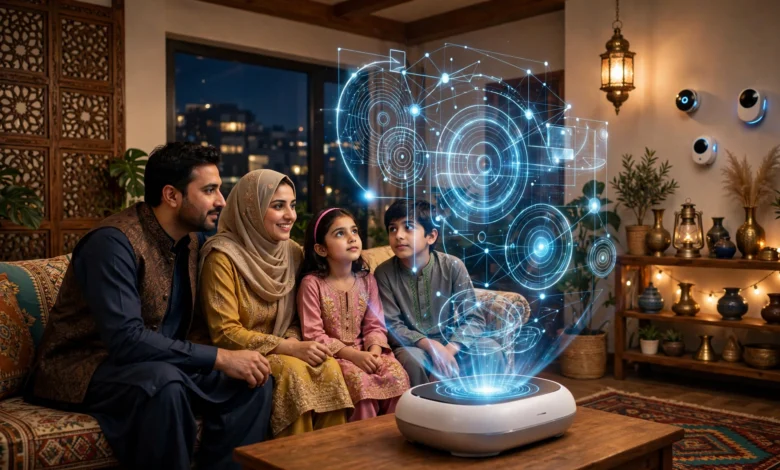
AI home assistants are no longer something Pakistanis only see in foreign YouTube videos. Walk into a newer apartment in DHA Karachi, Bahria Town Lahore, or Islamabad’s sectors, and you might find a smart speaker on the shelf, a Wi-Fi camera at the gate, and lights that switch on from a phone. Most of it arrived quietly through Daraz orders, relatives bringing gadgets from the Gulf, and local installers selling “smart home packages.”
But the real story is more complicated than the ads suggest. Pakistan has frequent load-shedding, uneven internet, a large Urdu and regional-language population, and a weak record on protecting personal data. We have seen national databases leaked, SIM data sold on Telegram, and families targeted by fake kidnapping calls built with cloned voices. Every one of those problems becomes more serious when a microphone is listening inside your home.
This article takes an honest look at where AI home assistants in Pakistan stand today and where they are likely heading. We will cover what these devices actually do, what they cost here, how well they understand Urdu, and which laws apply. We will also look at real cases of data misuse, both in Pakistan and abroad, because those cases show what can go wrong.
The goal is simple. If you are thinking about bringing an assistant into your home, or you already have one, you should understand both the benefits and the risks before you trust it with your family’s daily life.
What Are AI Home Assistants and How Do They Work?
AI home assistants are software systems, usually running on a smart speaker, phone, or display, that listen for a wake word and respond to voice commands. Think Amazon Alexa, Google Assistant (now being replaced by Gemini on many devices), and Apple’s Siri. Newer assistants built on large language models can hold a proper conversation, summarize information, and control connected devices.
Here is the basic process:
- The device listens locally for a wake word like “Hey Google” or “Alexa.”
- Once it hears it, it records your request and usually sends it to a cloud server.
- The server works out what you meant and sends back a reply or a command.
- The command is carried out, such as turning off a fan, playing a qawwali playlist, or setting an alarm for sehri.
The key point is step two. Most of the thinking happens on servers outside Pakistan. That affects speed, privacy, and which laws protect your data.
Smart Speakers vs Phone-Based Assistants
In Pakistan, phone-based assistants are far more common than dedicated smart speakers. Almost everyone has an Android phone with Google Assistant or Gemini built in. Dedicated speakers like the Echo or Nest Mini are mostly imported, since Amazon doesn’t officially sell Echo devices here. That means no local warranty and prices that jump with the dollar rate.
Where Home Automation Fits In
Home automation is the other half. Smart plugs, Wi-Fi switches, IR blasters for air conditioners, and IP cameras are widely available through local sellers. Many run on platforms like Tuya or Smart Life, which can link to Alexa or Google. This is where most Pakistani households actually begin: a smart plug on the geyser or a remote-controlled AC, not a full voice-controlled home.

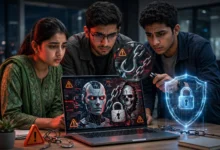
The Current State of AI Home Assistants in Pakistan
Adoption is real but narrow. AI home assistants are mostly found in upper-middle-class urban homes, tech-savvy young professionals’ flats, and families with relatives abroad who send gadgets back.
Who Is Actually Using Them
- Urban professionals who use assistants for alarms, reminders, and music.
- Families with elderly members who find voice commands easier than apps.
- Overseas Pakistanis who set up cameras and smart locks to keep an eye on parents back home.
- Small businesses like clinics and shops that use smart cameras and automated lights.
What’s Holding Adoption Back
The barriers are practical, not a lack of interest:
- Price. Imported smart speakers often cost several times their US price after duties, shipping, and reseller margins.
- Power cuts. A device that restarts every time the electricity goes out, and loses Wi-Fi when the router dies, gets frustrating quickly. UPS and solar setups help, but not every home has them.
- Internet quality. Pakistan has seen repeated slowdowns, from submarine cable faults to government-ordered disruptions. Cloud-based assistants simply stop working when the connection drops.
- Language gaps. English works well. Urdu is improving. Punjabi, Sindhi, Pashto, Saraiki, and Balochi are still poorly supported in voice.
7 Realities Shaping the Future of AI Home Assistants in Pakistan
This section covers the forces that will decide whether AI home assistants in Pakistan become as common as the UPS or stay a niche gadget.
1. Urdu and Regional Language Support Will Decide Mass Adoption
Most Pakistanis don’t speak to each other in formal English, and they won’t speak to a machine that way either. Real homes use mixed Urdu-English (“fan off kar do,” “kal subah 6 baje alarm laga do”). Newer AI models handle this code-switching much better than older assistants did, especially in text.
Voice is harder. Accents vary a lot between Karachi, Peshawar, and Multan, and regional languages have little training data. The company that gets natural Urdu and Punjabi voice right will win this market. Local startups and universities working on Urdu speech recognition could play a big role here, if they get funding.
2. Offline and Low-Power Operation Will Matter More Than Fancy Features
In Pakistan, reliability beats features. An Urdu voice assistant that can switch off lights during an internet outage is more useful than one that writes poetry but only works when fibre is up.
Globally, the trend is toward “on-device AI,” where smaller models run on the device itself instead of the cloud. This is good news for Pakistan. It means less dependence on internet quality and less personal data sent abroad. Expect devices that process basic commands locally and only go online for complex tasks.
3. Solar Homes Will Create a New Use Case
Pakistan’s rooftop solar boom has been one of the biggest household changes of the last few years. Homes with solar and batteries need to manage load: when to run the AC, when to switch the motor, when to save battery for the night.
This is a natural fit for smart home devices. An assistant that can say “battery is at 40 percent, should I turn off the second AC?” solves a real Pakistani problem. I think energy management, not entertainment, will be the main reason middle-class families adopt home AI.
4. Elderly Care and Overseas Families Will Drive Demand
Millions of Pakistani families have children working in the Gulf, UK, Europe, or North America while parents stay home. Voice reminders for medicine, fall alerts, video calling through smart displays, and cameras at the gate give these families some peace of mind.
The ethical line matters here, though. Monitoring a parent with their knowledge and consent is care. Putting hidden cameras or microphones in a parent’s room, or monitoring domestic workers without telling them, crosses into surveillance and can create legal problems.
5. Prices Will Drop, But Grey-Market Risks Will Stay
Cheap Chinese-made smart devices are already widespread, and prices will keep falling. The problem is that many are sold through informal channels with no clear origin, no firmware updates, and default passwords that buyers never change.
Pakistan also has a long history of smuggled and under-invoiced electronics. The PTA’s device registration system was introduced largely because of non-compliant mobile phones entering the market. Smart home gadgets that connect to the internet could face similar scrutiny in the future. Buying non-approved or smuggled devices is not just a legal risk. These are often the devices with the weakest security.
6. Local AI Policy Is Starting to Take Shape
The federal government approved a National AI Policy in 2025, focusing on skills, research, and responsible use. You can follow official updates through the Ministry of IT and Telecom. Policy on paper is a start, but enforcement, funding, and clear rules on consumer data are what will actually protect households.
7. Trust Will Be the Real Currency
Pakistani families are careful about privacy in the home for cultural and religious reasons. Many won’t accept a device that might record women of the household or private family conversations. Companies that offer clear privacy controls, local data storage, physical mic-off switches, and honest explanations in Urdu will earn trust. Companies that don’t will struggle, no matter how clever their AI is.
Data Privacy in Pakistan: The Legal Reality
This is where the conversation has to get serious. Data privacy in Pakistan is still weakly protected by law, and that directly affects anyone using AI home assistants.
What PECA 2016 Covers
The Prevention of Electronic Crimes Act (PECA) 2016 is the main cybercrime law. It makes certain things criminal, including:
- Unauthorized access to information systems or data.
- Unauthorized copying or transmission of data.
- Misuse of someone’s identity information.
- Cyberstalking, including recording or sharing someone’s images or videos without consent.
So if someone hacks your smart camera, or an installer secretly accesses your home feed, PECA applies. Complaints go to the cybercrime authorities, which since 2025 have been handled by the newly formed National Cyber Crime Investigation Agency (NCCIA), taking over from the FIA’s cybercrime wing.
PECA was amended in 2025, mainly around online content and “fake news.” Those changes drew criticism from journalists and rights groups, and they do little to protect ordinary users’ personal data from companies.
The Missing Piece: A Data Protection Law
Pakistan has had drafts of a Personal Data Protection Bill circulating for years. At the time of writing, a comprehensive data protection law with an independent regulator has still not been fully enacted and enforced. Check the current status before relying on it.
Without such a law, there are few clear rules on how long a company can keep your voice recordings, whether it must tell you about a breach, or whether you can demand deletion. Most global assistant companies store data abroad under their own policies, so Pakistani users depend largely on the company’s goodwill and foreign regulators.
Lessons from Previous Illegal Activities and Data Misuse
Real cases show why caution around IoT security and voice data isn’t paranoia. Here are some examples, from Pakistan and abroad.
The NADRA Data Leak
In 2024, a government investigation reported that personal data of around 2.7 million Pakistani citizens had been leaked from NADRA systems between 2019 and 2023, with some of it reportedly ending up abroad. If the country’s most important identity database can leak, households should be realistic about what private companies and small installers can protect.
Lesson: Any data collected about your household can leak eventually. Share as little as possible.
SIM and Call Data Sold on Telegram
Reports in 2024 described Telegram groups and bots selling Pakistani citizens’ personal details, including CNIC-linked SIM information, family trees, and even location and call records, for small fees. Authorities took action against some of these channels, but the episode showed how easily insider access turns into a black market.
Lesson: When your assistant is linked to your phone number, contacts, and location, a breach anywhere in that chain exposes much more than a single account.
AI Voice Cloning and Fake Kidnapping Calls
Pakistan has seen a rise in scam calls where a caller claims a family member has been arrested or kidnapped and demands money. Some scammers now use AI tools to copy a relative’s voice from short clips taken from social media or voice notes. Parents hear what sounds like their child crying for help and pay before checking.
Voice cloning scams are directly relevant here. Smart assistants store voice recordings. Families post voice notes on WhatsApp all day. The more of your voice exists online, the easier it is to copy.
Lesson: Set a family “code word” for emergencies, and always call the person back on their own number before sending money.
Amazon Alexa and Ring Penalties in the United States
In 2023, the US Federal Trade Commission took action against Amazon over two issues. One was keeping children’s Alexa voice recordings for years and not fully deleting them when parents asked, which was settled with a $25 million penalty. The other involved Ring, where employees and contractors had been able to access customers’ private camera videos, settled for $5.8 million.
Lesson: Even the biggest companies, under strict regulators, have mishandled home recordings. In a country without a strong data protection law, users have even less protection.
Hacked Home Cameras
In 2019, several US families reported hackers taking over their Ring cameras and speaking to their children through them, mostly because of reused or weak passwords. In Pakistan, cheap IP cameras with default passwords are common in homes, shops, and schools, and camera feeds from unsecured devices have been found openly accessible online in many countries.
Lesson: A camera with the password “admin123” is an open window into your home.
How to Use AI Home Assistants Safely in Pakistani Homes
You don’t need to avoid these devices entirely. You need to use them with care. Here are practical steps any household can follow.
Before You Buy
- Buy from reputable sellers with a clear warranty, and avoid unbranded devices with no update history.
- Check PTA approval where it applies, especially for anything with a SIM slot.
- Prefer devices with a physical microphone mute button and a camera shutter.
- Read the privacy settings before setup, not after.
During Setup
- Change every default password immediately and use a unique one for each device.
- Turn on two-factor authentication for your Google, Amazon, or smart home app account.
- Put smart devices on a separate guest Wi-Fi network if your router allows it.
- Turn off voice recording storage, or set it to auto-delete after the shortest period available.
- Disable voice purchasing and any features you won’t use.
Daily Habits
- Mute the microphone during private conversations, family discussions, or when guests are over.
- Don’t place cameras in bedrooms, bathrooms, or areas where women of the household expect privacy.
- Tell domestic staff and guests clearly if cameras or assistants are in use. It’s the ethical thing to do, and secretly recording someone can fall under PECA.
- Update firmware regularly, and replace devices that have stopped receiving updates.
- Review your assistant’s activity history every few months and delete what you don’t need.
If Something Goes Wrong
If you suspect your device has been hacked or your recordings misused:
- Disconnect the device from the internet.
- Change your account passwords from a different, trusted device.
- Save screenshots and any evidence.
- File a complaint with the national cybercrime authority through its official online portal or helpline.
The Ethical Side: Consent, Surveillance, and Power Inside the Home
Technology changes power inside a household. That’s worth thinking about honestly.
A husband who can check the gate camera from his office, a father who can hear what’s said in the living room, an employer who watches the maid all day: these are real situations in Pakistani homes, and AI home assistants make them easier. Used respectfully, these tools keep families safe. Used to control or watch people without their knowledge, they cause harm and may break the law.
A few principles help:
- Consent. Everyone who lives or works in the home should know what’s recording and where.
- Proportion. A camera at the gate is reasonable. A hidden microphone in a teenager’s room is not.
- Dignity. Domestic workers have a right to privacy in their rest areas and personal calls.
- Children’s data. Kids talk to assistants freely. Limit what’s stored, and use parental controls.
What the Next Five Years Might Look Like
Here is a realistic forecast, not a sales pitch.
Likely:
- Better Urdu and Roman Urdu understanding in mainstream assistants.
- Cheaper local smart switches and plugs, often bundled with solar installations.
- More on-device AI that works during internet outages.
- Growing use of smart displays for elderly care in families with members abroad.
Possible:
- A local Pakistani voice assistant built for Urdu and regional languages, possibly through startup and university partnerships.
- A data protection law that finally gets passed and enforced, requiring breach notices and data deletion rights.
- PTA or other regulators setting security standards for imported smart devices.
Unlikely soon:
- Fully voice-controlled homes becoming normal outside the wealthiest neighbourhoods.
- Reliable voice support for smaller regional languages like Balochi or Brahui.
The future of smart home Pakistan depends less on the technology itself and more on electricity, internet stability, language support, and trust.
Conclusion
AI home assistants have real potential in Pakistani homes, from managing solar power and helping elderly parents to making daily routines easier, but that potential comes with serious responsibilities. Weak data protection laws, past leaks like the NADRA breach, black markets for SIM data, voice cloning scams, and international cases like the Alexa and Ring penalties all show that home recordings can be misused. The families who benefit most will be the ones who buy from trusted sellers, change default passwords, limit what’s recorded, respect the privacy of everyone in the home, and push for stronger laws. Handled with care, AI home assistants in Pakistan can become useful everyday tools rather than a new source of risk.