Top Rugged Smartphones for Outdoor and Field Work
Rugged smartphones compared for outdoor and field work: real IP68 and MIL-STD ratings, battery life, top picks, and the marketing claims to doubt
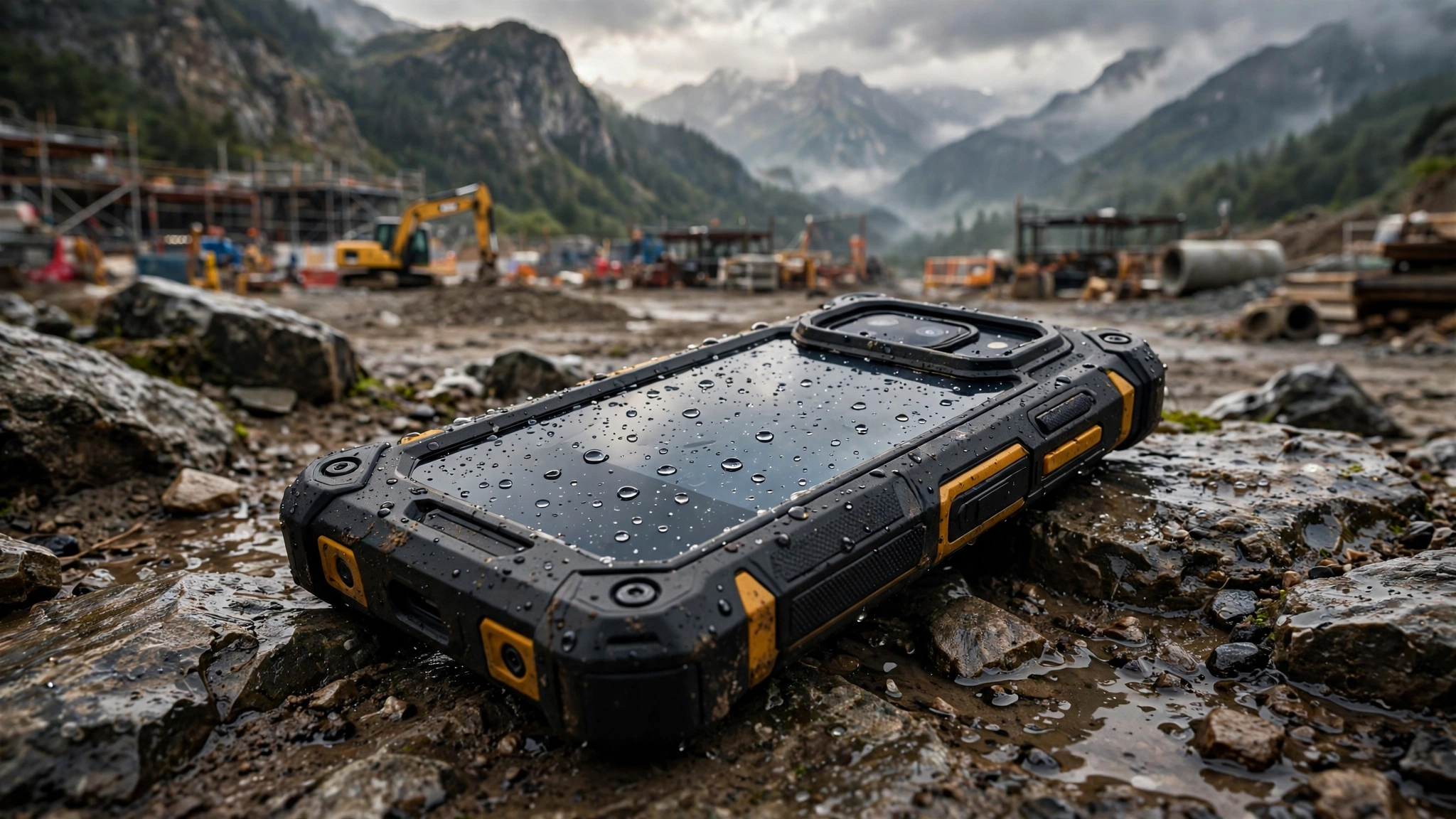
Rugged Smartphones: 7 Best Proven Picks for Outdoor and Field Work.
Introduction
Rugged smartphones exist for people whose phones live a harder life than most. Electricians, surveyors, farmers, delivery riders, hikers and site engineers drop their phones on concrete, use them in rain and dust, and need them to last a full shift without a charger nearby. A regular flagship in a thick case can handle some of that. A purpose-built rugged phone is designed for all of it.
The market has changed a lot in the past few years. Rugged phones used to be thick, slow and ugly. Now you can get one with a fast chip, a bright screen, a thermal camera, or a battery big enough to last several days. Prices range from under $200 to around $1,000.
There is a catch, though. Durability is easy to claim and hard to verify. Big brands have been fined for overselling water resistance. Samsung Australia paid A$14 million in 2022, and Apple was fined €10 million in Italy in 2020. If major companies got this wrong, smaller brands deserve a careful look too.
This guide covers what IP68, IP69K and MIL-STD-810H actually mean, the best rugged smartphones for outdoor and field work right now, and how to pick the right one for your job. You will also see where the marketing ends and the real-world limits begin, so you buy a phone that survives your workday, not just the advert.
What Makes Rugged Smartphones Different
Rugged smartphones are built around three things a normal phone treats as extras: sealing against water and dust, resistance to drops and shocks, and endurance through long shifts. Most add practical touches too, such as glove-friendly screens, physical shortcut keys, loud speakers and huge batteries. To compare them fairly, you need to understand the ratings printed on the box.
IP68 and IP69K: Water and Dust Ratings
The IP (Ingress Protection) code comes from the IEC 60529 standard. The first digit covers solids, the second covers water.
- IP68: the 6 means fully dust-tight. The 8 means the phone survives continuous immersion beyond 1 metre, at a depth and time the maker specifies. Read the small print, since “1.5m for 30 minutes” and “2m for 60 minutes” are both IP68.
- IP69K: this comes from a vehicle standard and tests resistance to high-pressure, high-temperature water jets. It matters if you hose down equipment or work near wash bays.
- What IP does not cover: salt water, chlorinated pools, soap, or pressing buttons underwater. Tests use fresh water in a lab.
Most serious rugged smartphones carry both IP68 and IP69K. A mainstream flagship usually stops at IP68.
MIL-STD-810H: The “Military Grade” Label
MIL-STD-810H is a US Department of Defense test method standard. It describes lab procedures for things like drops, vibration, extreme temperatures, humidity and low pressure. It is genuinely useful, but you should know its limits:
- It is a set of test methods, not a certification. No official body hands out a “MIL-STD approved” badge to phones.
- Brands choose which tests to run and often run them in their own or hired labs.
- A phone can pass a handful of tests and still use the label on its box.
So treat “military grade” as a starting point. Good brands publish which tests they passed, such as drop height and surface. If a listing just says “military grade” with no details, be sceptical.
When Durability Claims Cross the Line: Real Cases
Overselling toughness is not just bad marketing. In some countries it breaks consumer law, and regulators have acted:
- Samsung Australia, A$14 million (2022). The Federal Court ordered Samsung Australia to pay A$14 million after it admitted that nine ads, run between 2016 and 2018, misled buyers about using Galaxy phones in pools and sea water. Samsung admitted there was a real risk of the charging port corroding if a phone was charged while still wet. More than 3.1 million affected phones had been sold. Details are in the ACCC’s media release on the Samsung penalty.
- Apple Italy, €10 million (2020). Italy’s competition authority fined Apple over water-resistance promotion for iPhone 8 through iPhone 11 models. The regulator said the claims held only in specific lab conditions, and called it aggressive to advertise water resistance while the warranty excluded liquid damage. See the AGCM press release on the Apple fine.
Neither case involved a rugged phone, and that is the point. If the biggest brands overstated water resistance on mainstream phones, a lesser-known brand making bold durability claims deserves the same scrutiny. The practical lessons:
- Rinse your phone with fresh water after salt water or pool exposure, and let the port dry fully before charging
- Check whether the warranty actually covers water damage, not just the advert
- Prefer brands that publish test details and have independent reviews
7 Best Rugged Smartphones for Outdoor and Field Work
These picks cover different jobs and budgets. Ratings and battery figures below come from TechRadar’s tested rugged phone roundup and maker specs. Availability varies by country, so check local stock, network bands and warranty support before you buy.
| Phone | Protection | Battery | Best for |
|---|---|---|---|
| Samsung Galaxy XCover7 Pro | IP68, MIL-STD-810H | 4,350mAh (removable) | Business fleets, enterprise IT |
| Oukitel WP210 | IP68, IP69K, MIL-STD-810H | 8,800mAh | Best all-rounder |
| Ulefone Armor X16 Pro | IP68, IP69K, MIL-STD-810H | 10,360mAh | Tight budgets |
| Ulefone Armor 29 Pro | IP68, IP69K, MIL-STD-810H | 21,200mAh | Multi-day battery, thermal option |
| 8849 Tank 5 | IP68, IP69K, MIL-STD-810H | 17,600mAh | Flagship power, built-in projector |
| Doogee S200 Ultra | IP68, IP69K, MIL-STD-810H | 11,000mAh | Storage-heavy work |
| Blackview Xplore 2 Satellite | IP68, IP69K, MIL-STD-810H | Not confirmed | Remote areas with no signal |
1. Samsung Galaxy XCover7 Pro: Best for Businesses
The XCover7 Pro is the safest choice for companies buying phones in bulk. It looks closer to a normal phone than most rugged models, and it carries IP68 and MIL-STD-810H protection. Its biggest practical advantage is a removable 4,350mAh battery, so a worker can swap in a charged spare mid-shift instead of hunting for a socket.
It also has programmable keys, a glove-friendly touchscreen and Samsung Knox for device management, which IT teams value. The trade-offs are a smaller battery than Chinese rugged rivals, no IP69K, and no specialist extras like thermal cameras. If your company needs predictable updates and support, this is the one to shortlist.
2. Oukitel WP210: Best All-Rounder
TechRadar rates the WP210 as its top overall pick because it balances toughness with everyday usability. It has IP68, IP69K and MIL-STD-810H ratings, an 8,800mAh battery, and a body that does not feel like carrying a brick.
This is a good fit for people who want a rugged phone as their only phone, for both work and personal use. It will not match the battery giants below, but most users will get well over a day from it.
3. Ulefone Armor X16 Pro: Best Budget Pick
If you need something tough without spending much, the Armor X16 Pro punches above its price. You get the full trio of ratings and a 10,360mAh battery, which is more than many phones costing three times as much.
The compromises are in performance and cameras, which are basic. For a delivery rider, a farm worker, or a backup phone in the truck, that rarely matters. What matters is that it keeps working in rain and dust.
4. Ulefone Armor 29 Pro: Best Battery and Thermal Option
With a 21,200mAh battery, the Armor 29 Pro is built for people who spend days away from power, such as surveyors, campers and remote site crews. Ulefone also sells a thermal camera version, which is useful for electricians and HVAC technicians who need to spot overheating wires or air leaks.
The downside is weight. A battery this size makes the phone heavy and thick. Think of it as a tool that lives on your belt or in your kit bag, not in a jeans pocket. A thermal camera phone is also no substitute for a calibrated professional thermal imager when exact readings matter.
5. 8849 Tank 5: Best for Power Users
The Tank 5 is a flagship among rugged smartphones. According to 8849, it runs a Dimensity 9400e chip, has a 3K AMOLED screen, a built-in 2K projector, eSIM support and a 17,600mAh battery, starting at $999.99.
The projector is handy for site briefings, training in remote camps, or evenings off-grid. But this is a lot of money for a brand with a smaller service network than Samsung. Check warranty and repair options in your country before you buy.
6. Doogee S200 Ultra: Best for Storage-Heavy Work
The S200 Ultra stands out for big storage, with up to 1TB, and a small rear AMOLED display for quick notifications. With an 11,000mAh battery and full ratings, it suits people who capture large amounts of photo and video evidence, such as inspectors, insurance assessors and construction supervisors.
Like most Chinese rugged brands, Doogee’s software update record is shorter than Samsung’s. Plan to replace it on hardware age rather than expecting years of Android upgrades.
7. Blackview Xplore 2 Satellite: Best for No-Signal Areas
For work in mountains, deserts or at sea, a phone with satellite messaging can be a lifeline when there is no mobile network. The Xplore 2 Satellite carries the full IP68, IP69K and MIL-STD-810H set, though TechRadar notes availability is limited.
One important reality check: satellite communication is regulated, and in some countries using satellite devices without permission is illegal. Travellers have been detained or fined for carrying unlicensed satellite phones in places with strict rules. Before you take any satellite-capable device across a border, check the local law and whether the feature is approved there.
How to Choose Rugged Smartphones for Your Job
The best phone on a list is not always the best phone for you. Start with the work you actually do, then match the features.
Match the Phone to the Work
- Construction and trades: prioritise drop protection, a loud speaker for noisy sites, and glove-friendly touch. A thermal camera helps electricians and HVAC technicians.
- Agriculture and food processing: IP69K matters here, since phones get washed down or exposed to high-pressure cleaning.
- Hiking, trekking and remote fieldwork: battery size and offline GPS are key. Satellite messaging helps where legal.
- Logistics and delivery: a mid-size battery, fast barcode scanning and a phone light enough to carry all day.
- Company fleets: removable batteries, device management and a clear update policy, which is where the XCover line leads.
Features That Actually Matter in the Field
- Battery you can live with. 8,000 to 11,000mAh covers most people for two days. Above 15,000mAh brings real weight.
- Screen visibility. A bright display you can read in direct sunlight saves a lot of squinting.
- Physical buttons. A programmable key for push-to-talk, the torch or a scanner app is faster than unlocking and tapping.
- Network bands. Many rugged phones are sold internationally. Confirm they support your carrier’s 4G and 5G bands before buying.
- Software updates. A phone that stops getting security patches becomes a risk if it holds work data.
The Realities of Buying Rugged Smartphones
A few things the product pages will not tell you:
- Support can disappear. In 2024, Bullitt Group, the company behind Cat-branded rugged phones, went into administration, leaving owners unsure about repairs and updates. Brand stability matters for a phone you plan to keep for years.
- Brand-run “best of” lists are adverts. Several top search results for rugged phones are published by the manufacturers themselves and only rank their own models. Cross-check with independent reviews.
- Ratings wear out. Seals age, and a phone that has been dropped a few times may no longer be fully waterproof. Do not assume year-three performance matches day one.
- Water damage and warranties. As the Apple case in Italy showed, a phone sold as water resistant may still exclude liquid damage from its warranty. Read the terms.
- Import and grey-market units. Cheap listings sometimes ship versions without local warranty or with the wrong bands. In some countries, such as Pakistan, phones also need to be registered with the telecom regulator to work on local networks.
Rugged Phone or Rugged Case?
If you mostly work indoors and only face occasional rough days, a good flagship with IP68 and a heavy-duty case might be enough, and you keep a better camera and longer updates. If your phone faces rain, dust, drops and long shifts every day, dedicated rugged smartphones are worth the extra weight.
Conclusion
The right rugged smartphones can take drops, dust, rain and long shifts that would finish an ordinary phone, but only if you choose based on your actual work and read the ratings with a critical eye. IP68 and IP69K tell you about water and dust, while MIL-STD-810H describes lab tests that brands pick and often run themselves, so published test details and independent reviews matter more than a “military grade” sticker. The Samsung Galaxy XCover7 Pro suits business fleets, the Oukitel WP210 is a strong all-rounder, the Ulefone Armor X16 Pro covers tight budgets, the Armor 29 Pro and 8849 Tank 5 serve heavy users, the Doogee S200 Ultra handles storage-heavy jobs, and the Blackview Xplore 2 Satellite helps where there is no signal and the law allows it. The A$14 million Samsung penalty in Australia and the €10 million Apple fine in Italy show that durability claims can be overstated even by the biggest brands, so check warranties, local support and network compatibility before you buy, and your rugged smartphones will earn their place in the field.