Auto Loan Guide How Car Financing Works in Pakistan
Car financing in Pakistan explained: SBP rules, down payments, markup costs, Islamic options, and loan traps and frauds every borrower should avoid.
Car Financing in Pakistan: 9 Essential Steps to Get the Best Auto Loan Deal
Introduction
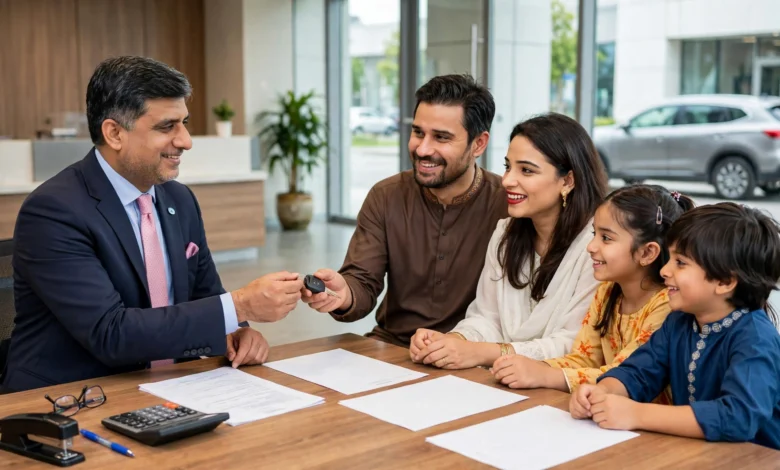
Car financing in Pakistan has become the main way many salaried professionals and small business owners get behind the wheel. With car prices several times higher than they were a few years ago, saving the full amount in cash is out of reach for most families. A bank auto loan lets you pay a portion upfront and spread the rest over a few years.
But an auto loan is a serious financial commitment. The monthly instalment is only part of the story. Markup rates tied to KIBOR, compulsory insurance, tracker fees, processing charges and late payment penalties can add a large amount to what you finally pay. The State Bank of Pakistan has also tightened and adjusted auto finance rules several times, so advice from even a couple of years ago may no longer apply.
There is a darker side too. Borrowers have been caught out by fake documents prepared by agents, unlicensed lending apps with abusive recovery tactics, and illegal sale of bank-owned cars. Some buyers have unknowingly purchased leased cars that legally still belonged to the bank.
This guide explains how auto loans in Pakistan actually work, the difference between conventional and Islamic financing, current rules, eligibility, the true cost of borrowing, and the practices to avoid. By the end, you will know how to compare offers, borrow only what you can afford, and get the car you need without falling into debt you regret.
How Car Financing in Pakistan Works
At its simplest, the bank buys the car on your behalf, registers it with the bank’s interest noted on the documents, and you repay the cost plus profit in monthly instalments. Once you finish paying, the bank issues a No Objection Certificate (NOC) and the car is transferred fully into your name. Until then, the bank has a legal claim on the vehicle.
There are two main routes.
Conventional Car Leasing
Conventional banks offer car leasing or auto loans where you pay a markup, usually linked to KIBOR (Karachi Interbank Offered Rate) plus a fixed spread. Many banks offer both:
- Fixed rate: the instalment stays the same for the whole term, which makes budgeting easy, but the starting rate is usually higher.
- Variable rate: the instalment is revised periodically as KIBOR moves. You benefit when rates fall and pay more when they rise.
Islamic Car Financing (Ijarah and Diminishing Musharakah)
Islamic car financing is offered by Islamic banks and Islamic windows of conventional banks. The most common structures are:
- Ijarah: the bank owns the car and rents it to you. At the end of the term, ownership is transferred to you.
- Diminishing Musharakah: you and the bank co-own the car. You pay rent on the bank’s share and buy its share gradually until you own it fully.
Under Islamic structures, the bank carries some ownership risk, such as takaful costs or certain losses, as defined in the contract. Monthly payments are often similar to conventional loans because rental rates are also benchmarked against KIBOR. Choose the option you are comfortable with, but compare the total cost either way.
Financing a Used Car
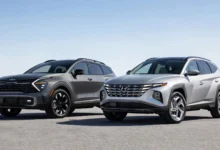
Some banks also finance used cars, usually up to a certain age and only after the bank’s own valuation and inspection. Terms are often stricter, with higher down payments and shorter tenures.
SBP Rules That Shape Car Financing in Pakistan
Auto loans are governed by the State Bank of Pakistan’s Prudential Regulations for Consumer Financing. The current framework comes from changes made in 2021 and 2022, when the central bank tightened lending to slow imports and protect foreign exchange reserves.
Key Limits in Force
As reported by Dawn and Business Recorder, the main rules are:
- Minimum down payment of 30% of the vehicle’s value
- Maximum total auto financing of Rs 3 million per person across all banks and DFIs combined
- Maximum tenure of 5 years for locally assembled vehicles up to 1,000cc
- Maximum tenure of 3 years for vehicles above 1,000cc
- No bank financing for imported vehicles, new or used
- Debt burden ratio capped at 40% of your income for all loan repayments combined
What These Rules Mean in Practice
The Rs 3 million cap matters more than many buyers realise. If a car costs Rs 6 million, the bank can lend you only Rs 3 million, so you would need to pay the other Rs 3 million yourself, which is 50% rather than 30%. The short three-year tenure for bigger cars also pushes monthly instalments much higher.
Possible Changes Ahead
The auto industry has lobbied for these limits to be relaxed, and a draft auto policy for 2026–31 has reportedly proposed longer tenures, lower down payments and a higher financing cap. As of this writing, those proposals have not been enacted. Always confirm the latest rules with your bank before you apply.
Eligibility and Documents for Car Financing in Pakistan
Each bank sets its own criteria within SBP rules, but the basics are similar across the market.
Typical Eligibility Criteria
- Age: usually between 21 and 60 or 65 years at loan maturity
- Income: a minimum monthly income set by the bank, often higher for self-employed applicants
- Employment history: salaried applicants usually need at least six months to a year in their current job, while business owners need a few years of operating history
- Credit history: a clean record in the SBP’s electronic Credit Information Bureau (eCIB), with no defaults or serious late payments
- Debt burden: total monthly loan payments, including the new car instalment, must stay within 40% of income
Documents You Will Usually Need
For salaried individuals:
- Copy of CNIC
- Recent salary slips (usually three months)
- Bank statements for six months
- Employment certificate
- Passport-size photographs
For self-employed and business owners:
- Copy of CNIC
- Business bank statements for six to twelve months
- NTN certificate and tax returns
- Proof of business, such as registration or rental agreement
Being a tax filer usually helps. Non-filers face higher withholding taxes on vehicle purchase and registration, which adds to the overall cost.
Check Your Credit Report First
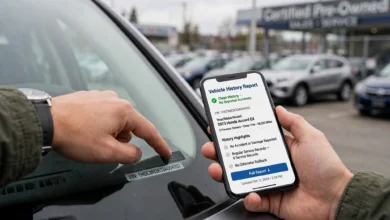
Before applying, request your own credit report. Errors in eCIB records, such as an old credit card you closed but the bank never updated, can lead to rejection. Fixing them before you apply saves time and protects your record from multiple rejected applications.
The True Cost of an Auto Loan in Pakistan
The monthly instalment is the number banks advertise, but it is not the full cost. Here is what you actually pay for.
Markup or Rental Rate
Most car loan interest rates in Pakistan are set as KIBOR plus a spread of a few percentage points. Because KIBOR follows the SBP policy rate, your cost can change noticeably on a variable-rate loan. Fixed-rate options give certainty but usually start higher.
Other Charges to Budget For
- Comprehensive insurance or takaful, which is mandatory and charged every year, often as a percentage of the car’s value
- Tracker installation and annual fees, usually required by the insurer
- Processing fee charged at the start
- Registration and withholding taxes, which are higher for non-filers
- Late payment charges if you miss an instalment
- Early settlement charges, which some banks apply if you pay off the loan before the term ends
A Worked Example
The figures below are illustrative only, using an assumed markup of 16% per year on a reducing balance. Actual rates and car prices will differ.
| Item | Amount |
|---|---|
| Car price (above 1,000cc) | Rs 4,000,000 |
| Down payment (30%) | Rs 1,200,000 |
| Amount financed | Rs 2,800,000 |
| Tenure | 3 years (36 months) |
| Approximate monthly instalment | Rs 98,400 |
| Total repaid to bank | Rs 3,543,000 approx. |
| Total markup paid | Rs 743,000 approx. |
On top of this, you would pay insurance and tracker fees each year. With the 40% debt burden rule, an instalment of around Rs 98,400 would need a monthly income of roughly Rs 246,000 or more, assuming no other loans. This is why many buyers in Pakistan opt for cheaper cars or larger down payments.
9 Steps to Get the Best Car Financing in Pakistan
Follow these steps in order to keep costs down and avoid surprises.
- Set a realistic budget. Keep the instalment well below the 40% limit, ideally closer to 25 to 30% of your income, so you still have room for fuel, maintenance and emergencies.
- Save a bigger down payment. Every extra rupee you pay upfront cuts both the instalment and the total markup.
- Check your credit report. Fix any errors in your eCIB record before applying.
- Compare at least three banks. Look at the markup rate, fees, insurance cost and early settlement terms, not just the monthly figure. Use each bank’s car loan calculator to compare like for like.
- Decide between fixed and variable rates. Choose fixed if you value certainty, or variable if you expect rates to fall and can absorb increases.
- Compare conventional and Islamic options. Ask for the total cost under each and read how ownership, takaful and early termination work.
- Read the full agreement. Check late payment charges, early settlement charges, insurance terms and what happens if the car is stolen or totalled.
- Deal only with the bank directly. Submit documents through official branches or channels, never through informal agents who promise guaranteed approval.
- Keep records and pay on time. Save every receipt and statement. After your last payment, collect the NOC promptly and complete the transfer into your name.
Illegal and Unethical Practices in Car Financing in Pakistan
Most bank auto loans are legitimate, but the wider system has seen its share of fraud and abuse. These past patterns are worth knowing, whether you are a borrower or buying a used car.
Fake Documents Through “Guaranteed Approval” Agents
Some informal agents promise loan approval for people who do not qualify by preparing fake salary slips, bank statements or employment letters. Banks and the FIA have pursued cases of loan fraud involving forged documents. If the fraud is discovered, the borrower can face criminal charges, loan recall and a damaged credit record for years. No genuine approval needs fake paperwork.
Selling a Leased Car Before Clearing the Loan
A car under bank finance legally belongs to, or is held as security by, the bank until the NOC is issued. Some borrowers have sold such cars on open letters or with duplicate documents, leaving buyers with a vehicle the bank could repossess. Banks have filed cases against borrowers for this. If you are buying a used car, always check whether the registration mentions a bank and insist on the NOC.
Illegal Lending Apps and Harassment
In 2022 and 2023, unlicensed digital lending apps spread rapidly in Pakistan, charging extreme fees and harassing borrowers and their contacts with threats and abusive messages. The Securities and Exchange Commission of Pakistan (SECP) blocked many of these apps and tightened rules for licensed lenders after widespread complaints, including a widely reported case in Rawalpindi where a borrower took his own life after harassment. Never take a vehicle or personal loan from an app or lender that is not licensed by the SBP or SECP.
Abusive Recovery Practices
SBP rules require banks and their recovery agents to follow fair debt collection practices: no threats, no harassment and no calls at unreasonable hours. If a recovery agent crosses these lines, you can complain to the bank and escalate to the SBP’s complaint system or the Banking Mohtasib.
Phishing and Fake Loan Offers
Fraudsters often pose as bank staff on phone calls or WhatsApp, offering pre-approved car loans in exchange for an upfront “processing fee” or your banking details. Banks do not ask for OTPs, PINs or advance payments over the phone. Hang up and contact your bank through its official helpline.
Common Auto Loan Mistakes and How to Save Money
Small decisions at the start of an auto loan can save or cost you hundreds of thousands of rupees over the term.
Mistakes Borrowers Often Make
- Focusing only on the instalment. A lower instalment can hide a higher total cost through fees or insurance.
- Borrowing the maximum allowed. Just because a bank will lend Rs 3 million does not mean you should borrow it.
- Ignoring running costs. Fuel, maintenance, tax and parking add up quickly and still have to be paid alongside the loan.
- Skipping the fine print on early settlement, insurance renewal and late payment charges.
- Forgetting the NOC. Many people finish paying but never collect the NOC or complete the transfer, which causes problems when they sell.
Practical Ways to Cut Costs
- Increase your down payment wherever you can.
- Choose a car that fits your budget, not the one at the top of your range.
- Become a tax filer to reduce withholding taxes on purchase and registration.
- Shop around for insurance if your bank allows you to choose from a panel of insurers.
- Make partial prepayments when you receive bonuses, if your bank allows it without heavy charges. On a reducing-balance loan, early payments cut markup the most.
- Pay on time, every time to avoid penalties and protect your credit score for future borrowing.
Frequently Asked Questions About Car Financing in Pakistan
What is the minimum down payment for a car loan in Pakistan?
Under current SBP rules, the minimum down payment is 30% of the car’s value. If the car costs more than about Rs 4.3 million, the Rs 3 million financing cap means you will need to pay more than 30% yourself.
Can I finance an imported car through a bank?
No. SBP rules do not allow banks to finance imported vehicles, whether new or used.
What is the maximum car loan tenure?
Five years for locally assembled vehicles up to 1,000cc and three years for vehicles above 1,000cc, unless the rules are changed.
Is Islamic car financing cheaper than conventional leasing?
Not necessarily. Rental rates are usually benchmarked against KIBOR, so costs are often similar. Compare the total amount payable under each option.
What happens if I miss an instalment?
You will pay late charges and the missed payment may be reported to the eCIB, hurting your credit record. Repeated defaults can lead to repossession. If you are struggling, talk to your bank early about restructuring options.
Conclusion
Car financing in Pakistan can put a reliable car within reach, but only if you understand the full picture: SBP rules currently require a 30% down payment, cap total auto financing at Rs 3 million per person, limit tenure to five years for cars up to 1,000cc and three years above that, and bar financing for imported vehicles, while the real cost includes KIBOR-linked markup, insurance, tracker fees, taxes and possible penalties on top of the monthly instalment. Whether you choose conventional leasing or Islamic ijarah, compare at least three banks on total cost, keep your instalment comfortably within your income, check your credit report, and read every clause before you sign. Stay away from agents who offer fake documents, unlicensed lending apps, phishing calls and anyone trying to sell a car that is still under bank finance, because these practices have cost Pakistani borrowers their money, their credit records and in some cases far more, and a careful, honest approach is the surest way to drive away with a car you can truly afford.