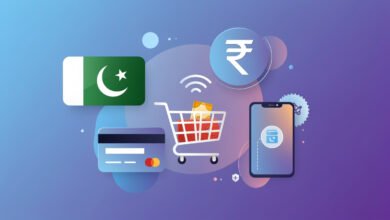
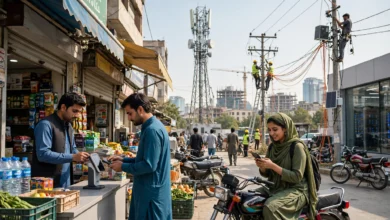
How Digital ID Systems Are Improving Access to Public Services
Digital ID systems are making public services faster and easier to reach. Here is how they help, where they have failed, and what keeps citizens safe.

Digital ID Systems: 7 Powerful Ways They Improve Access to Public Services, and the Real Risks
Introduction
Digital ID systems are changing how people deal with the state. In Pakistan, renewing an identity card used to take a day off work, a long queue and sometimes a “fee” to an agent at the door. Today a citizen can do it on a phone, and a pensioner who can no longer give a clear fingerprint can confirm they are alive through a family member’s phone instead of travelling to a bank. For many families, a verified identity is what unlocks a bank account, a SIM card, a passport or a welfare payment.
That same power is why these systems need careful scrutiny. When identity becomes the key to every service, a stolen identity can do far more damage. Pakistan has seen corrupt officials sell national identity cards to foreigners, millions of citizen records leak from the national database, and fraudsters use fake silicone thumbprints to beat biometric checks. In India, journalists showed they could buy access to the national ID database for a few hundred rupees, and a child’s death was linked by activists to her family’s ration card being cancelled because it wasn’t connected to the ID system.
This article looks at how digital ID systems are improving access to public services, with a focus on Pakistan’s NADRA and the Pak-ID app, plus lessons from India and Estonia. It covers the real gains, the illegal activity that has exploited identity systems, and the safeguards that make a digital identity both useful and trustworthy.
What Are Digital ID Systems?
A digital ID system is a government-backed way for people to prove who they are electronically. It usually combines three things:
- A unique record in a national database, such as a CNIC number in Pakistan.
- Credentials, like a smart card, a mobile app or a digital certificate.
- Authentication, often biometric verification (fingerprints or face), a PIN or a one-time code.
Once that foundation exists, other services can rely on it: banks, telecom companies, passport offices, welfare programs, tax authorities and schools.
Why identity matters for access
People without proof of identity are often shut out of basic services. According to the World Bank, more than 800 million people worldwide are still without official proof of their identity, and 2.8 billion lack access to digital IDs. Its earlier research found that people without ID are at a high risk of exclusion from basic services and economic opportunities and are among the most marginalized in their communities. That is the core argument for digital ID systems: they can bring people who were invisible to the state into the system.
7 Ways Digital ID Systems Improve Access to Public Services
1. Getting an Identity Document Without the Queue
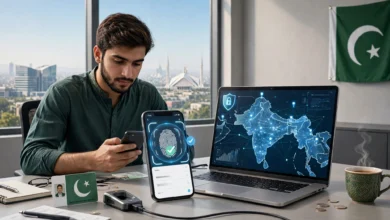
The most visible change in Pakistan is NADRA’s Pak-ID app. NADRA has fully digitised the process of applying for identity cards and other official documents through its Pak ID mobile application. The numbers show how quickly people are using it. More than six million citizens obtained their identity documents through the Pak-ID mobile application during 2025, and in early 2026 daily applications crossed 15,000 for the first time. By mid-2026, total app downloads had passed 18.1 million.
For a labourer, a student or a woman who finds it hard to travel to a registration centre, skipping the queue is a real improvement in access to public services.
2. A Digital Card With Legal Standing
A digital ID is only useful if offices accept it. NADRA says that under Pakistan’s digital laws, the digital record and digital identity available through the Pak ID app now have the same legal status as the relevant physical identity document. Practical uses are growing. Passport applicants in Pakistan and at missions abroad can now verify their identity using the digital ID in the Pak ID app.

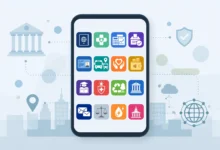
This cuts the risk of losing a physical card, and it helps overseas Pakistanis who would otherwise have to wait for documents to arrive by post.
3. Making Services Work for Older People
Fingerprint systems often fail older people whose prints have worn away. NADRA has added a fix: an online “Proof of Life” feature in the Pak ID app, primarily aimed at pensioners facing challenges with fingerprint verification due to age or health issues. NADRA has also introduced facial recognition-based verification, which will be fully accessible through the Pak ID Mobile App.
This matters because a system that works for the average user but fails the most vulnerable isn’t truly inclusive. Alternatives to fingerprints are one of the most important improvements any digital ID system can make.
4. Registering Life Events From Home
Identity covers more than the adult ID card. Birth, marriage and death records shape inheritance, schooling and pensions. In Punjab, citizens can now register important life events and obtain official certificates through the Pak-ID app. NADRA has also made it possible to verify a Child Registration Certificate (B-Form) or a Cancellation Certificate by scanning its digital QR code. QR verification makes forged certificates easier to catch.
5. Linking SIM Cards to Real People
Pakistan’s biometric SIM verification drive shows how digital identity can be used to clean up a service at national scale. After the attack on the Army Public School Peshawar on December 16, 2014, the government ordered every SIM to be re-verified against its owner’s fingerprints. Mobile operators had to re-verify 103 million SIMs through the BVS technology in 90 days. By the end of the drive, a total of 26 million SIMs (out of 103 million) were blocked.
The benefit is that a verified SIM can now support mobile banking, digital wallets and the one-time codes that other e-government services depend on. The cost was disruption: cellular subscribers dropped from 139.98 million users in FY14 to 114.75 million users at the end of June 2015. Some of those were fraudulent connections, but some were legitimate users who couldn’t verify in time.
6. Opening Doors to Complaints and Accountability
Digital ID systems can also give citizens a channel to hold the state to account. The latest Pak-ID update adds a dedicated FIA section, and once arrangements are complete users will be able to submit complaints online through Pak ID and track their progress. When citizens can file and track complaints without visiting an office, both convenience and accountability improve.
7. Building a Whole Digital State: The Estonia Example
Estonia is the best-known example of a country run on digital identity. There, 98% of Estonians have an ID card that they are able to use as a valid travel ID within Europe, access health insurance, and pay taxes. Digital ID cards were introduced in 2002 and became the foundation of the country’s e-services. Estonia shows what becomes possible when a trusted ID is combined with strong laws and public confidence.
The Dark Side: Illegal Activities That Exploited Identity Systems
The benefits above are real, but identity systems have also been abused. Each case below reveals a weakness that any digital ID system must address.
Case 1: Pakistani ID Cards Sold to Foreigners
For years, corrupt insiders sold genuine Pakistani identity documents. In Balochistan, Dawn reported that NADRA officials had issued thousands of National Identity Cards to foreigners, especially Afghan nationals, in violation of the rules. Sources said cards were being sold for Rs50,000 to Rs2 lakh in Quetta and other parts of the province. In 2015 the FIA told a Senate committee that more than 200 people had been arrested and that NADRA had closed an office in Karachi’s Baldia area where almost all officials were involved in issuing CNICs to people of Afghan, Indian and other nationalities.
The problem hasn’t fully gone away. In April 2026, the FIA arrested a NADRA official in Karachi for his alleged role in approving CNICs issued to two Afghan nationals.
The lesson: a database is only as honest as the people who control access to it. Insider fraud needs audit trails, separation of duties, random checks and real penalties.
Case 2: The NADRA Data Leak
When identity data leaks, every service built on it becomes vulnerable. A joint investigation found that data of 2.7 million Pakistanis was compromised between 2019 and 2023, allegedly with the involvement of NADRA offices in Multan, Peshawar and Karachi. The report said the data was obtained from Multan to Peshawar, then routed to Dubai, and was also reportedly sold in Argentina and Romania.
The lesson: centralising data creates a single high-value target. Strong encryption, minimal data access, independent audits and an enforceable data protection law are essential.
Case 3: Fake Thumbs and Welfare Theft
Biometrics feel secure, but they can be faked or misused. In a Lahore fraud raid, investigators recovered 415 fake active SIM cards, 610 fake silicone thumb impressions, 56 ATM cards and 13 biometric verification devices.
The same techniques have hit Pakistan’s largest welfare program. In Badin, the FIA seized 16 devices, six plastic thumb-impression tokens, and over Rs 2.296 million in cash while arresting suspects accused of embezzling BISP funds. In another case, auditors found that payments linked to beneficiaries from 39 districts were reportedly processed through a single mobile shop franchise in Multan.
The lesson: biometric verification needs liveness detection (checking that a real finger or face is present), device monitoring and alerts for unusual patterns, such as many withdrawals from one location.
Case 4: India’s Aadhaar Access for Rs500
India’s Aadhaar is the world’s largest biometric ID program. In January 2018, The Tribune reported that it had bought access to Aadhaar details for as little as 500 rupees ($7.89) from someone on a WhatsApp social media group. For another Rs300, the agent provided software that could facilitate the printing of the Aadhaar card for any individual.
The government strongly disputed the report. The UIDAI said its security systems met high international standards and that there had been no breach or leakage of Aadhaar data at UIDAI, calling the story misreporting. The newspaper said it could not access biometric data, only personal details such as home addresses and dates of birth.
The lesson: even when the core biometric database is secure, the many intermediaries with access to it can become leak points. Access controls for third parties matter as much as central security.
Case 5: When Digital ID Shuts People Out
The most serious ethical risk isn’t theft. It’s exclusion. In 2017, Santoshi Kumari, an 11-year-old girl in Jharkhand’s Simdega district, died after her family was denied food rations because they did not have an Aadhaar-linked ration card, according to Right to Food activists. Officials disputed the cause, and government authorities said she died of malaria and not hunger. A fact-finding team, however, said the local block office confirmed the family’s ration card had been deleted because it was not linked to Aadhaar.
The lesson: if a digital ID becomes a hard requirement for food, pensions or health care, any glitch, missing link or failed fingerprint can cut off people who are fully entitled. A human fallback must always exist.
Case 6: Estonia’s Chip Flaw and a Transparent Response
Even the best systems have flaws. On November 4, 2017, Estonia disabled the certificates of more than 760,000 national electronic ID cards because of a security vulnerability in the chips that could have exposed cards issued over a three-year period. What stood out was how the government handled it. Officials developed a software update that let them bypass the security risk without replacing all the affected cards. Estonia’s former president argued that other countries using the same chips stayed quiet about the very same flaw.
The lesson: openness builds trust. Admitting a flaw quickly and fixing it in public is far better than denying it.
Ethical Questions Every Digital ID System Must Answer
Is it inclusive or exclusionary?
A digital ID system should make services easier to reach for people who struggle most: the elderly, women without phones in their own names, people with disabilities, and residents of remote areas. Fingerprint alternatives, offline options and assisted service desks aren’t extras. They are the test of whether a system is fair.
Is consent real?
Citizens should know what data is collected, who can see it and why. In Pakistan, critics have argued that the Digital Nation Act does not recognise women as a distinct category of rights holders in digital ecosystems, nor does it mandate gender impact assessments, consent-based data processing, or safeguards against misuse of personal data. Those concerns deserve answers as the national digital ID expands.
Where is the line between service and surveillance?
Linking identity to SIMs, bank accounts, travel and welfare makes services smoother. It also builds a detailed picture of each person’s life. Clear legal limits on who can combine and query that data, with independent oversight, help keep a service tool from becoming a surveillance tool.
Who is accountable when things go wrong?
When a pension stops, a CNIC is blocked or data leaks, citizens need a fast, simple way to complain and get their problem fixed. Accountability should rest with institutions, not with the victim.
Safeguards That Make Digital ID Systems Trustworthy
Taken together, the cases above point to a clear set of safeguards:
- Enforceable data protection law with an independent regulator and real penalties for both state bodies and private companies.
- Multiple ways to verify, including fingerprint, face, iris and assisted verification, so no single failure locks someone out.
- No denial without a fallback, meaning essential services like food, health care and pensions are never refused only because of a technical failure.
- Insider controls, such as access logs, two-person approval for sensitive changes and regular audits of registration offices.
- Liveness detection and fraud analytics to catch fake thumbs, cloned devices and unusual transaction patterns.
- Data minimisation, so each service sees only what it needs, for example “over 18: yes” rather than a full date of birth.
- Transparent breach disclosure, following Estonia’s approach of telling citizens quickly and fixing problems openly.
- Easy grievance redress through apps, helplines and physical desks, with deadlines for resolution.
For more on international standards, the World Bank’s ID4D Initiative publishes guidance on building inclusive and trusted identification systems, and Estonia’s Information System Authority explains how it handled its ID card crisis.
What Citizens Can Do to Protect Their Digital Identity
- Use only official apps. Download the Pak-ID app from official app stores, and NADRA advises citizens to use the official PakID app for digital ID services.
- Never share your CNIC photo, OTP or biometrics with callers, agents or unofficial “helpers.”
- Check SIMs registered in your name regularly through the PTA’s official service and report any you don’t recognise.
- Use the PIN and tracking ID on your NADRA receipt to track applications yourself instead of paying agents.
- Report fake ID rackets or welfare deductions to the FIA and the relevant program helpline.
- Keep family records updated so births, deaths and marriages are recorded correctly, which protects inheritance and pensions.
Conclusion
Digital ID systems are improving access to public services in real, measurable ways. In Pakistan, millions of people now get identity documents through the Pak-ID app, the digital card has legal status, pensioners can confirm they are alive without a fingerprint, life events can be registered from home, and biometric SIM verification has tied mobile connections to real owners. Globally, Estonia shows how far a trusted digital identity can go. The record also carries serious warnings: corrupt officials selling CNICs to foreigners, the leak of 2.7 million citizens’ records, fake silicone thumbs used to steal welfare money, India’s Aadhaar access racket, and the exclusion that can follow when a digital link becomes a hard requirement for food. The way forward isn’t to reject digital identity but to build it ethically, with enforceable data protection, multiple ways to verify, a human fallback for essential services, strict insider controls, open breach disclosure and simple ways for citizens to get problems fixed. Built that way, a digital ID can become a trusted way into public services for every citizen.